









Want to start a personal training business but not sure where to begin? A simple plan can make the next steps much clearer.
The short answer is: define your clients, services, prices, costs, and revenue goals. You do not need a long business plan to get started.
As an Exercise Physiology & Biomechanics Expert at YR Fitness, I work closely with training needs, fitness equipment, and exercise spaces. That experience helps me see which business decisions are practical for trainers and which ones can create unnecessary costs later.
This guide will show you how to build your plan step by step. You can use it as a simple checklist before you start.
1. Write a Simple Business Summary
Start by explaining what kind of personal training business you want to create.
You do not need pages of detail. In fact, the U.S. Small Business Administration’s business planning guidance explains that a business plan can act as a roadmap for how you structure, operate, and grow a business.
Start with these questions:
- What is your business name?
- Where will you train clients?
- Will you work alone or with other trainers?
- What services will you provide?
- What do you want the business to achieve?
For example:
I provide one-to-one and small-group strength training for beginners. I train clients from a rented studio and aim to build 25 regular clients within my first year.
That is already enough for a basic summary.
Keep it simple: Can you explain your business in two or three sentences?
If not, your plan may be more complicated than it needs to be.

2. Choose Your Target Clients
Who do you actually want to train?
Possible clients include:
- Fitness beginners
- People trying to lose weight
- People who want to build strength
- Busy professionals
- Older adults
- Athletes
- People returning to exercise
You do not need to serve everyone.
I often see new trainers say, “Anyone who wants to get fit is my client.” It sounds flexible, but it makes the service harder to explain and market.
A clearer target could be: Busy professionals aged 25–45 who want strength training but do not know how to train properly.
There is also real demand for fitness services. The U.S. Bureau of Labor Statistics fitness trainer data reports about 388,400 fitness trainer and instructor jobs in 2025, with employment projected to grow 7% from 2025 to 2035.
That does not guarantee clients, of course. It simply shows why having a clear position matters in an active market.

3. Decide What Training Services You Will Offer
Now decide what clients can actually buy from you.
Your services may include:
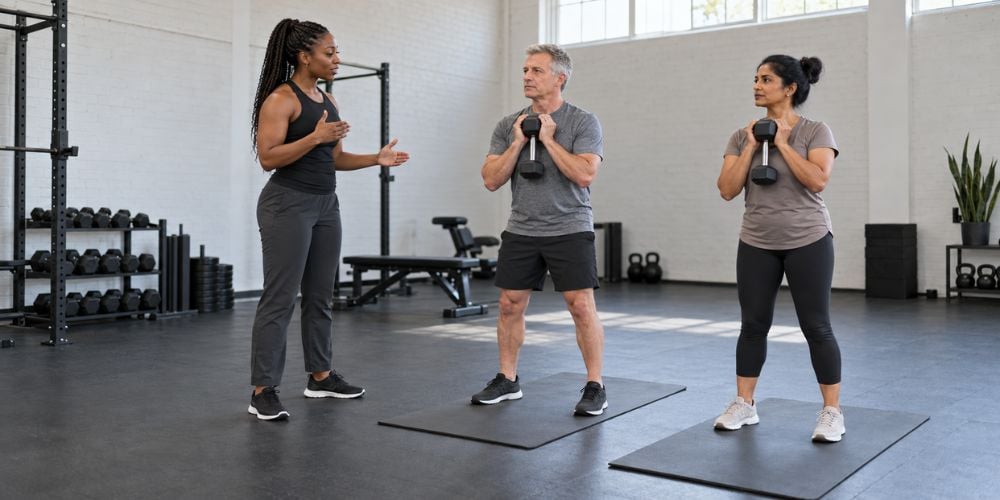
- One-on-one personal training
- Partner training
- Semi-private training
- Small-group training
- Online coaching
- Fitness assessments
- Exercise programming
- Progress reviews
Do not offer too much at the beginning.
Three clear services may be enough.
Service | Simple Example | Best Fit |
One-to-one training | 60-minute private session | Beginners or clients wanting close support |
Small-group training | 3–5 clients per session | Clients wanting lower-cost coaching |
Online coaching | Monthly workout plan and check-in | Clients training independently |
Ask yourself one question:
What problem does each service solve?
A beginner may need more one-to-one support. Someone with more experience may prefer lower-cost group training.
Make each service easy to understand in a few seconds.
4. Set Your Personal Training Prices
Next, decide what you will charge.
Do not simply copy another trainer’s prices.
Your pricing should consider:
- Your experience
- Session length
- Local market prices
- Studio or gym fees
- Monthly expenses
- Your income goal
- Number of clients you can realistically train
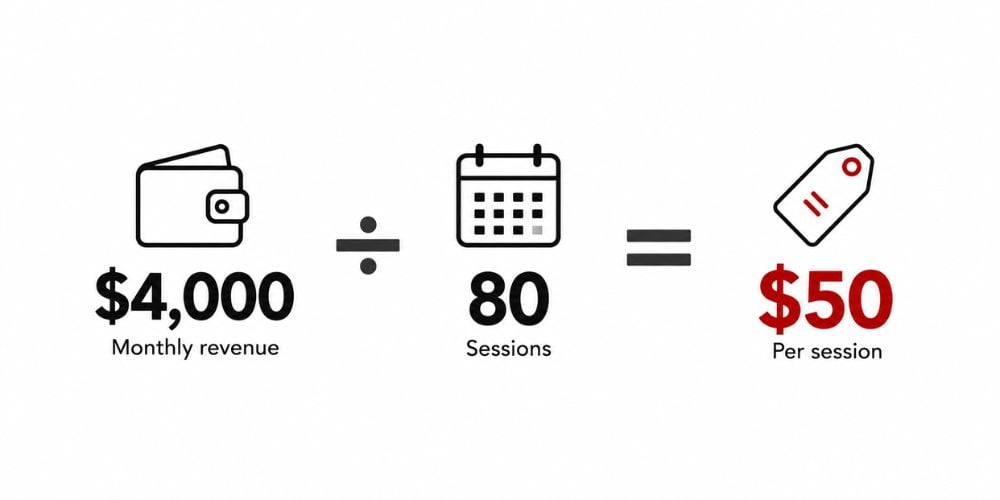
A simple formula is:
Required monthly revenue ÷ expected monthly sessions = average revenue needed per session
For example, if you want to generate $4,000 per month and expect to deliver 80 sessions:
$4,000 ÷ 80 = $50 per session
That gives you a useful starting point.
You can also offer packages such as:
- 4 sessions per month
- 8 sessions per month
- 12 sessions per month
Packages can make your income more predictable and help clients train more consistently.
Should you try to be the cheapest trainer?
Usually, no.
Your price needs to cover your costs and leave enough income for you to keep operating.
5. Estimate Your Startup Costs
Before taking your first client, work out how much money you need to start.
Common startup costs include:
- Personal trainer certification
- Business registration
- Insurance
- Website
- Booking software
- Marketing materials
- Studio deposit
- Basic training equipment
- Payment processing setup
Put everything into a simple budget.
Startup Item | Estimated Cost | Why It Matters |
Certification | $___ | Professional qualification |
Insurance | $___ | Business risk protection |
Business setup | $___ | Registration and administration |
Equipment | $___ | Training delivery |
Website/software | $___ | Booking and client management |
Marketing | $___ | Finding your first clients |
Emergency reserve | $___ | Covers unexpected costs |
Total | $___ | Your starting capital target |
Do not forget the emergency reserve.
I would rather see a trainer start with a smaller setup and some cash left over than spend everything before the first client arrives.

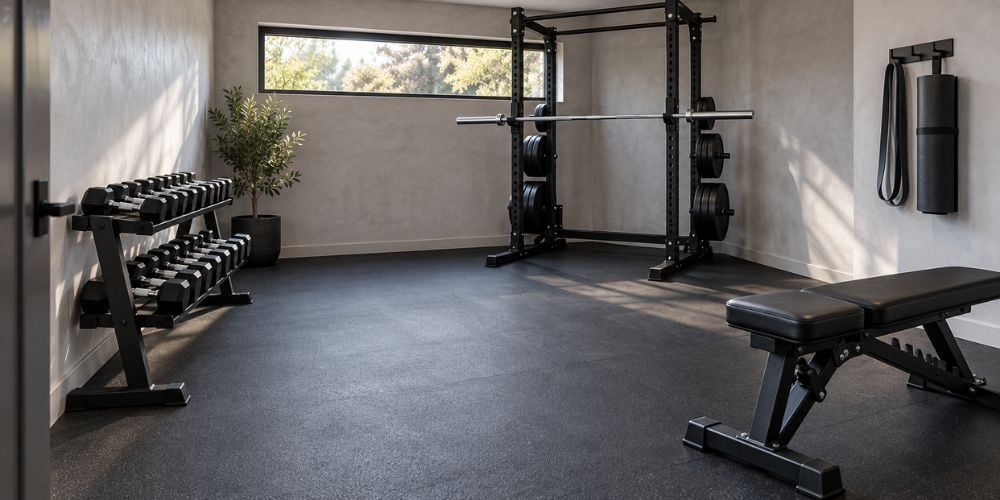
6. Plan Your Training Space and Equipment
Where will you train your clients?
You have a few common options.
Commercial Gym
You may work as an employed or independent trainer inside an existing gym.
This usually reduces equipment costs because the facility already has machines, benches, dumbbells, and cardio equipment.
Rented Personal Training Studio
You rent space inside another facility.
This gives you more independence without the full cost of opening your own gym.
Home Studio
You train clients from a suitable home-based space.
You may need less equipment, but you still need enough room for safe movement.
Private Studio
You operate your own dedicated training facility.
This gives you more control, but rent, utilities, insurance, equipment, and maintenance become part of your business costs.
Start with equipment that supports many exercises:
- Adjustable bench
- Dumbbells
- Resistance bands
- Cable machine
- Squat rack
- Barbells and plates
- Mats
- Functional accessories
You do not need every machine on day one.
One mistake I often see is trainers choosing the studio first and thinking about equipment later. A better order is:
Training services → equipment needed → space needed → budget
That keeps your facility tied to how you actually plan to train clients.
If your plan eventually includes a private training studio, we recommend working out your equipment list before committing to the space. You can explore our commercial strength machines, cardio equipment, and fitness accessories at YR Fitness and use those options to build a more realistic equipment budget.
7. Calculate Your Monthly Operating Costs
Startup costs mainly happen at the beginning.
Operating costs keep coming every month.
Typical expenses include:
- Rent
- Utilities
- Software
- Insurance
- Equipment maintenance
- Marketing
- Cleaning
- Internet
- Payment processing fees
- Staff or contractor payments
- Loan or lease payments
Add everything together.
For example:
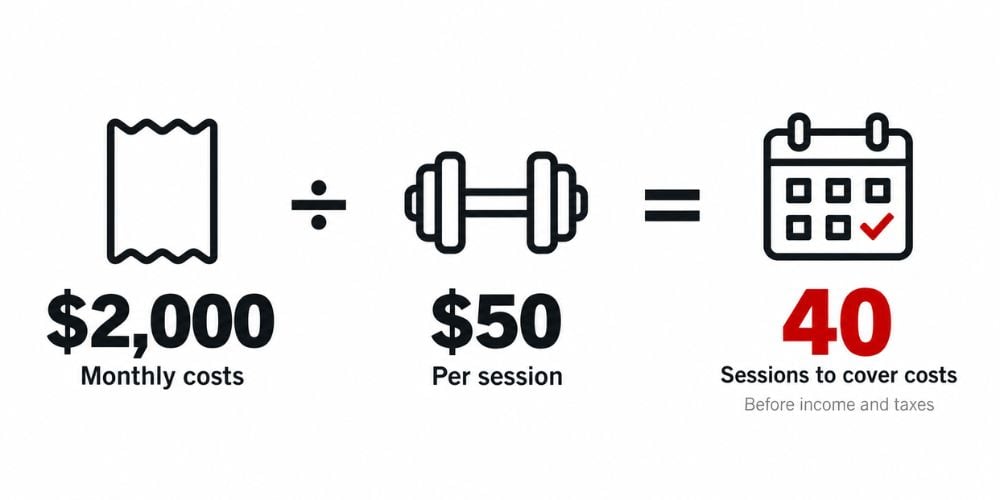
Rent $1,000 + software $100 + insurance $100 + marketing $300 + utilities $200 + cleaning/maintenance $150 + other costs $150 = $2,000 per month
Then calculate how many sessions you need to cover those costs.
If your average revenue is $50 per session:
$2,000 ÷ $50 = 40 sessions
That means your first 40 sessions cover the example operating costs before considering your own income and taxes.
This is your basic break-even point.
Why does this number matter?
Because feeling busy is not the same as being profitable. Knowing your break-even point tells you how much work the business needs before it starts supporting you.
Conclusion
A personal trainer business plan does not need to be complicated. Start with your clients, services, prices, costs, training space, equipment, and revenue goals, then adjust the numbers as your business grows.
If a private studio is part of your long-term plan, build the equipment budget before making a large commitment.
Browse YR Fitness commercial gym equipment to compare the type of equipment your future training space may need and turn that estimate into a more practical business plan.
Related articles:



