








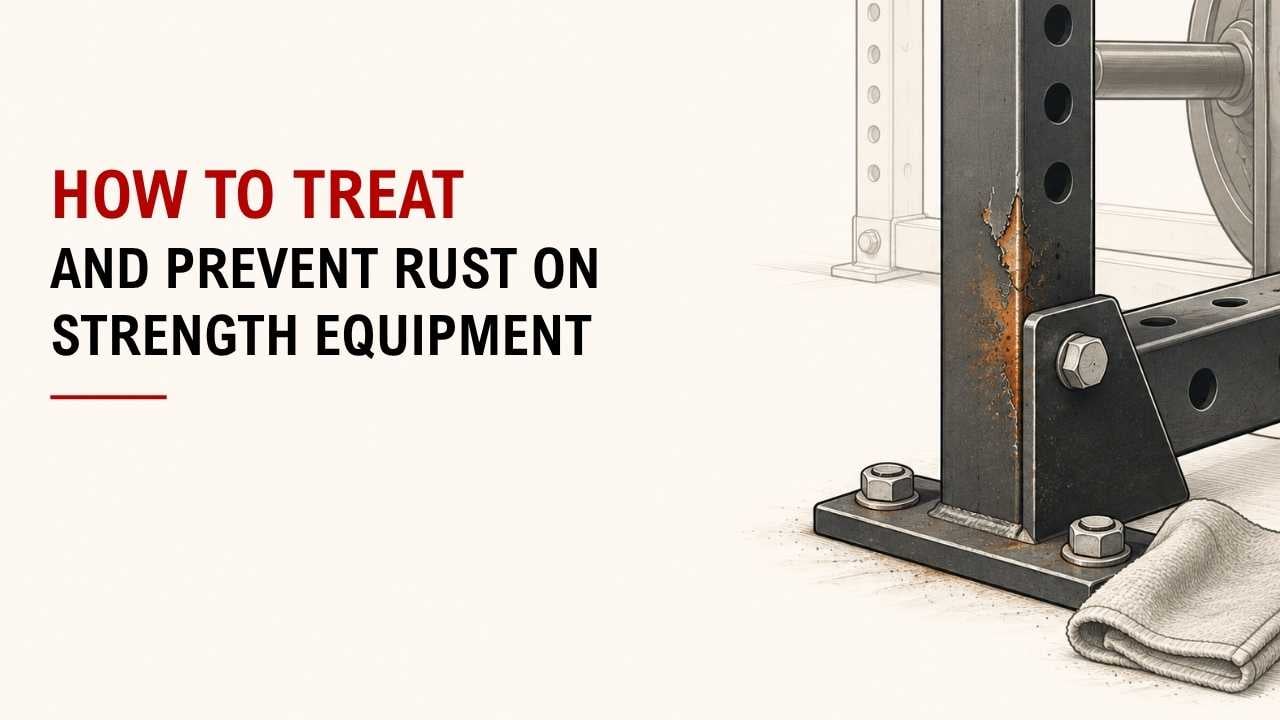

Have you noticed rust on your strength equipment? Small rust spots can spread and damage metal surfaces.
The solution is simple: remove surface rust, protect exposed metal, and keep equipment dry. Regular cleaning helps prevent rust from returning.
As a Machinery & Structural Engineer at YR Fitness, I focus on equipment durability and corrosion protection. I often see how early rust treatment prevents bigger problems and helps equipment last longer.
Below, I’ll share six simple ways to treat and prevent rust on strength equipment. Follow these tips to keep your machines in good condition.
1. Inspect the Equipment for Rust
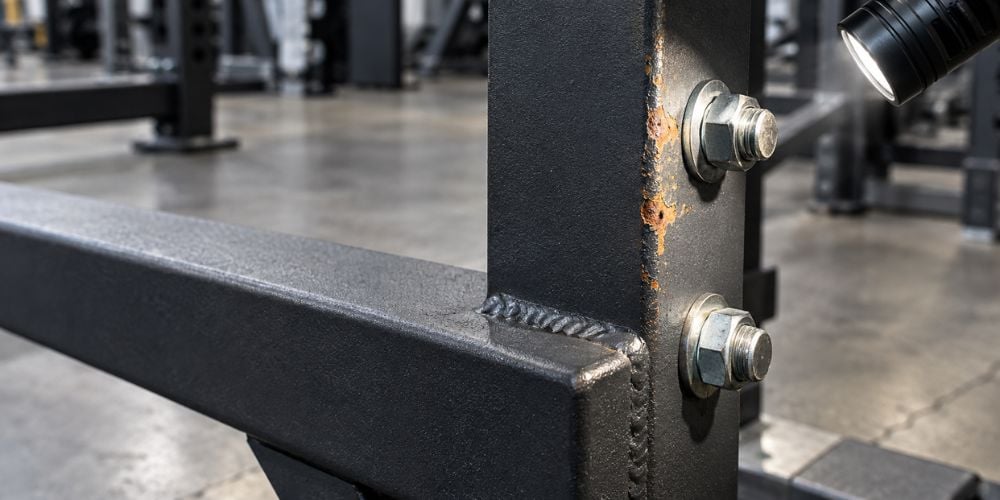
Before removing rust, check how much damage has developed. Light surface rust is usually easier to treat, but deep corrosion may affect equipment safety.
Check these areas:
- Frames: Look for orange or brown rust spots.
- Bolts and joints: Check for rust around connections.
- Handles: Inspect areas where sweat collects.
- Weight plates: Look for corrosion on exposed metal.
- Painted surfaces: Check for peeling, bubbling, or damaged coatings.
How do you know if rust is serious?
Small surface spots usually indicate early corrosion. Deep pitting, flaking metal, cracks, or weakened connections are warning signs.
According to AMPP’s guide to corrosion, corrosion can gradually weaken metal and reduce its service life. That is why early inspection matters.
I recommend stopping use when corrosion affects structural parts. Have the equipment inspected before training again.
2. Clean the Rusted Area
Cleaning removes dirt and sweat that can hide rust. It also prepares the surface for proper treatment.
Follow these steps:
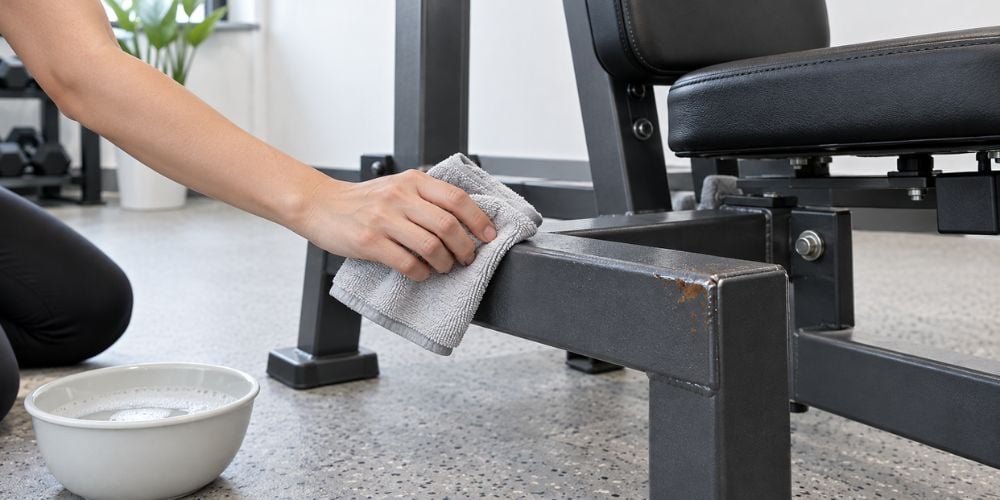
- Wipe away dust and dirt with a soft cloth.
- Mix mild soap with a little water.
- Gently clean the rusted area.
- Remove soap residue with a damp cloth.
- Dry the surface completely.
Avoid soaking bearings, cables, and adjustment mechanisms.
Quick Tip: Use a microfiber cloth for painted and polished surfaces. It helps remove dirt without scratching the finish.
3. Remove Light Surface Rust
Once the area is clean, remove the surface rust carefully. The right method depends on the metal and its protective finish.
Here’s how:
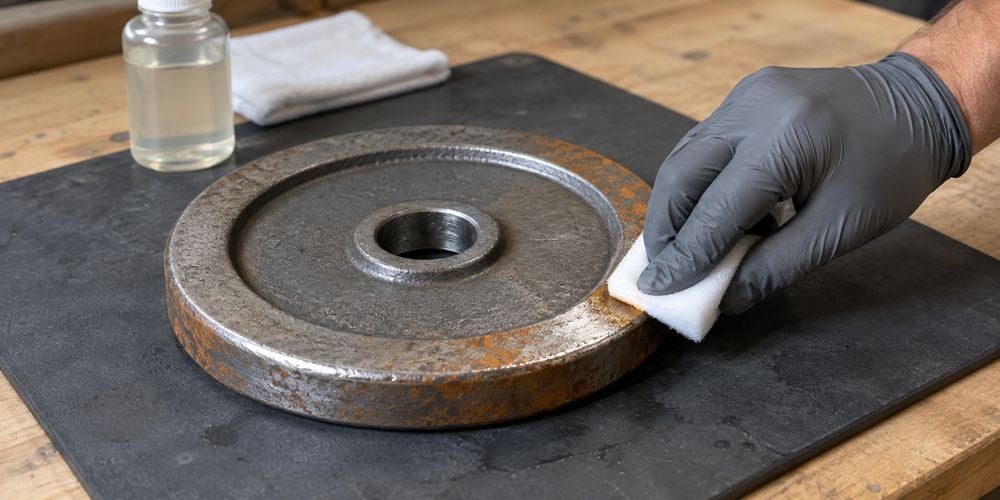
- Choose a rust remover suitable for the metal.
- Apply it according to the product instructions.
- Gently rub the affected area with a suitable non-scratching pad.
- Remove the remaining residue.
- Dry the metal thoroughly.
Can you use sandpaper?
Yes, but only on suitable bare metal when the manufacturer allows it. Avoid sanding chrome plating, polished guide rods, and precision parts.
What if the rust does not come off?
Do not keep scrubbing harder. Deep rust may require professional treatment or replacement of the affected component.
I always recommend starting with gentle cleaning before trying stronger rust-removal methods. This helps protect the original finish.
4. Protect the Metal After Rust Removal
Removing rust is not enough if the metal stays exposed. You also need to protect the treated surface from moisture.
Use these methods:
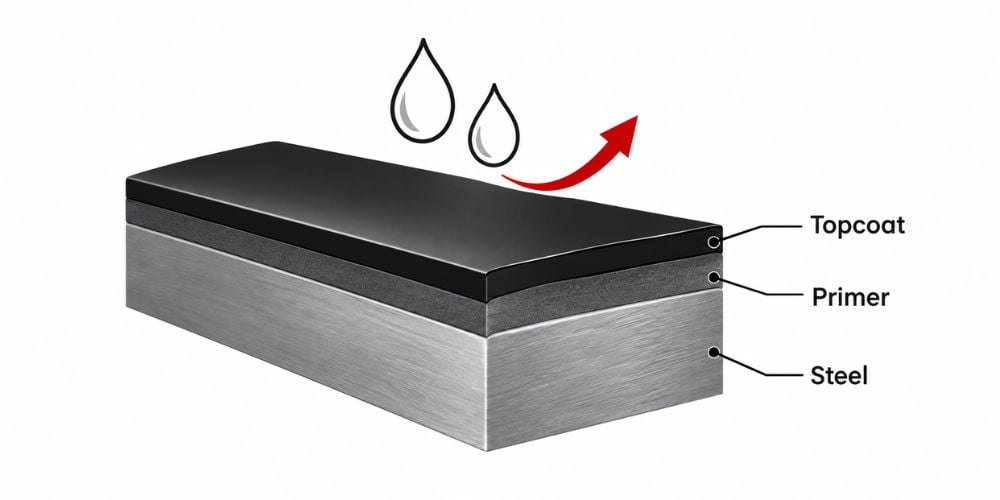
- Painted steel: Apply a compatible rust-resistant primer and touch-up paint.
- Bare metal: Use a manufacturer-approved corrosion inhibitor when suitable.
- Chrome surfaces: Use cleaning and protection products designed for chrome.
- Bolts and joints: Replace heavily corroded components when necessary.
Why is this important?
The Association for Materials Protection and Performance (AMPP) explains that protective coatings help prevent corrosion by separating metal from moisture, oxygen, and other damaging elements.
Allow coatings to dry and cure completely before using the equipment.
What if the paint keeps peeling?
The surface may still contain rust or moisture, or the coating may not have bonded properly. Check the area before repainting.
At YR Fitness, we build commercial strength equipment using solid materials and advanced manufacturing processes for frequent training. Our focus is reliable quality and long-term use, helping reduce unnecessary equipment problems.
If your current machines have badly damaged frames or protective finishes, explore our strength equipment options to find a more durable replacement.
5. Keep Strength Equipment Clean and Dry
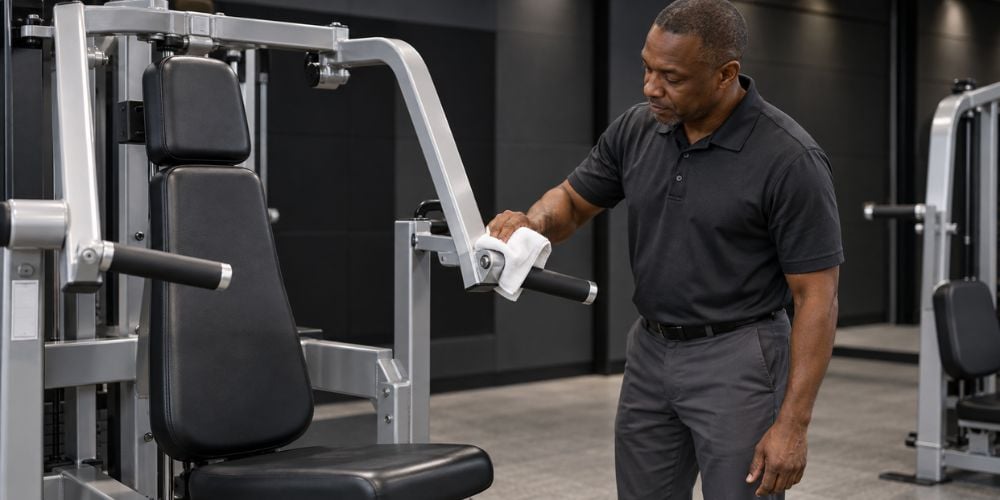
Sweat and moisture can cause rust, especially around handles, bolts, and exposed metal. Keeping equipment dry is one of the easiest ways to prevent corrosion.
Make these habits part of your routine:
- Wipe handles and frames after workouts.
- Remove sweat from exposed metal.
- Use equipment-safe cleaning products.
- Dry surfaces after cleaning.
- Avoid leaving wet towels on machines.
I often notice rust starting in places people forget to wipe, especially around bolts and handle connections. A quick cleaning routine can help prevent bigger problems later.
For example, Concept2’s equipment maintenance guidance recommends regular wiping and cleaning of exercise equipment surfaces. The same basic habit is useful for keeping strength equipment clean, although cleaning products should always match the machine’s finish.
Simple Cleaning Schedule
Task | Frequency |
Wipe away sweat | After every workout |
Clean handles and frames | Daily |
Check for rust spots | Weekly |
Inspect bolts and joints | Monthly |
Check protective coatings | Every 3 months |
These are suggested intervals. Follow the manufacturer’s instructions and clean more often when necessary.
6. Control Moisture and Humidity
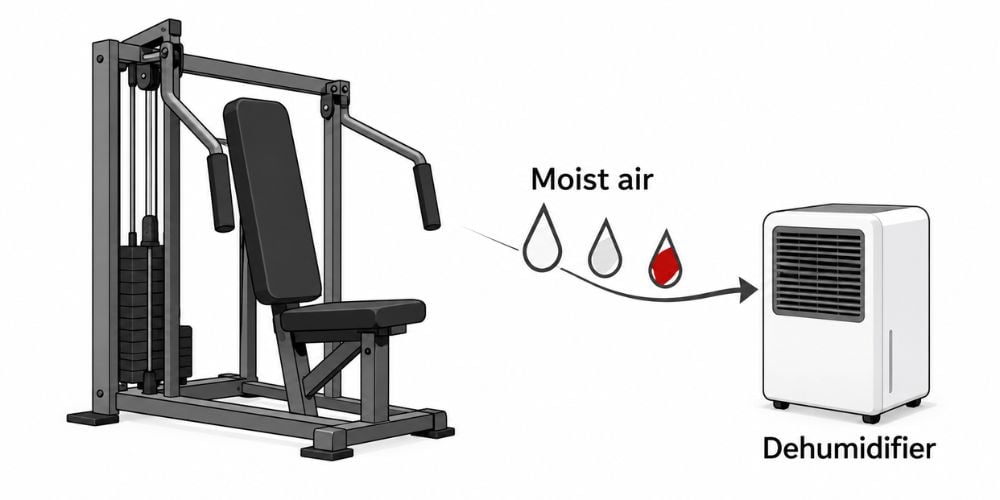
Even clean equipment can rust when the surrounding air stays damp. High humidity allows moisture to collect on exposed metal.
Here’s what you can do:
- Improve ventilation: Keep air moving around your equipment.
- Use a dehumidifier: Reduce excess moisture in enclosed spaces.
- Fix leaks: Keep water away from machines.
- Avoid damp walls: Leave space between equipment and moist surfaces.
- Store accessories properly: Keep unused weights and attachments in dry areas.
Does humidity really make a difference?
Yes. Humid conditions can speed up corrosion, especially when the metal’s protective finish is damaged.
For home gyms, keeping equipment in a dry, well-ventilated room can make maintenance much easier.
Common Rust Problems and Solutions
Problem | What to Do |
Rust on exposed steel | Remove light rust and protect the surface |
Rust around bolts | Clean, inspect, and replace damaged bolts |
Peeling paint | Treat the metal and repair the coating |
Rust on chrome | Use a chrome-safe cleaning method |
Rust caused by humidity | Improve airflow and reduce moisture |
Deep corrosion | Stop using the equipment and seek professional inspection |
Quick Reminder: If rust affects a load-bearing frame, weld, cable connection, or other safety-critical component, do not rely on cleaning or repainting alone. Have the machine professionally inspected before using it again.
Conclusion
Rust is easier to control when treated early. Clean your equipment, remove surface rust, protect exposed metal, and keep your workout area dry.
If corrosion has seriously damaged your machines, explore YR Fitness commercial strength equipment for durable options designed for regular training and long-term use.
Related articles:



