






Thinking about opening a personal training studio but unsure what it may cost each month? Rent, equipment, staff, and smaller bills can add up faster than expected.
The simple answer is to total your rent, utilities, equipment, staff, software, and cleaning costs. Once you know those six numbers, you have a practical starting point for your monthly budget.
As an Ergonomics Engineer at YR Fitness, I look closely at how studio size, equipment choices, and training space affect operating costs. I often see people focus heavily on equipment prices while overlooking rent, floor space, and ongoing expenses.
In this guide, I’ll show you how to estimate each major monthly cost step by step. Add your own numbers as you go, and you will quickly see what your studio may need each month.
1. Start With Your Monthly Rent
Rent is usually one of the easiest costs to calculate.
Include:
- Base rent
- Service fees
- Parking
- Storage space
- Common-area charges
- Property management fees
For example, if your rent is $2,000 per month and building fees are another $200, your real monthly space cost is $2,200.
Monthly space cost = Rent + building fees + parking + storage
Why include everything? Because the rent written on the lease may not represent your full cost of using the space.
The U.S. Small Business Administration recommends separating business expenses into one-time and monthly costs, with rent and utilities included among the regular expenses you should estimate.
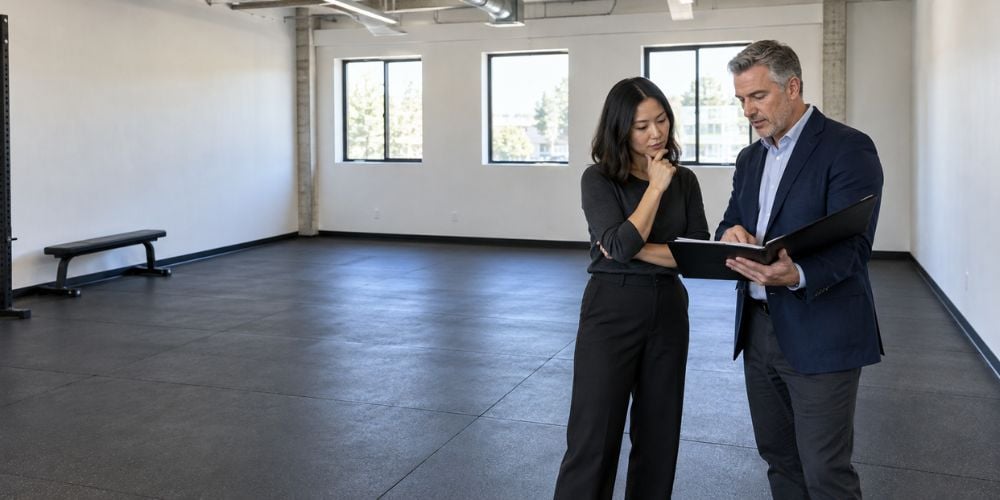
How much space do you really need?
Think about how many people will train at the same time.
A one-on-one studio needs less space than a studio running several sessions together. More space can also mean higher rent, utilities, and equipment costs.
From my experience, a well-planned smaller studio can often work better than a large room with wasted space.
2. Add Utilities
Next, estimate the basic cost of keeping the studio running.
Your main utility costs may look like this:
Utility | Example Monthly Cost | What Can Affect It? |
Electricity | $250 | AC, lighting, cardio equipment, opening hours |
Water | $50 | Toilets, showers, cleaning |
Internet | $60 | Speed and service plan |
Phone/other services | $40 | Business communication needs |
Total | $400 | — |
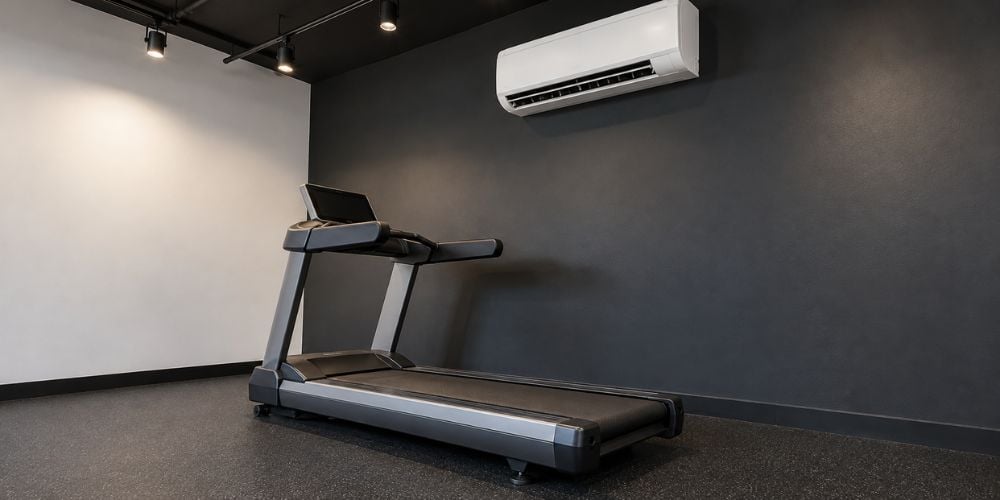
Electricity can become noticeable if lighting, air conditioning, treadmills, fans, and displays run for many hours.
Monthly utilities = Electricity + water + internet + other services
Your actual cost will depend on your location, studio size, operating hours, and equipment.
I would also leave some room for seasonal changes. Air-conditioning costs, for example, may rise during hotter months.
The IRS also lists utilities among common operating business expenses, which is a useful reminder not to treat them as an afterthought when building your budget.
3. Calculate Equipment Costs
Equipment costs depend heavily on how you build your setup.
You might:
- Buy equipment upfront
- Finance it
- Lease it
- Add equipment gradually
Either way, include:
- Equipment loan payments
- Leasing payments
- Maintenance
- Replacement parts
- Small accessories
- Future replacement costs
Even if you pay for everything upfront, maintenance and replacement still need room in the budget.
Here is a simple example:
Equipment Expense | Monthly Budget | Why Include It? |
Equipment financing | $500 | Regular purchase or loan payment |
Maintenance | $100 | Routine servicing and minor repairs |
Replacement reserve | $100 | Future parts or equipment replacement |
Total | $700 | — |
When I review studio layouts, I usually prefer equipment that earns its floor space. A machine that supports several useful exercises can make more sense than filling a small room with many single-purpose machines.
Commercial equipment also needs to handle much more frequent use than typical home equipment.
If equipment is taking up a large part of your budget, look at the cost together with space, training function, and expected daily use. At YR Fitness, we design commercial strength and cardio equipment for frequent daily training, so you can explore our commercial gym equipment options and compare what actually fits your studio instead of simply buying more machines.

4. Add Staff and Trainer Expenses
Will you run the studio alone?
If not, include:
- Trainer salaries
- Trainer commissions
- Reception staff
- Cleaning staff
- Payroll costs
- Employee benefits
- Contractor payments
For example:
2 trainers × $1,500 per month = $3,000
Add another $1,000 for reception, cleaning, or other support and your total staffing cost becomes $4,000 per month.
One cost people often forget is their own income.
If the studio is your main job, include the amount you need to pay yourself. Otherwise, the business may look profitable on paper while still not providing enough personal income.
Quick question: How much does the studio need to earn before you can reasonably pay yourself?
Keep that figure in your planning, even if your exact pay structure changes later.

5. Include Software and Business Services
Even a small studio can build up several monthly subscriptions.
Common costs include:
- Booking software
- Client management software
- Payment processing
- Accounting software
- Website hosting
- Business email
- Music subscriptions
- Online training platforms
Together, these may cost around $100 to $300 or more per month, depending on what you choose.
Before adding another subscription, ask:
Do I actually use this every week?
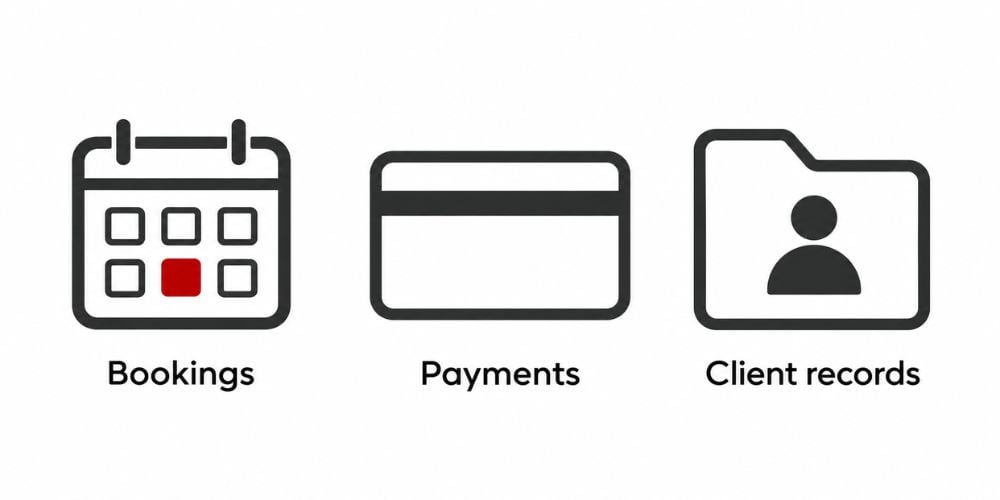
I prefer starting with the tools needed for bookings, payments, records, and communication. You can always add more later.
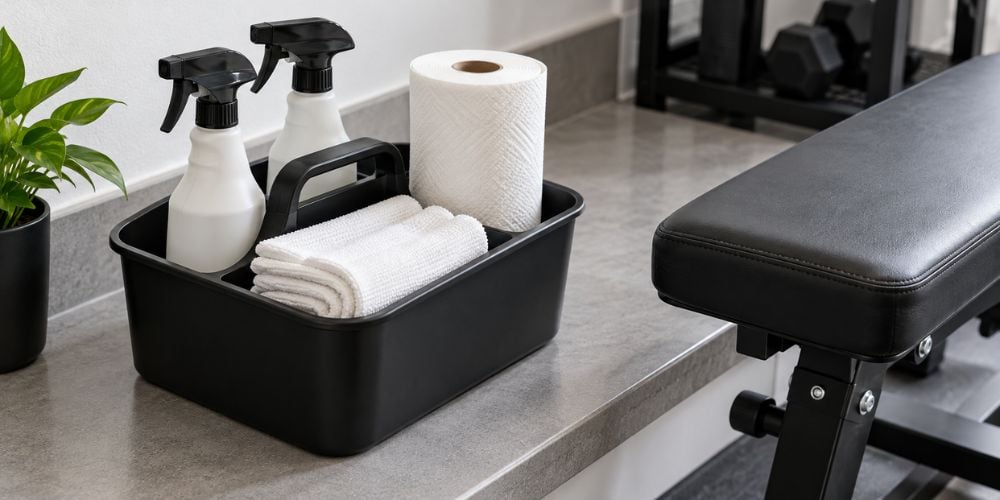
6. Estimate Cleaning and Consumable Costs
Small items are easy to overlook because you buy them little by little.
They may include:
- Disinfectant
- Cleaning sprays
- Paper towels
- Toilet paper
- Hand soap
- Towels
- Drinking water
- Trash bags
- Batteries
- Small fitness accessories
A small studio may spend around $100 to $300 per month, while a busier studio may spend more.
Here is why this matters: high-use training spaces have equipment and surfaces that people touch throughout the day. OSHA guidance recommends paying particular attention to frequently touched surfaces when deciding how often to clean.
The easiest approach is to estimate your first month and then replace that estimate with your actual spending once you have real data.
Put Everything Together
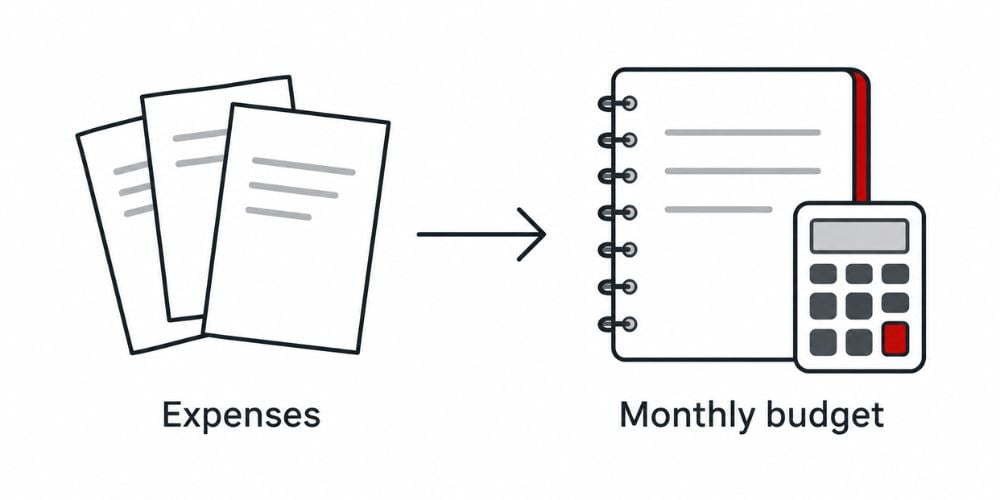
Now add your six main categories:
Monthly Studio Cost = Rent + Utilities + Equipment + Staff + Software + Cleaning/Supplies
Using the examples above:
Monthly Expense | Estimated Cost |
Rent and building fees | $2,200 |
Utilities | $400 |
Equipment | $700 |
Staff | $4,000 |
Software | $200 |
Cleaning and supplies | $250 |
Estimated Monthly Cost | $7,750 |
So, what does the $7,750 tell you?
It is not your profit figure. It simply shows roughly how much the studio needs each month before profit.
Once you have that number, compare it with the number of clients you expect to train and what each client pays.
Conclusion
Estimating your monthly studio costs does not need to be complicated. Add your rent, utilities, equipment, staff, software, and cleaning expenses, then update those estimates as real bills start coming in.
Do not worry about making the first estimate perfect. What matters is seeing where your money is going and spotting costs that are too high before they become a problem.
If equipment is a big part of your budget, YR Fitness can help you compare durable commercial equipment for your space and training needs. Explore YR Fitness and plan a setup that gives you the equipment you need without filling the studio with machines you may rarely use.
Related articles: