





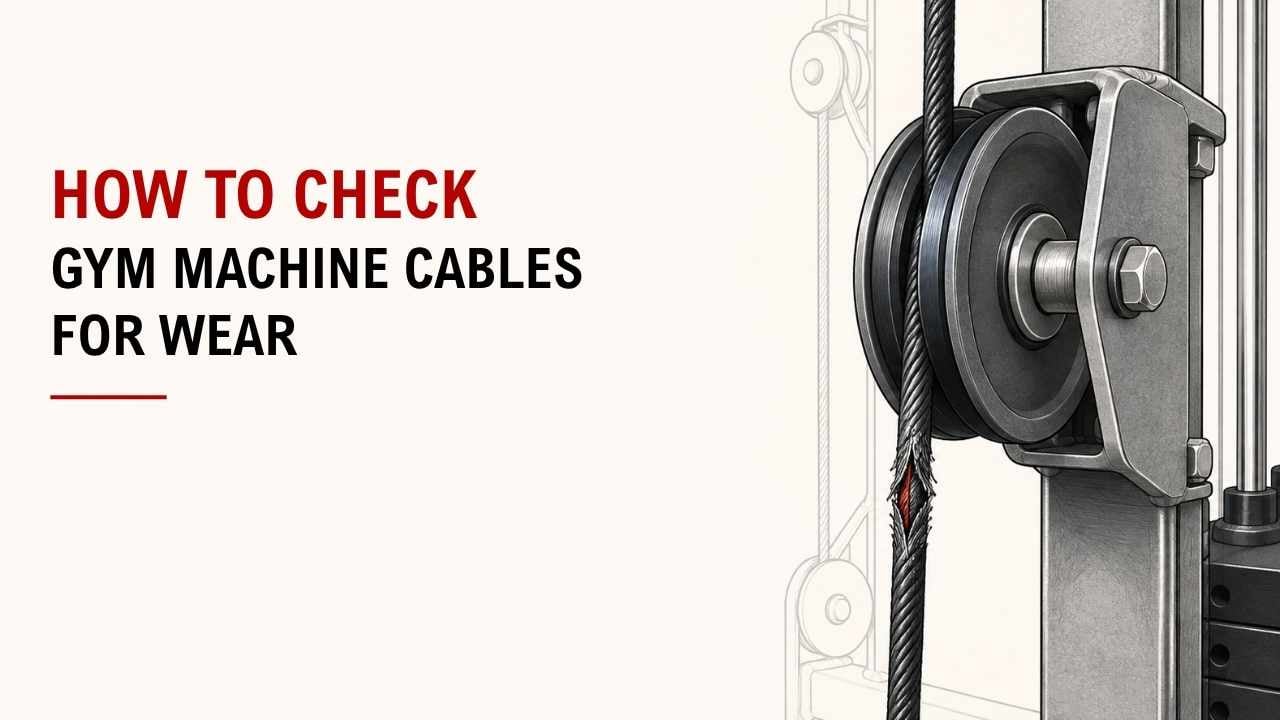

Does a gym machine cable look cracked, rough, or worn? These signs are worth checking before you use the machine.
The quick answer: check for fraying, coating damage, worn pulleys, loose cable ends, and rough movement. Stop using the machine if you see broken strands or serious damage.
As a Machinery & Structural Engineer at YR Fitness, I work directly with cables, pulleys, frames, and other moving machine parts. From my experience, cable wear often shows clear warning signs before a bigger problem develops.
Below, I’ll show you six quick ways to check a gym machine cable. Keep reading to know what is normal and when you should stop using the machine.
1. Look Along the Entire Cable
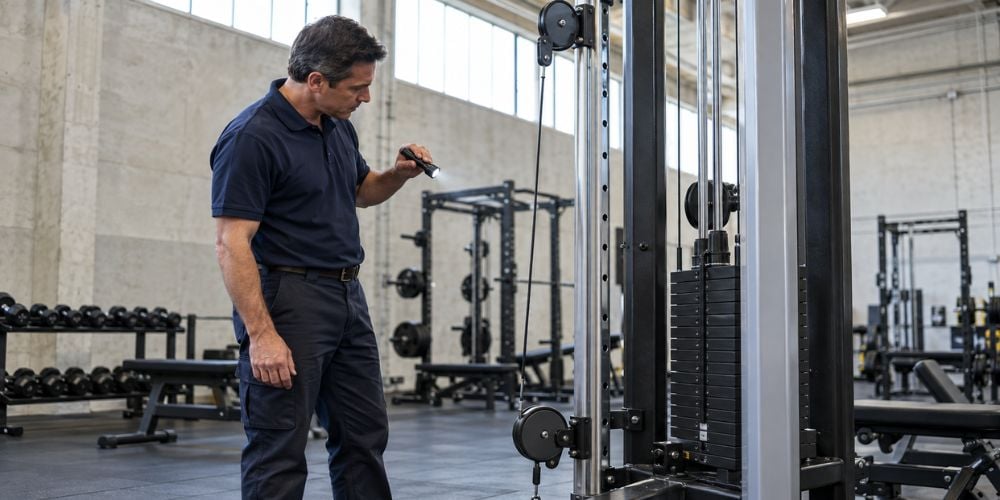
Start at one end of the cable and follow it all the way to the other.
Check around the weight stack, pulleys, adjustment points, and attachments. Life Fitness also recommends visually inspecting cables around connections and along their entire length as part of its strength maintenance guidelines.
Look for:
- Rough surfaces
- Flattened sections
- Unusual bends
- Cuts or cracks
- Exposed metal
- Areas rubbing against the machine
I pay extra attention to places where the cable changes direction. These sections repeatedly bend as you perform each rep.
What if part of the cable is hidden? Do not start removing machine covers just to inspect it unless you are trained to do so safely.
2. Check for Fraying
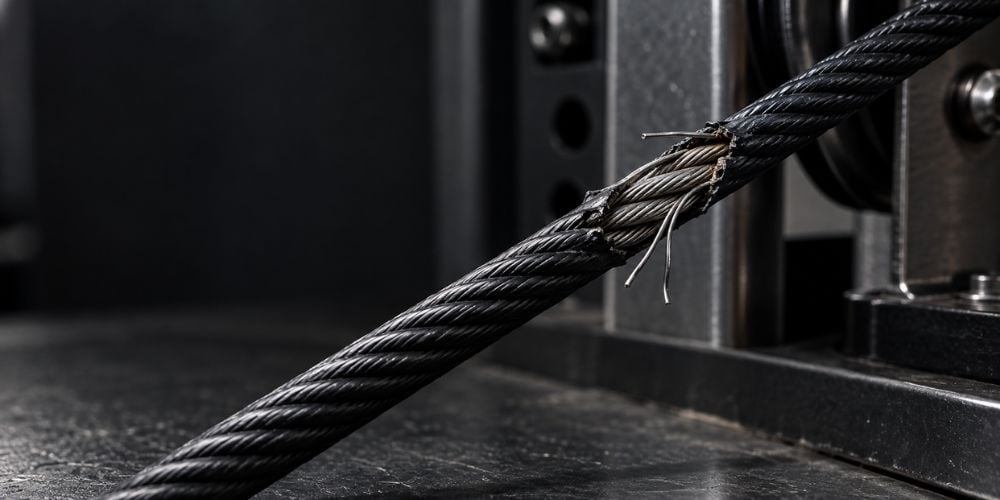
Fraying is one of the easiest cable problems to spot.
Look closely for:
- Broken steel strands
- Small wires sticking out
- A fuzzy or rough appearance
- Separating strands
- Sharp metal fibers
Use your eyes instead of your bare hand to check the cable. A broken wire strand may be sharp enough to cut your skin.
Precor’s preventive maintenance guidance for strength equipment says cables and cable ends should be inspected and replaced when wear appears.
So, what should you do if you see exposed or broken strands?
Stop using the machine. The cable may still look mostly intact, but visible strand damage should not be ignored.
3. Check Cable Coating
Many gym machine cables have a protective outer coating around the steel cable.
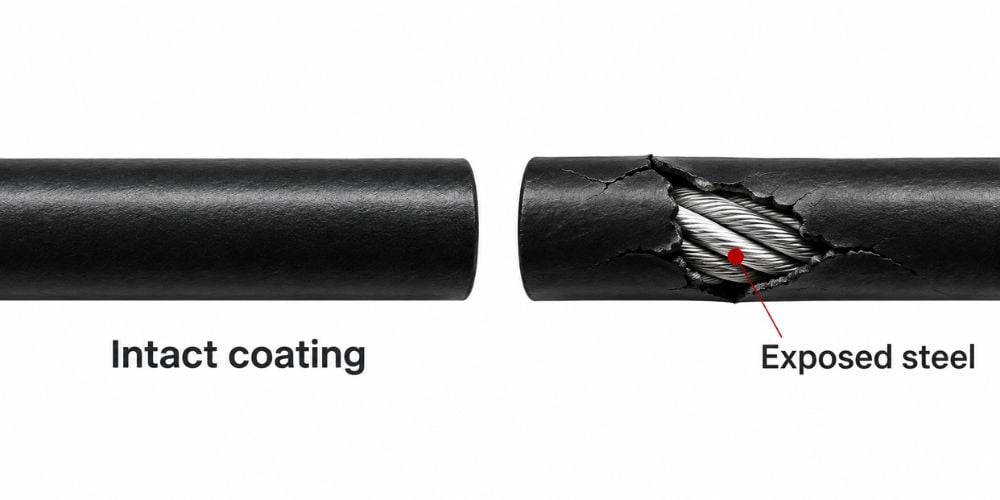
Check whether that coating is still smooth and continuous. Cracking, peeling, deep cuts, or flattened areas deserve a closer look.
What You See | What It May Mean |
Light surface marks | Normal use in some cases |
Small cracks | Coating is beginning to wear |
Deep cuts | Cable needs closer inspection |
Flattened coating | Excess pressure or pulley wear |
Missing coating | Steel cable is no longer protected |
Exposed strands | Stop using the machine |
Small cosmetic marks do not automatically mean a cable has failed.
On the other hand, deep cracks, missing coating, or exposed steel are much more serious. Precor specifically advises checking for kinks, frayed wires, coating deterioration, and wear near pulleys and crimped cable ends.
At YR Fitness, we pay attention to how cables, pulleys, frames, attachments, and resistance systems work together under repeated use. If you want to compare commercial strength-machine designs, browse our commercial gym equipment and see which options fit your training environment.
4. Inspect Areas Around the Pulleys
Now look at every point where the cable travels over a pulley.
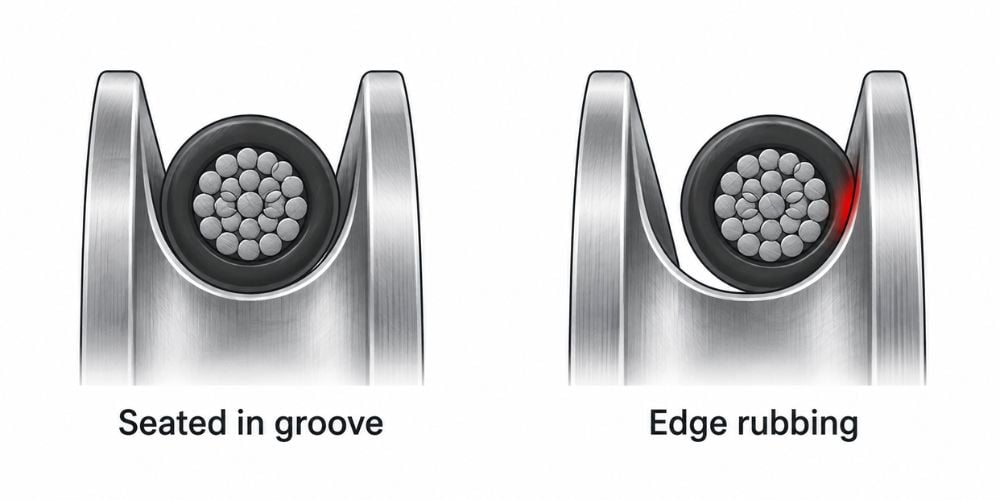
The cable should sit properly inside the pulley groove. It should not constantly rub against the edge or nearby frame.
Look for:
- Cable rubbing against the pulley side
- Deep pulley grooves
- Cracked or damaged pulleys
- Off-center cable movement
- Flattened cable sections
- Unusual scraping marks
Here is why this matters: a worn pulley can also damage a good cable.
I often see wear concentrated around one pulley instead of along the entire cable. When that happens, alignment or pulley wear may be part of the problem rather than simple cable aging.
If the cable keeps moving toward the edge of the pulley, stop using the machine and have it checked.
There is another safety point worth remembering. The U.S. Occupational Safety and Health Administration explains in its machine-guarding guidance that safeguards around hazardous moving parts should remain secure, and maintenance involving dangerous moving machinery requires proper safety procedures.
So, do not reach into guarded pulley areas while the machine is moving.
5. Check Cable Ends and Attachments
The middle of the cable is not the only place that can wear.
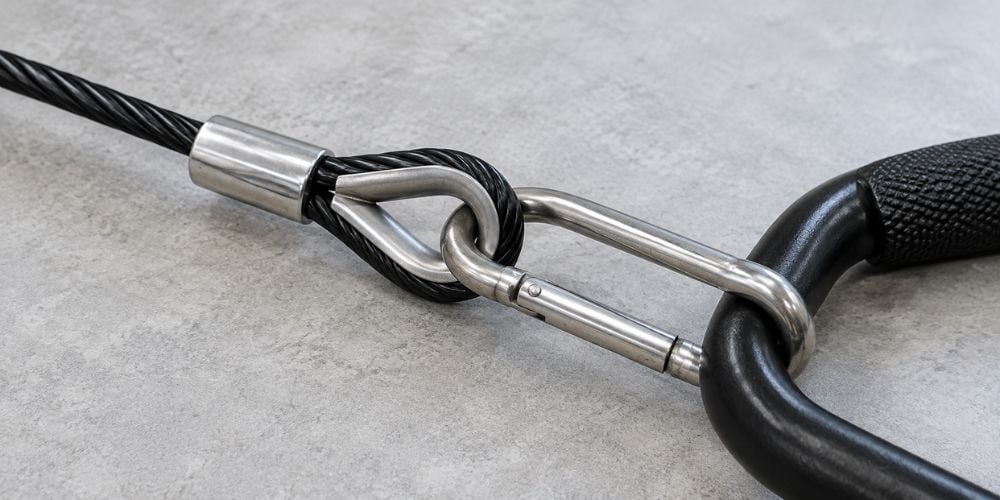
Inspect both ends and every point where the cable connects to another part.
Check:
- Cable loops
- Eyelets
- Ball stops
- Clips
- Bolts
- Swaged cable ends
- Attachment points
Everything should look secure and properly positioned.
Watch for bending, cracking, separation, looseness, or parts pulling away from the cable.
I would be cautious even when the cable itself looks perfect but the end fitting appears loose. A strong cable still depends on a secure connection.
Not sure whether a small crack matters? When it appears around a cable end or connection, it is better to stop and have someone qualified inspect it rather than continue adding weight.
6. Test the Cable Movement
Once the visual check looks good, test how the cable moves.
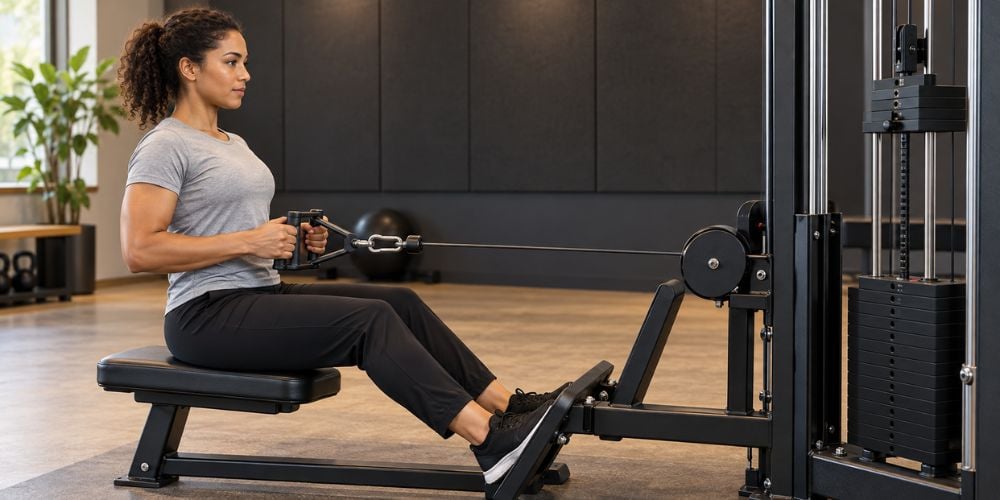
Choose a light resistance and slowly perform the machine’s normal movement. Do not start with a heavy working set.
A healthy cable system should generally:
- Move smoothly
- Stay inside the pulley grooves
- Maintain steady tension
- Return smoothly
- Avoid sudden catching
- Avoid unusual scraping or clicking
Pay attention to what you see, hear, and feel.
Does the cable suddenly jerk? Does the weight stack hesitate and then jump?
If the cable sticks, becomes loose, jerks, or produces unusual metal-on-metal sounds, stop the test. Adding more weight is not a good way to see whether the problem disappears.
Sometimes the cable itself is not the problem. A damaged pulley, bearing, attachment, or alignment issue can also make cable movement feel rough.
Conclusion
Checking gym machine cables is simple: look over the full cable, inspect the coating, check the pulleys and cable ends, and test for smooth movement. Stop using the machine if you find broken strands, serious coating damage, loose ends, or poor pulley tracking.
At YR Fitness, we build commercial gym equipment for repeated daily training with attention to cables, pulleys, frames, and movement systems.
If you are comparing durable strength machines, browse our equipment range and see which designs make sense for the way you train.
Related articles: