






Want more personal training clients through word of mouth? A simple referral program can help happy clients bring new people to you.
The quick answer is: offer a clear reward, make referrals easy, and ask at the right time. Keep the whole process simple.
As an Exercise Physiology & Biomechanics Expert at YR Fitness, I study how training quality and client experience affect trust and retention. I often see that clients are more willing to recommend a trainer when they feel supported, see real progress, and know exactly how the referral works.
Below, I’ll show you the simple steps to build your referral program. Use them to make referrals easier for both you and your clients.
1. Decide What Counts as a Referral
First, define exactly when a referral becomes valid.
Does someone only need to send you a friend’s name? Or does the new person need to book a consultation, attend a session, or buy a training package?
Keep the rule simple.
For example:
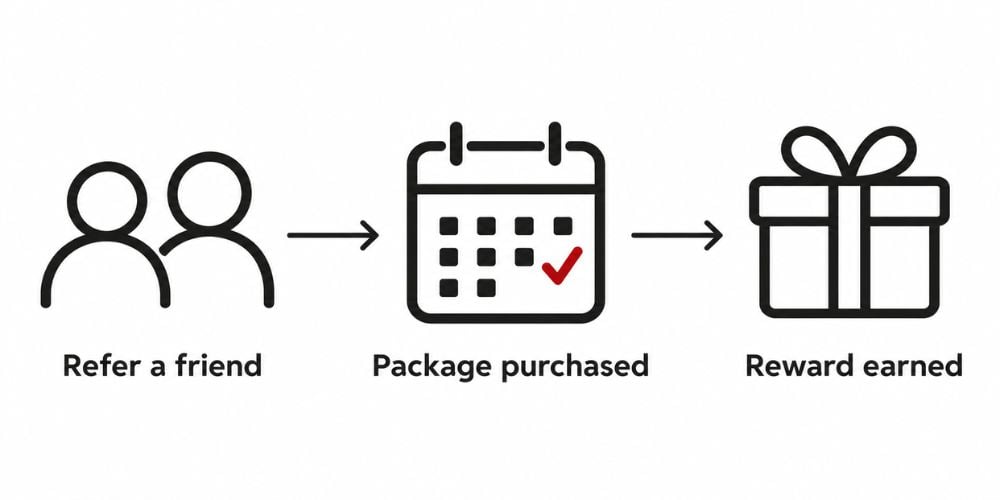
- A client refers to a friend.
- The friend books a first session.
- The referral becomes valid.
- The existing client receives the reward.
A clear offer could be:
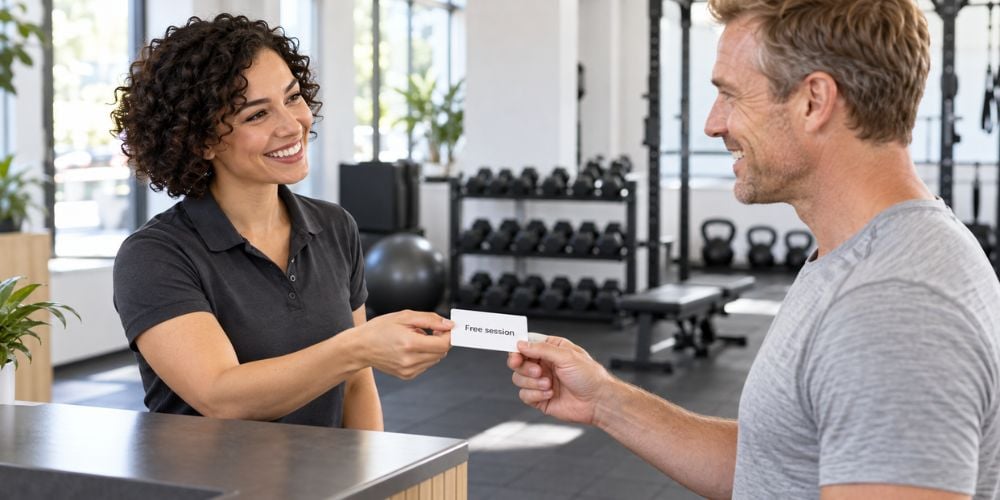
“Refer a friend who purchases their first training package, and you receive one free session.”
Why does this matter? Clear rules prevent awkward conversations about whether someone actually qualified.
2. Choose a Referral Reward
Now decide what your existing client receives.
You do not need an expensive reward. It simply needs to feel useful.
Reward | Why It Can Work | Best Fit |
Free training session | Gives the client more coaching time | Regular training clients |
Package discount | Reduces their next training cost | Clients buying packages |
Free fitness assessment | Adds useful feedback | Progress-focused clients |
Workout review | Gives extra coaching value | Clients wanting guidance |
Small fitness gift | Simple physical reward | Occasional referrals |
Not sure what to choose?
Start with what your clients already value. ISSA’s personal training referral guidance discusses incentives such as discounts and other rewards as ways to encourage referrals.
I would still keep the choices limited. Too many rewards make the program harder to explain and remember.

3. Give the New Client a Benefit Too
Do not reward only the person making the referral.
Give the new client a reason to try your service as well.
You could offer:
- A free consultation
- A discounted first session
- A free movement assessment
- A trial workout
- A small discount on their first package
For example:
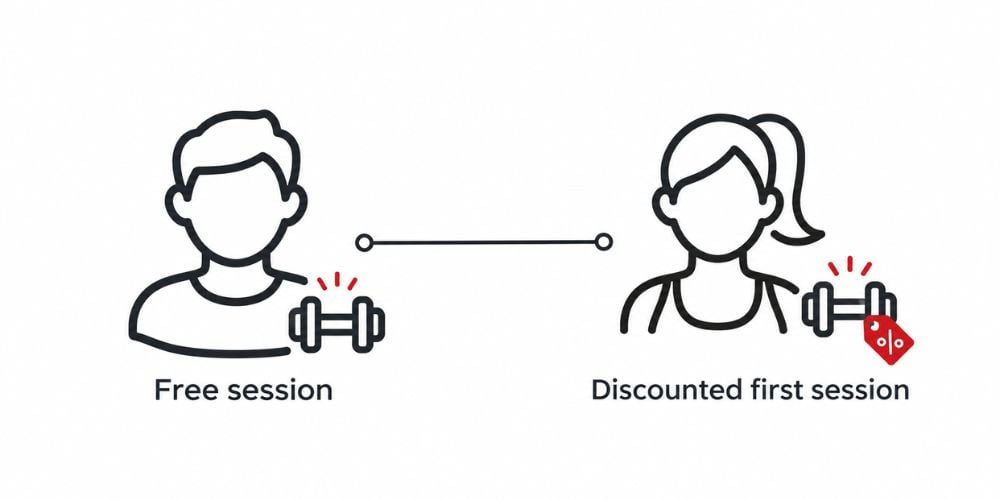
Existing client: gets one free session.
New client: gets a discounted first training session.
Now both people receive something useful.
Here is why this matters: your client is not simply telling a friend to buy training. They are giving that person an easier way to try it.
A referral may bring someone through the door, but the training experience still has to deliver. At YR Fitness, we build commercial strength, cardio, and functional equipment designed for regular daily training, so trainers can create smoother and more consistent sessions. Explore our equipment if you are improving the setup behind your client experience.
4. Make the Referral Process Simple
The more steps you add, the fewer people are likely to use it.
Your process could be this simple:
- The client shares your booking link.
- Their friend books a session.
- You ask who referred them.
- You record the referral.
- You apply the reward.
That’s enough.
You can also use a referral link, QR code, WhatsApp message, text message, social media message, or simple referral card.
One question handles most of the tracking:
“Who referred you?”
Write the answer down immediately.
5. Ask for Referrals at the Right Time
Should you ask after every workout?
Probably not.
Ask when a client already feels positive about their progress. ACE’s guidance on attracting new personal training clients specifically recommends asking current clients for referrals and building referral reciprocity.
Here are a few natural moments:
Client Moment | Referral Opportunity |
Reaches a training goal | Congratulate them, then mention the program |
Notices visible progress | Let them enjoy the win before asking |
Improves strength | Connect the referral to similar goals |
Gives positive feedback | Naturally mention they can recommend you |
Completes a training block | Review progress, then introduce the offer |
Says they enjoyed the session | Keep the request casual and short |
For example, a client says:
“My squat feels much better now.”
You could respond:
“I’m glad it’s improving. If you know someone dealing with something similar, you’re welcome to send them my way. I have a referral offer for current clients.”
No hard sell needed.
I often see referral requests work better after a clear win. The client already feels good about your coaching, so recommending you feels more natural.

6. Give Clients Something Easy to Share
Some clients want to recommend you but do not know what to say.
Give them a ready-to-send message.
For example:
“I’ve been training with my trainer and thought you might like it too. They’re offering a discounted first session for referrals. Here’s the booking link.”
Your message can include:
- What you offer
- Who it suits
- The referral benefit
- Your booking link
- Your phone number or social profile
Keep it short. Nobody wants to forward a five-paragraph advertisement.
One more thing: if a client publicly promotes your service because they received something of value, be transparent about the incentive. The FTC’s Endorsement Guides explain that material connections that could affect how people view an endorsement should be disclosed clearly.
For a simple private introduction between friends, keep the process natural. For promotional social posts, make the reward relationship clear when applicable.

7. Deliver a Good Training Experience
This is the part that matters most.
No referral reward can fix a poor training experience.
People are more comfortable recommending trainers when they feel:
- Listened to
- Comfortable
- Supported
- Properly coached
- More confident
- Like they are making progress
So get the basics right.
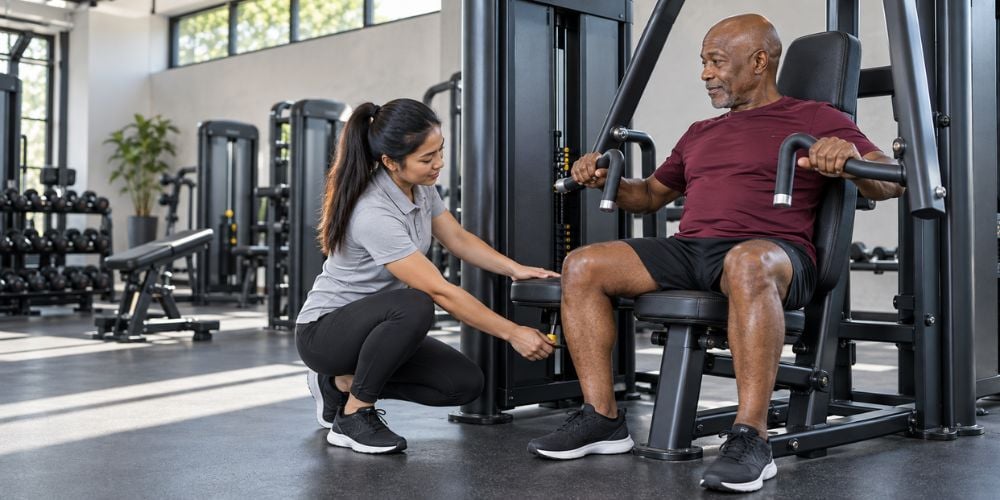
Be ready before the session starts. Know the client’s goal, explain exercises clearly, adjust equipment properly, keep the workout moving, and track progress.
In my experience, the reward is only the extra push. The real reason someone recommends you is that they trust you to give their friend a good experience too.
Conclusion
A personal training referral program does not need to be complicated. Define the referral, choose a useful reward, give the new client a benefit, make sharing easy, and ask when the timing feels right.
Good coaching still comes first. A referral program simply makes it easier for satisfied clients to introduce other people to the service they already enjoy.
If you want the training environment to support that experience too, explore YR Fitness commercial strength, cardio, and functional training equipment and see what fits the way you train your clients.
Related articles: