




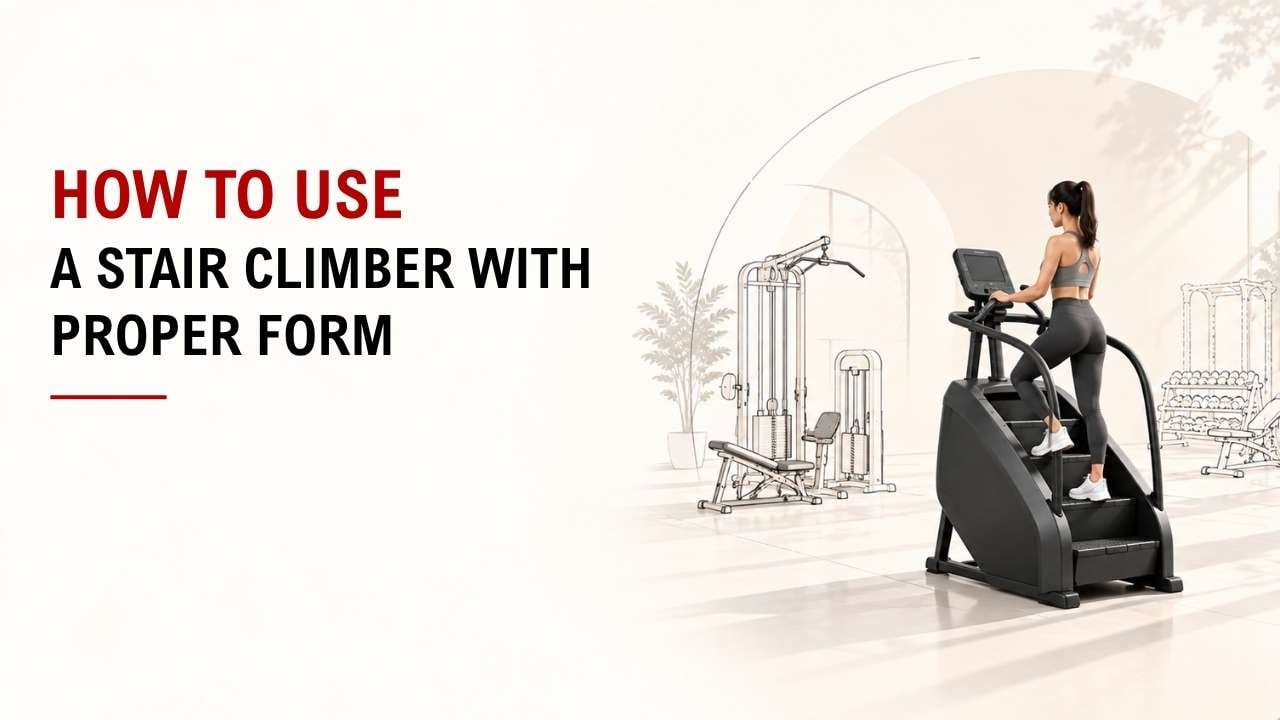

Using a stair climber, but not sure if your form is right? A few small changes can make each step feel smoother and more controlled.
The short answer is simple: stand tall, use most of your feet, keep your knees controlled, and use the handrails mainly for balance. Start slowly and increase the speed only when your form stays steady.
As an Exercise Physiology & Biomechanics Expert at YR Fitness, I study how body position affects movement on cardio equipment. I regularly see better results when people focus on posture, balance, and controlled steps instead of chasing speed.
Below, I’ll show you seven simple steps to use a stair climber with proper form. Follow them in order and keep the movement clean.
Stair Climber Form at a Glance
Before getting into each step, here is the basic position you want.
Body Area | What to Do | What to Avoid |
Head | Look forward | Looking down constantly |
Shoulders | Keep them relaxed | Hunching forward |
Torso | Stay tall and stable | Leaning heavily over the console |
Hands | Use a light grip | Hanging on the rails |
Knees | Keep them following your toes | Repeated inward collapse |
Feet | Place most of the foot on the step | Staying only on your toes |
Core | Gently brace | Excessive twisting or rocking |
Why focus on posture? Your body constantly adjusts its position while moving, something Cleveland Clinic describes as dynamic posture.
1. Step Onto the Machine Safely
Hold the handrails and step onto the machine carefully. Place both feet securely on the steps before you begin.
Start at a low speed and take a few slow steps.
- Keep your feet centered.
- Hold the rails lightly.
- Find your balance first.
- Increase the level only when you feel stable.
I like to treat the first minute as a setup period. There is no reason to start hard immediately.
2. Stand Tall
Keep your upper body upright while you climb.
Focus on:
- Looking forward
- Keeping your chest lifted
- Relaxing your shoulders
- Keeping your back in a natural position
Avoid bending heavily forward at your waist.
A simple cue I often use is:
Head over shoulders. Shoulders over hips.
You do not need to stay stiff. Stay relaxed while keeping your torso controlled.
3. Place Your Whole Foot on the Step
Try to place most of your foot on each step instead of staying on your toes.
Let your midfoot and heel make solid contact when the size of the step allows it. This gives you a more stable base and helps you control each step.
Staying on your toes the entire time can also make your calves tire faster.
Keep your feet generally facing forward. Do not rush from one step to the next.
Want to see why stair climbing feels demanding so quickly? This Cleveland Clinic guide to stair-climbing workouts explains how stair climbing combines cardiovascular work with repeated lower-body effort.
4. Keep Your Knees in Line
Your knees should generally move in the same direction as your toes.
Try not to let them repeatedly collapse inward as you step. Push yourself upward through the working leg while keeping the knee controlled.
I often tell fitness lovers not to worry about every tiny movement. The main thing is to avoid obvious inward collapsing or twisting.
Losing control?
Reduce your speed first.
At YR Fitness, we pay close attention to movement paths, stable stepping positions, and how users interact with cardio equipment. If you want to compare different commercial cardio and training designs, you can explore our fitness equipment here.
5. Use the Handrails for Balance, Not Support
The handrails are there to help with balance. They should not carry most of your body weight.
Keep your hands lightly on the rails when needed. Avoid locking your elbows and hanging your upper body forward.
Why does this matter?
When you lean heavily on the rails, your legs do less of the work. It can also pull you into a more hunched position.
As your balance improves, try using an even lighter grip.
The goal is not to prove you can climb without touching the rails. Use them when needed, but let your legs handle climbing.
6. Keep Your Core Engaged
You do not need to squeeze your stomach as hard as possible.
Gently brace your core so your upper body stays stable while your legs move.
Try to avoid:
- Excessive twisting
- Rocking from side to side
- Arching your lower back
- Collapsing forward
I usually describe it this way: keep your torso quiet and let your legs do the work.
A stable core also makes it easier to maintain your posture when the speed increases.
7. Use a Comfortable Step Speed
Do not choose your speed based on what someone beside you is doing.
Choose a level where you can keep good form from start to finish. Beginners should usually begin with slow, controlled stepping and increase the level gradually.
Fitness Level | Starting Approach | Main Focus |
Beginner | Slow pace for 5–10 minutes | Balance and form |
Intermediate | Moderate pace for 10–20 minutes | Steady controlled climbing |
Advanced | Faster pace or controlled intervals | Intensity without losing form |
Not sure if the pace is right?
Ask yourself:
Can I keep this same form for another few minutes?
If not, your speed may be too high.
You can also use your breathing as a guide. According to the Mayo Clinic’s exercise-intensity guide, moderate exercise normally makes you breathe faster while still allowing you to talk, whereas vigorous exercise makes speaking more difficult.
The CDC also recommends building activity around your own fitness level and abilities rather than copying someone else’s pace.
Quick Proper Form Checklist
Before increasing the intensity, check yourself:
- Am I standing upright?
- Am I looking forward to it?
- Are my shoulders relaxed?
- Is most of my foot landing on the step?
- Are my knees following my toes?
- Am I using the rails lightly?
- Is my core stable?
- Can I control this speed?
Good stair climber training does not need to look extreme.
Smooth, repeatable steps usually matter more than chasing the highest level on the machine.
Conclusion
Using a stair climber with proper form comes down to a few basics: stand tall, use most of your foot, control your knees, keep your core stable, and avoid leaning heavily on the rails.
Start slowly and increase your pace only when you can maintain the same clean movement.
If you also want to explore equipment designed for consistent daily training, you can view more equipment from YR Fitness and compare the options that fit your training needs.
Related articles: