








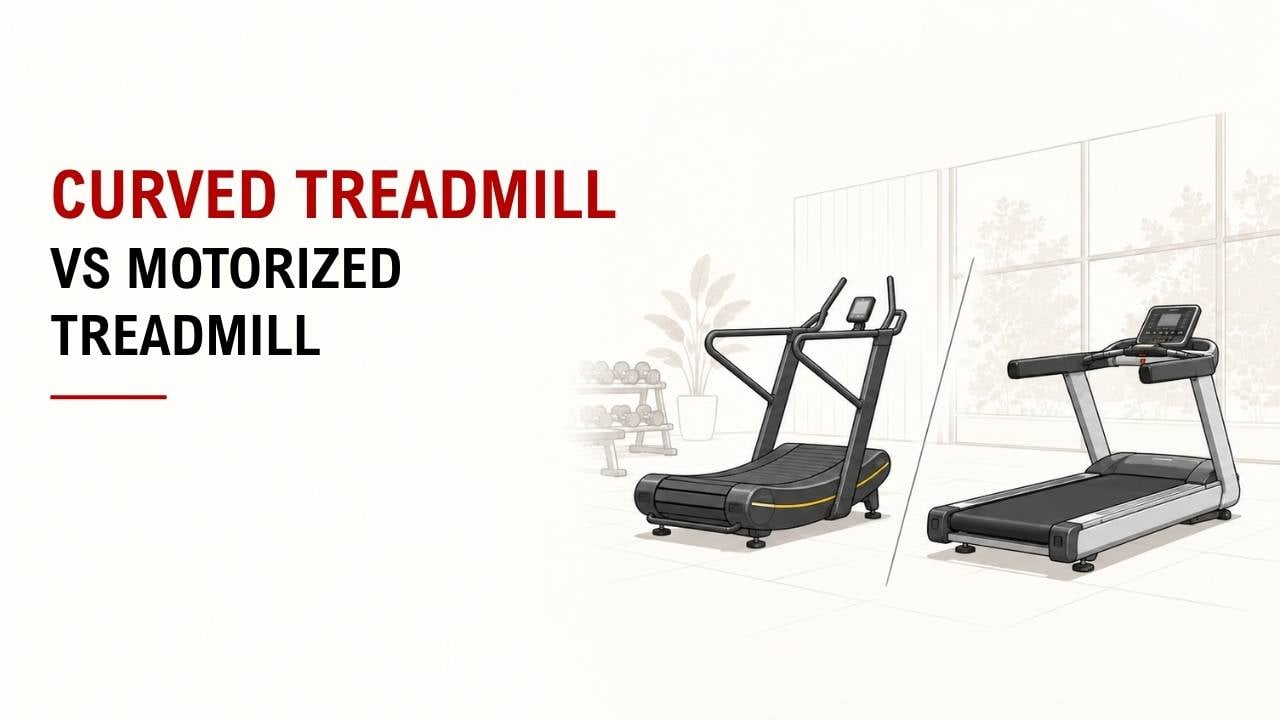

Not sure whether a curved treadmill or motorized treadmill is better for you? The difference comes down to how you train.
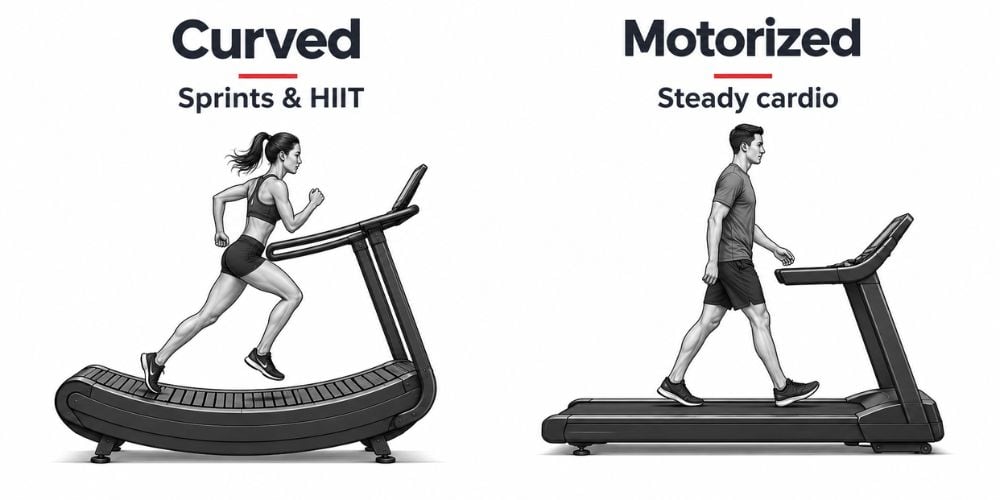
Choose a curved treadmill for sprints, HIIT, and hard conditioning. Choose a motorized treadmill for walking, jogging, incline work, and longer cardio.
As an Exercise Physiology & Biomechanics Expert at YR Fitness, I work closely with running mechanics, resistance, and cardio equipment. That experience helps me compare how each treadmill actually feels and performs during training.
Below, I’ll compare effort, speed control, workout style, and maintenance. By the end, you should know which treadmill fits you better.
1. How Does Each Treadmill Work?
The biggest difference is what moves the belt.
Curved Treadmill
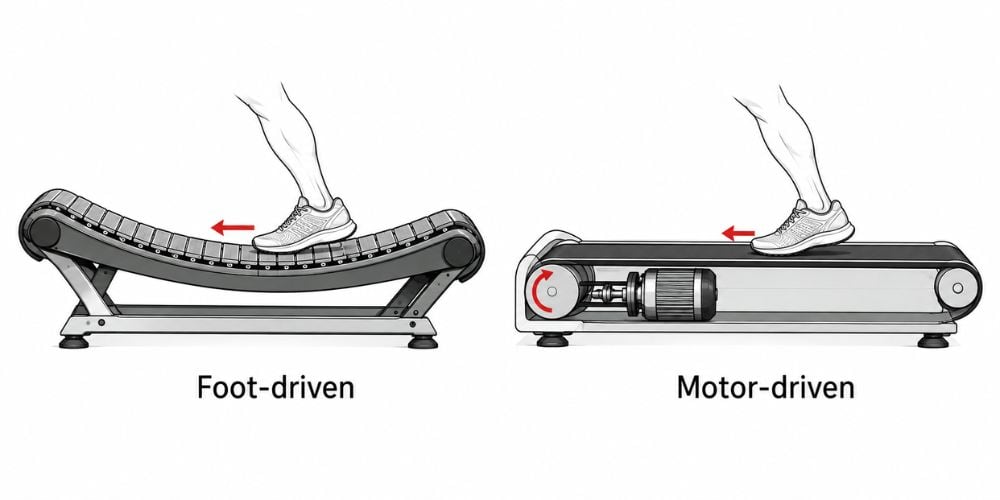
A curved treadmill is usually self-powered. Your feet push the belt backward as you walk or run.
Run farther forward on the curve and the belt tends to move faster. Slow your stride or move slightly back, and it slows down.
You do not need to press speed buttons.
Motorized Treadmill
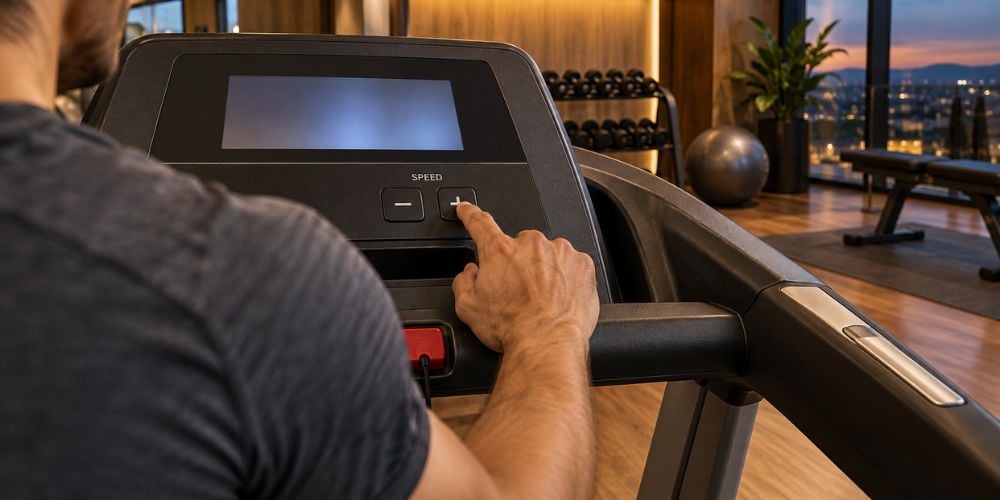
A motorized treadmill uses an electric motor to move the belt. You choose a speed from the console, and the machine keeps that pace for you.
You can usually adjust:
- Speed
- Incline
- Workout time
- Training programs
Feature | Curved Treadmill | Motorized Treadmill |
Belt power | Your body | Electric motor |
Speed control | Your movement | Buttons or console |
Electricity | Usually not needed | Required |
Pace | Self-selected | Precisely controlled |
Best use | Sprints and conditioning | Walking and steady cardio |
Quick difference? A curved treadmill responds to your body, while a motorized treadmill controls the belt speed.
2. Which One Feels Harder?
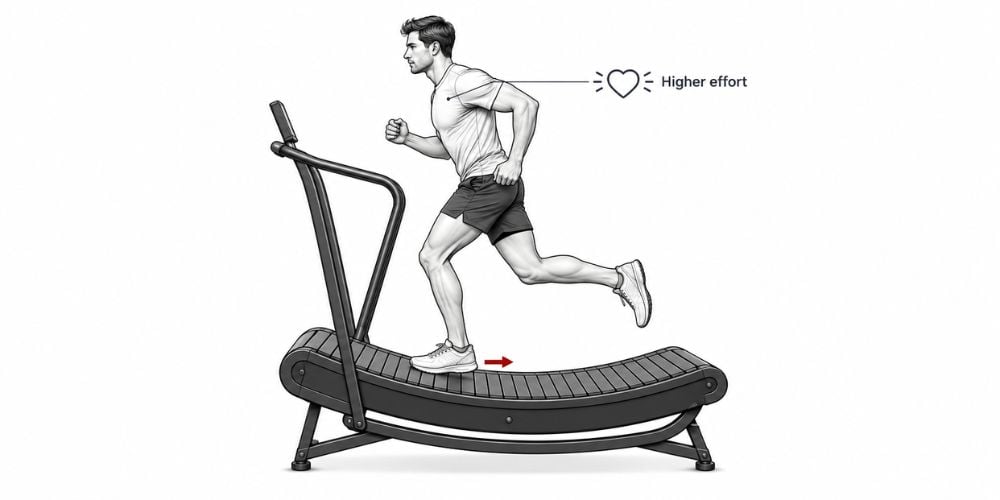
For most people, the curved treadmill feels harder.
You have to create the force needed to keep the belt moving. There is no drive motor doing that work for you.
This is not just a feeling. Research comparing curved non-motorized and motorized treadmill running found higher cardiovascular and metabolic demands on the curved treadmill when runners were compared at set speeds.
Another study found that the energy cost of walking and running was higher on a curved non-motorized treadmill in the conditions tested. That helps explain why a pace that looks manageable can feel surprisingly tough.
I notice this difference most during faster running. Even a short curved treadmill session can feel demanding if you normally train on a motorized treadmill.
Choose Curved If You Want:
- Higher-effort conditioning
- Self-paced running
- Short, hard workouts
Choose Motorized If You Want:
- More controlled effort
- Exact speed settings
- Easier pacing
3. Which Is Better for Sprinting and HIIT?
For sprinting and HIIT, I would usually choose the curved treadmill.
You can accelerate simply by running harder. When your interval ends, you slow your body down and the belt responds.
That works well for:
- 10-second sprints
- 20–30 second hard intervals
- Sprint-and-rest circuits
- Athletic conditioning
- Short high-intensity sessions
Why does that matter? You do not have to keep reaching for speed controls between short intervals.
Research into self-paced running on curved non-motorized treadmills also shows that this style of running can create a high physiological and perceived workload. That makes the machine well suited to demanding conditioning sessions when used at an appropriate intensity.
A motorized treadmill can still handle HIIT. It may actually suit you better if your workout requires very specific speed settings.
Best for natural sprint changes: curved treadmill.
Best for controlled speed intervals: motorized treadmill.
If you are comparing cardio equipment and want to see how different machine designs fit different training styles, take a look at the commercial cardio options from YR Fitness. We focus on practical equipment designed for regular training use, so you can compare features based on how you actually plan to exercise rather than choosing from specifications alone.
4. Which Is Better for Walking and Longer Cardio?
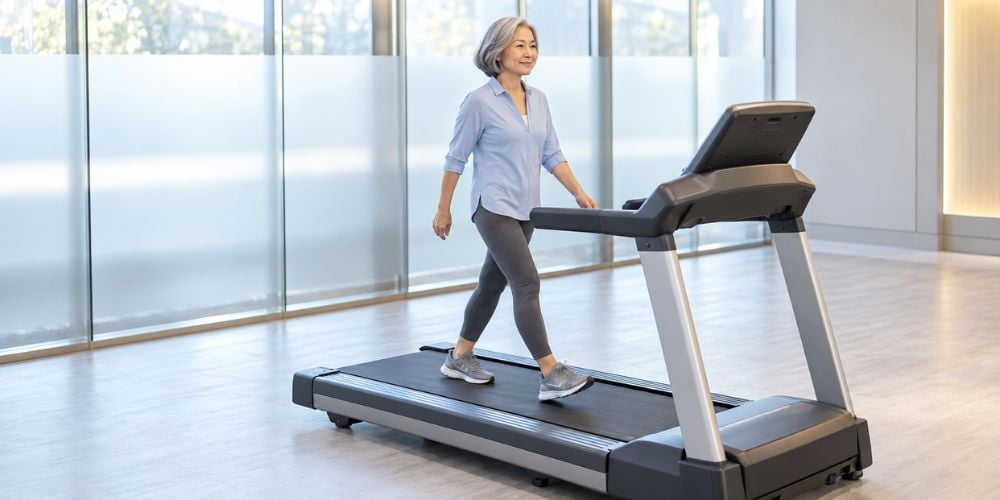
For most people, the motorized treadmill is the better choice.
You can set a comfortable speed and keep walking or jogging without constantly driving the belt yourself.
It works especially well for:
- 30–60 minute walks
- Easy jogging
- Incline walking
- Steady-state cardio
- Beginner treadmill workouts
Many motorized treadmills also let you adjust the incline while keeping the same speed. That gives you an easy way to increase difficulty without running faster.
This also makes motorized treadmills practical if you are trying to build regular cardio into your week. The CDC recommends adults aim for at least 150 minutes of moderate-intensity activity or 75 minutes of vigorous-intensity activity per week, depending on the mix of exercise.
A curved treadmill can still be used for walking and longer sessions. However, it may feel more demanding because you are always moving the belt yourself.
In my experience, people who mainly want simple daily cardio usually find the motorized treadmill easier to use.
Walking: motorized treadmill.
Longer jogging: motorized treadmill.
Short, hard running: curved treadmill.
5. Maintenance and Power Differences
The two treadmills also differ mechanically.
Curved Treadmill
A curved treadmill usually has no drive motor. That means fewer electrical components are needed to move the belt.
You may still need to check:
- Belt condition
- Belt alignment
- Bearings
- Rollers
- Frame hardware
- Moving components
Because it is self-powered, it usually does not need to sit near an electrical outlet.
Motorized Treadmill
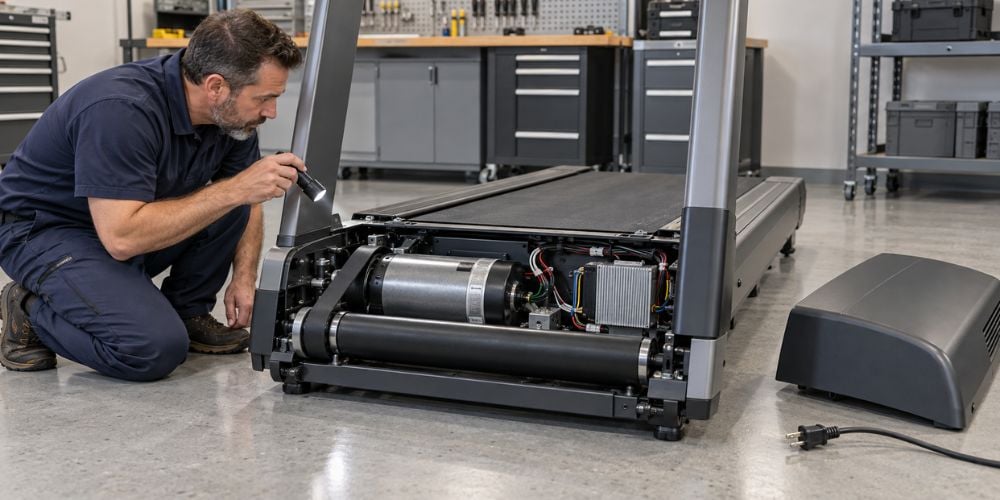
A motorized treadmill has more electrical and mechanical parts.
These may include:
- Drive motor
- Motor controller
- Console
- Wiring
- Incline motor
- Sensors
- Running belt and rollers
More parts can mean more maintenance points over time.
On the other hand, that extra complexity gives you features curved treadmills often do not provide, such as automatic incline and precise speed control.
Area | Curved Treadmill | Motorized Treadmill |
Drive motor | No | Yes |
Power required | Usually no | Yes |
Electronics | Fewer | More |
Speed adjustment | Self-powered | Electronic |
Incline control | Usually limited | Often adjustable |
6. Curved or Motorized Treadmill: Which Should You Choose?
Your decision should come down to how you actually train.
Choose a Curved Treadmill If You:
- Like sprinting
- Do HIIT regularly
- Want hard conditioning
- Prefer natural speed changes
- Want a self-powered treadmill
- Do short, intense workouts
Choose a Motorized Treadmill If You:
- Walk regularly
- Jog for longer periods
- Want exact speed control
- Like incline walking
- Are new to treadmill training
- Prefer steady cardio
Still unsure?
Ask yourself one simple question:
Do I want the treadmill to control the pace, or do I want my body to control it?
If you want your body to control the pace, choose curved.
If you want the machine to hold your pace, choose motorized.
Conclusion
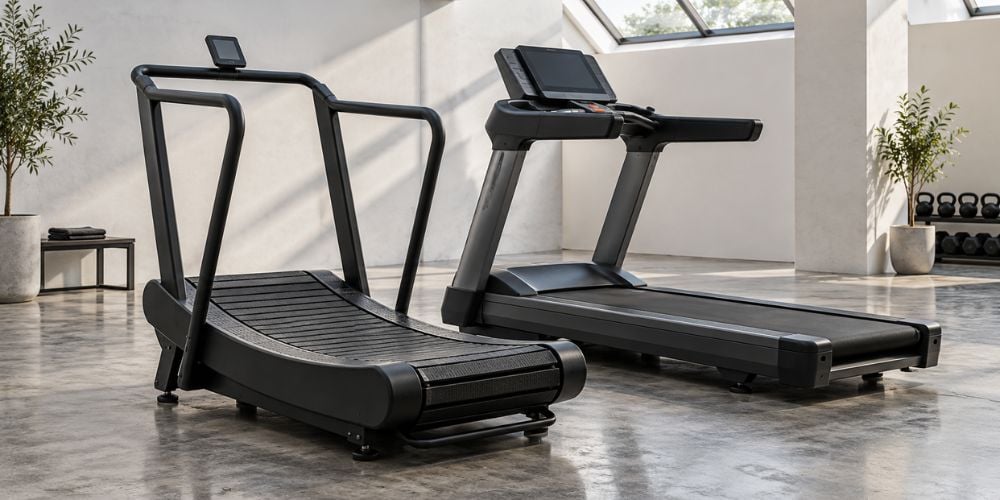
A curved treadmill is better for sprinting, HIIT, and demanding self-powered workouts. A motorized treadmill is better for walking, jogging, incline training, and longer steady cardio.
Neither option is better for everyone. Pick the one that matches the workouts you actually enjoy doing.
If you are ready to compare cardio equipment, YR Fitness has been developing commercial fitness equipment built for frequent use. Explore the available cardio options to choose a setup that fits the way you want to train.
Related articles:



