






Is your spin bike flywheel suddenly squeaking, clicking, scraping, or grinding? That noise usually means a moving part needs checking.
The quick answer is: check the bolts, belt or chain, bearings, flywheel alignment, and resistance pad. The type of sound can often point you to the problem.
As a Machinery & Structural Engineer at YR Fitness, I work closely with equipment structure, drivetrains, and moving parts. I often see unusual noises appear before a small mechanical issue becomes a bigger repair.
Below, I’ll show you the six most common causes and what to check. Start with the simple ones first.
1. The Flywheel or Crank Bolts Are Loose
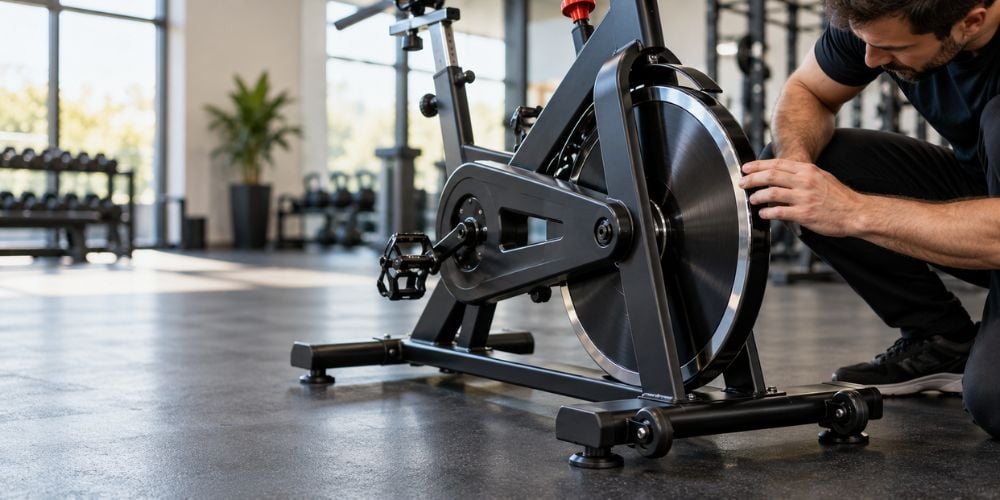
Hearing a repeated click or knock? Start by checking for loose parts.
Look around the:
- Flywheel
- Crank arms
- Pedals
- Flywheel axle
- Nearby frame connections
Loose components can move slightly every time you pedal. That small movement can create repeated clicking or knocking.
This is not just a general possibility. Stages Cycling notes in its flywheel hub-noise service guidance that incorrectly adjusted flywheel lock nuts can cause a rhythmic clicking noise.
What should you do?
Stop riding and check the visible fasteners. Tighten them according to the bike manufacturer’s instructions instead of simply forcing every bolt tighter.
I usually check the pedals and crank area first. Noise from these parts can easily sound like it is coming directly from the flywheel.
2. The Drive Belt Is Loose or Worn
Does your bike use a belt drive?
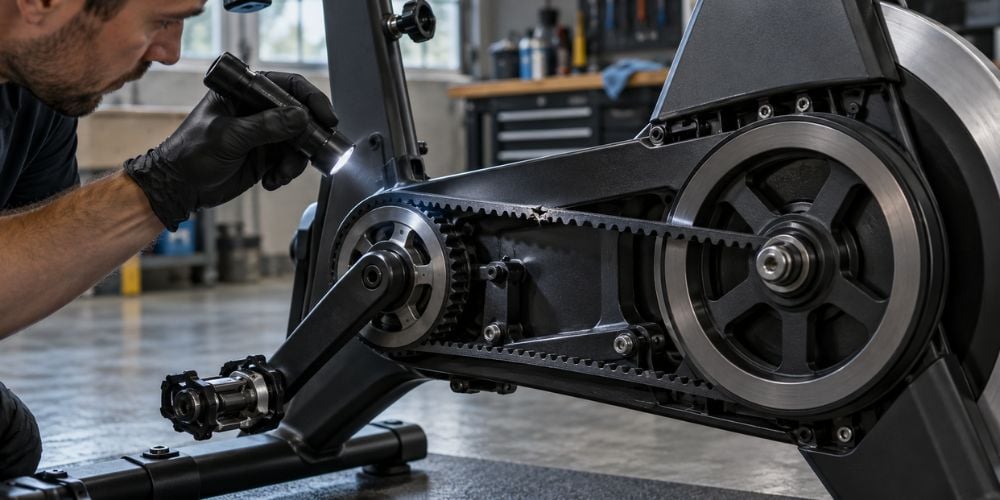
A loose or worn belt may cause:
- Squeaking
- Chirping
- Rubbing
- Slipping sounds
The belt can stretch for long-term use. Its surface may also become cracked, glazed, or damaged.
Turn the pedals slowly and listen near the belt. If the sound follows the belt movement, inspect it for visible wear.
Also check whether the belt runs straight across the pulleys. Poor alignment can cause one edge to rub continuously.
Belt systems are generally chosen partly for quieter operation. For example, Stages says its carbon-drive belts are significantly quieter than traditional chains on its SC Series indoor bikes.
So if a normally quiet belt suddenly becomes loud, it is worth checking.
3. The Chain Needs Lubrication or Adjustment
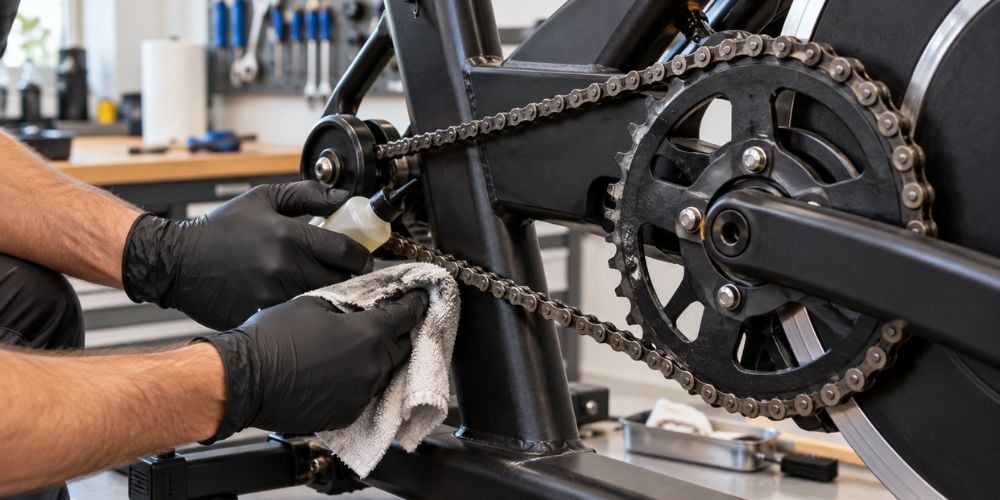
Chain-driven spin bikes are normally louder than belt-driven bikes. But excessive rattling, clicking, or grinding is different.
Your chain may be:
- Too loose
- Too tight
- Dry
- Dirty
- Poorly aligned
A dry chain can create a rough metallic sound as it moves across the sprockets. A loose chain may slap or rattle while you pedal.
Can you just add lubricant?
Sometimes, yes. Check your bike’s maintenance instructions first because lubricant type and application can vary by model.
I prefer cleaning visible dirt from the chain before applying fresh lubricant. Adding oil over heavy dirt can create sticky buildup that attracts even more debris.
Quick First Checks
What to Check | What You May Notice | First Step |
Loose bolts | Clicking or knocking | Check visible fasteners |
Drive belt | Squeaking or slipping | Inspect wear and alignment |
Chain | Rattling or metallic noise | Check tension and lubrication |
Bearings | Grinding or humming | Turn flywheel slowly |
Flywheel alignment | Repeated scraping | Watch for side-to-side movement |
Resistance pad | Squeaking or rubbing | Change resistance and listen |
If your current bike keeps developing drivetrain or flywheel problems, repeated repairs can become frustrating. At YR Fitness, we build commercial cardio equipment for regular daily use, so you can compare more durable equipment designs before deciding whether another repair is worth it.
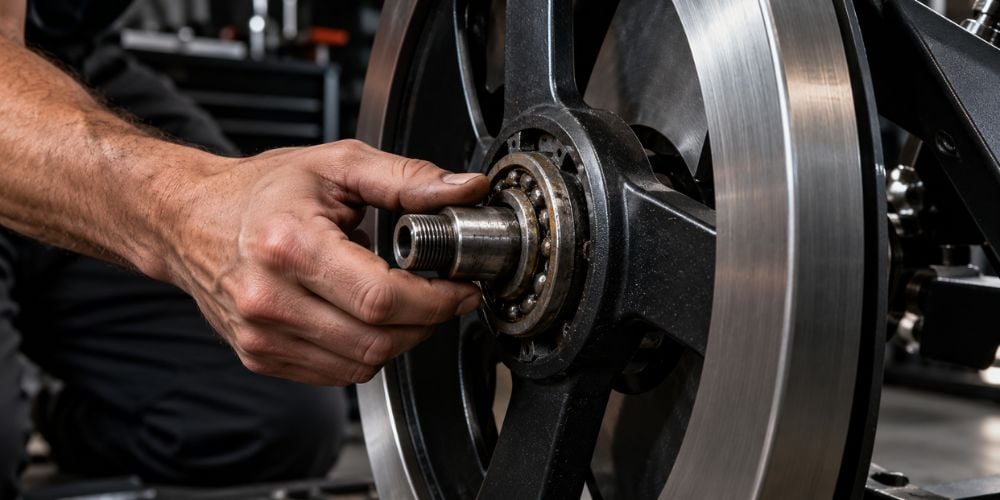
4. The Flywheel Bearings Are Wearing Out
Grinding or rough humming deserves more attention.
The flywheel rotates on bearings that help it spin smoothly. As those bearings wear, the movement can become rougher and noisier.
Common warning signs include:
- Grinding while pedaling
- Humming that gets louder with speed
- Rough flywheel rotation
- Side-to-side movement
- Vibration near the flywheel axle
Try rotating the flywheel slowly when the bike is not being used. It should feel smooth.
If it feels rough or produces a deep grinding sound, the bearings may need inspection or replacement.
This is one issue I would not ignore. Riding on badly worn bearings can place extra stress on nearby parts.
5. The Flywheel Is Misaligned
Does the scraping happen at the same point during every rotation?
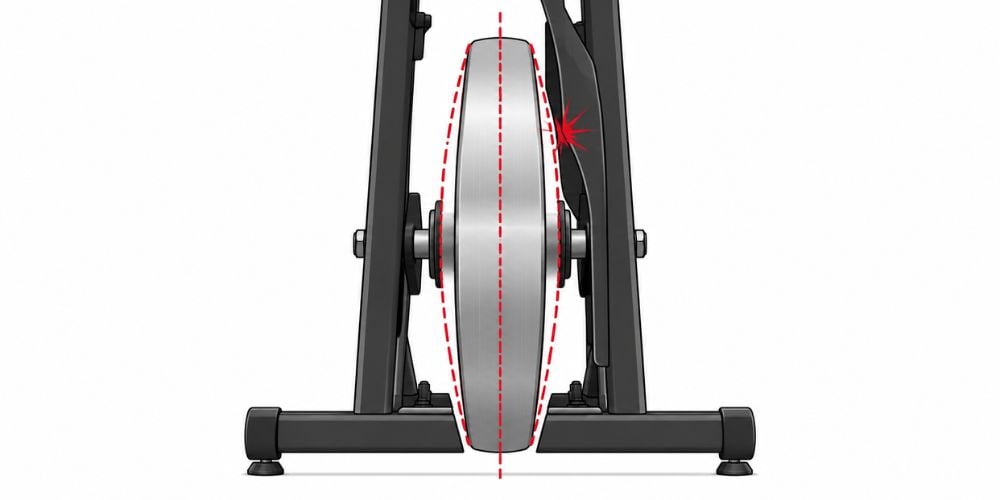
The flywheel may not be running straight.
Possible causes include:
- Loose axle hardware
- Incorrect assembly
- Bearing wear
- Frame or mounting movement
- Previous repairs
Watch the flywheel from the front while turning the pedals slowly. It should rotate evenly without obvious side-to-side movement.
A misaligned flywheel can also rub against a guard, resistance component, or nearby frame part.
On some bikes, scraping may come from the resistance system rather than the flywheel itself. Stages lists brake magnets rubbing against the flywheel as one possible source of metal scraping in its indoor bike troubleshooting guide.
Avoid trying to bend anything back into position yourself. If the cause is not obvious, have the bike inspected.
6. The Resistance Pad Is Rubbing Incorrectly
Some spin bikes use a friction resistance pad that physically touches the flywheel. Some contact noise is normal.
The problem starts when the pad becomes:
- Dry
- Dirty
- Worn
- Uneven
- Misaligned
You may hear squeaking, scraping, or uneven rubbing.
Does the sound change when you adjust resistance?
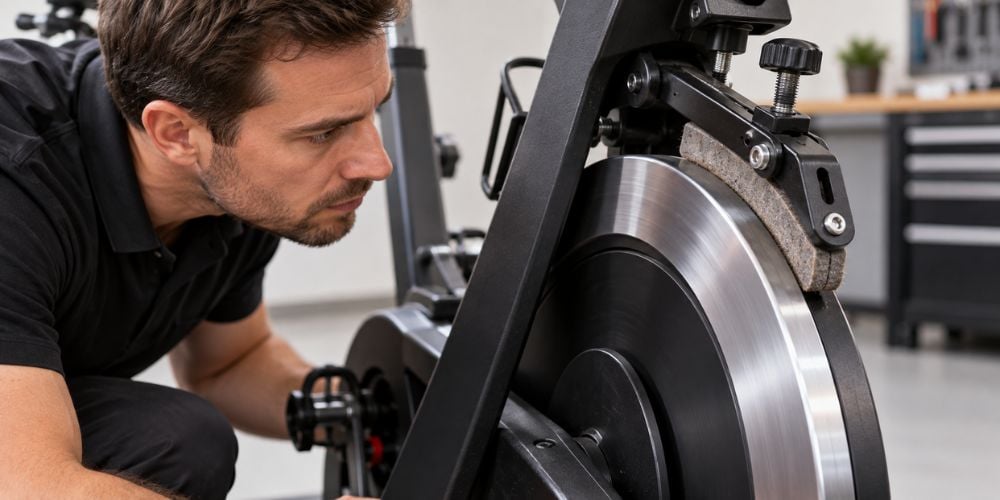
Increase and decrease the resistance while pedaling slowly. If the noise changes with the resistance setting, the pad is a likely source.
Check whether the pad contacts the flywheel evenly. If it is badly worn or damaged, replacement may be better than repeatedly adjusting it.
Do not randomly spray lubricant onto the flywheel. Some friction systems require specific maintenance, and the wrong product can affect resistance performance.
When Should You Stop Riding?
Stop using the bike if you hear strong grinding, heavy knocking, or metal-on-metal scraping.
You should also stop if the flywheel:
- Wobbles noticeably
- Suddenly becomes difficult to rotate
- Produces strong vibration
- Feels rough while turning
At that point, continuing to ride may make the problem worse.
Conclusion
A noisy spin bike flywheel usually comes down to loose bolts, belt wear, chain problems, worn bearings, flywheel misalignment, or resistance-pad contact. Start with the simple checks and pay attention to exactly when the sound appears.
Catching a new noise early is one of the easiest ways to prevent a small maintenance problem from becoming a bigger repair.
If your bike keeps developing mechanical issues, compare its drivetrain, flywheel construction, frame stability, and maintenance needs before replacing it. You can explore YR Fitness equipment when you want to compare equipment built for reliable, repeated daily use.
Related articles: