




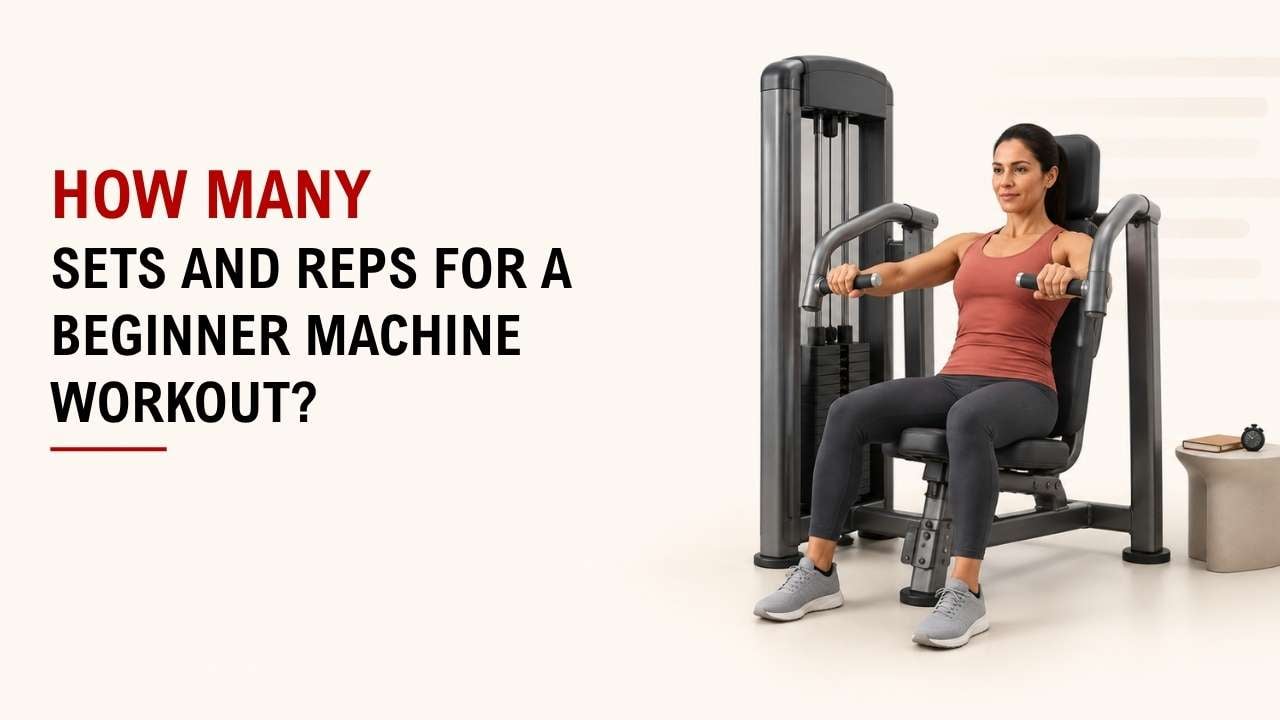

Not sure how many sets and reps you should do on gym machines? You do not need a complicated training plan to get started.
The quick answer is 2–3 sets of 8–12 reps per exercise. That gives most beginners enough work without adding unnecessary volume.
As an Exercise Physiology & Biomechanics Expert at YR Fitness, I study how training volume, resistance, and movement affect the body. I often see beginners progress better when they focus on good reps instead of simply doing more.
Below, I’ll show you how many sets and reps to use, how long to rest, and when to increase the weight. Keep scrolling, and you can build a simple machine workout in minutes.
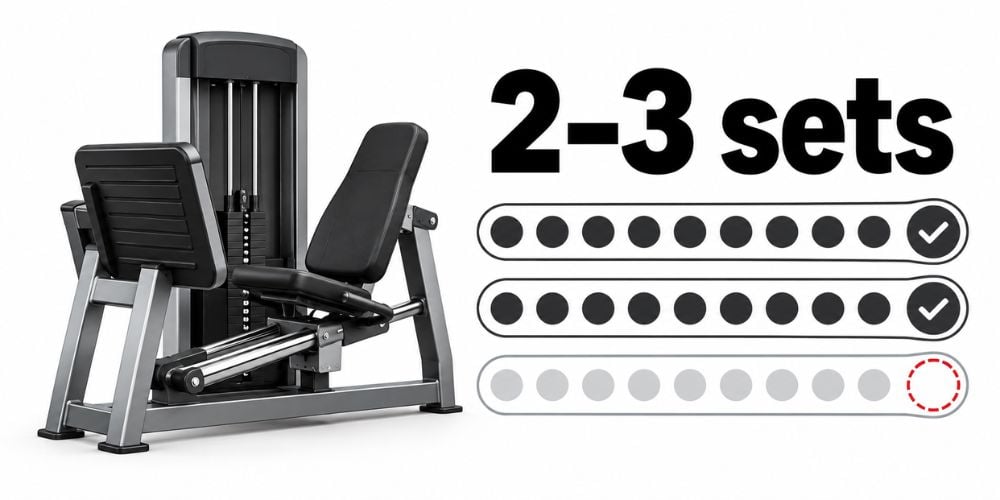
1. Start With 2–3 Sets Per Machine
If you are completely new to strength training, start with 2 sets per exercise. Once the movement feels comfortable, move up to 3 sets.
That is already enough for a useful beginner workout. The CDC’s strength-training guidance recommends at least one set and notes that two or three sets can provide additional benefits.
Experience | Sets Per Exercise |
Completely new | 2 sets |
Becoming comfortable | 2–3 sets |
Ready for slightly more work | 3 sets |
Do you need four or five sets? Usually not when you are just starting.
I often see beginners add extra sets because they think more always means better. Fewer quality sets are usually much easier to recover from and repeat consistently.
2. Aim for 8–12 Reps Per Set
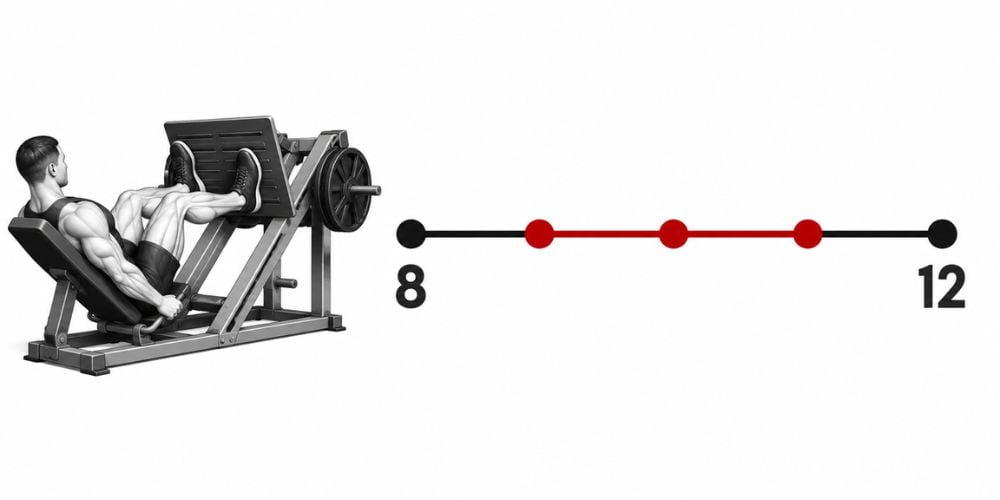
For a basic machine workout, aim for 8–12 reps per set.
This is also in line with the CDC recommendation of 8–12 repetitions for muscle-strengthening activities. The same guidance says the activity should become difficult enough that doing another repetition would be challenging.
A few examples:
- Leg press: 2–3 sets × 8–12 reps
- Chest press: 2–3 sets × 8–12 reps
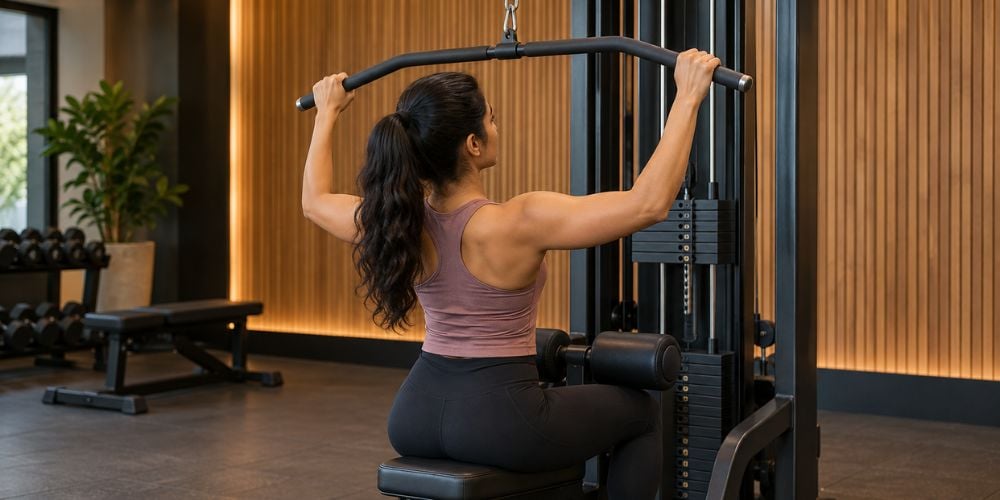
- Lat pulldown: 2–3 sets × 8–12 reps
Can you easily do more than 12 reps? Your weight may be too light.
Cannot reach 8 reps with good form? The weight is probably too heavy.
Here is why this matters: the goal is not simply to reach a number. You want those reps to be challenging while still looking controlled.
3. Choose the Right Weight
Choose a weight that feels manageable at the beginning and challenging near the end.
You should still control every repetition. If you need to swing, bounce, shorten the movement, or change your body position, reduce the weight.
I use one simple rule with beginners:
Finish your set feeling like you could probably perform another 1–3 good reps.
You do not need to turn every set into a maximum-effort test. Good technique matters more than forcing one extra repetition.
The Mayo Clinic’s weight-training guidance also recommends lowering the weight or repetitions if you cannot maintain proper form.
If you want to see how different machine exercises fit into a strength routine, browse the strength equipment from YR Fitness. We design our commercial machines around controlled movement and practical resistance adjustment, which can make gradual progression easier to manage.
4. How Much Rest Between Sets?
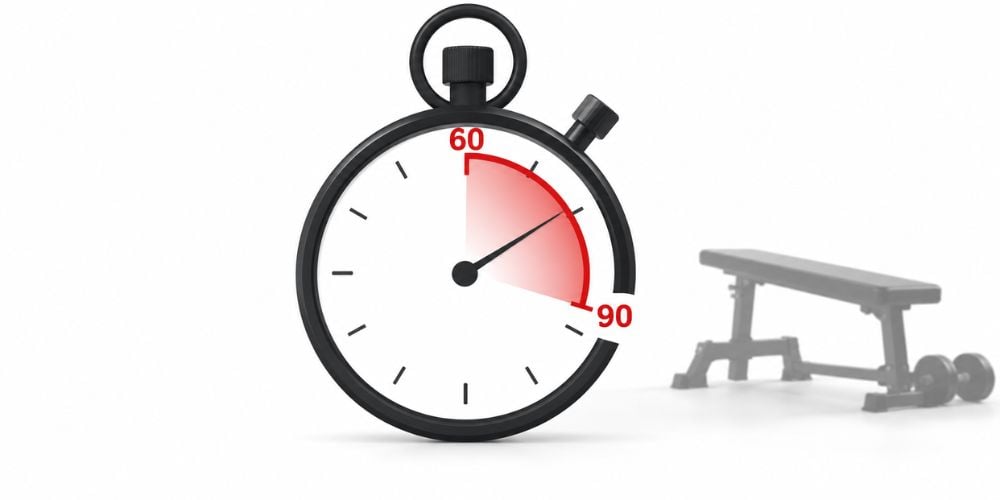
For most beginner machine exercises, rest around 60–90 seconds between sets.
You may need a little longer after demanding exercises such as the leg press. What matters is being recovered enough to perform the next set with good control.
A simple guide:
- Smaller or easier machine exercises: around 60 seconds
- Most strength machines: 60–90 seconds
- Hard leg exercises: 90–120 seconds
Still breathing heavily after 90 seconds? Take more time.
There is no prize for starting the next set early. If rushing makes your technique worse, rest a little longer.
Also remember the bigger recovery picture. The CDC adult activity guidelines recommend muscle-strengthening activity on at least 2 days each week, covering the major muscle groups.
5. Simple Beginner Machine Workout Example
You do not need ten different machines to train your whole body. Five or six basic movements can already cover the major muscle groups.
Machine | Sets | Reps |
Leg Press | 2–3 | 8–12 |
Chest Press | 2–3 | 8–12 |
Lat Pulldown | 2–3 | 8–12 |
Leg Curl | 2–3 | 8–12 |
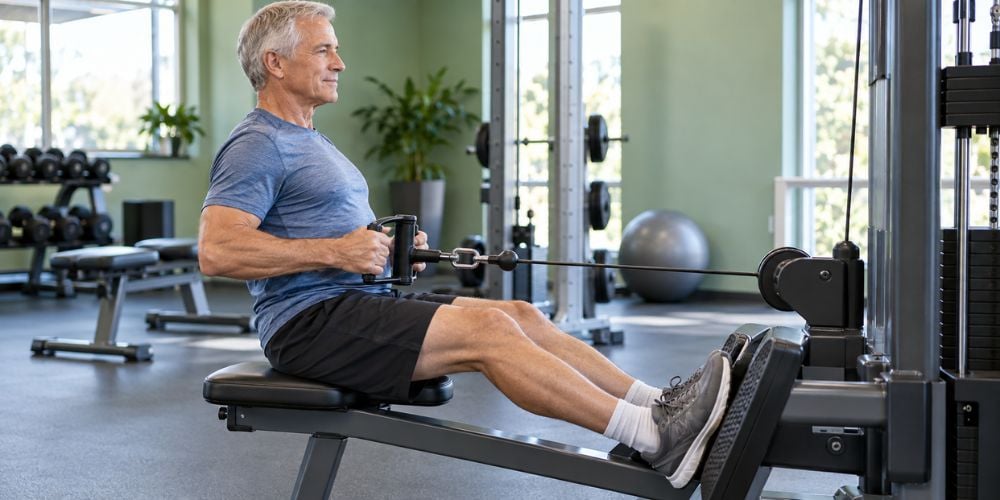
Seated Row | 2–3 | 8–12 |
Shoulder Press | 2 | 8–12 |
Is that really enough? For a beginner, it can be.
I would rather see someone perform these exercises with steady, controlled reps than rush through ten machines. Learn the basic movements first, then add more only when you have a reason.
6. When Should You Increase Weight?
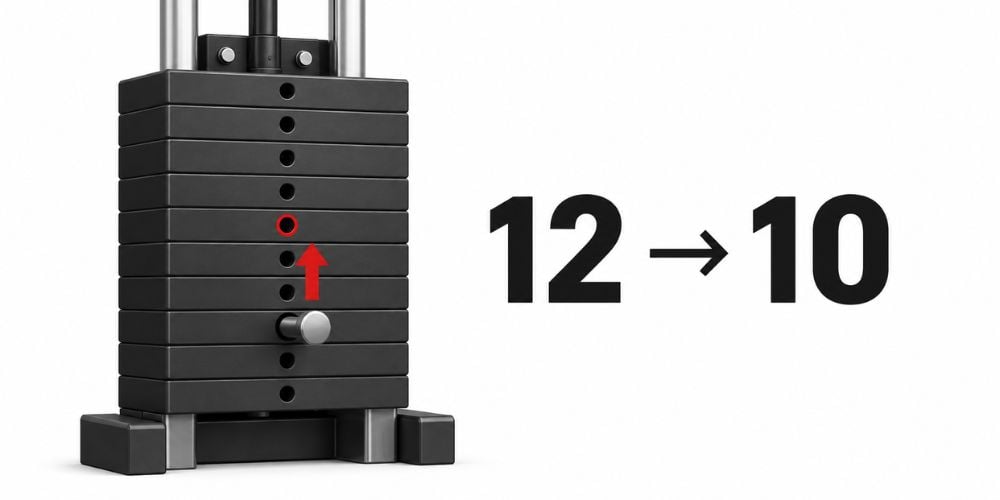
Increase the weight when you can complete 12 good reps on every set without your form breaking down.
Do not make a huge jump. Move up by one resistance level or use the smallest practical weight increase available.
For example:
Before increasing:
12 reps → 12 reps → 12 reps
After increasing:
10 reps → 9 reps → 8 reps
That drop is normal.
Stay with the new weight until you gradually work your way back toward 12 controlled reps. Then increase the resistance again.
This gradual approach is much easier to manage than changing your exercises, sets, reps, and weights every workout. Mayo Clinic similarly advises increasing resistance gradually once your current weight becomes easy to perform.
Conclusion
For most beginners, remember one simple formula: 2–3 sets × 8–12 reps per machine, with around 60–90 seconds of rest. Start with a manageable weight and increase it slowly when 12 reps becomes controlled.
Keep your workout simple and focus on good movement before chasing heavier numbers.
When you want to explore more machine exercises, browse YR Fitness and choose equipment that fits the way you want to train.
Related articles: