








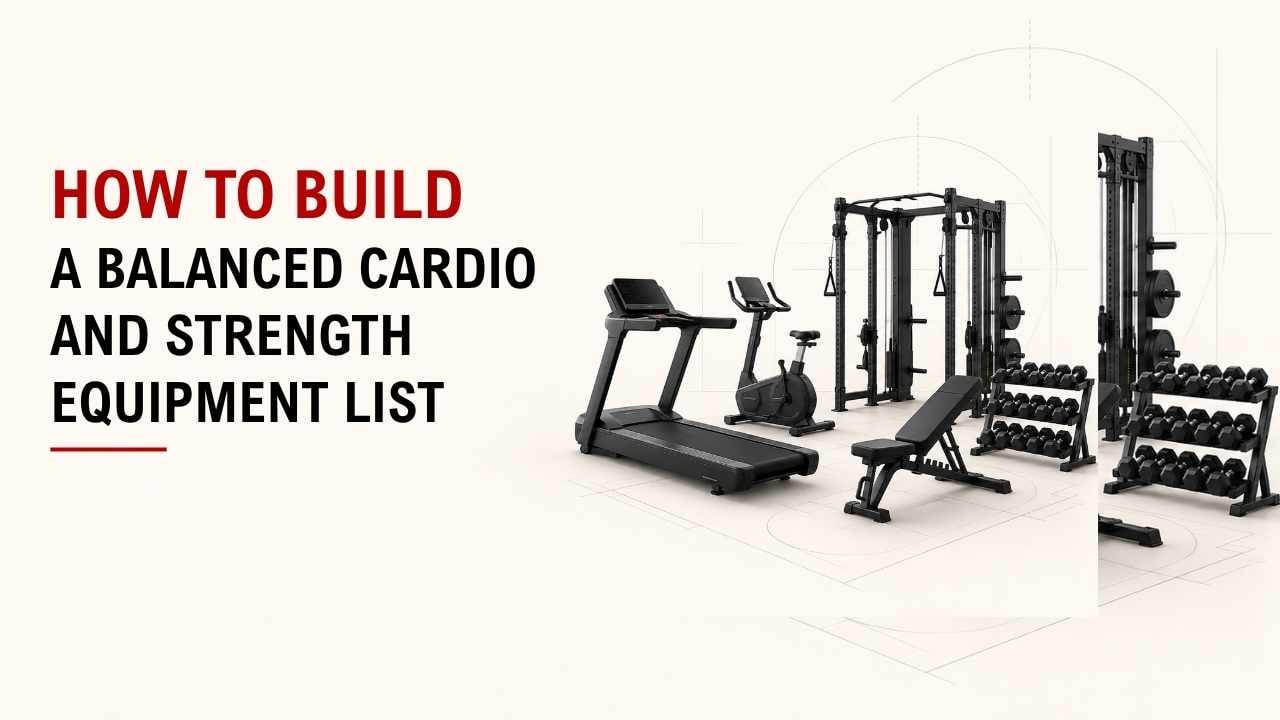

How do you balance cardio and strength equipment without wasting space? The key is choosing what people will actually use.
The simple answer is: cover the main cardio options, major strength movements, and add more units where demand is highest. You do not need one of every machine.
As the founder and chief designer of YR Fitness, I have spent decades working with commercial gym equipment and gym layouts. In my experience, a balanced setup works better than simply adding more machines.
Below, I will show you six simple steps to build the right equipment mix.
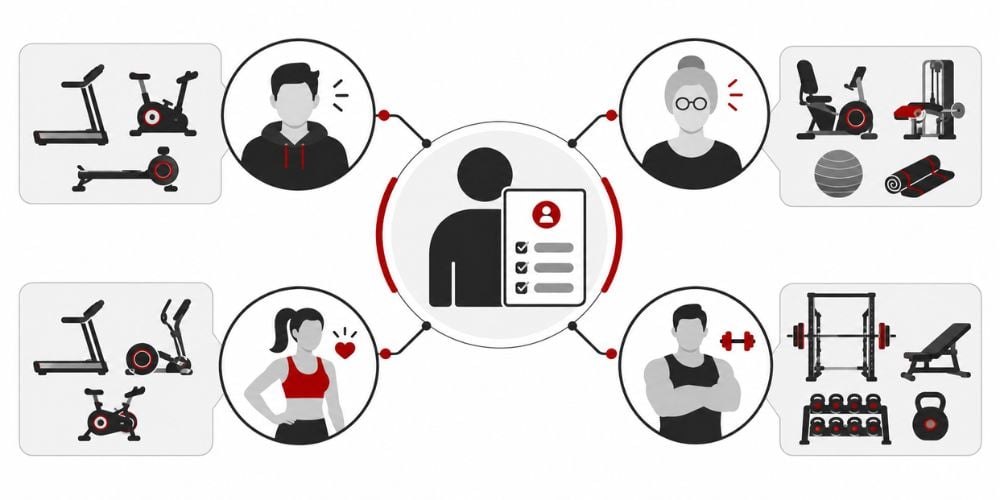
1. Start With Your Member Profile
Before choosing equipment, think about who will use it most.
Ask:
- Are most users beginners or experienced?
- Do they want general fitness, weight loss, or muscle growth?
- Do they prefer machines or free weights?
- Will older adults use the gym?
- Will there be serious strength training?
Why does this matter? Because your members should shape your equipment list.
For example, a general fitness gym may need more treadmills, bikes, selectorized machines, and cable stations. A strength-focused gym may need more racks, benches, dumbbells, and plate-loaded machines.
Current industry data supports paying close attention to strength training. The Health & Fitness Association reported that 43.4% of U.S. Fitness facility members used treadmills and 32.1% used dumbbells or free weights in 2024, while newer 2025 data showed free weights continuing to lead equipment-use growth.
Simple rule: build around your main users first instead of trying to satisfy every possible training style.
2. Decide How Much Floor Space Goes to Cardio and Strength
Next, look at the space you actually have.
You do not need to divide it 50/50. Cardio and strength equipment use space differently, and your users may prefer one area more than the other.
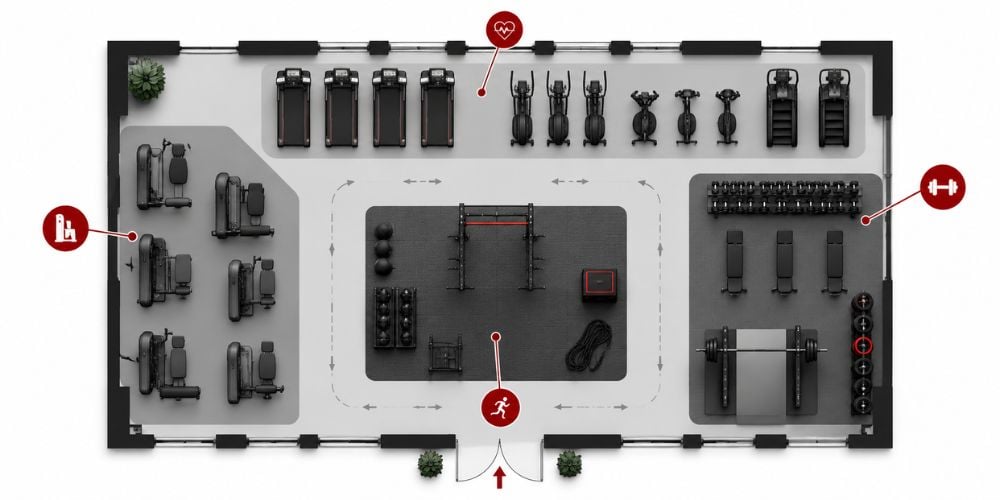
A simple layout can include:
Zone | What Goes There |
Cardio | Treadmills, bikes, ellipticals, rowers |
Machine strength | Selectorized and plate-loaded machines |
Free weights | Racks, benches, dumbbells, barbells |
Functional | Cable work, mobility, open-floor exercises |
Circulation | Clear paths between training areas |
Please remember the space around the equipment.
If your facility is in the U.S., accessibility must also be part of the layout. ADA guidance requires an accessible route to serve applicable exercise equipment and addresses clear floor space for exercise-machine types.
I would rather see fewer useful machines with comfortable training space than a crowded room where equipment is difficult to use.
3. Build Your Cardio Equipment List
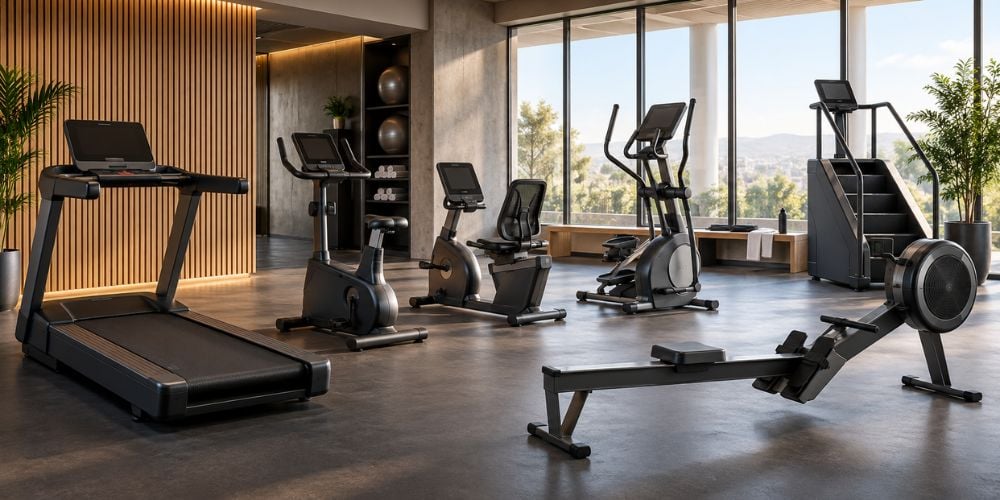
Start with a few different cardio options instead of buying too many of the same type.
Cardio Equipment | Why Include It | Typical Priority |
Treadmill | Walking, jogging, and running | High |
Upright bike | Simple seated cardio | High |
Recumbent bike | More supported riding position | Medium |
Elliptical | Low-impact full-body movement | High |
Rower | Upper- and lower-body cardio | Medium |
Stair climber | Higher-intensity lower-body cardio | Medium |
You do not need the same number of every machine.
Treadmills are often a core part of a cardio area. That also matches the HFA data above, where treadmills were the most widely used equipment category among members surveyed in 2024.
Rowers or stair climbers, on the other hand, may only need one or two units depending on your space and actual demand.
There is another reason to keep cardio in the mix. The CDC adult physical activity guidelines recommend at least 150 minutes of moderate-intensity aerobic activity per week, alongside muscle-strengthening activity on at least two days.
The goal is simple: give people enough variety without unnecessary duplication.
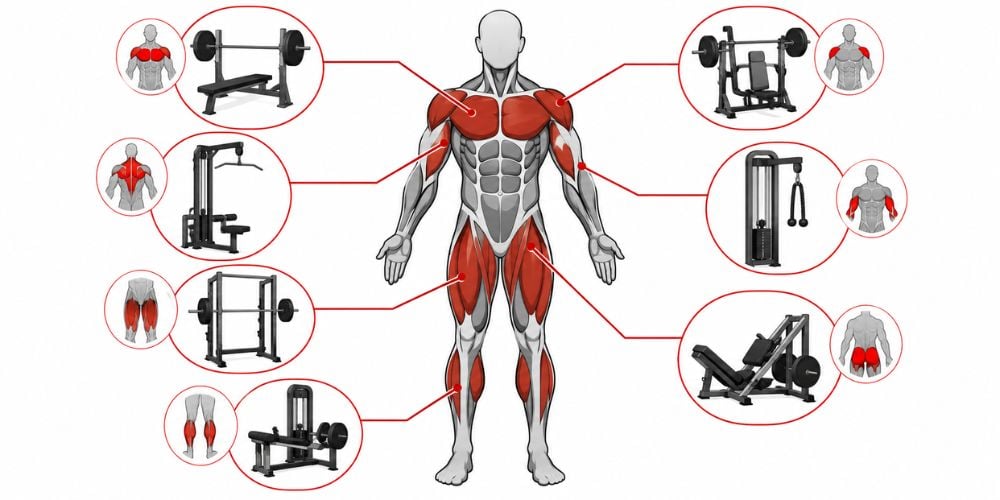
4. Build Your Strength Equipment List Around Major Movements
Do not choose strength machines randomly.
Start by making sure you cover the main movement patterns.
Area | Movements to Cover | Equipment Examples |
Chest | Pressing | Chest press, bench |
Back | Vertical and horizontal pulling | Lat pulldown, row |
Shoulders | Pressing | Shoulder press |
Legs | Squatting and pressing | Rack, leg press |
Knees | Extension and flexion | Leg extension, leg curl |
Hips & glutes | Hip-dominant work | Hip thrust, cable station |
Arms | Elbow flexion and extension | Cables, curls, triceps stations |
Calves | Plantar flexion | Calf machine |
Then add the free-weight basics:
- Dumbbells
- Barbells
- Adjustable benches
- Power racks
- Weight plates
This also lines up with the CDC recommendation to work all major muscle groups, including the legs, hips, back, abdomen, chest, shoulders, and arms.
Do you need three chest press machines immediately? Probably not.
Cover one solid chest press first. Then add different variations when you know the demand is there.
If you are deciding how cardio, selectorized machines, plate-loaded equipment, racks, and benches should fit together, YR Fitness can help you compare the options as one complete setup. We can use your available space and training needs to narrow down the equipment instead of simply adding more machines.
5. Choose Versatile Equipment Before Specialty Machines
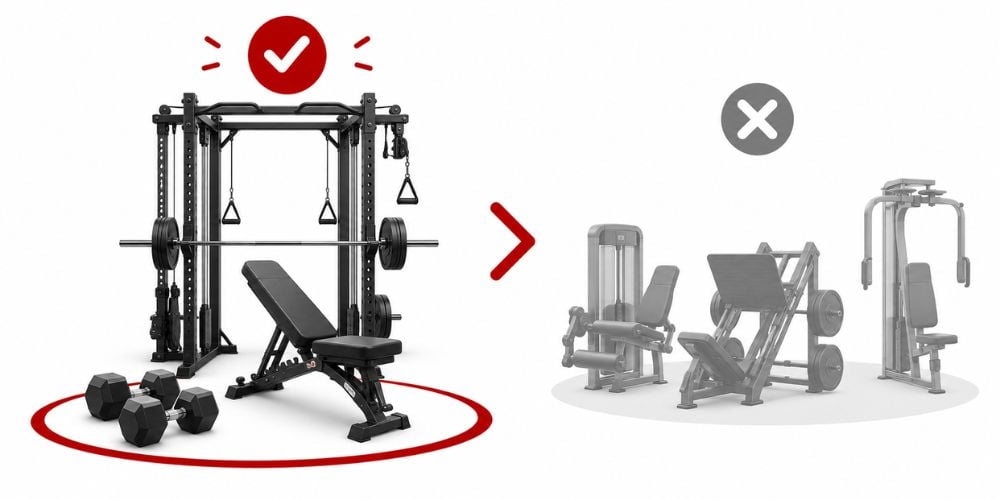
If space or budget is limited, choose equipment that supports several exercises first.
Good examples include:
- Functional trainers
- Cable crossover machines
- Adjustable benches
- Power racks
- Multi-station machines
- Dumbbells
A cable station can support chest, back, shoulder, arm, and core exercises. That makes it easier to justify than a machine built for one very specific movement.
Versatile first. Specialty second.
Once the basics are covered, you can add equipment such as:
- Pendulum squats
- Hack squats
- Hip thrust machines
- Specialized row machines
- Plate-loaded chest presses
- Dedicated arm machines
This does not mean specialty machines are unnecessary. They simply make more sense after the main movement patterns are already covered.
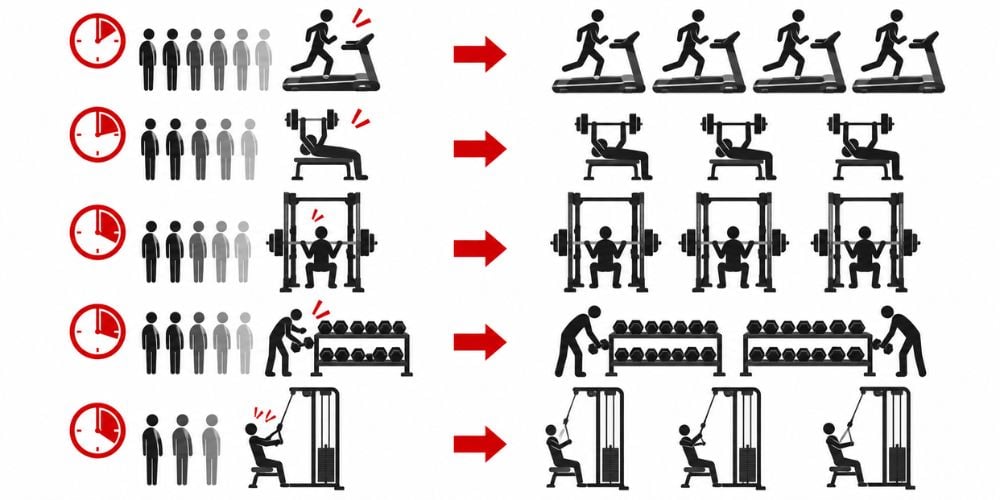
6. Match Equipment Quantity to Peak-Hour Demand
The final step is deciding how many machines you need.
One unit may be enough for special exercise. It may not be enough for equipment everyone wants during busy periods.
Equipment | Watch for This | Possible Action |
Treadmills | Regular queues | Add another unit |
Power racks | Long workouts creating waits | Add racks if space allows |
Benches | Constant sharing | Add adjustable benches |
Dumbbells | Popular weights always missing | Add duplicate weight pairs |
Cable stations | Several users waiting | Add another cable station |
Leg press | Regular peak-hour queue | Consider a second unit |
Lat pulldown | High repeated demand | Add another pull station |
Chest press | Frequent waiting | Add a second press option |
What if only one person uses a special machine at a time?
One unit may be enough. Put the extra budget into the equipment people regularly wait for.
This matters especially with racks, benches, and cable stations because users often spend longer at them.
A Simple Final Check
Before finishing your list, ask:
- Do I have enough cardio variety?
- Are all major strength movements covered?
- Do I have free-weight options?
- Are my most useful machines available in enough quantity?
- Am I buying too many machines that perform nearly the same exercise?
- Is there enough room to use everything comfortably?
If you can answer these clearly, your equipment list is probably close to balanced.
Conclusion
A balanced equipment list does not mean buying the same number of cardio and strength machines. Start with your users, cover the main training needs, choose versatile equipment, and add extra units where demand is highest.
If you want to build a complete training space without guessing which machines belong together, YR Fitness can help you compare commercial cardio and strength equipment and create a practical mix for your space and training needs. Explore YR Fitness and start planning your equipment list
Related articles:



