








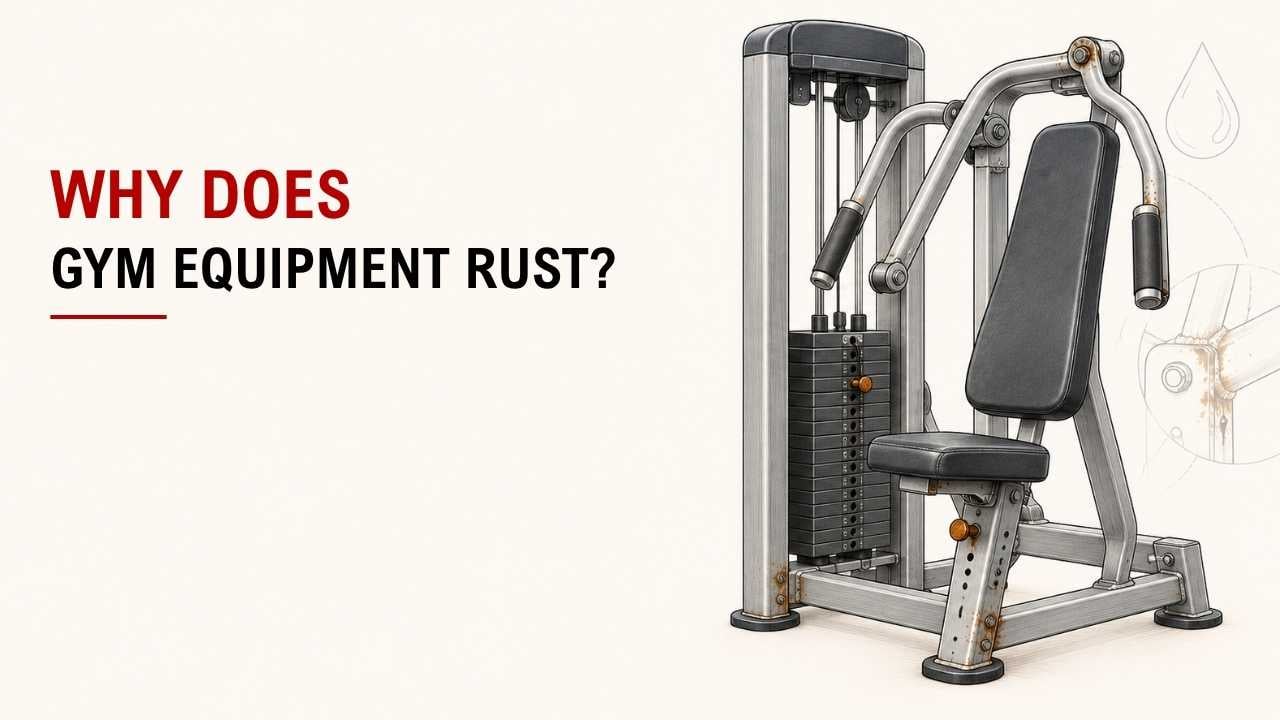

Have you noticed rust starting on your gym equipment? It can happen even when the machine stays indoors.
The short answer is simple: sweat, humidity, water, damaged coatings, and exposed metal can all cause rust. Moisture is usually the main trigger.
As a Machinery & Structural Engineer at YR Fitness, I work closely with steel frames, welds, coatings, and moving parts. I often see rust start in small areas first, so knowing where to look can help you catch it early.
Below, I’ll show you the six main reasons gym equipment rusts and what you can do to reduce it. Keep reading for the simple fixes.
1. Sweat Stays on the Metal
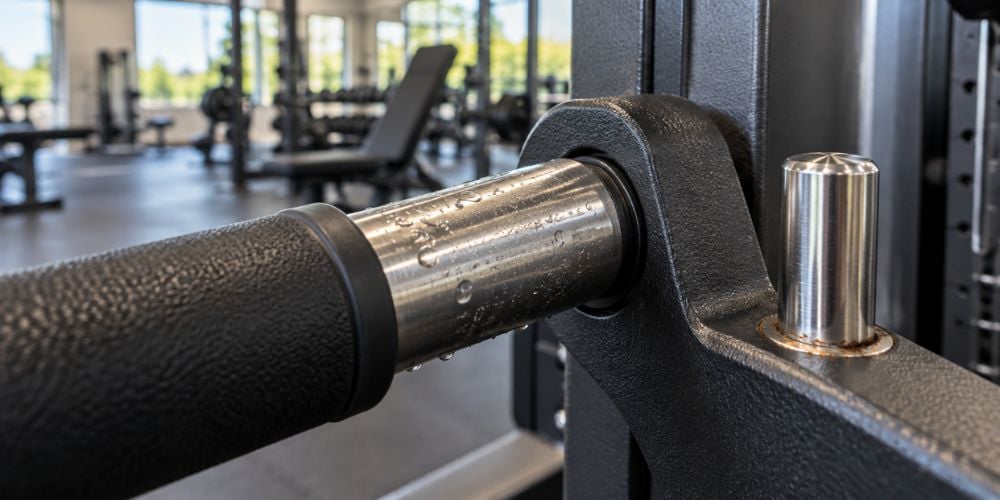
Sweat is one of the most common reasons gym equipment starts rusting.
Why?
Sweat contains water and electrolytes, including sodium chloride. CDC technical material describes sweat as a dilute electrolyte solution made up principally of sodium chloride.
Salt matters because chloride ions can increase corrosion risk and interfere with protective films on some metals.
Rust often starts around:
- Handles
- Adjustment pins
- Weight stack areas
- Metal frames
- Bolts and screws
I often see the first spots in areas people touch most because these areas repeatedly collect sweat.
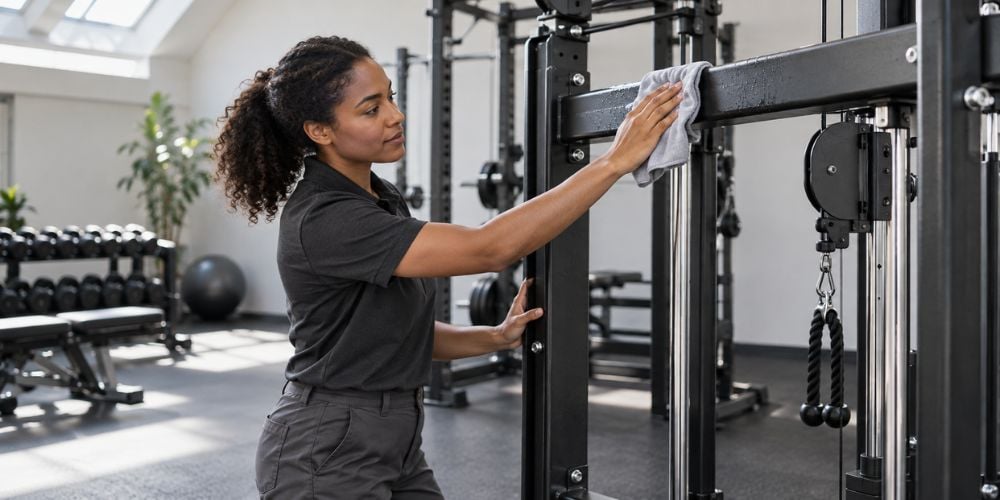
What should you do? Wipe your equipment after training instead of letting sweat dry on the metal overnight.
2. The Gym Is Too Humid
No water spilled on the machine? It can still rust.
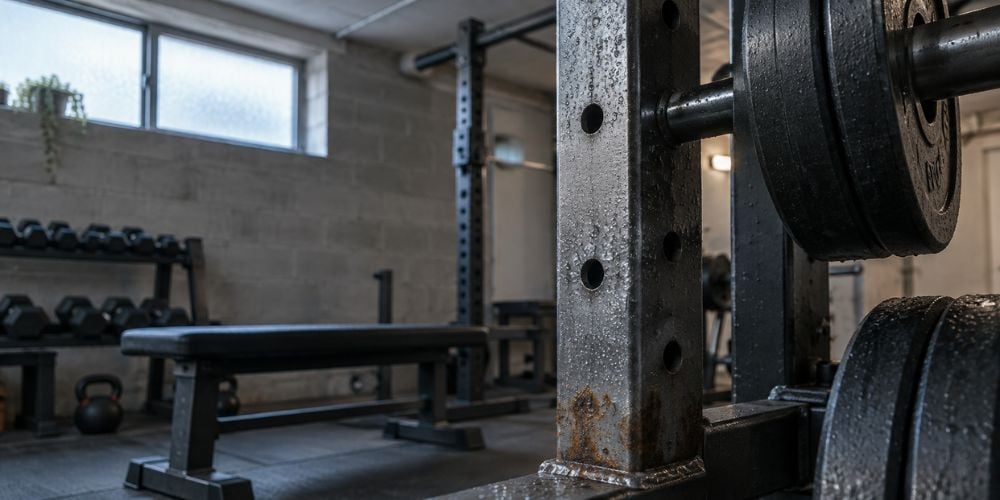
High humidity means more moisture is available around metal surfaces. AMPP specifically lists humidity and salt-water exposure among the environmental conditions that affect corrosion.
This can be more noticeable in:
- Basements
- Garages
- Rooms with poor ventilation
- Gyms in humid climates
You may also see condensation forming on colder metal surfaces.
If your equipment often feels slightly damp, increase airflow or consider using a dehumidifier.
3. The Paint or Powder Coating Is Damaged
Most steel gym equipment is not left as bare steel.
It normally has a protective surface such as:
- Paint
- Powder coating
- Chrome
- Another protective treatment
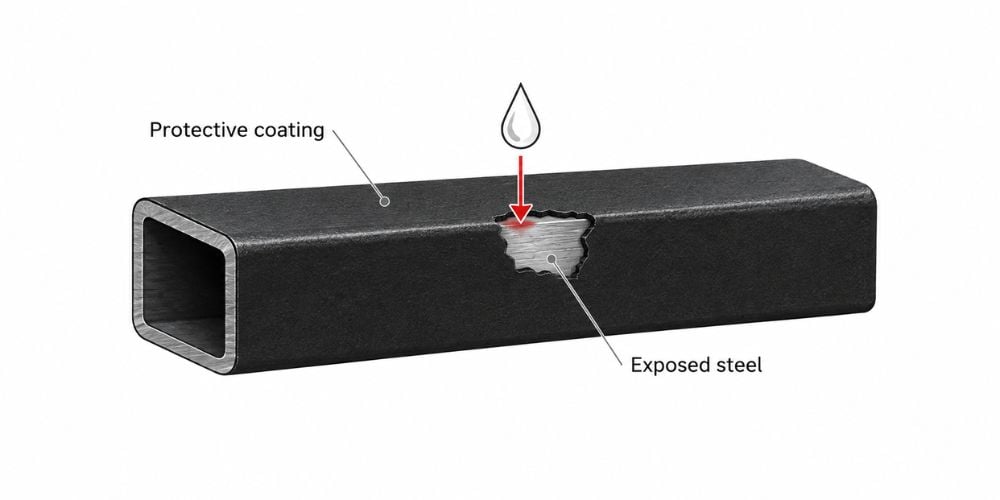
These layers help separate the metal underneath from its environment.
But what happens when you scratch the coating?
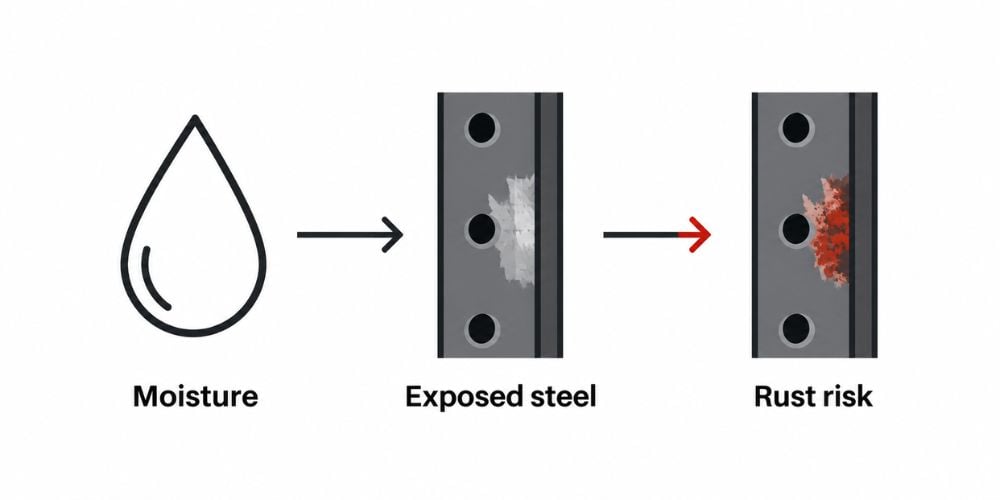
The steel underneath may become exposed to moisture. That gives corrosion a place to start.
Surface preparation matters too. ASTM notes that proper surface preparation is important for good powder-coating adhesion and that moisture retained around an improperly prepared surface can contribute to coating problems.
See a chip or deep scratch? Deal with it early instead of waiting for rust to spread underneath the surrounding coating.
At YR Fitness, we pay close attention to steel construction, welding, surface preparation, and protective finishing because these details affect how equipment handles sweat, moisture, wear, and repeated daily use. If you want to compare commercial-grade construction before choosing equipment, you can explore our strength and cardio equipment on the website.
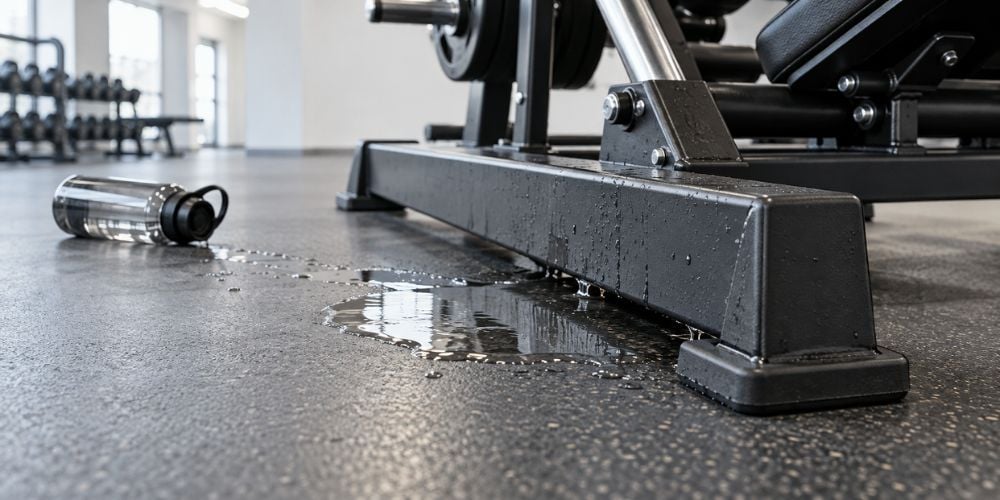
4. Water Gets on the Equipment
This cause is simple: water and steel are not a good combination when the metal is unprotected.
Common sources include:
- Wet floors
- Open windows during rain
- Leaking roofs
- Water bottles
- Heavy cleaning
- Damp towels
Water may also collect underneath a machine where you rarely look.
I recommend checking around the machine base when you clean the floor. If the frame or feet are wet, dry them rather than leaving the water there.
Here is why this matters: moisture on a metal surface can support the electrochemical reactions involved in corrosion, while salts can make the process more aggressive.
5. Bolts, Welds, and Joints Are More Exposed
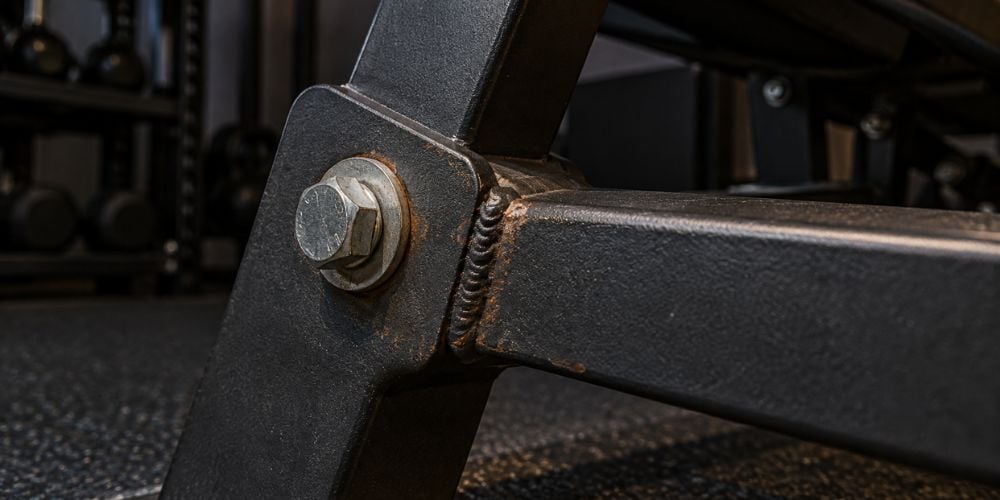
Rust does not always start in the middle of a large steel frame.
Quite often, it appears around:
- Bolts
- Screws
- Welds
- Adjustment holes
- Joints
- Moving parts
Why these places?
They can collect sweat, dust, and moisture. Moving areas may also experience friction that gradually wears the protective surface.
Edges deserve attention too. ASTM notes that coating coverage around corners and edges can behave differently from coverage on flatter surfaces.
When I inspect equipment, these small connection points are some of the first places I look.
Quick Check: Run your eyes around the bolts and adjustment holes next time you wipe down your machine. A small orange or brown mark can be an early warning.
6. The Equipment Uses Poor Materials or Surface Protection
Not all gym equipment handles moisture equally well.
Rust resistance can depend on several things:
- Steel quality
- Surface preparation
- Coating quality
- Coating thickness
- Welding quality
- Protection around exposed areas
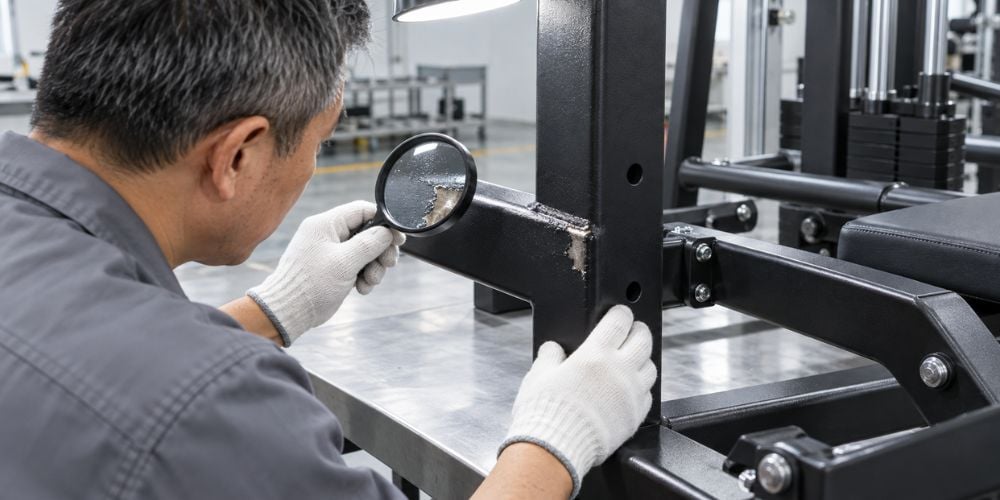
A machine can look perfect when new but still develop corrosion sooner if its protective surface is weak or poorly applied.
That does not mean expensive equipment can never rust. Any steel equipment can corrode if its protection is damaged and moisture repeatedly reaches the metal.
The better approach is to combine good construction with regular care.
What Makes Rust More Likely?
Situation | Rust Risk | Simple Response |
Sweat left overnight | Higher | Wipe after training |
Humid room | Higher | Improve ventilation |
Deep frame scratch | Higher | Protect the exposed area |
Water under machine | Higher | Dry it quickly |
Rust around bolts | Needs attention | Clean and inspect the area |
Intact coating + dry room | Lower | Continue routine cleaning |
How Can You Reduce Rust?
You do not need complicated maintenance.
Focus on a few basic habits:
- Wipe off sweat after use.
- Keep the room dry.
- Improve ventilation.
- Dry water spills quickly.
- Inspect scratches and chips.
- Check bolts, welds, and joints.
- Repair damaged coatings before corrosion spreads.
And remember one simple rule: keep moisture away from exposed metal whenever you can.
Conclusion
Gym equipment rusts mainly because moisture reaches the metal. Sweat, humidity, water, damaged coatings, exposed joints, and weak surface protection can all make the problem worse.
If durability matters when choosing your next machine, YR Fitness offers commercial strength, cardio, and fitness equipment designed for repeated daily use. You can explore the equipment directly on our website and compare the options that fit your training needs.
Related articles:



