





Does your treadmill run fine until you step on it, then slow down or stop? That usually means the belt is slipping or the machine is struggling under your weight.
The quick answer is: check the belt tension, lubrication, drive belt, deck, motor, and power supply. Loose belts and poor lubrication are common causes.
As the founder and chief designer of YR Fitness, I have spent decades working with commercial fitness equipment. In my experience, many treadmill problems come from simple belt, friction, or maintenance issues rather than a failed motor.
Below are the 7 most common reasons your treadmill belt stops when you step on it. Start with the simple checks first.
1. Your Walking Belt Is Too Loose
A loose walking belt is one of the first things I would check.
The treadmill may run perfectly when nobody is standing on it. Once you step on, your weight adds resistance and the belt can slip over the rollers.
What Does a Loose Belt Feel Like?
You may notice:
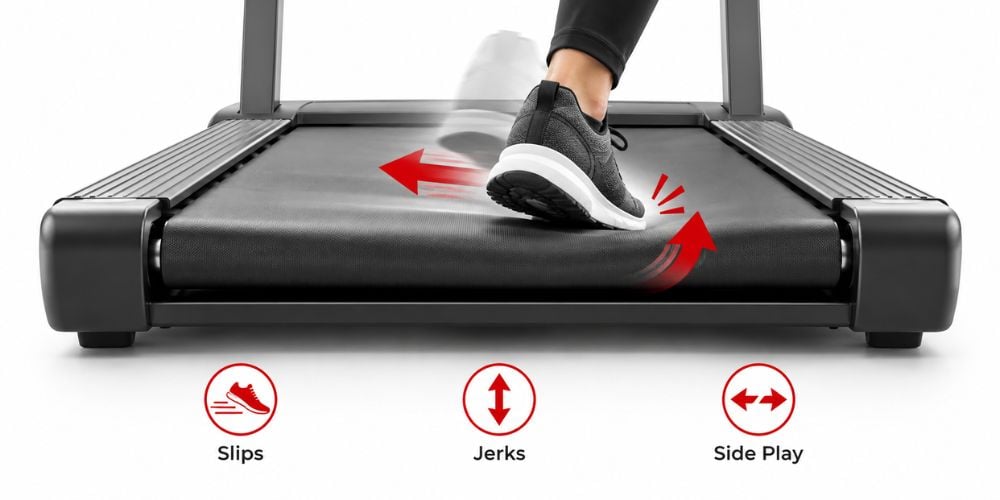
- The belt stops under your foot.
- The belt jerks when you walk.
- The motor keeps running while the belt slips.
- The belt moves too easily from side to side.
If that sounds familiar, check the tension instructions in your treadmill manual.
Make small, even adjustments on both sides. Do not keep tightening until the belt feels extremely firm.
Why? Because a belt that is too tight creates another problem.
2. The Treadmill Belt Needs Lubrication
Does the belt move normally when empty but slow down once you start walking?
Friction may be the reason.
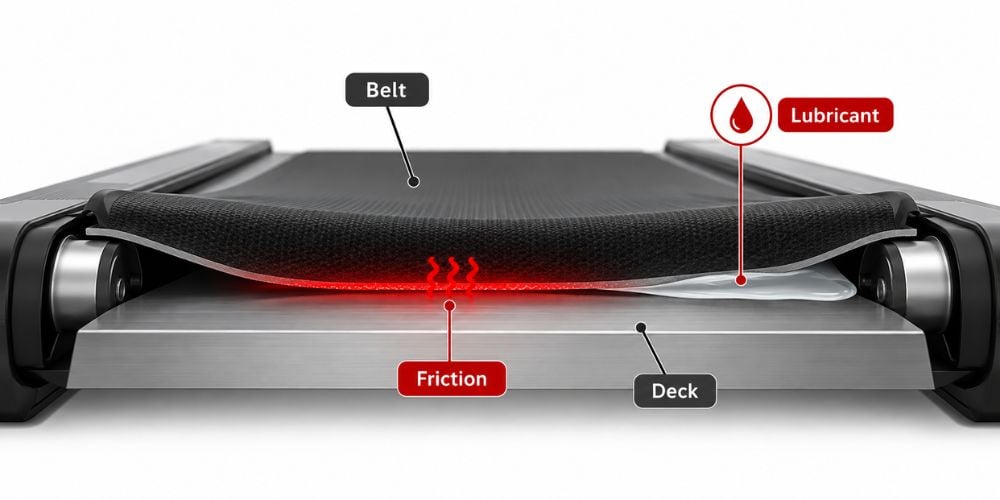
The walking belt slides across the deck every time the treadmill runs. If there is not enough lubrication between those surfaces, your weight pushes them together harder and increases resistance.
That extra resistance makes the motor work harder.
Signs of Poor Lubrication
Look for:
- Slower belt movement
- Rough or inconsistent motion
- Extra heat around the deck
- A motor that sounds more strained than usual
In my design experience, lubrication is easy to forget because you cannot always see that anything is wrong.
But do not automatically pour silicone under the belt. Different treadmills use different systems.
For example, Horizon explains that some treadmills use silicone-lubricated surfaces while others use waxed surfaces that should not have lubricant added. Their treadmill running-surface guide explains the difference.
Simple rule: check your owner’s manual before adding any lubricant.
3. The Walking Belt Is Too Tight
Can a treadmill belt be too tight?
Yes.
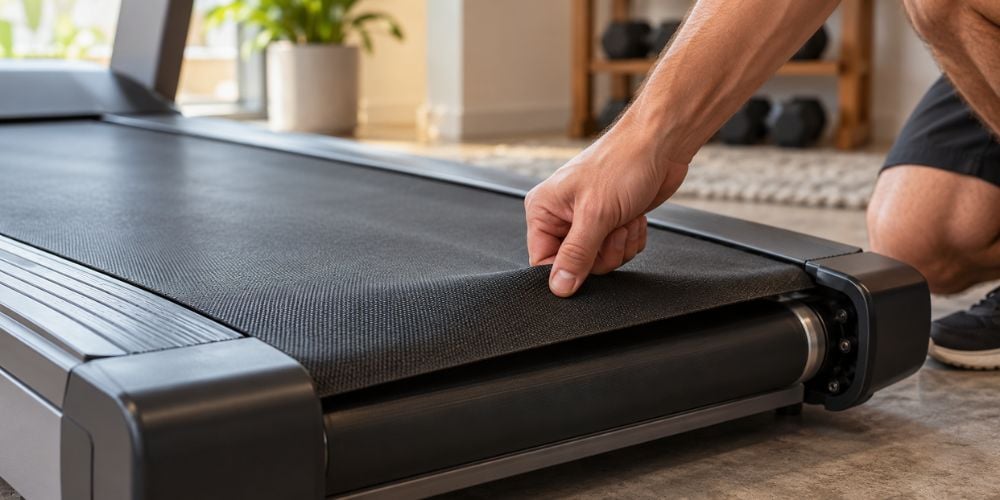
An overly tight walking belt creates more resistance around the rollers and deck. The motor then has to work harder every time you step onto the treadmill.
I often see this happen after someone tries to fix a slipping belt by tightening it too much.
Signs the Belt May Be Too Tight
- The belt is difficult to move manually.
- The motor sounds strained.
- Speed drops when you step on it.
- The belt or deck becomes unusually warm.
The goal is not to make the belt as tight as possible.
It should be tight enough not to slip, but loose enough to move smoothly.
Check your manufacturer’s recommended adjustment procedure rather than guessing.
4. The Drive Belt Is Slipping
What if the motor is still running but the walking belt stops?
The problem may be inside the driving system.
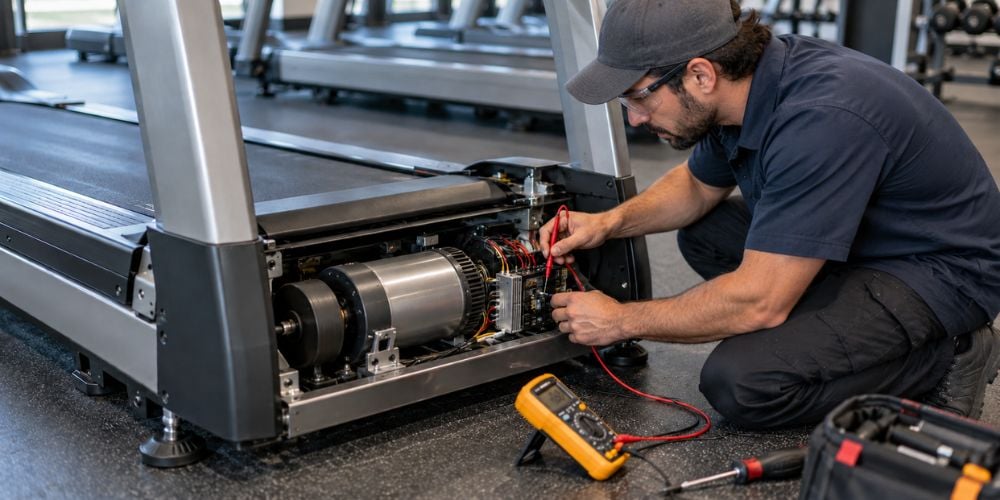
Your treadmill has a drive belt connecting the motor to the front roller. If that belt becomes loose or worn, the motor can keep turning while the roller loses the grip needed to move the walking belt properly.
Signs of a Drive Belt Problem
Watch for:
- Motor noise continuing when the walking belt stops
- Squealing from the front of the treadmill
- The belt stopping suddenly under your foot
- Walking-belt adjustments make no difference
Here is why this matters: tightening the walking belt will not fix a slipping drive belt.
The drive belt is normally located behind the motor cover. If you are not comfortable working around motors and electrical components, this is a good point to stop and call a qualified technician.
If repeated belt slipping is making you question the condition of your current machine, YR Fitness designs commercial treadmills for smooth, stable operation under regular load. You can compare our treadmill models here and see the drive, motor, and running-area options available.
5. The Belt or Deck Is Worn Out
What if the tension is correct and lubrication does not help?
The walking surface itself may be worn.
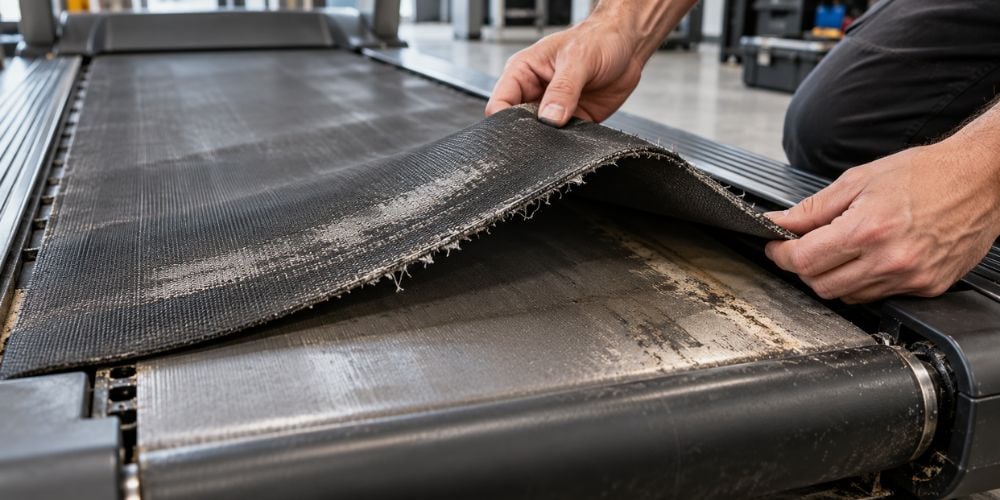
An older belt can become rough underneath, while the deck can develop worn areas. That increases friction every time your foot presses the belt against the deck.
Check for These Signs
- Cracks or fraying
- Rough belt movement
- Worn or polished areas on the deck
- Slowing even after proper adjustment
- Excessive heat under the walking surface
Life Fitness also recommends regular treadmill preventive maintenance and inspection rather than waiting for a problem to become obvious. Its cardio preventive-maintenance guidance is a useful reference.
I often see people keep adjusting an old belt when the real problem is wear.
If the belt or deck has reached the end of its usable life, replacement is usually more sensible than continuing to tighten or lubricate it.
6. The Motor Is Losing Power Under Load
A weak motor may still move the belt when nobody is standing on the treadmill.
Then you step on it.
The added load exposes the problem, and the speed begins to drop.
How Can You Tell?
Look for:
- Noticeable speed loss
- A strained motor sound
- The treadmill shuts off during use
- Problems becoming worse at higher speeds
Before assuming the motor is bad, check the simpler causes first.
A dry deck, overly tight belt, worn belt, or slipping drive belt can all make a healthy motor work much harder than it should.
So when should you suspect the motor?
If belt tension, lubrication, belt condition, and the drive belt all look correct but the treadmill still cannot maintain speed under load, the motor or its electrical controls may need testing.
7. Power Supply Problems Can Also Cause It
Sometimes the treadmill itself is not the main problem.
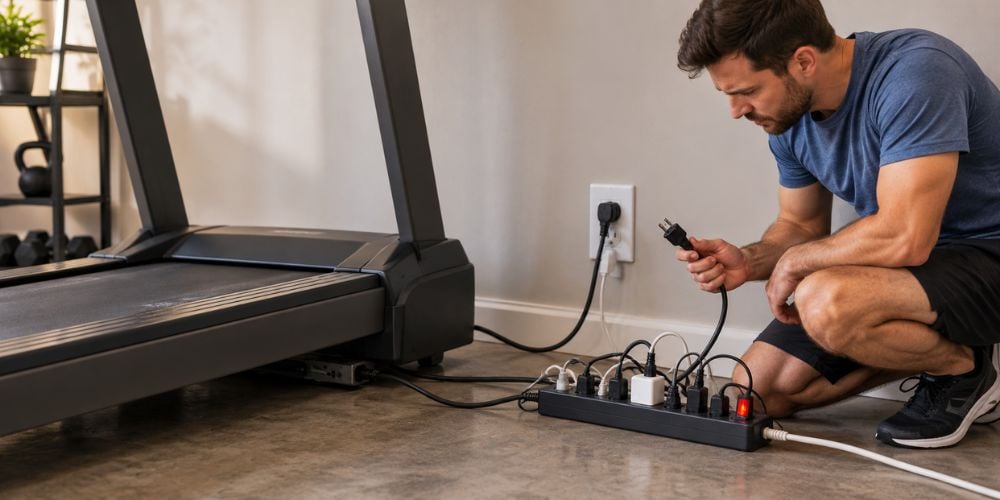
A treadmill needs reliable electrical power, especially when the motor is working harder under your body weight.
If the power supply is inadequate, the machine may run while empty but slow down, trip a breaker, or shut off when you use it.
Check These First
- Is the plug loose?
- Is the power cord damaged?
- Are you using an extension cord?
- Is the circuit overloaded?
- Are other high-power devices using the same circuit?
You can review its treadmill electrical requirements for an example of what manufacturers specify.
If the treadmill repeatedly trips a breaker, produces an electrical smell, or shuts down under load, stop using it.
A qualified technician or electrician should check the problem before you try again.
Conclusion
If your treadmill belt stops when you step on it, start with the simple checks: belt tension, lubrication, drive belt condition, deck wear, motor performance, and power supply.
These are the most common reasons a treadmill runs normally without weight but struggles once you step on.
If you want a treadmill that delivers smoother movement and more reliable performance under regular use, at YR Fitness, we can help you compare durable commercial treadmill options and choose a model that fits your training needs.
Related articles: