








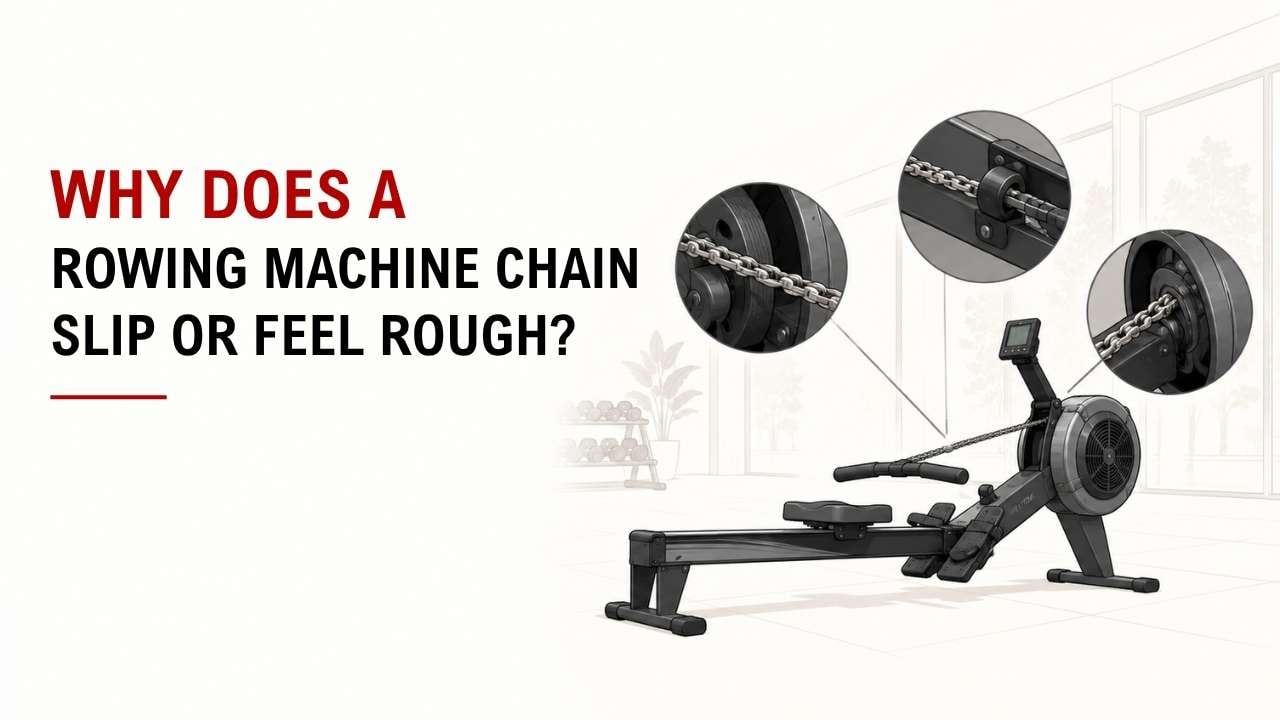

Does your rowing machine chain feel rough, jerky, or like it slips when you pull? That usually means something in the chain or driving system needs attention.
The most common causes are a dry chain, dirt buildup, worn links, a damaged sprocket, incorrect tension, recoil problems, or worn bearings. Some problems only need cleaning or lubrication, while damaged parts may need replacement.
As a Machinery & Structural Engineer at YR Fitness, I work closely with moving parts, drive systems, and equipment that handles repeated loads. I often see small chain problems become much more noticeable once a rower is used harder or more often.
Below, I’ll show you the seven most likely causes and what each one usually feels like. Start with the simple checks first, then look deeper if the problem remains.
1. The Chain Is Dry
A dry chain is one of the simplest reasons a rowing machine starts feeling rough.
The links need to move freely as you pull the handle. When lubrication wears away, friction increases.
You may notice:
- A dry or scratchy sound
- Stiff movement during the pull
- Slight jerking
- More resistance than usual
What should you do?
Check your rowing machine manual first. If lubrication is recommended, clean the chain as directed and apply the correct lubricant in a thin layer.
For example, Concept2’s official RowErg maintenance guide recommends regular chain lubrication and checking for stiff links. It also notes that a chain should be replaced if lubrication does not free those links.
I usually start here because it is easy to check before taking anything apart.
One Warning: Do not simply pour oil over the chain. Too much lubricant can attract dirt and leave more buildup behind.
2. Dirt Has Built Up on the Chain
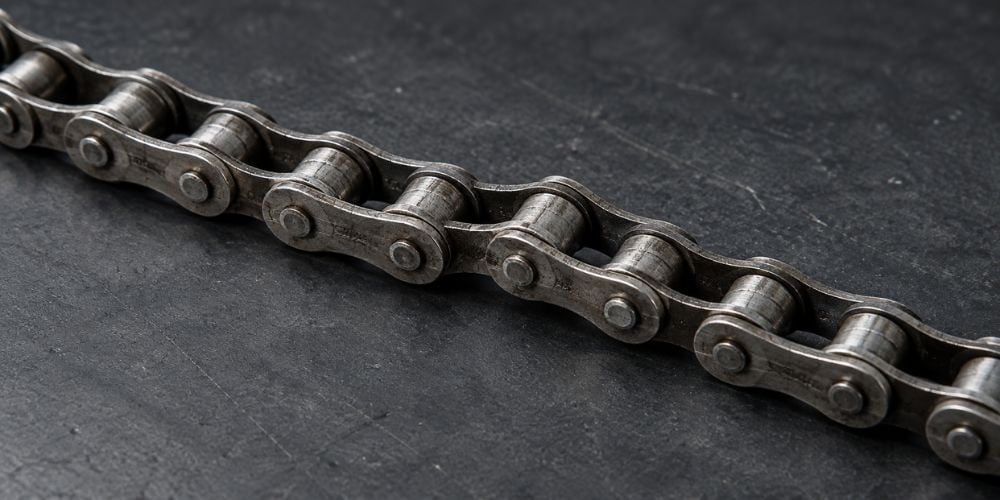
Sweat, dust, lint, and old lubricant can collect around the chain.
That buildup can work between the links and stop them from moving smoothly. You may feel a small bump or rough spot during the stroke.
Quick Check: Pull the handle slowly and watch the exposed chain. Does one section look dirty, stiff, or darker than the rest?
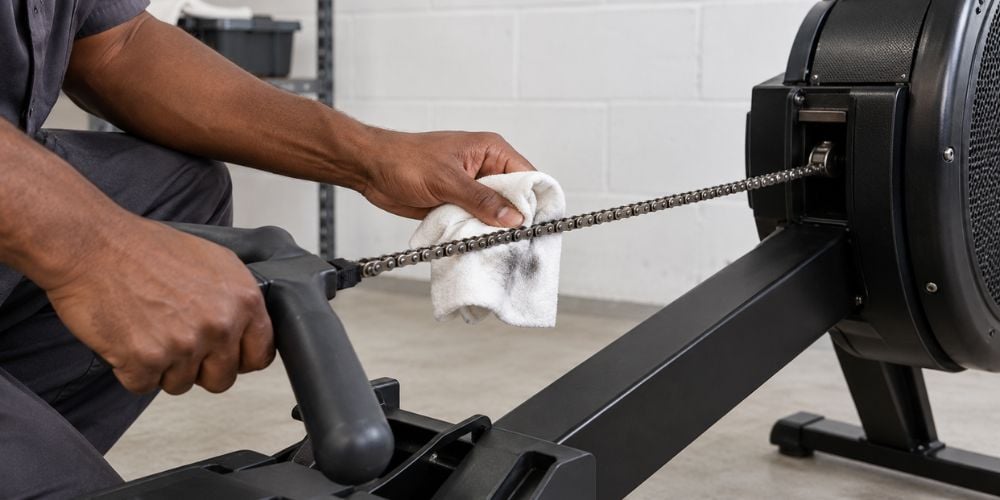
Wipe the chain with a clean cloth and follow your manufacturer’s cleaning instructions. Avoid spraying strong cleaners directly into the machine.
Here is why this matters: dirt can hide a stiff link. What first looks like a simple cleaning problem may actually be wear in one section of the chain.
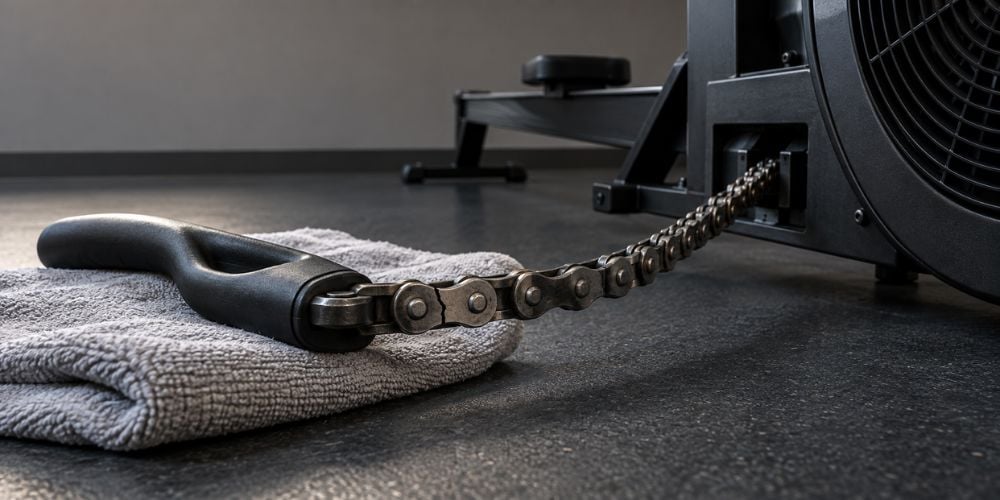
3. The Chain Links Are Worn or Damaged
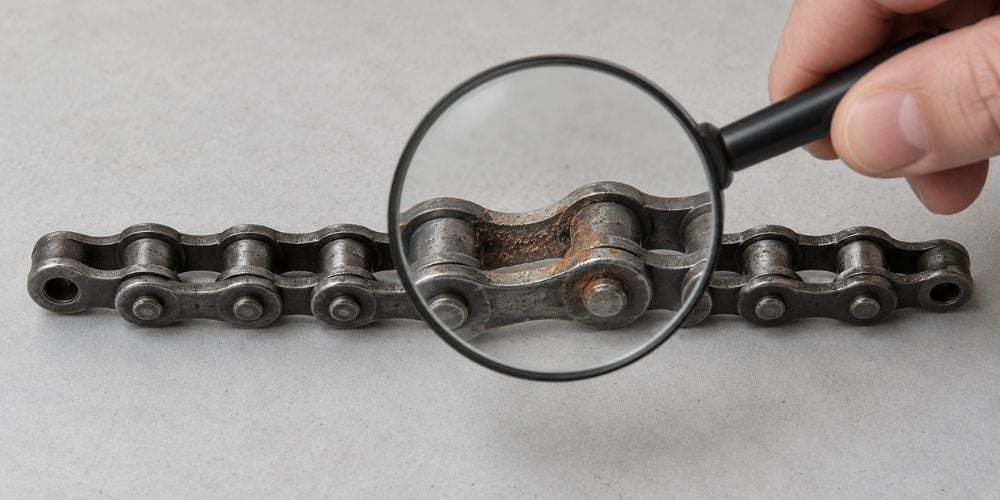
Cleaning will not fix a chain that is physically damaged.
Repeated pulling can slowly wear, stretch, or damage individual links. You may also see rust, bending, or stiff sections.
Common warning signs include:
- One part of the stroke feels rough
- The chain catches in the same place
- Links do not move freely
- Visible rust appears
- The chain looks uneven when extended
I pay extra attention when a chain catches at the same point every time. That usually tells me one section deserves a closer look.
Do not try to straighten badly damaged links. A worn chain is usually better replaced with the correct part.
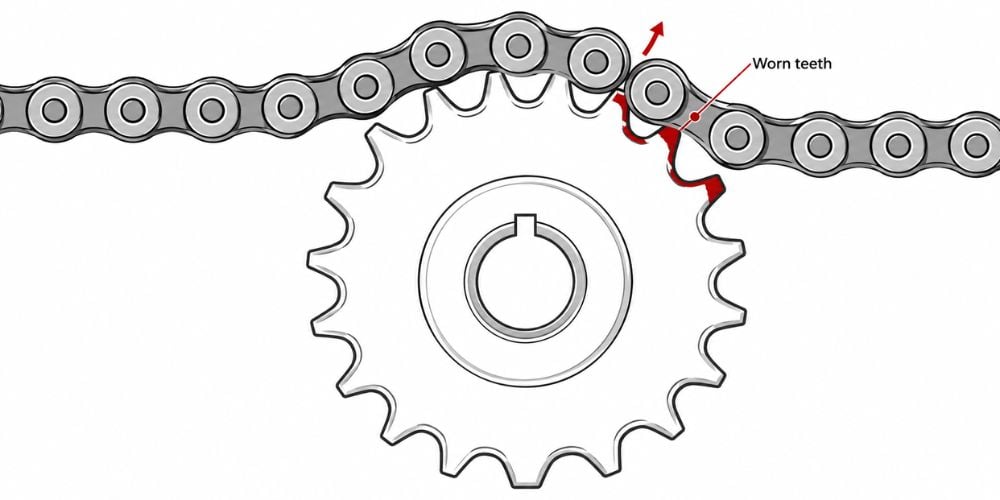
4. The Sprocket Is Worn
The rowing chain runs across a toothed sprocket inside the machine.
Those teeth help transfer your pulling force into the rowing mechanism. When they wear down, the chain may stop sitting correctly between them.
That can create a clear slipping feeling.
You may pull hard and suddenly feel the chain jump forward slightly. A clicking sound may appear at the same time.
Chain Problem or Sprocket Problem?
Concept2’s official chain troubleshooting guidance says that skipping or rough running can come from stiff chain links or a worn sprocket. It also advises users not to continue rowing if skipping remains after the chain has been serviced.
So, should you just pull harder to test it?
No. If the chain repeatedly skips under load, stop and inspect the drive system first.
If repeated chain or drive problems are making you question the condition of your rower, it may also be worth comparing how newer equipment is built. At YR Fitness, we focus on durable commercial cardio equipment and smooth moving systems designed for repeated daily use, and you can explore our commercial rowing machines here.
5. The Chain Tension Is Incorrect
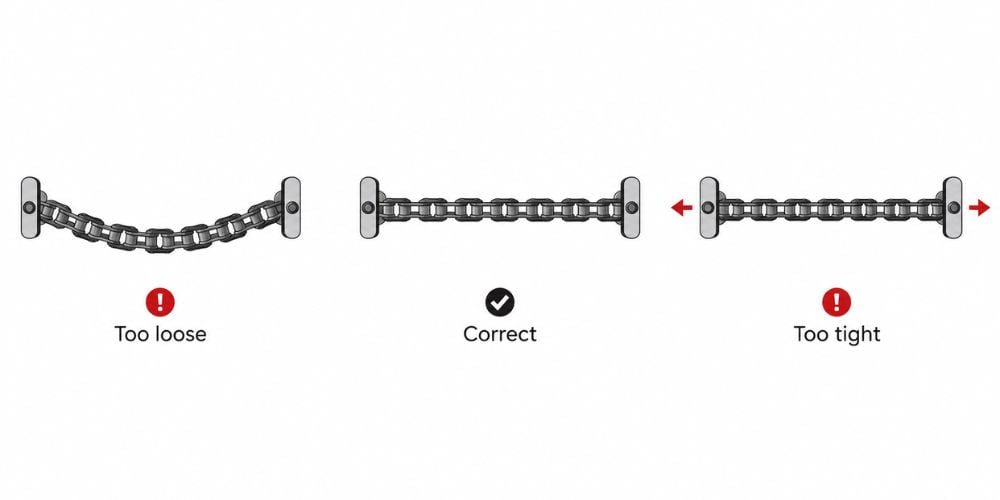
The chain needs the correct amount of tension.
Too much slack may stop it from engaging the drive system consistently. This can make the chain jump or feel loose at the beginning of your pull.
Too much tension creates the opposite problem.
The stroke may feel:
- Heavy
- Tight
- Rough
- Slow to return
Should you simply tighten it?
Not always.
Chain tension depends on machine design. Adjusting the wrong component can create extra wear or interfere with the recoil system.
Follow the adjustment procedure in your rower’s manual rather than guessing.
6. The Recoil System Has a Problem
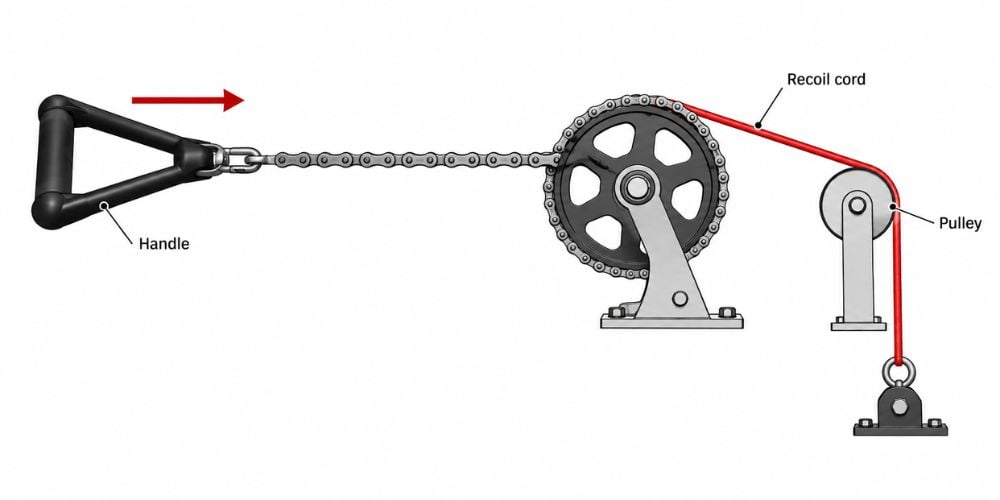
After each stroke, the handle and chain need to return smoothly.
That movement is controlled by a recoil system. Depending on the rowing machine, it may use a spring, elastic cord, pulley, or another return mechanism.
Problems here may cause:
- Slow chain return
- Uneven handle movement
- Chain slack
- Jerking during recovery
- A handle that does not return completely
The tricky part? It can feel like a chain problem even when the chain itself is fine.
I often watch what happens during the return phase. If the pull feels normal but the chain becomes loose or jerky on the way back, I would inspect the recoil mechanism next.
For one real-world example, Concept2 explains in its shock cord guidance that a slowly recoiling chain can point to a return cord that needs inspection, adjustment, or replacement.
Stop using the rower if the handle suddenly stops returning properly.
7. Bearings or Drive Parts Are Wearing Out
Sometimes the chain is not the real problem.
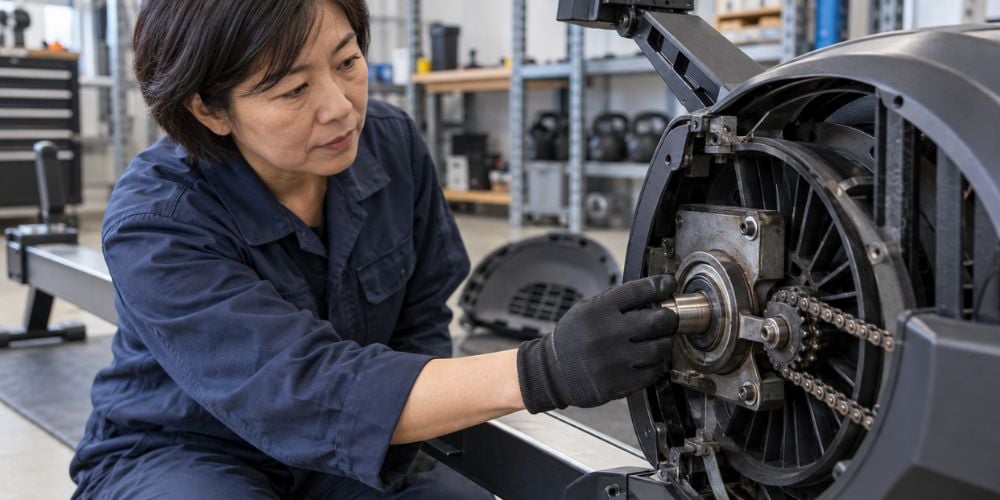
Bearings, pulleys, shafts, or other internal drive parts can wear over time. That roughness can travel through the chain and into the handle.
Listen while you row. What do you hear?
Grinding, knocking, repeated clicking, or unusual vibration may point toward an internal mechanical issue.
What Does the Feeling Tell You?
Feeling or Sound | First Area to Check | Likely Next Step |
Dry scraping | Chain lubrication | Lubricate as directed |
Sticky movement | Dirt or stiff chain link | Clean and inspect |
Sudden slipping | Chain and sprocket | Inspect for wear |
Loose return | Recoil system | Check cord or return parts |
Grinding | Bearings or drive parts | Stop and inspect internally |
Knocking | Internal drive components | Check for loose or worn parts |
At this point, I would stop basic troubleshooting.
Bearings and internal drive parts may require partial disassembly, correct replacement parts, and proper reassembly. If you are not comfortable opening the machine, this is a good time to use a qualified service technician.
When Should You Stop Using the Rowing Machine?
A little dryness does not always mean the machine is unsafe. Repeated slipping is different.
Stop rowing and inspect the machine if:
- The chain repeatedly jumps
- A chain link is bent or cracked
- The sprocket appears damaged
- The chain does not return normally
- You hear strong grinding or knocking
- Resistance suddenly disappears during a pull
Why stop?
Your body expects resistance when you pull the handle. If the chain suddenly slips, your movement can become uncontrolled.
Fix the mechanical problem before continuing your workout.
Conclusion
A rowing machine chain usually feels rough or slips because of poor lubrication, dirt buildup, damaged chain links, sprocket wear, incorrect tension, recoil problems, or worn drive components.
Start with cleaning and lubrication, then inspect the chain and drive system if the problem continues.
At YR Fitness, we believe smooth movement starts with solid construction, dependable moving parts, and proper maintenance. If your current rower is becoming difficult to maintain, you can compare our cardio equipment and rowing options here to see how equipment designed for regular daily use is built.
Related articles:



