








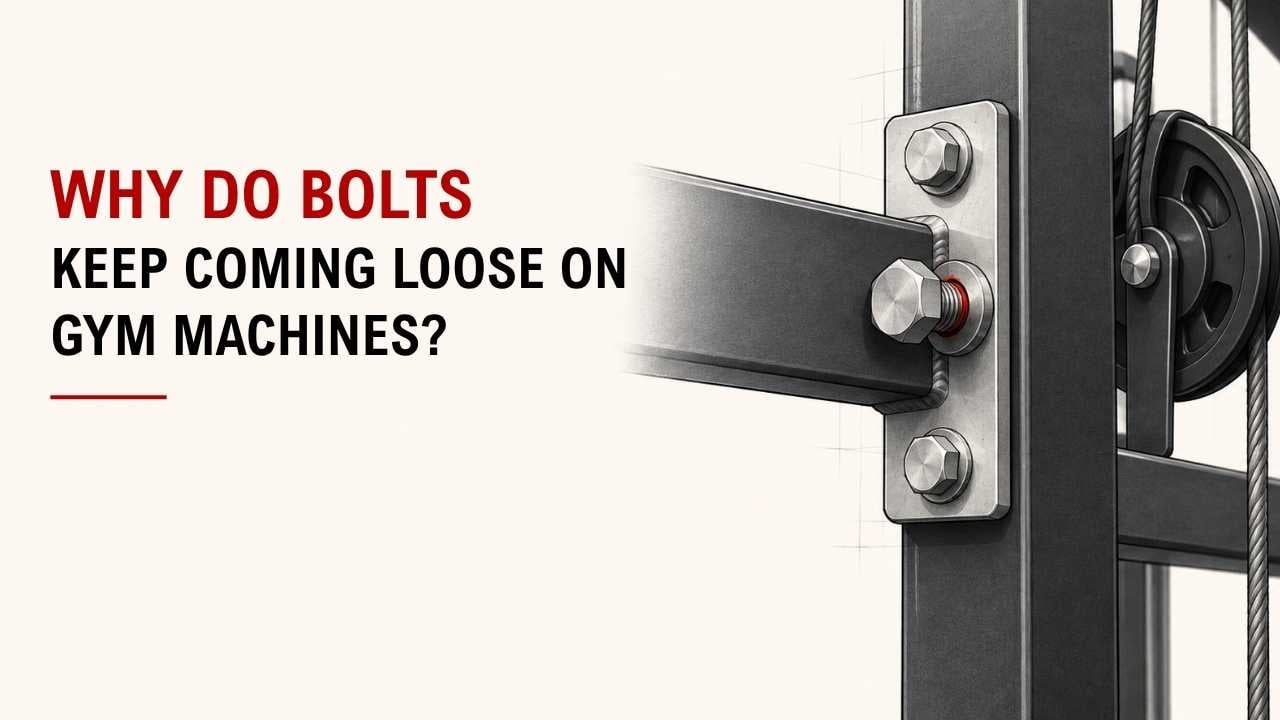

Have you noticed bolts coming loose on gym machines? Loose bolts can make equipment noisy, unstable, and unsafe.
The main causes are vibration, improper tightening, damaged threads, poor assembly, missing locking hardware, and heavy impacts. Knowing these reasons helps you spot problems early.
As a Machinery & Structural Engineer at YR Fitness, I specialize in machine stability, structural strength, and durability. I understand how bolted connections work and why small problems can affect equipment safety.
Below, I’ll explain six common reasons gym machine bolts come loose. You’ll also learn how to spot warning signs and what to do next.
1. Repeated Vibration During Workouts
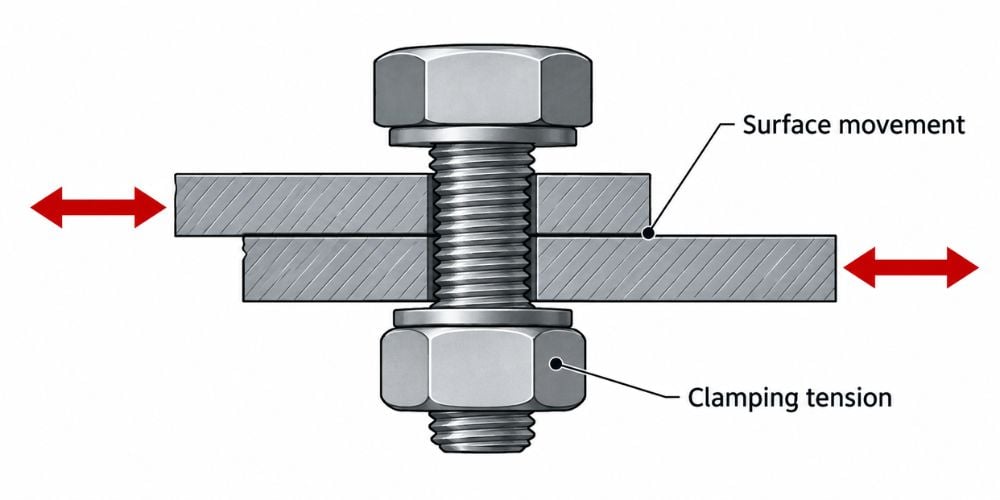
Gym machines move constantly during exercise. Every push, pull, and lift creates small vibrations that travel through the equipment.
Over time, these vibrations can make connected parts shift slightly. When that happens, bolts may lose the tension keeping them secure.
According to Nord-Lock’s explanation of bolt loosening, repeated vibration and movement between connected surfaces can cause bolts to loosen gradually.
Where does this usually happen?
- Treadmills: Running creates repeated vibration.
- Cable machines: Pulling movements place changing forces on connections.
- Leg press machines: Heavy loads create repeated stress on frame joints.
- Weight stack machines: Dropping weights creates sudden impacts.
Does every vibration loosen bolts?
No. Properly secured connections are designed to handle normal machine movement.
The problem becomes more likely when bolts are already loose or connected parts begin shifting.
I often notice that unusual rattling or clicking sounds are among the first warning signs of a loose connection.
2. Bolts Were Not Tightened Properly
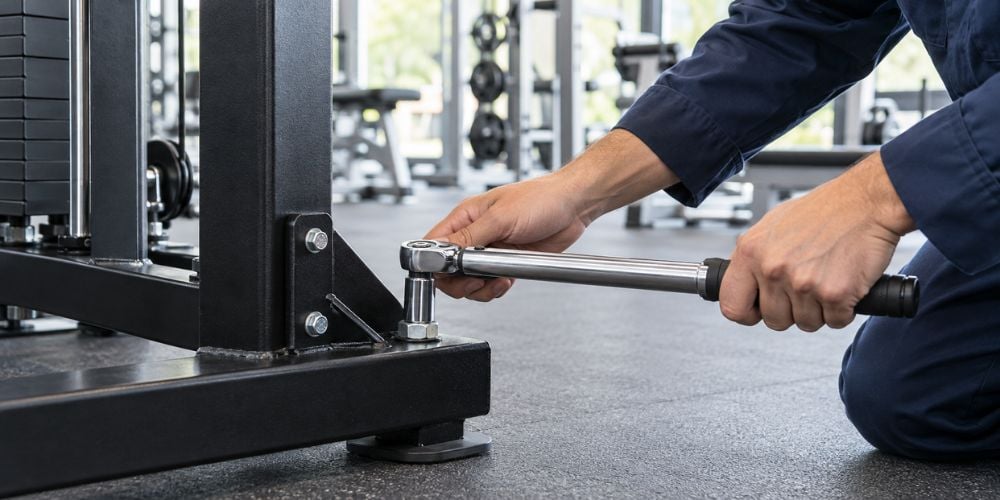
Bolts need the correct tightening force to hold machine parts securely together.
If a bolt is too loose, connected parts may shift during exercise. If it’s too tight, the threads or bolt itself can become damaged.
Common tightening mistakes include:
- Leaving bolts loose during installation.
- Tightening frame bolts unevenly.
- Applying too much force.
- Using the wrong tools during assembly.
Why Does Proper Tightening Matter?
Tightening Condition | What Can Happen |
Too loose | Parts shift and bolts loosen |
Correctly tightened | Connections remain securely clamped |
Too tight | Threads or bolts may become damaged |
Uneven tightening | Some joints experience extra stress |
Can you tell if a bolt is tight enough just by looking?
Not always. A bolt may appear secure but still lack the clamping force needed to hold parts together.
The NASA Fastener Design Manual explains how fastener torque, friction, and preload affect bolted connections.
That’s why technicians should follow the equipment manufacturer’s torque specifications instead of guessing.
3. Missing or Incorrect Locking Hardware
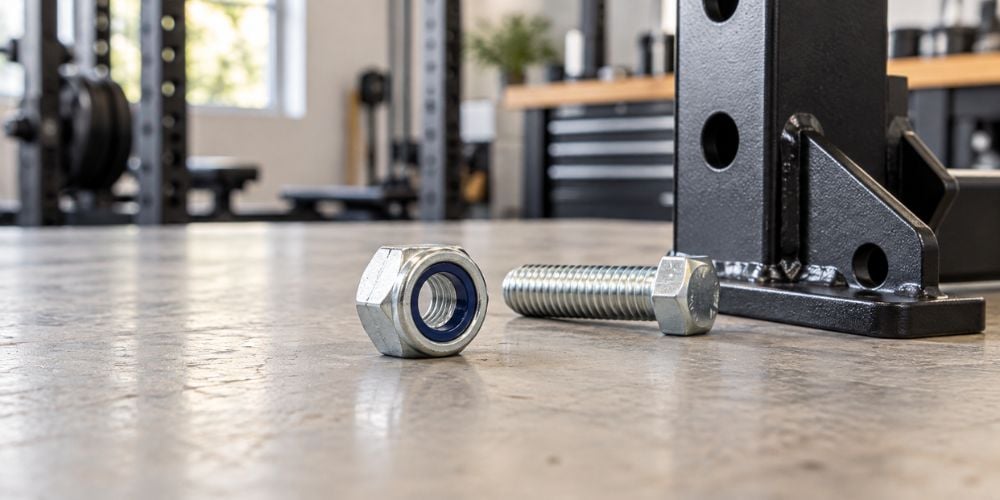
Some gym machines use special locking components to prevent bolts from loosening during repeated movement.
These parts help connections resist vibration and changing loads.
When the wrong hardware is installed, or a required locking component is missing, bolts may gradually loosen.
Common locking components include:
- Lock nuts: Help prevent unwanted rotation.
- Thread-locking compounds: Help secure threaded connections.
- Locking washers: Certain designs resist loosening.
- Specialized fasteners: Provide additional security in specific connections.
Can you fix a loose bolt by adding another washer?
Not necessarily.
Ordinary flat washers don’t automatically prevent loosening. Adding unapproved parts can also affect how the connection works.
I recommend using the locking hardware specified by the manufacturer. Different machines need different solutions, and the wrong replacement part may create another problem.
If a bolt keeps loosening, ask gym staff to have the locking components checked.
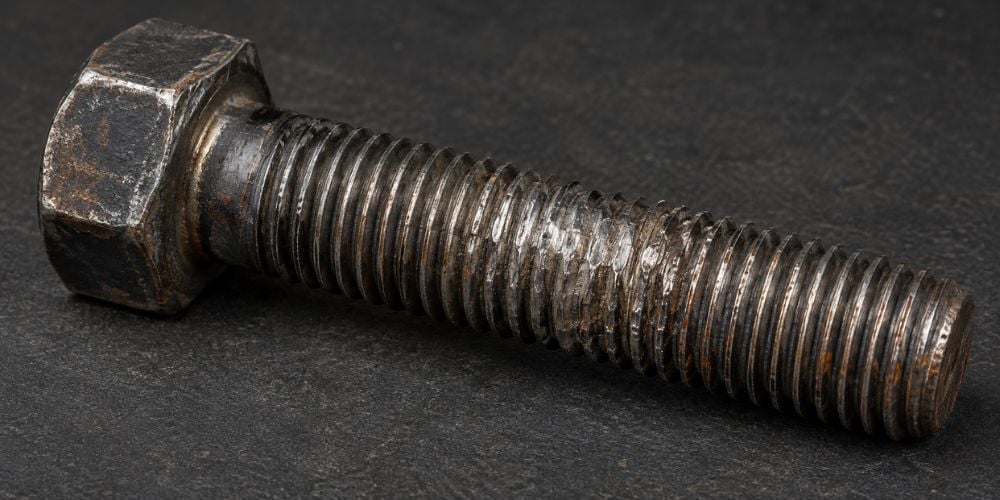
4. Worn or Damaged Bolt Threads
Bolt threads help maintain the tension that holds connected machine parts together.
When threads become worn, stripped, or damaged, the bolt may no longer stay secure.
This can happen because of repeated tightening, incorrect installation, excessive force, or corrosion.
Signs of Damaged Bolt Threads
Watch for these warning signs:
- Bolts turn without becoming tight.
- Threads look flattened or stripped.
- Rust appears around threaded connections.
- Bolts loosen repeatedly after tightening.
- Fasteners appear bent or damaged.
Why is thread damage a problem?
Damaged threads may not maintain enough clamping force to keep the connection secure.
Rust can also make bolts difficult to inspect or remove. Severe corrosion may weaken the fastener.
5. Poor Machine Assembly
Even strong bolts can loosen when gym equipment is assembled incorrectly.
If frame sections don’t fit together properly, bolts may experience uneven stress during exercise.
Over time, repeated movement can reduce the tension holding these connections together.
Common assembly mistakes include:
- Misaligned frame sections.
- Incorrect bolt sizes or lengths.
- Missing washers or spacers.
- Loose connections after installation.
- Parts assembled in the wrong order.
How Assembly Problems Affect Gym Machines
Assembly Problem | Possible Effect |
Misaligned frame | Uneven stress on bolts |
Wrong bolt size | Insecure connections |
Missing components | Reduced connection reliability |
Loose mounting points | Increased movement and vibration |
Incorrect assembly order | Poor alignment between parts |
How can you recognize poor assembly?
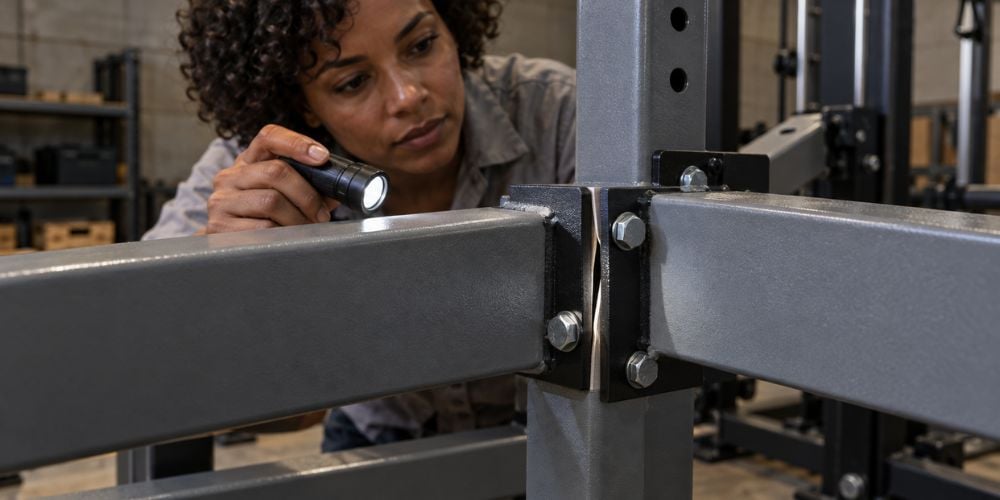
Look for visible gaps between frame sections, unexpected movement, or rattling sounds during exercise.
I’ve found that checking how machine parts fit together is just as important as checking the bolts themselves.
A properly tightened bolt cannot always compensate for a poorly aligned connection.
Looking for Commercial Gym Equipment Built for Daily Use?
At YR Fitness, we focus on solid materials, strong frame construction, and advanced manufacturing processes. Since 1997, we’ve produced commercial fitness equipment featuring self-designed movement angles and more than 40 patents, with reliable quality at competitive prices.
Explore our commercial strength equipment to learn how we approach machine construction, durability, and long-term performance.
Remember, even well-built equipment needs correct installation and regular inspections.
6. Heavy Loads and Rough Equipment Use
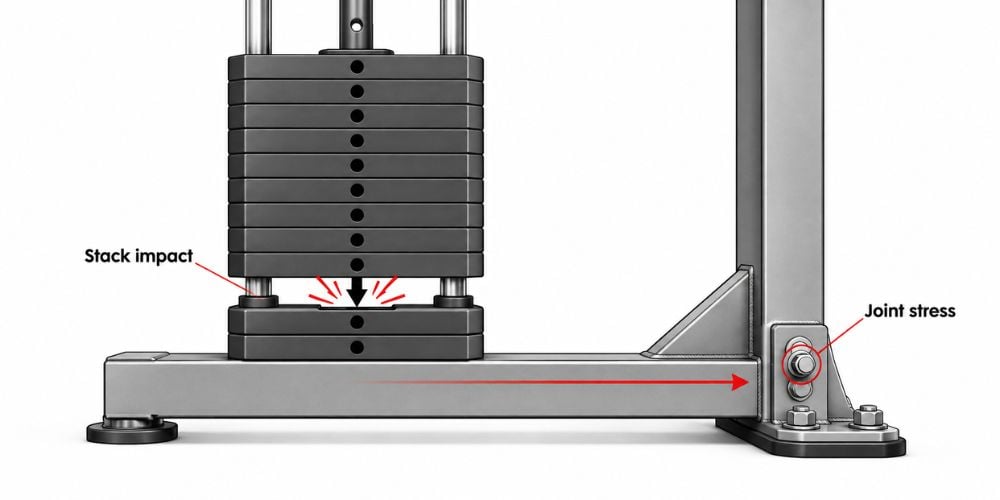
Gym machines are designed to handle repeated exercise movements. However, sudden impacts can place extra stress on bolts and connected parts.
For example, dropping a weight stack creates a sharp impact that travels through the machine.
When this happens repeatedly, connections may begin to shift, especially if they’re already loose or damaged.
Common causes include:
- Dropping weight stacks between repetitions.
- Slamming machine handles or moving parts.
- Exceeding the machine’s rated weight limit.
- Using uncontrolled or jerky movements.
- Repeatedly hitting mechanical stops.
Do heavy weights automatically loosen bolts?
No. A properly assembled commercial machine should handle loads within its rated capacity.
The bigger concern is repeated impact, incorrect loading, or existing damage to the connection.
How to Reduce Unnecessary Stress
You can help protect gym equipment with a few simple habits:
- Control your weight: Choose loads you can lift and lower smoothly.
- Avoid dropping weight stacks: Return the weights gently after each repetition.
- Use the machine correctly: Follow its intended movement path.
- Respect weight limits: Never exceed the manufacturer’s rated capacity.
- Watch for unusual movement: Stop if the machine shakes or rattles unexpectedly.
These habits reduce unnecessary stress on machine components. They also help make workouts smoother and more comfortable.
Conclusion
Gym machine bolts usually loosen because of vibration, improper tightening, missing locking hardware, damaged threads, poor assembly, or heavy impacts.
If you notice loose bolts, rattling, or unusual movement, stop using the equipment and inform gym staff. Proper inspections and repairs help keep machines safe.
At YR Fitness, we focus on strong frames and reliable machine construction for everyday training. Explore our commercial gym equipment to learn more about designs built for long-term use.
Related articles:



