








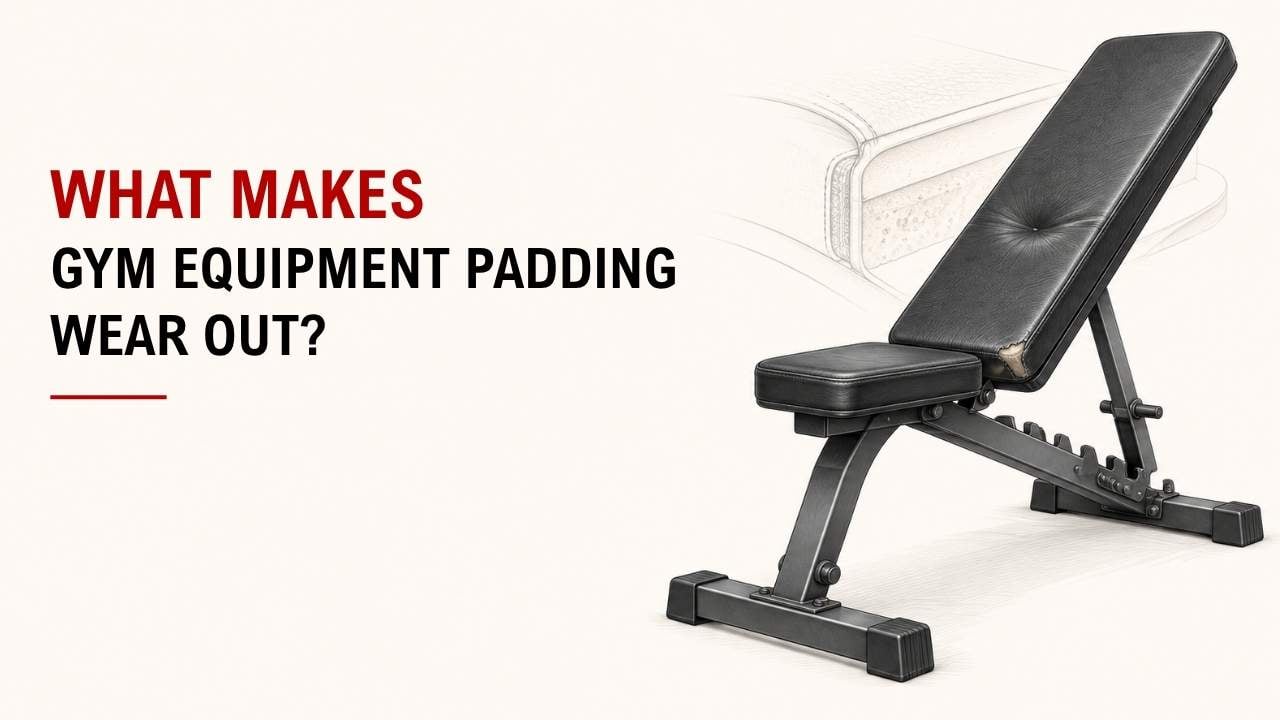

Why does gym equipment padding start to flatten, crack, or peel even when the machine still works perfectly? Most padding damage happens gradually from normal workouts, cleaning, and everyday use.
The short answer is simple: pressure, sweat, friction, harsh cleaners, heat, sunlight, and sharp objects wear gym padding down. You cannot stop normal aging completely, but you can slow it.
As a Machinery & Structural Engineer at YR Fitness, I look closely at how foam, upholstery, stitching, and other machine materials handle repeated use. I often find that padding shows wear before the main structure of a well-built machine does.
Below are the six main reasons gym padding wears out. I will also show you what the early signs look like and what you can do about them.
Gym Padding Wear at a Glance
Before we go deeper, here is the quick version.
Cause | What It Does | Early Sign |
Constant pressure | Compresses the foam | Dents or flat spots |
Sweat | Leaves moisture and salts on the surface | Discoloration or dry patches |
Friction | Wears the outer upholstery | Smooth or shiny spots |
Harsh cleaners | Dries or weakens the cover | Stiffness or cracking |
Heat and sunlight | Ages the material | Fading or brittleness |
Sharp objects | Cuts or punctures upholstery | Small tears |
If you see one of these signs, do not ignore it. Small padding problems are usually easier to deal with than large tears or badly compressed foam.
1. Constant Body Pressure Compresses the Foam
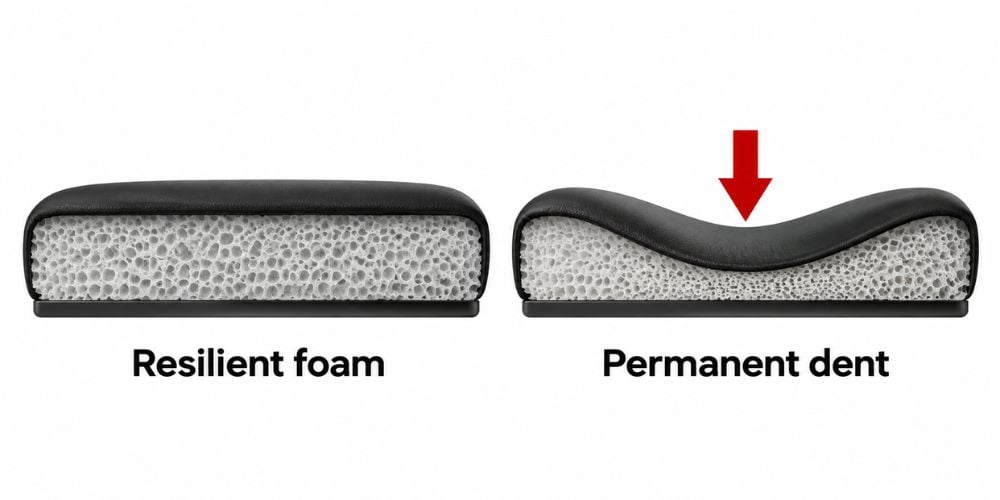
Every time you sit, lie down, or press against a machine, you compress the foam inside the pad.
That is exactly what the foam is supposed to do. The problem comes when the same area is compressed again and again.
Over time, the foam may not return fully to its original shape.
You may notice:
- Permanent dents
- A flatter seat
- Less cushioning
- Uneven support
I often see the deepest compression in the middle of benches, seats, and back pads. These are the areas taking most of your body weight.
Foam quality matters too. Softer or lower-density foam can feel comfortable when new but may lose its shape faster under repeated pressure.
Quick Check: Press the pad firmly with your hand. If one area feels noticeably thinner or stays compressed, the foam may already be breaking down.
Does a Small Dent Matter?
Not always.
A small amount of compression is normal as padding ages. But if you can clearly feel the hard base underneath or one side feels very different from the other, the pad deserves a closer look.
2. Sweat Breaks Down the Surface
Finished a hard workout and left the bench covered in sweat?
That moisture does not simply disappear without leaving anything behind.
Human sweat is mainly water but also contains electrolytes such as sodium and chloride, along with smaller amounts of other compounds. You can read more about how human sweat is composed in this scientific review.
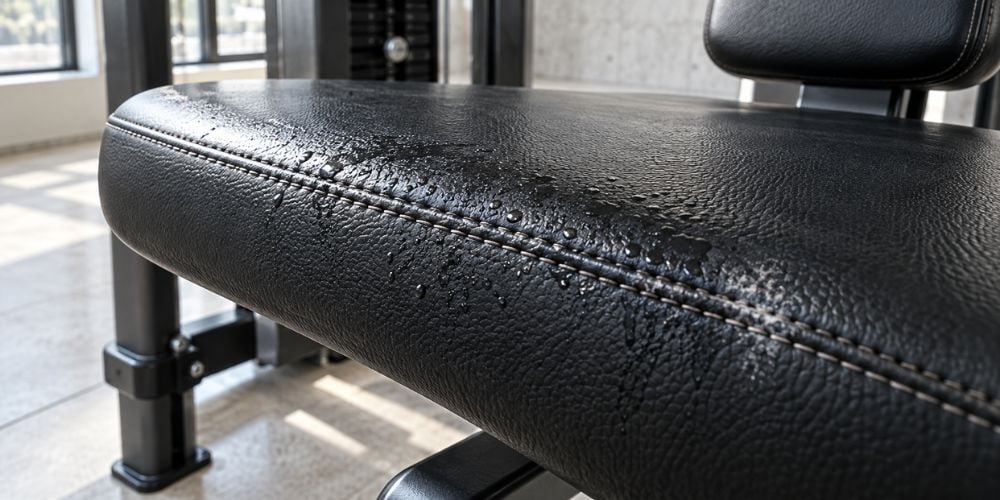
When sweat is repeatedly left on upholstery, moisture and residue can build up on the surface and around seams.
Watch for:
- Discoloration
- Dry or hard areas
- Small cracks
- Peeling around edges
Seams deserve extra attention because liquid can sit around them longer than on a flat surface.
What should you do? Wipe the pad after training rather than letting sweat dry naturally.
It takes a few seconds and removes one of the most common sources of grime from frequently used equipment.
3. Friction Wears Through the Upholstery
Do you slide across a bench before every set?
That movement creates friction.
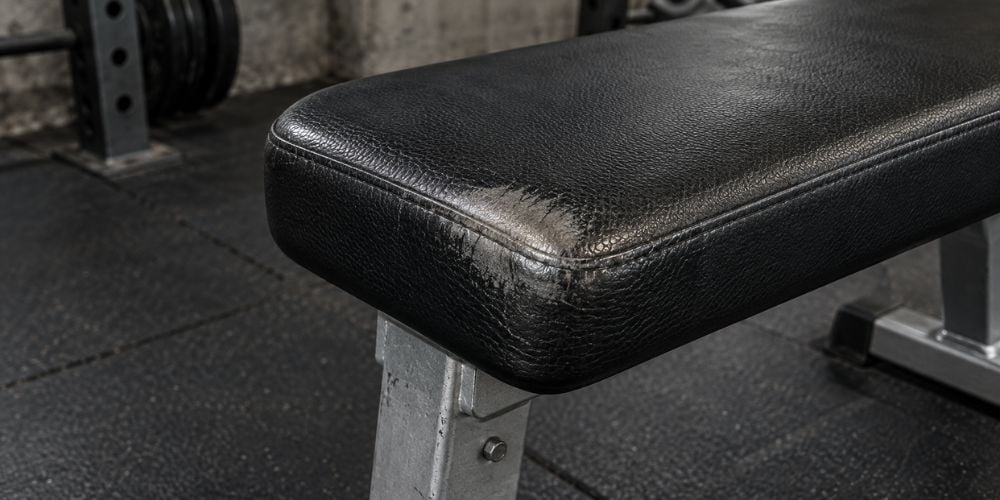
Your shirt, shorts, shoes, and body rub against the same surface repeatedly. Over hundreds or thousands of workouts, the outer material can slowly become thinner.
Common wear areas include:
- Seat edges
- Bench corners
- Backrest sides
- Shoulder contact points
- Hip contact areas
The first sign is often surprisingly small. You may simply notice that one section looks smoother or shinier than the rest.
Later, the same area can become rough, thin, or cracked.
In my experience, shiny wear spots are worth watching early. They often appear before the upholstery develops an obvious tear.
Try to sit down and stand up without unnecessarily dragging yourself across the pad.
Pressure vs. Friction: What Is the Difference?
Type of Wear | Mainly Affects | What You Usually See |
Pressure | Foam underneath | Flattening and dents |
Friction | Outer upholstery | Shiny, thin, or rough areas |
Both together | Foam and cover | Flat padding plus surface damage |
Here is why this matters: replacing upholstery alone will not solve a pad that has already lost most of its internal support.
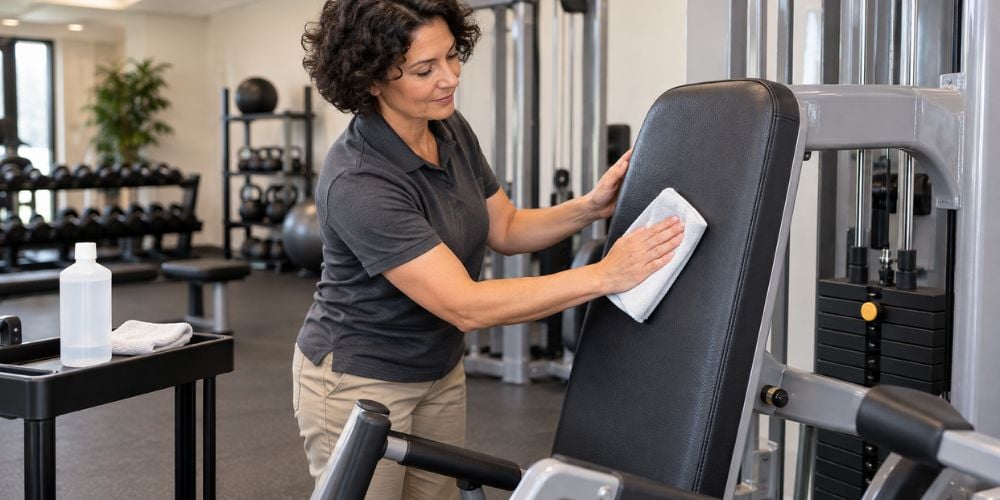
4. Strong Cleaning Chemicals Damage the Cover
Cleaning protects gym equipment, but stronger is not always better.
Some aggressive cleaners and solvents can damage or discolor vinyl materials. Upholstery manufacturer Morbern specifically warns that indiscriminate use of solvents or solvent-containing products can seriously damage vinyl, while recommending appropriate cleaning and rinsing instead.
Repeated exposure to unsuitable products can leave upholstery:
- Dry
- Hard
- Discolored
- Less flexible
- More likely to crack
You should also avoid soaking the pad. Excess liquid can collect around seams or enter through an existing cut.
Keep the routine simple:
- Use a cleaner suitable for upholstery.
- Apply only what you need.
- Wipe rather than soak the surface.
- Remove leftover moisture.
- Follow the equipment or upholstery manufacturer’s instructions.
If you train regularly and want equipment built to handle repeated pressure and daily use, look beyond how soft a pad feels on day one. At YR Fitness, we pay attention to the foam, upholstery, stitching, and overall machine construction so the equipment can handle demanding everyday training. Compare these details before choosing your next strength machine or bench.
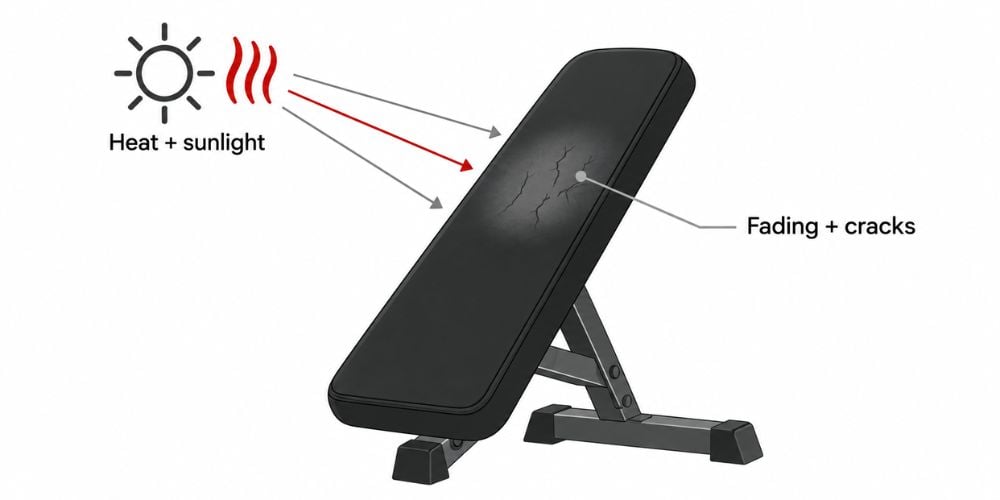
5. Heat and Sunlight Age the Material Faster
Is your bench sitting beside a window that gets strong sunlight every afternoon?
That can matter.
Ultraviolet radiation can change the surface chemistry and mechanical behavior of polymer materials. Research from the U.S. National Institute of Standards and Technology found significant physical and chemical changes in vinyl ester material after prolonged UV exposure.
Gym upholstery materials are not all identical to the material studied, but the basic lesson is useful: long-term UV exposure can age polymer-based materials.
On gym padding, you may notice:
- Fading
- Dry surfaces
- Hardening
- Small cracks
- Peeling
Heat can add to the problem by making some materials feel harder or more brittle over time.
You do not need to keep your equipment in a dark room. Just avoid unnecessary hours of strong direct sunlight when possible.
If your training room gets very hot, better ventilation can also help reduce constant heat exposure.
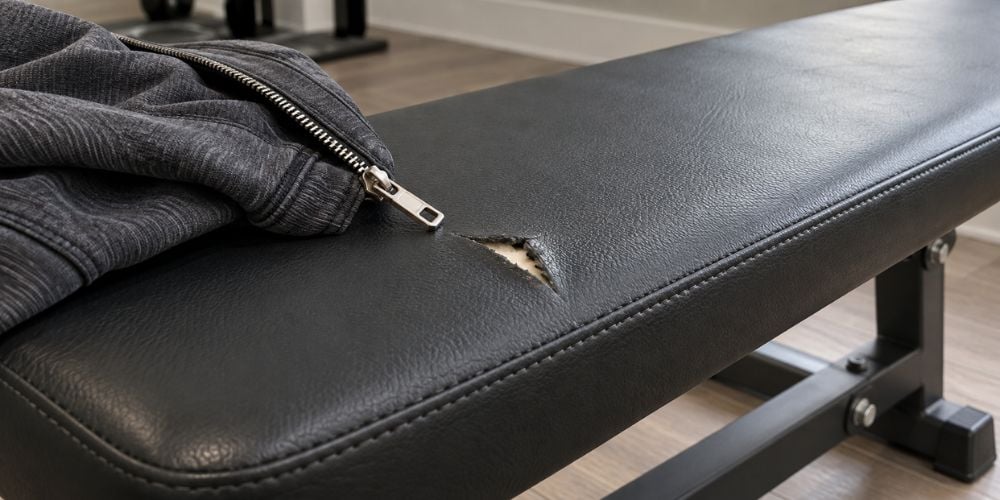
6. Sharp Objects and Rough Clothing Cause Damage
Not every pad wears out slowly.
Sometimes one zipper is enough.
Common causes of sudden damage include:
- Keys in your pocket
- Metal zippers
- Belt buckles
- Jewelry
- Sharp shoe parts
- Accessories placed directly on a bench
A tiny cut may look harmless at first.
But every time you sit or lie on that spot, the cover stretches around the cut. The opening can gradually become larger.
Once the foam is exposed, sweat and moisture can reach the inside more easily.
I have seen small cuts become much bigger simply because nobody dealt with them early. Catching the damage while it is still small is much easier.
Before sitting down: quickly check your pockets, belt, and clothing for anything sharp.
Conclusion
Gym equipment padding mainly wears out because of repeated pressure, sweat, friction, harsh cleaning products, heat, sunlight, and physical damage.
Look for dents, shiny areas, cracks, fading, and small tears before they become bigger problems.
If you want to compare equipment designed for regular heavy training, explore YR Fitness and look closely at the padding, frame, stitching, and overall construction before choosing your next machine.
Related articles:



