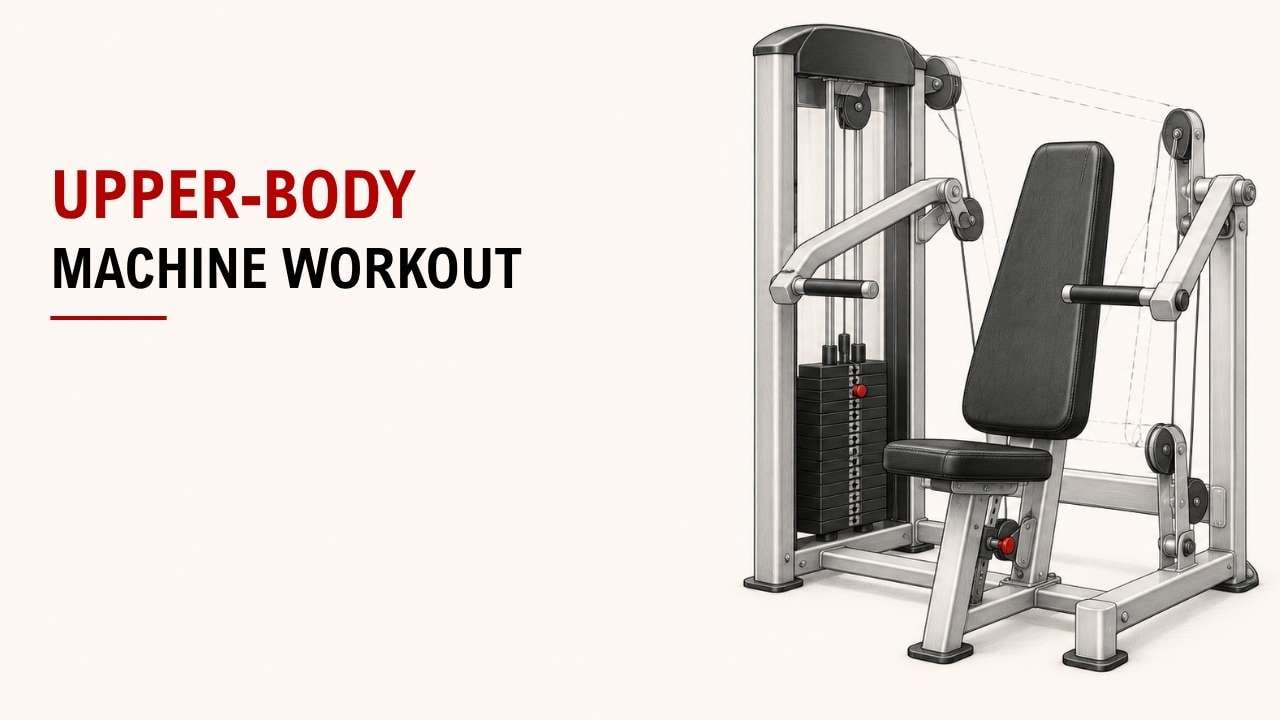

Want to train your whole upper body without jumping between complicated exercises? A few well-chosen machines can cover your chest, back, shoulders, biceps, and triceps.
The quick answer: use 7 machines, perform 2–3 sets per exercise, and aim for 8–15 controlled reps. Choose a weight that feels challenging but still lets you keep good form.
As an Exercise Physiology & Biomechanics Expert at YR Fitness, I study how exercise setup, resistance, and movement paths affect training. I often see better results when people learn each movement first instead of rushing to add more weight.
Below, I’ll walk you through the complete upper-body machine workout in order. Follow it from top to bottom, and you will have a simple routine you can repeat each week.
Upper-Body Machine Workout at a Glance
Exercise | Sets | Reps | Main Muscles |
Machine Chest Press | 3 | 8–12 | Chest, triceps, shoulders |
Lat Pulldown | 3 | 8–12 | Lats, upper back, biceps |
Seated Row Machine | 3 | 8–12 | Mid-back, lats, biceps |
Machine Shoulder Press | 3 | 8–12 | Shoulders, triceps |
Pec Deck / Chest Fly | 2–3 | 10–15 | Chest |
Biceps Curl Machine | 2–3 | 10–15 | Biceps |
Triceps Extension / Dip Machine | 2–3 | 10–15 | Triceps |
Rest around 60–90 seconds between sets. If you are a beginner, start with two sets and add more as the workout becomes easier.
Why use these rep ranges? An American Heart Association scientific statement on resistance exercise notes that moderate resistance allowing roughly 8–12 repetitions can be effective for improving muscular strength and endurance in healthy adults.
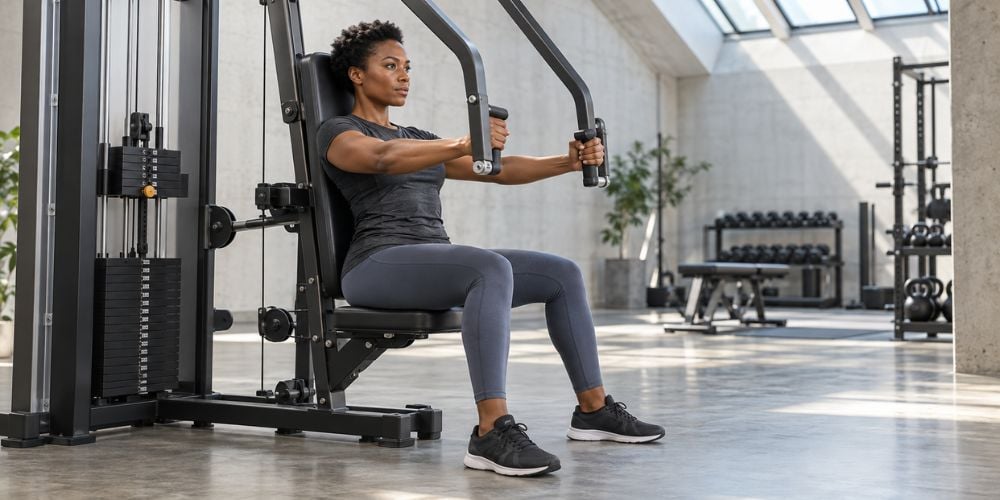
1. Machine Chest Press
Start with the chest press while your upper body is fresh.
Adjust the seat so the handles sit around the middle of your chest. Keep your back against the pad and both feet firmly on the floor.
Push the handles forward until your arms are almost straight. Then bring them back slowly.
Try this:
- 3 sets
- 8–12 reps
- Controlled push and return
Avoid locking your elbows or letting the weight stack slam down.
I often see beginners choose too much weight on their first set. I would rather see a smooth, controlled rep than a heavier rep with poor form.
2. Lat Pulldown
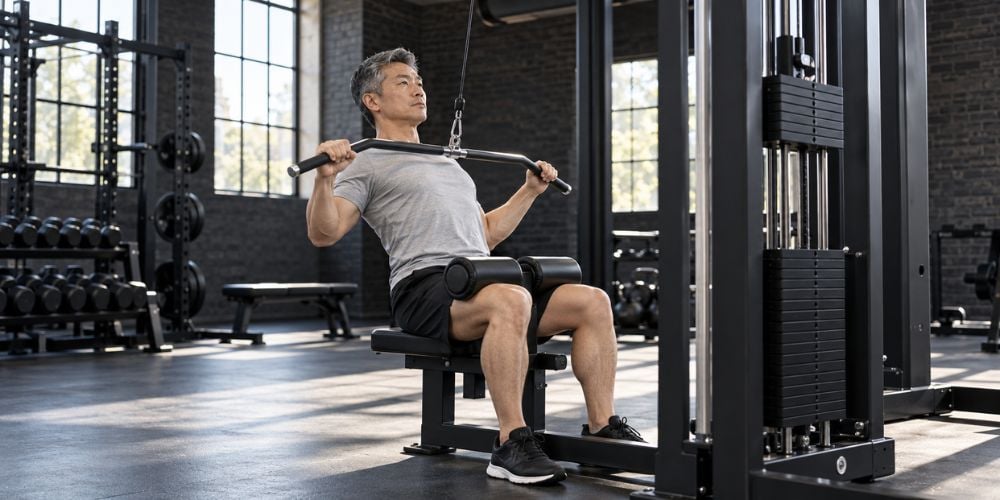
Next, train your back with the lat pulldown.
Sit down and secure your thighs under the pads. Grip the bar slightly wider than shoulder width and keep your chest lifted.
Pull the bar toward your upper chest while bringing your elbows down toward your sides. Slowly extend your arms again.
Try this:
- 3 sets
- 8–12 reps
- Slow return at the top
Keep the bar in front of your body. There is no need to pull it behind your neck.
3. Seated Row Machine
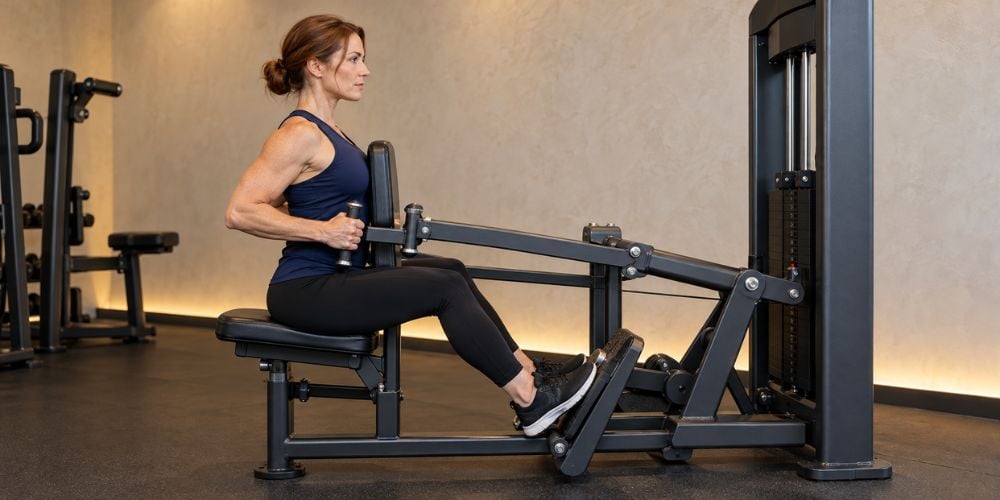
Now move to the seated row for more mid-back work.
Sit tall, grip the handles, and pull them toward your lower ribs. Keep your shoulders down and your torso mostly still.
Pause briefly when your elbows move behind your body. Then slowly extend your arms again.
Try this:
- 3 sets
- 8–12 reps
- Brief squeeze at the end of each pull
A common mistake is rocking backward to move the weight. I prefer keeping the torso stable so your back muscles do more of the work.
Here is why this matters: better control makes it easier to repeat the same movement and judge when you are actually ready for more resistance. The latest ACSM position stand on resistance training also supports progressive resistance training as the foundation for improving strength, muscle size, and physical performance.
A good machine should feel stable, smooth, and easy to adjust before you even start your working set. At YR Fitness, we design our commercial strength equipment with practical movement paths, adjustable training positions, and durable construction so users can focus more on the exercise itself.
Curious how different machine designs handle presses, rows, and pulldowns? Explore our strength equipment range.
4. Machine Shoulder Press
Next, move to your shoulders.
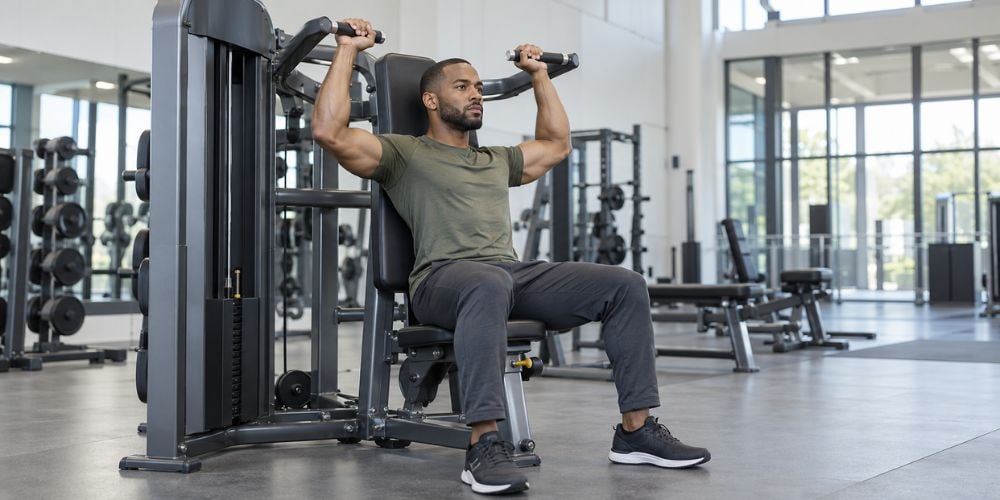
Adjust the seat so the handles start around shoulder height. Keep your back supported and your feet on the floor.
Press the handles upward until your arms are nearly straight. Lower them slowly to the starting position.
Try this:
- 3 sets
- 8–12 reps
- Keep your shoulders relaxed
Avoid using momentum or pushing your head forward.
Take a few seconds to check the seat before your first working set. I have found that small changes in seat height and handle position can make a big difference in how comfortable the press feels.
Quick Machine Setup Check
Not sure whether you are set up correctly? Use this quick check before each exercise.
Machine | Quick Setup Check | Common Mistake |
Chest Press | Handles around mid-chest | Locking elbows |
Lat Pulldown | Thighs secured, chest lifted | Pulling behind the neck |
Seated Row | Sit tall, shoulders down | Rocking backward |
Shoulder Press | Handles around shoulder height | Using momentum |
Pec Deck | Arms lined up with chest | Using too much weight |
Biceps Curl | Upper arms supported | Moving shoulders forward |
Triceps Machine | Upper body stable | Rushing the return |
It only takes a few seconds. Those few seconds can make the rest of your set much easier to control.
5. Pec Deck / Chest Fly
Now return to the chest with a more focused movement.
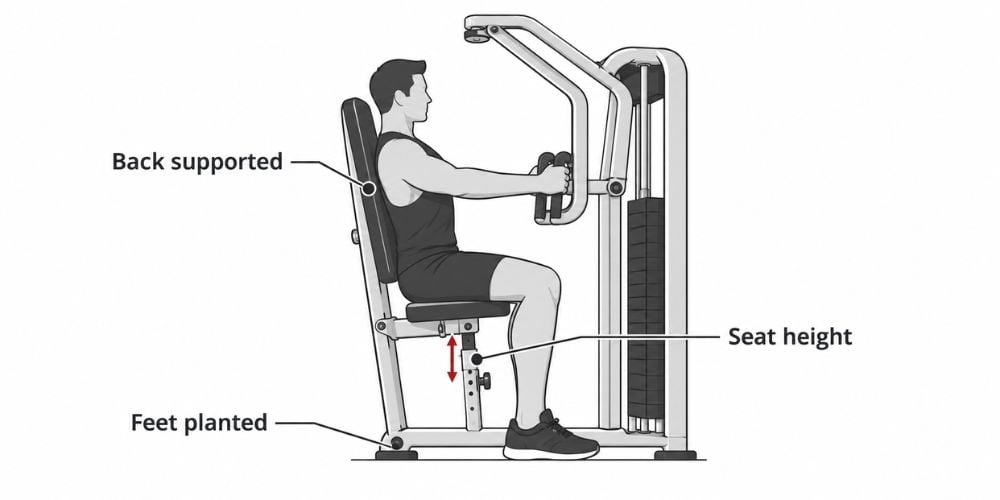
Adjust the seat so your arms line up comfortably with your chest. Keep a slight bend in your elbows.
Bring your arms together in front of you and briefly squeeze your chest. Return slowly until you feel a comfortable stretch.
Try this:
- 2–3 sets
- 10–15 reps
- Smooth, controlled movement
You do not need very heavy weight here. Focus on keeping tension on your chest from start to finish.
6. Biceps Curl Machine
Next, train your biceps directly.
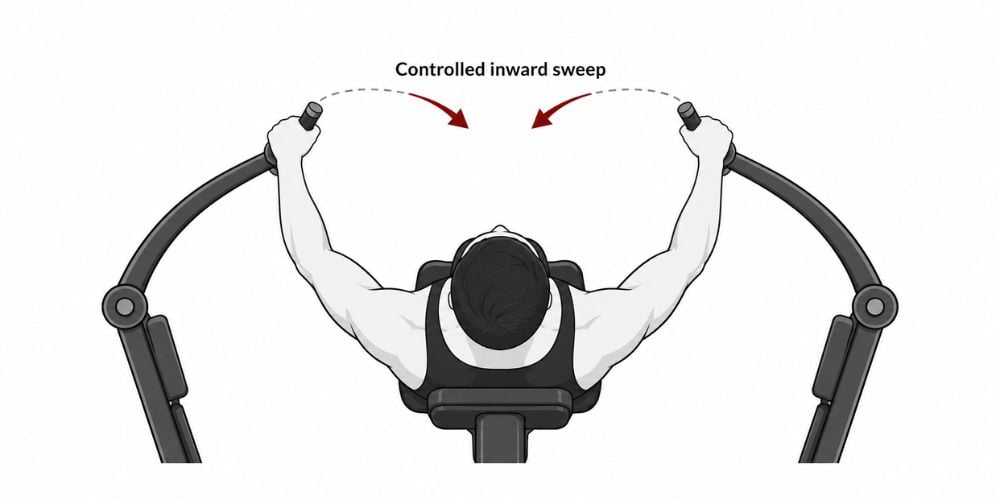
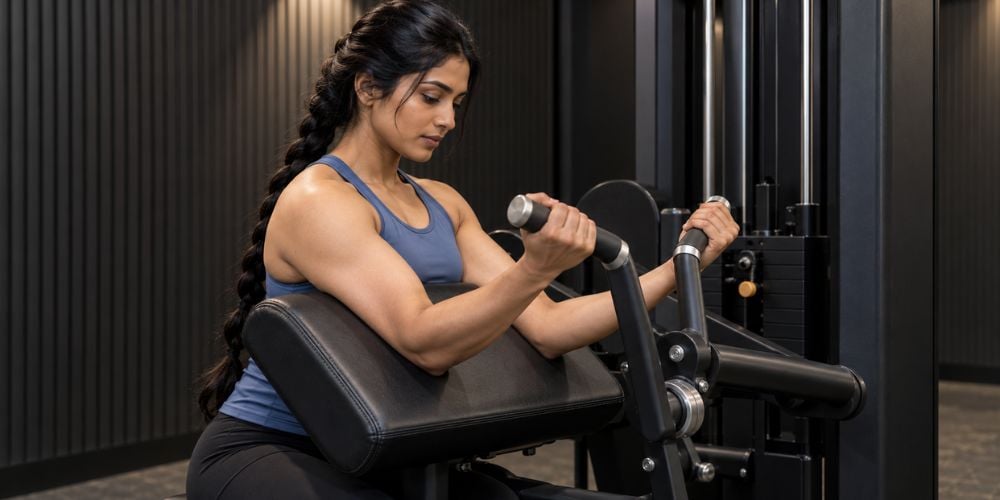
Sit with your upper arms supported by the pad. Grip the handles and curl them toward your shoulders.
Keep your upper arms in place as you lift. Lower the handles slowly rather than letting the resistance drop.
Try this:
- 2–3 sets
- 10–15 reps
- Keep your elbows stable
Are your shoulders moving forward? That is usually a good sign to reduce the resistance and regain control.
7. Triceps Extension or Dip Machine
Finish the workout with your triceps.
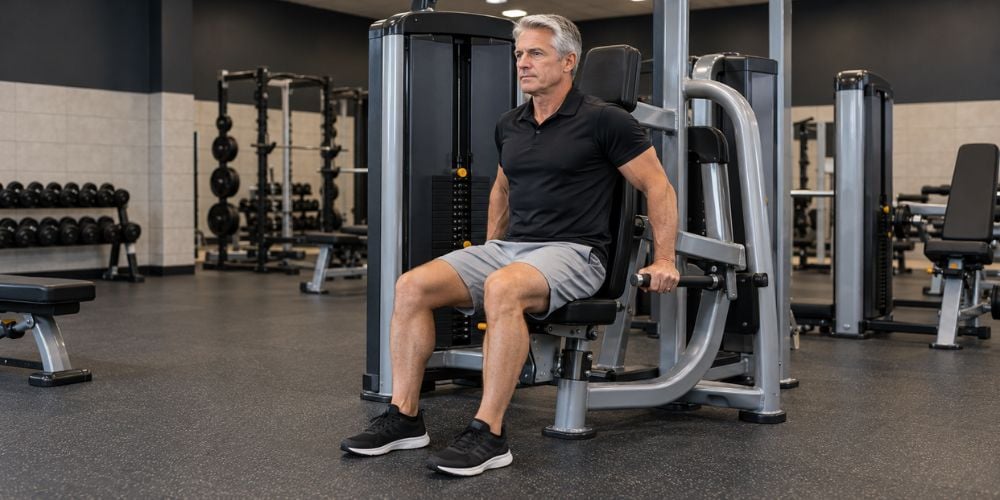
On a triceps extension machine, keep your upper arms stable and straighten your elbows against the resistance. On a seated dip machine, press the handles downward while keeping your torso controlled.
Return slowly after every rep.
Try this:
- 2–3 sets
- 10–15 reps
- Smooth extension and controlled return
Your triceps have already worked during the chest and shoulder presses. Do not be surprised if you need less weight here.
How Often Should You Do This Workout?
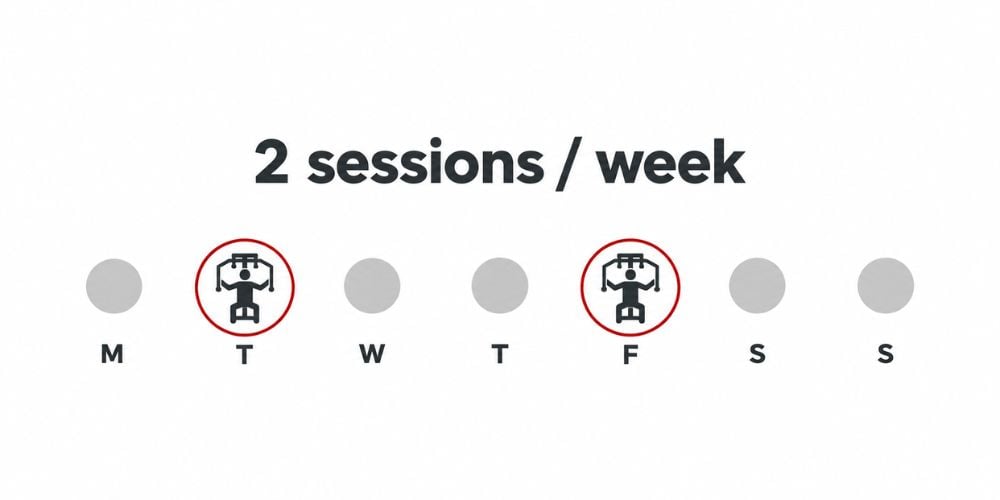
For most fitness lovers, two upper-body sessions per week is a simple starting point.
That also fits the CDC physical activity guidance for adults, which recommends muscle-strengthening activities on at least two days each week and covering the major muscle groups.
Give your muscles enough recovery between hard sessions. If you already do separate chest, back, or arm workouts, reduce the volume so you are not repeating too much work.
Do you need every machine in the gym? No.
Stick with a manageable group of exercises. Gradually improve your reps, control, or resistance instead of changing the workout every few sessions.
Conclusion
A good upper-body machine workout can stay simple: chest press, lat pulldown, seated row, shoulder press, pec deck, biceps curl, and triceps work. Use controlled reps, choose manageable resistance, and increase the weight gradually as you get stronger.
Master these basic movements first, and you already have a solid upper-body routine.
If you also want to see the equipment behind workouts like this, YR Fitness offers commercial strength machines covering pressing, pulling, shoulder, chest, and arm training. Browse the strength equipment range and compare your options.
Related articles: