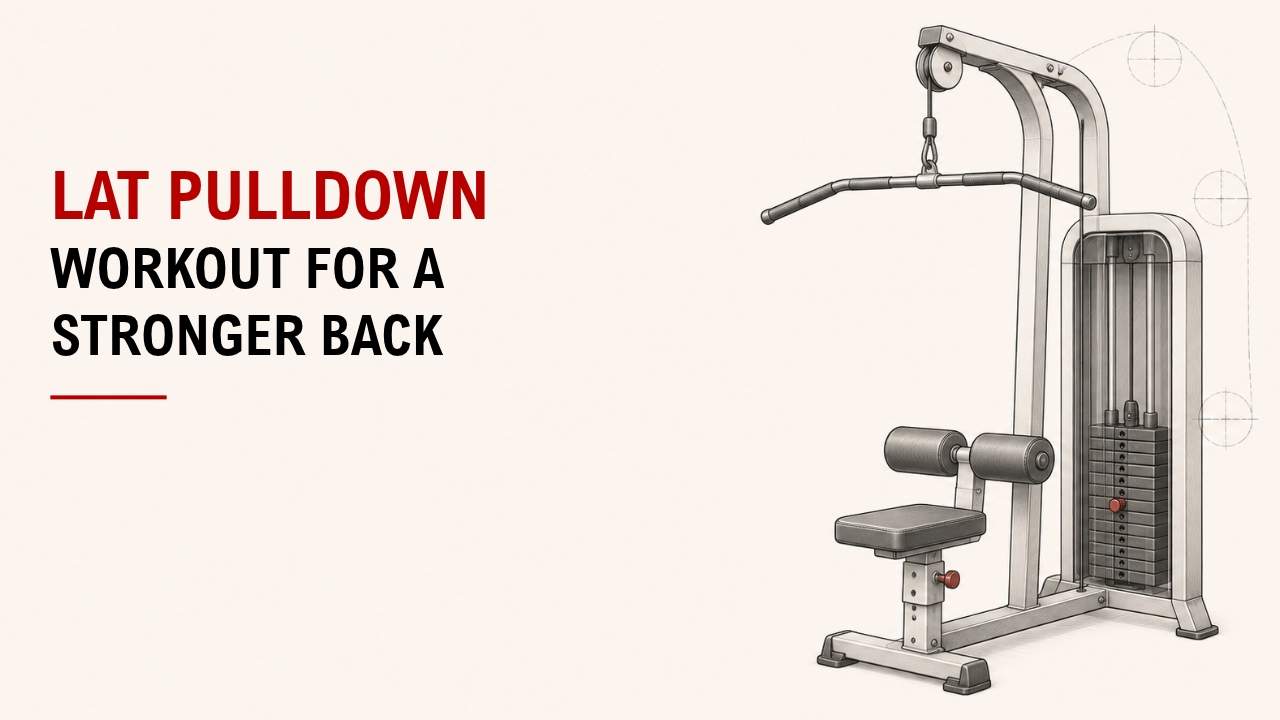

Want to build a stronger back but aren’t sure which lat pulldown exercises to do? You don’t need a complicated routine to get started.
A good lat pulldown workout uses different grips to strengthen your back and improve pulling power. Four simple exercises are enough to give your lats a solid workout.
As an Exercise Physiology & Biomechanics Expert at YR Fitness, I help fitness lovers understand how to train safely and effectively. I always recommend controlled movements over lifting heavy weights with poor form.
In this guide, you’ll learn four lat pulldown exercises with clear sets, reps, and instructions. Follow the workout below to start building a stronger back.
Lat Pulldown Workout at a Glance
Here’s a simple back workout you can follow at the gym.
Exercise | Sets | Reps | Rest |
Wide-Grip Lat Pulldown | 3 | 10–12 | 60–90 sec |
Close-Grip Lat Pulldown | 2 | 10–12 | 60–90 sec |
Reverse-Grip Lat Pulldown | 2 | 8–12 | 60–90 sec |
Single-Arm Lat Pulldown | 2 | 10–12 per arm | 60 sec |
Workout duration: Around 20–30 minutes
Frequency: 1–2 times per week
Equipment: Lat pulldown machine with suitable attachments
Before starting, warm up with 1–2 light sets of 12–15 reps. Choose a weight you can control throughout the movement.
New to this machine? Read this guide on how to use a lat pulldown machine to understand the basic setup before your first set.
1. Wide-Grip Lat Pulldown
Sets: 3 | Reps: 10–12
The wide-grip lat pulldown is a good exercise to start your back workout. It mainly targets your lats, the large muscles that help give your back its width.
Your upper-back muscles also help during the movement.
How to Do It
- Sit on the machine and secure your thighs under the pads.
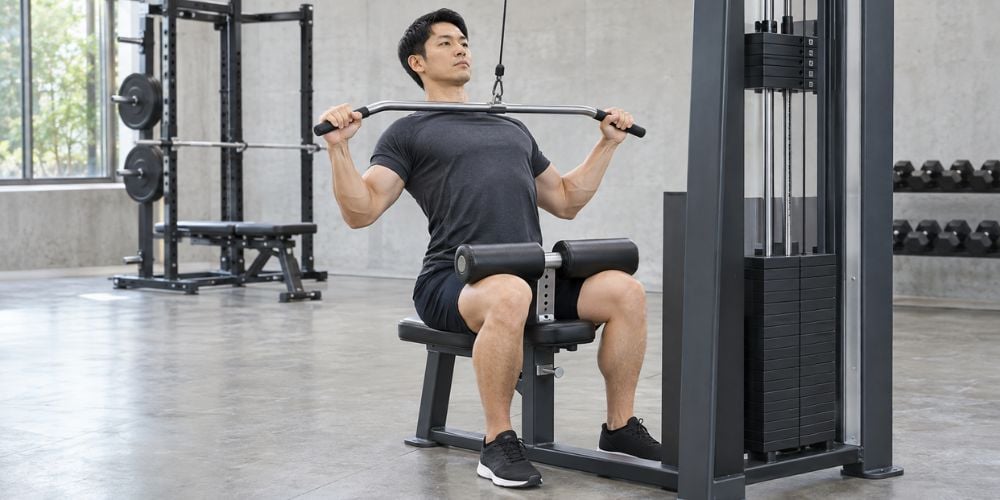
- Hold the bar slightly wider than shoulder-width.
- Lift your chest and lean back slightly.
- Pull the bar toward your upper chest.
- Slowly extend your arms to return to the starting position.
Workout Tip: Focus on pulling your elbows downward instead of just pulling with your hands.
I often see people grab the bar too wide, thinking it will build a wider back. A comfortable grip usually makes it easier to control the weight.
The American Council on Exercise’s seated lat pulldown guide also recommends keeping your torso stable and pulling toward your upper chest.
Leaning back too much? Reduce the weight and keep your torso steady. You can also follow these simple fixes for leaning back during lat pulldowns.
2. Close-Grip Lat Pulldown
Sets: 2 | Reps: 10–12
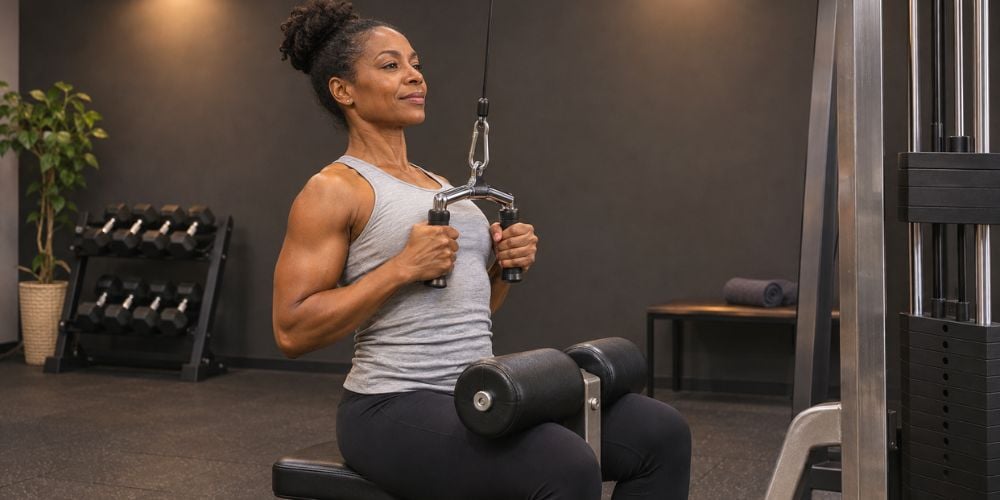
The close-grip lat pulldown works your lats while bringing your biceps into the movement.
Using a neutral-grip handle, with your palms facing each other, can also feel more comfortable for your wrists and shoulders.
How to Do It
- Attach a close neutral-grip handle to the cable.
- Sit down and adjust the thigh pads.
- Hold the handle with your palms facing each other.
- Pull the handle toward your upper chest.
- Slowly return until your arms extend overhead.
Workout Tip: Keep your elbows close to your body. Avoid leaning too far backward when pulling the weight.
Why does the setup matter?
If your thighs aren’t secure, your body may lift off the seat when pulling. This makes the movement harder to control.
Before starting, check your seat height and thigh pads. This lat pulldown machine adjustment guide explains how to set up the machine for a more comfortable workout.
3. Reverse-Grip Lat Pulldown
Sets: 2 | Reps: 8–12
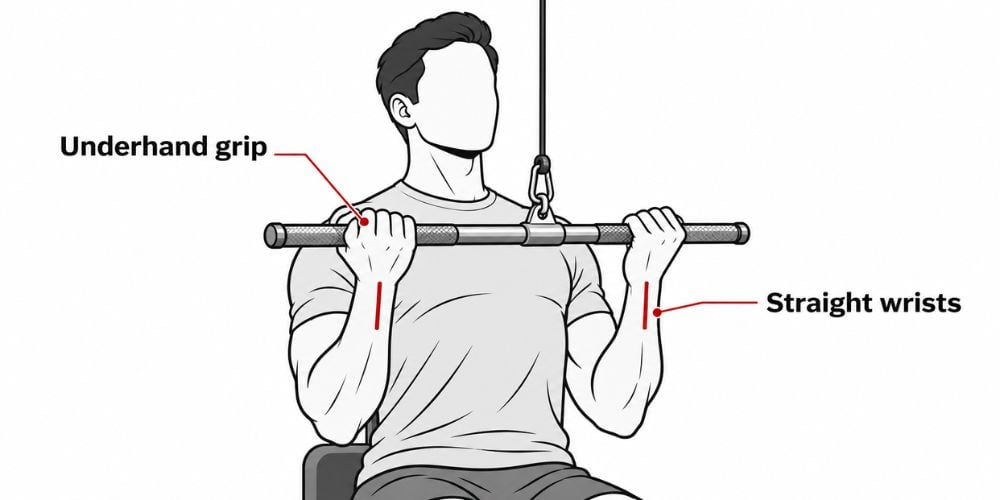
The reverse-grip lat pulldown uses an underhand grip, meaning your palms face toward you.
This variation strengthens your lats while allowing your biceps to assist with the pull. It’s a simple way to change your grip without changing machines.
How to Do It
- Sit on the machine and adjust the thigh pads.
- Grab the bar with your palms facing you.
- Keep your hands around shoulder-width apart.
- Pull the bar toward your upper chest.
- Slowly raise the bar until your arms extend.
Workout Tip: Keep your wrists straight and avoid swinging your body to lift the weight.
Feeling discomfort in your wrists? Try a lighter weight or switch to a more comfortable grip.
I suggest starting light when trying this variation for the first time. Once the movement feels natural, you can gradually increase resistance.
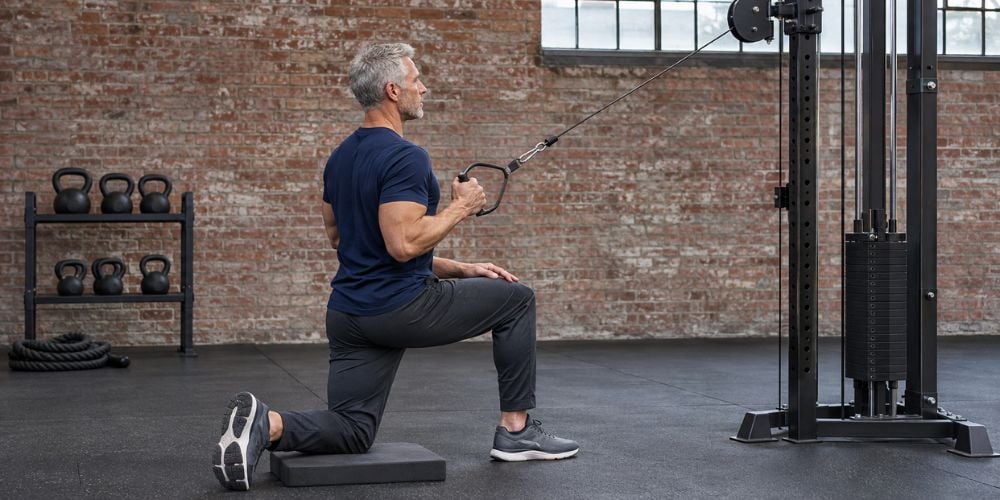
4. Single-Arm Lat Pulldown
Sets: 2 | Reps: 10–12 per arm
The single-arm lat pulldown lets you train one side of your back at a time.
It’s useful when one arm feels stronger than the other. It also helps you focus on controlling each side separately.
How to Do It
- Attach a single-hand handle to a suitable high cable pulley.
- Sit or kneel in a stable position.
- Hold the handle with one hand and extend your arm overhead.
- Pull your elbow downward toward your side.
- Slowly return to the starting position.
- Finish your reps before switching arms.
Workout Tip: Start with your weaker side and use the same weight and reps for both arms. Keep your torso steady instead of twisting as you pull.
You don’t need heavy resistance here. Focus on smooth and controlled repetitions.
A stable machine with smooth resistance can also help you perform this movement consistently.
At YR Fitness, we design commercial strength equipment with stable support, practical adjustments, and controlled movement paths. If you want to see another way to train each side of your back, explore our ISO-Lateral Front Lat Pulldown Machine, which features independent pulling arms for separate left- and right-side training.
5. How to Progress With This Lat Pulldown Workout
Building a stronger back takes regular practice. You don’t need to increase the weight every time you train.
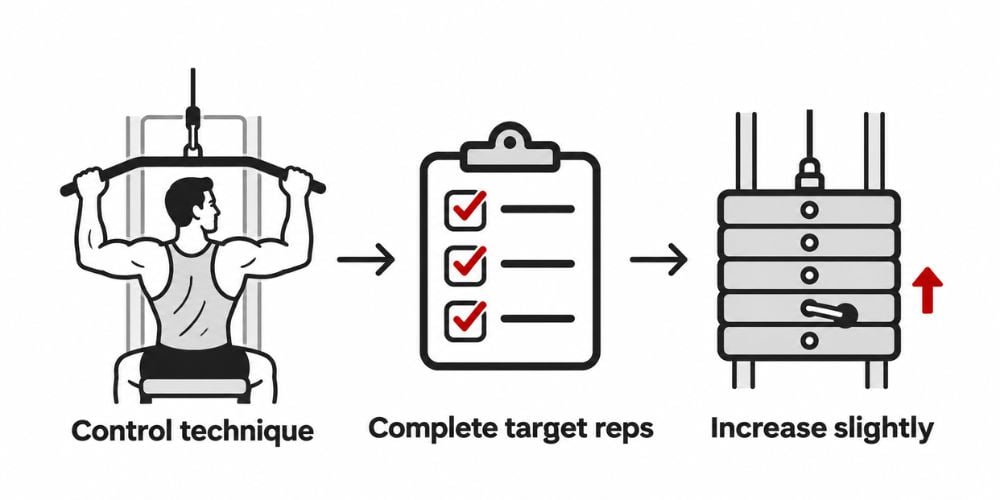
Start with good technique, complete your target reps, and gradually make the workout harder.
Adjust the Workout to Your Fitness Level
Fitness Level | Workout Plan | Main Focus |
Beginner | 2 exercises, 2 sets each | Learn proper movement |
Intermediate | Follow all 4 exercises | Build strength and control |
Advanced | Follow all 4 exercises with progressive resistance | Increase training difficulty |
Start With Manageable Weights
Choose a weight that lets you finish your reps without swinging or leaning too far backward.
The last few reps should feel challenging, but you should still control the movement.
Increase the Weight Gradually
Can you finish every set without losing control?
If yes, you may be ready to increase the weight.
For example, if you can comfortably complete 3 sets of 12 wide-grip pulldowns, try the next available weight during your next workout.
Keep the increase small so you don’t lose your technique.
Train Your Back Consistently
Perform this workout 1–2 times per week based on your training schedule.
The American College of Sports Medicine’s updated resistance training guidelines recommend training all major muscle groups at least twice weekly. Consistency matters more than following an overly complicated routine.
Allow at least 48 hours between challenging back sessions. If you already do rows or pull-ups, reduce some pulldown sets to avoid unnecessary fatigue.
Conclusion
A lat pulldown workout is a simple way to build a stronger back and improve your upper-body pulling strength.
Start with wide-grip and close-grip pulldowns, then add reverse-grip and single-arm variations as you improve. Keep your movements controlled and increase the weight gradually.
The right machine can also make your workout more comfortable. If you’d like to explore different equipment options, check out the lat pulldown machines at YR Fitness to compare machine designs and pulling options.
Related articles: