




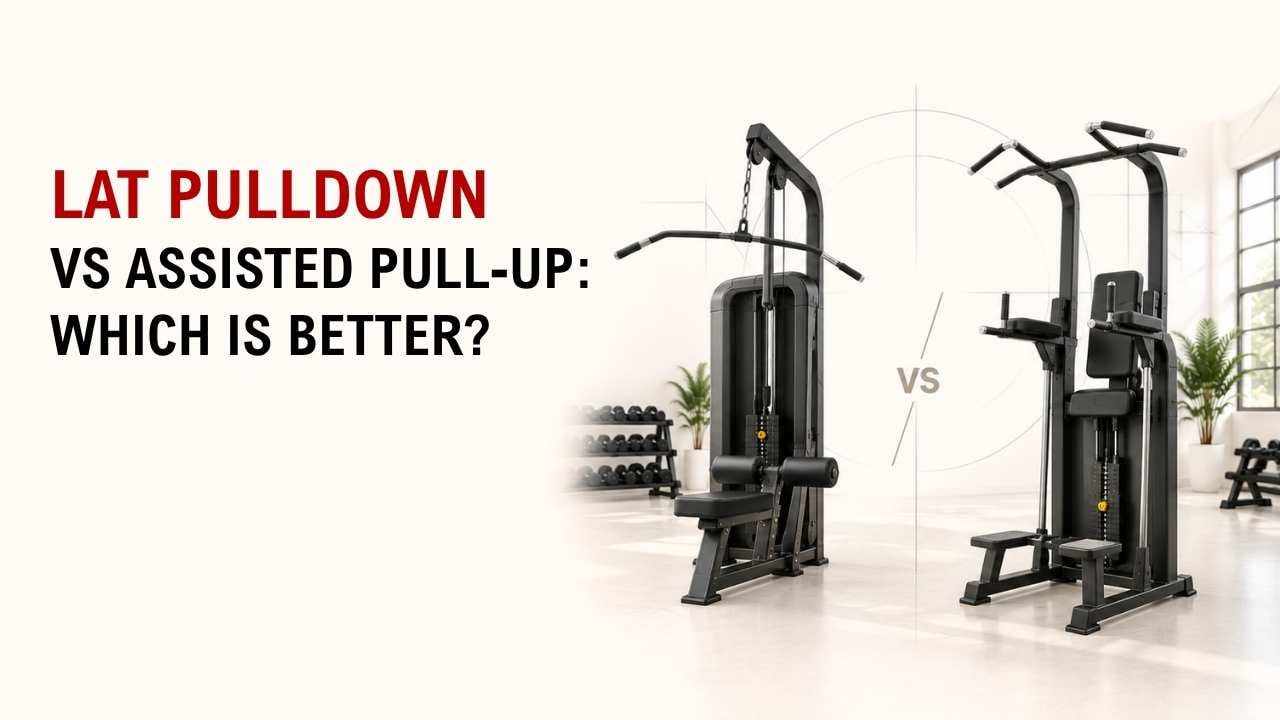

Not sure whether to choose the lat pulldown or assisted pull-up? Both train your back, but they do it in different ways.
Choose the lat pulldown for more control and easy weight changes. Choose the assisted pull-up if you want to improve your pull-up strength.
As the founder and chief designer of YR Fitness, I have spent decades working with strength machines and movement design. That experience has shown me that both exercises work well when matched to the right goal.
Below, I will compare the main differences so you can quickly decide which one fits your workout.
1. The Main Difference Is How You Move
The main difference is easy to see.
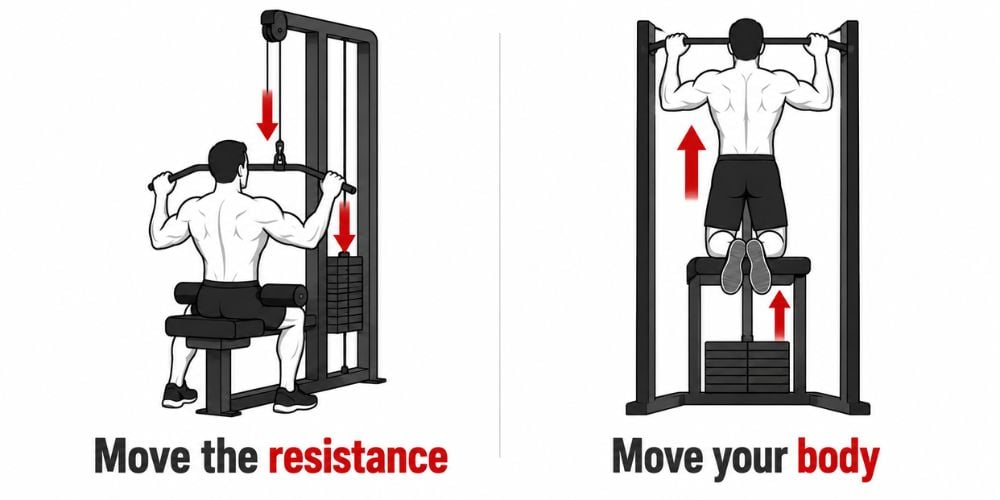
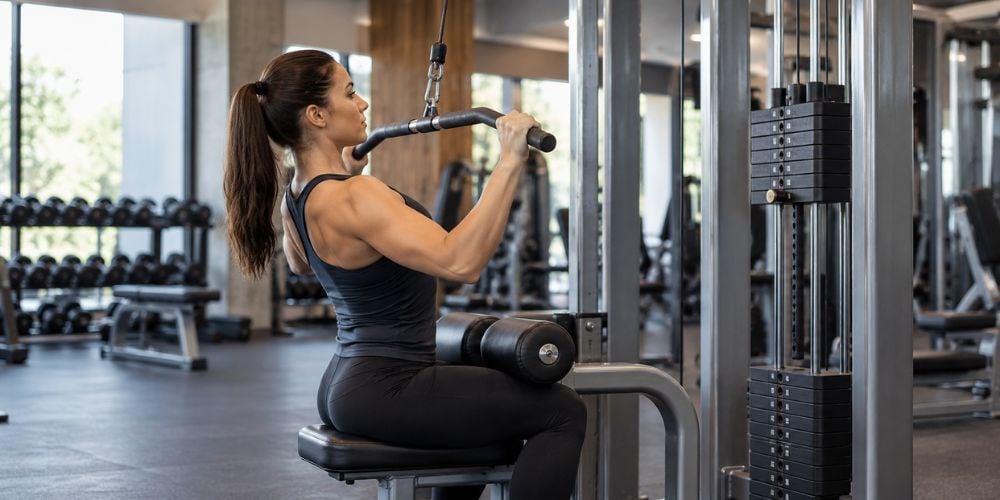
On a lat pulldown, you sit in place while pulling the bar toward your upper chest. The American Council on Exercise’s lat pulldown guide also recommends securing your thighs, keeping your torso controlled, and pulling the bar toward the upper or middle chest.
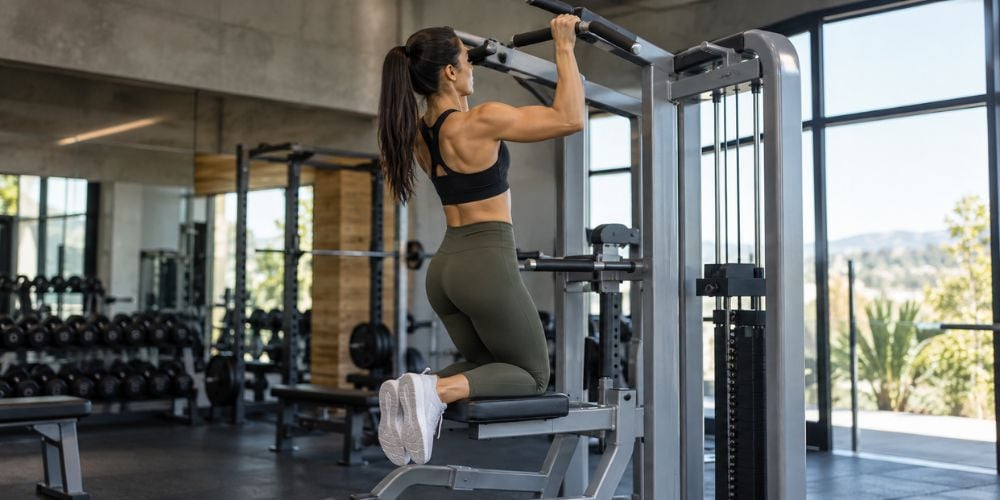
On an assisted pull-up, the bar stays fixed while you pull your body upward. The machine supports part of your bodyweight through a knee or foot platform.
Want to get better at regular pull-ups?
The assisted version is more specific because you are practicing almost the same body movement. NASM also lists the assisted pull-up machine as a progression toward full pull-ups.
Here is the difference in one line:
Lat pulldown = move the resistance.
Assisted pull-up = move your body.
2. Both Train Similar Muscles
Do they train completely different parts of your back?
No.
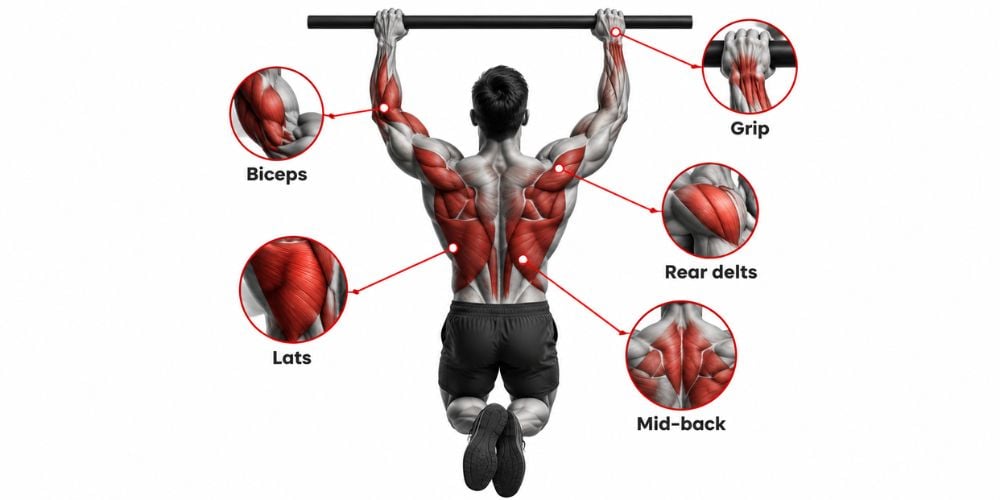
Both mainly involve your:
- Latissimus dorsi (lats)
- Biceps
- Rhomboids and mid-back
- Rear shoulders
- Forearms and grip
The lat pulldown follows a similar vertical pulling pattern. NASM’s lat pulldown biomechanics guide describes the latissimus dorsi as the main driver of the exercise.
The assisted pull-up does ask for more whole-body control because your body is moving through space.
But if your basic goal is building a stronger back, both are useful.
3. Lat Pulldowns Are Easier to Control
The lat pulldown is usually easier to learn.
You sit down, secure your thighs under the pads, choose a weight, and start pulling. Because your body is supported, you can focus more closely on movement.
Why does that matter?
It makes several things easier:
- Changing resistance
- Controlling each repetition
- Keeping your body stable
- Focusing on your lats
- Increasing resistance gradually
For example, if 40 kg feels too heavy, you can drop to 35 kg immediately and continue training.
I often prefer this approach when someone is still learning how a vertical pull should feel. You can focus on driving your elbows down without worrying as much about controlling your whole body.
Simple form cue: pull with control, then let the bar return slowly. ACE also recommends avoiding excessive backward lean during the movement.
Take a look at the YR Fitness assisted chin-up machine and other strength-machine options. We design the resistance and movement path to help users progress with more control, so you can see how machine design changes the training experience.
4. Assisted Pull-Ups Require More Body Control
The assisted pull-up feels more like a bodyweight exercise.
Instead of pulling a bar down, you pull yourself up.
That means you need to control more than your back. Your shoulders, torso, hips, core, and grip all play a role.
There is also one adjustment that often confuses beginners:
Exercise | To Make It Harder | To Make It Easier |
Lat Pulldown | Add weight | Remove weight |
Assisted Pull-Up | Reduce assistance | Add assistance |
So remember: assistance works in reverse.
If the machine gives you 40 kg of assistance, you are lifting less of your bodyweight than you would with 20 kg of assistance.
Want to reach your first pull-up?
Start with enough assistance to complete controlled reps. Then gradually reduce the help as you become stronger.
5. Which Is Better for Beginners?
For most complete beginners, start with the lat pulldown.
It gives you more stability and makes resistance changes very simple.
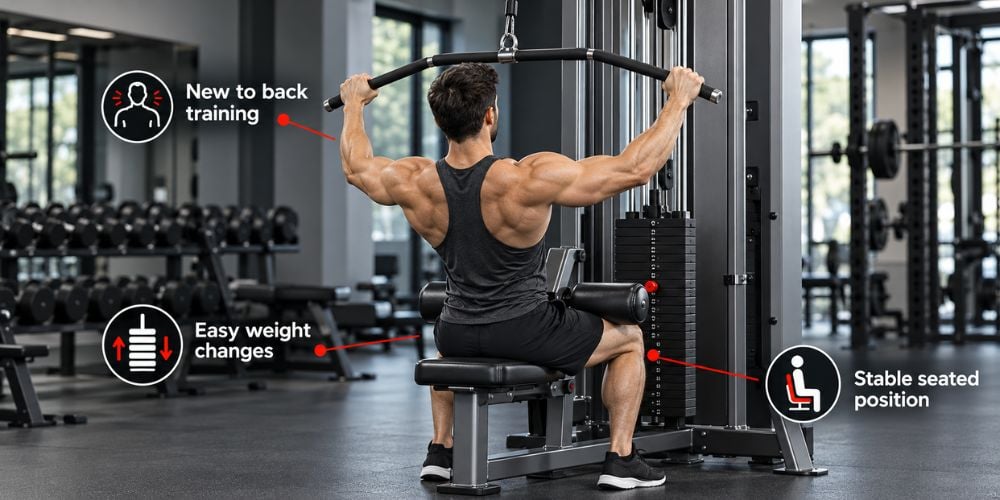
Choose the Lat Pulldown If You:
- Are new to back training
- Want simple weight adjustments
- Find pull-ups difficult
- Want to focus on your lats
- Prefer a stable seated position
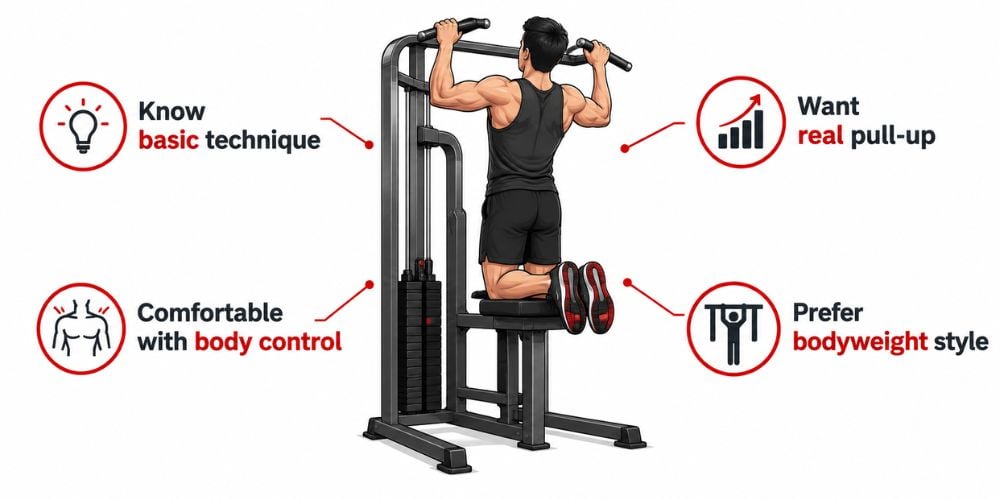
Choose the Assisted Pull-Up If You:
- Understand basic pulling technique
- Want to perform a real pull-up
- Are comfortable controlling your body
- Prefer bodyweight-style training
Not sure which path to follow?
Try this:
Stage | Exercise | Main Goal |
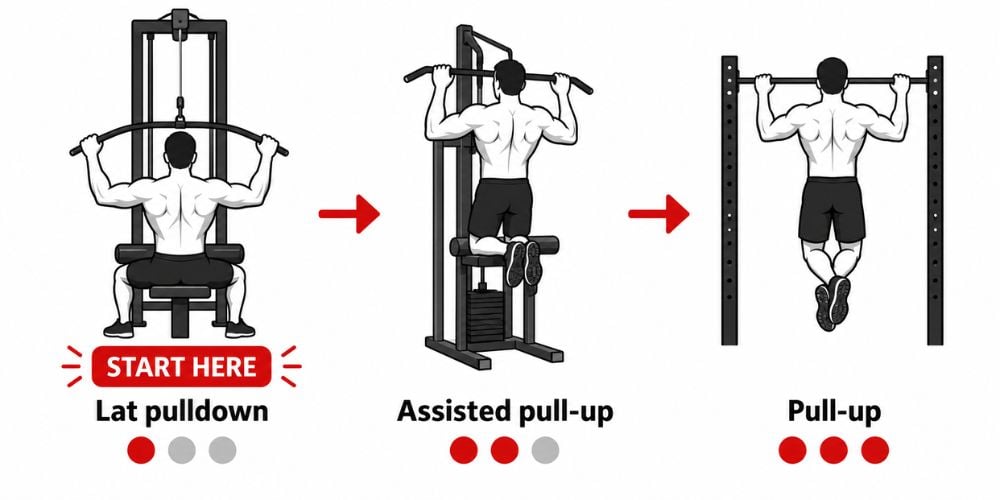
1 | Lat Pulldown | Learn vertical pulling |
2 | Assisted Pull-Up | Practice moving your body |
3 | Unassisted Pull-Up | Lift your full bodyweight |
Lat pulldown → assisted pull-up → unassisted pull-up
It is a simple progression, not a strict rule.
Lat pulldown training can also carry over to pull-up performance. One eight-week study in recreationally active male college students found that traditional lat pulldown training improved pull-up endurance as well as lat pulldown strength.
So you are not wasting your time on pulldowns just because your long-term goal is a pull-up.
6. Which Is Better for Muscle Growth?
Both can build muscle.
You do not need to search for an automatic winner.
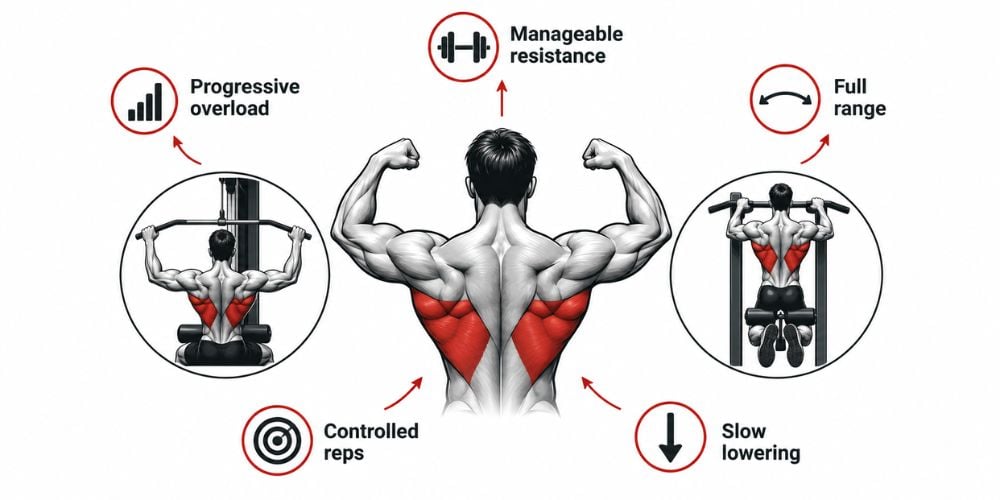
For muscle growth, focus more on whether you can train consistently and gradually increase the challenge.
What matters most?
- Use challenging but manageable resistance
- Keep a comfortable range of motion
- Control each repetition
- Control the lowering phase
- Avoid excessive swinging
- Increase resistance or reduce assistance over time
The lat pulldown may feel easier for muscle-focused sets because your body is supported and weight changes are simple.
On the other hand, the assisted pull-up can also build your back effectively as you progressively reduce assistance.
Current ACSM resistance-training guidance also notes that no single equipment type consistently produces better results for the average healthy adult. For hypertrophy, total training volume and matching your program to your goal matter more.
Can You Use Both?
Yes.
You could perform assisted pull-ups first while you are fresh, then use lat pulldowns for more controlled back work.
Exercise | Sets | Reps |
Assisted Pull-Up | 3 | 6–10 |
Lat Pulldown | 3 | 8–12 |
You do not need to make it complicated.
Keep your reps controlled, use a resistance you can manage, and make the last few repetitions challenging.
Conclusion
Choose the lat pulldown if you want more stability, easier resistance changes, and controlled back training. Choose the assisted pull-up if your goal is to build toward stronger, unassisted pull-ups.
For many fitness lovers, using both is a smart option.
If you want to compare machines that support both types of back training, at YR Fitness, we can help you explore commercial strength equipment designed for smooth movement and reliable daily use.
Related articles: