




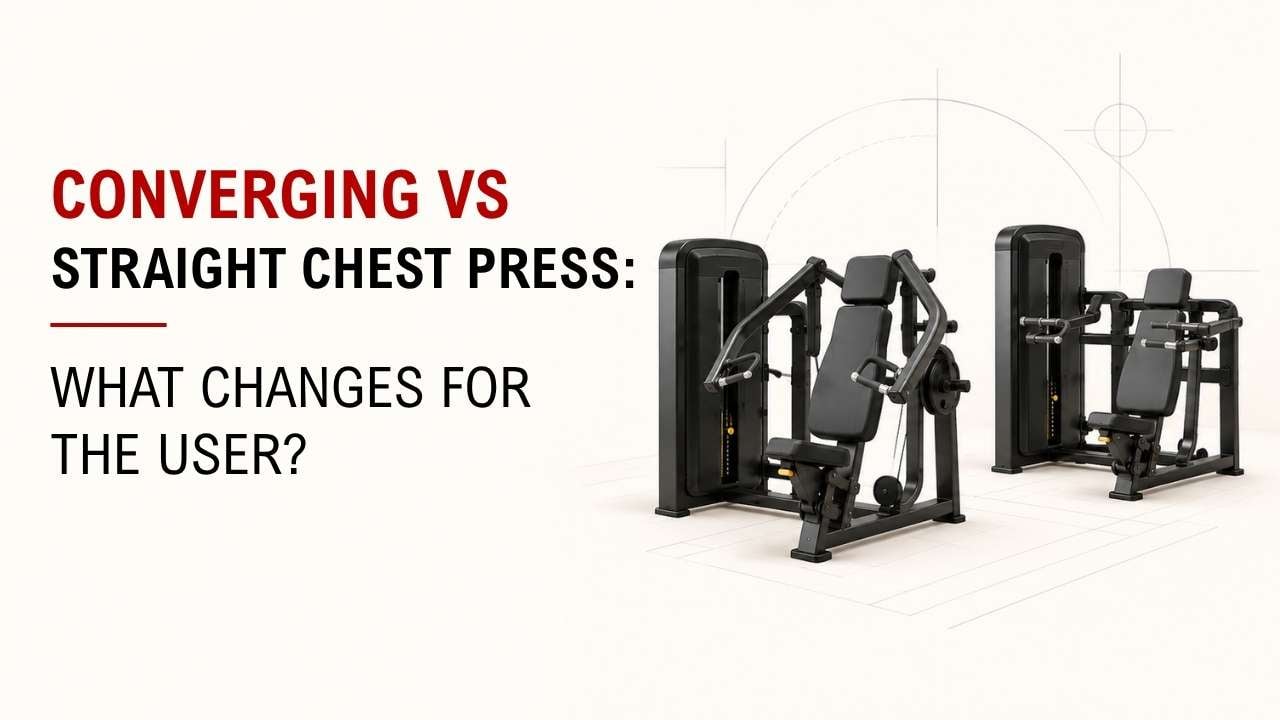

Have you ever used two chest press machines that looked similar but felt completely different? The difference often comes from how the handles move.
A converging chest press moves forward and inward, while a straight chest press moves mostly forward. This affects the movement feel, chest squeeze, and overall comfort.
As the founder of YR Fitness, I have spent decades working and studying how movement paths affect the user. That experience helps me look beyond the machine label and focus on how the press actually feels.
In this guide, I will compare the movement, muscle engagement, comfort, stability, and ease of use. You will quickly see which chest press style may suit you better.
1. What Is a Converging Chest Press?
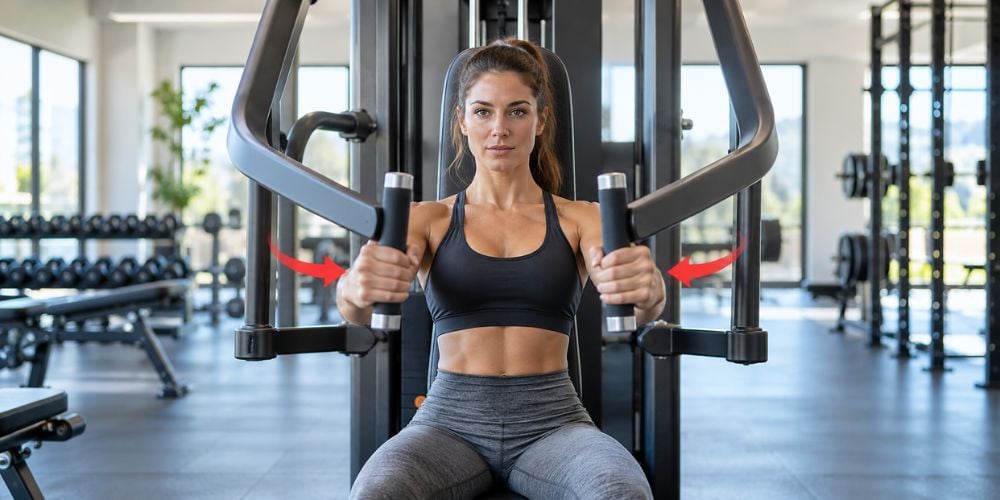
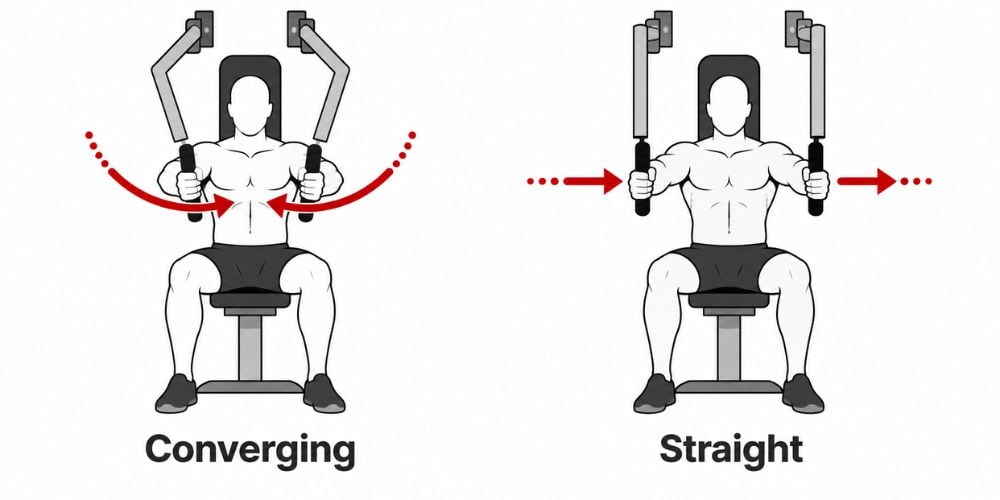
A converging chest press moves the handles forward and inward as you press.
The movement looks like this:
Stage | Handle Position |
Start | Hands apart |
Press | Forward + inward |
Finish | Hands closer together |
This curved path follows the way your upper arms can move across your body during a pressing motion.
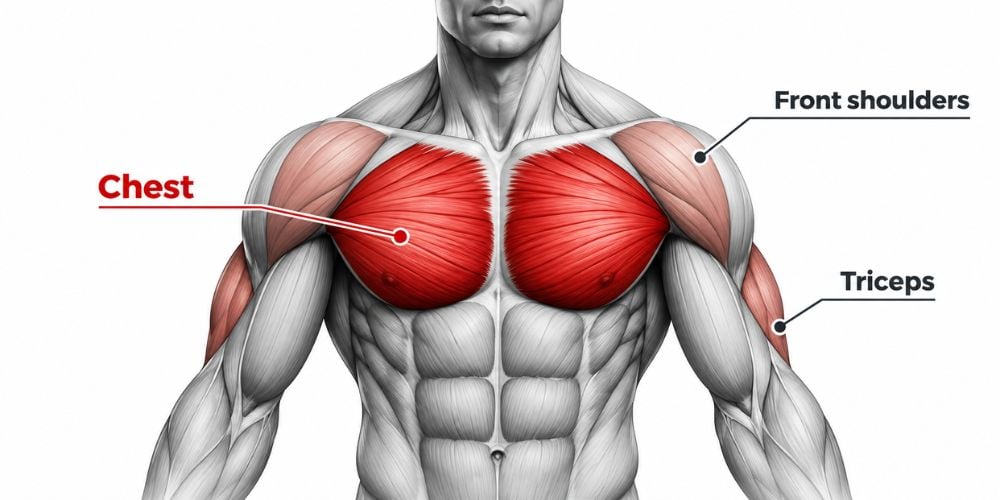
You are still training the chest, front shoulders, and triceps. Research comparing chest press and bench press variations also measures the pectoralis major, anterior deltoid, and triceps as major muscles involved in these pressing movements.
The main change is simply how your arms travel.
Because the handles move inward, many users notice a stronger squeezing sensation across the chest near the end of each repetition.
2. What Is a Straight Chest Press?
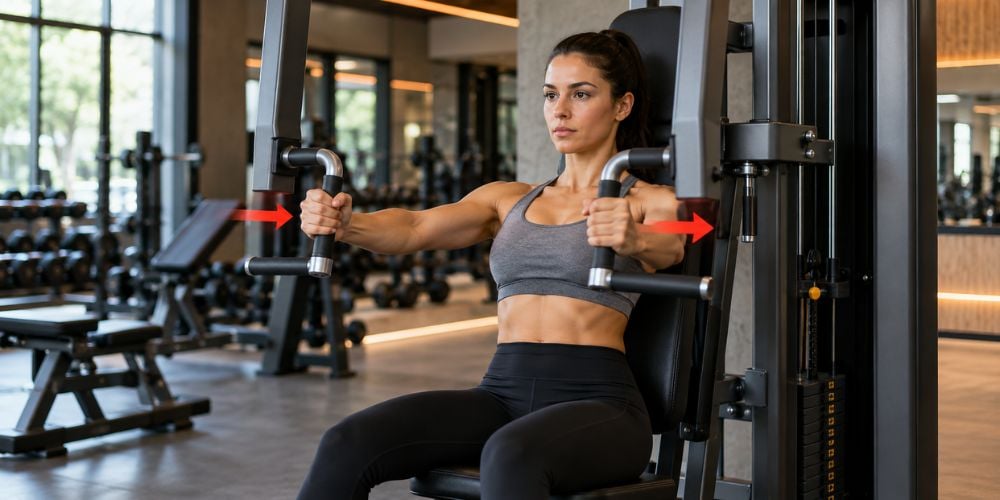
A straight chest press uses a more linear movement path.
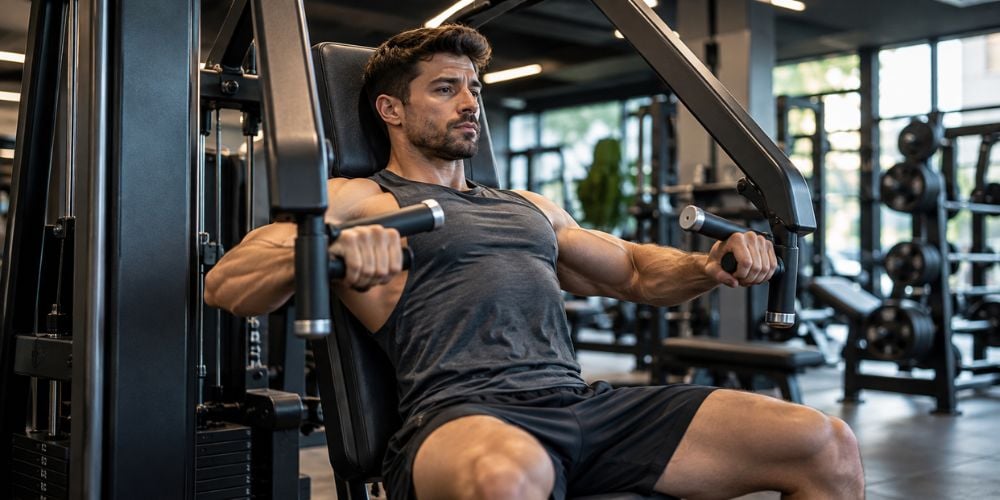
You start with the handles beside or slightly in front of your chest and press them mostly straight forward.
Stage | Handle Position |
Start | Hands apart |
Press | Mostly forward |
Finish | Hands stay at roughly the same width |
The movement feels stable and predictable because the machine guides you through a fixed path.
That simple movement is one reason straight chest press machines work well for beginners.
Like the converging version, the straight press trains the chest, front shoulders, and triceps. It simply uses a different mechanical path to do it.
3. Movement Path
This is the biggest difference between the two.
Converging Chest Press | Straight Chest Press |
Handles move forward and inward | Handles move mostly forward |
Uses a curved pressing path | Uses a more linear path |
Hands finish closer together | Hands remain at a similar width |
Feels less fixed to some users | Feels more predictable |
Can you actually feel this difference?
Usually, yes.
I often describe a straight press as pushing something directly away from you. A converging press feels more like pushing forward while bringing your arms together.
Neither movement is automatically better.
Handle placement, seat position, starting angle, resistance curve, and the overall geometry of the machine also change how the exercise feels.
4. Chest Muscle Engagement
Both machines mainly train the pectoralis major, with help from the front deltoids and triceps. Chest press research supports the involvement of these muscle groups during machine pressing.
The main difference is usually how the contraction feels.
With a converging press, your upper arms move closer toward the center of your body as you finish the repetition. That inward movement can make the chest squeeze feel more noticeable.
A straight chest press keeps the resistance focused on a more direct forward push.
So, in simple terms:
- Converging: More noticeable inward squeeze
- Straight: More consistent forward pressing sensation
Does More Squeeze Mean More Muscle?
Not automatically.
A strong muscle sensation can make an exercise feel effective, but muscle growth also depends on your resistance, range of motion, training volume, progression, and consistency.
The American College of Sports Medicine’s 2026 resistance training guidance reviewed evidence across more than 137 studies and 30,000 participants. Its broader message is useful here: training results depend on the full resistance-training program, not one advanced technique or one machine feature.
So do not choose a machine only because the squeeze feels stronger. Choose one that lets you train hard and consistently with good control.
At YR Fitness, we design chest press machines around movement angle, user position, adjustability, and controlled resistance rather than focusing on one feature alone. If you want to compare straight and converging designs side by side, explore our commercial chest press range and look closely at the handle path, seat setup, and pressing mechanism.
5. Shoulder and Joint Comfort
A converging chest press may feel more natural for some people because the hands are allowed to move inward during the press.
A straight press keeps you on a more fixed path.
Some people like that extra stability. Others prefer having more change in arm position as they press.
Which one is easier on your shoulders?
There is no single answer for everyone.
Your shoulder position changes with grip width, pressing angle, technique, and individual anatomy. Research looking at bench press technique and shoulder biomechanics also shows that changes in pressing setup can alter shoulder loading.
That is why the machine setup matters.
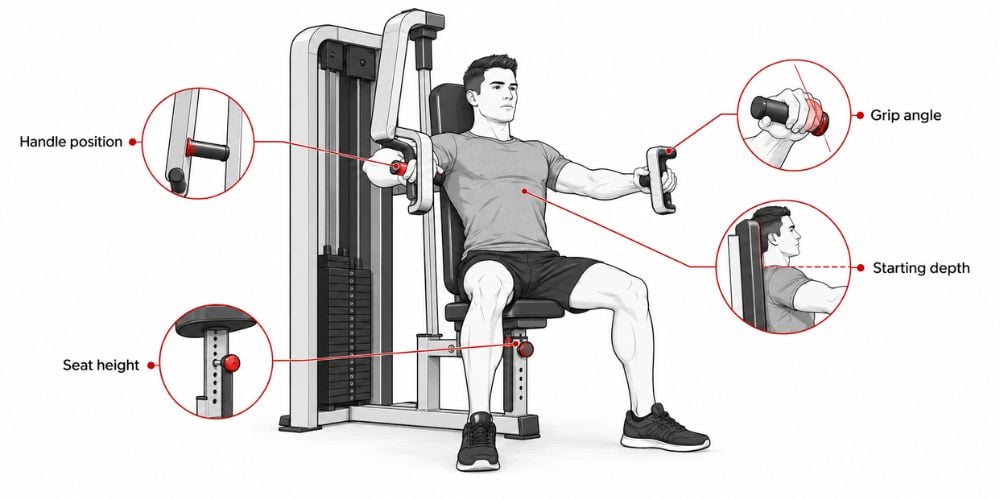
Pay attention to:
- Seat height
- Handle position
- Grip angle
- Starting depth
- Your shoulder mobility
- How far your elbows travel behind your body
I often see users judge a chest press before adjusting the seat.
If the seat is too high or too low, even a good machine can feel awkward.
A simple starting point is to place the handles around mid-chest level while keeping your shoulders comfortably against the back pad.
Normal muscular effort is expected. Sharp or persistent shoulder pain is different.
If the movement hurts, stop and change your setup, reduce the range, or choose another exercise.
6. Stability and Ease of Use
The straight chest press has a small advantage in simplicity.
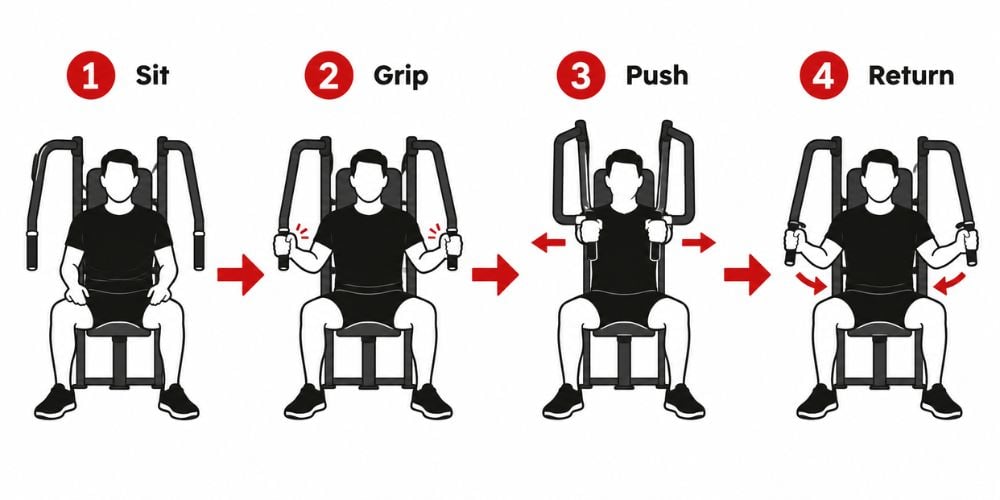
The movement is easy to understand:
Sit → Grip → Push forward → Return slowly
That predictable path can be helpful if you are new to strength training.
A converging chest press is still a guided machine, so it requires much less stabilization than a dumbbell or free-weight press. The curved path may simply feel unfamiliar during your first few repetitions.
Most people adjust quickly.
Here is the practical comparison:
Feature | Converging Chest Press | Straight Chest Press |
Movement | Forward + inward | Mostly forward |
Stability | High | Very high |
Learning difficulty | Easy | Very easy |
Chest squeeze | Often more noticeable | More consistent forward tension |
Movement feel | More natural arc for some users | More fixed and predictable |
Main appeal | Inward pressing path | Simplicity |
Beginner use | Easy | Very easy |
One point is worth repeating: machine-guided does not mean every machine feels the same.
7. User Training Experience
This is where the difference becomes easiest to understand.
A straight chest press normally feels controlled and predictable.
You press forward, control the return, and repeat.
A converging chest press adds inward movement. It can feel more like you are bringing your arms across your chest while you press.
Some bodybuilding-focused users prefer that sensation because they feel a stronger chest squeeze near the end of the repetition.
For general strength training or beginner workouts, a straight chest press works perfectly well. Its simple movement requires very little learning time.
From a designer’s point of view, I would never choose a machine just because the label says converging or straight. The quality of the complete movement matters more.
The Difference in One Minute
If You Prefer… | Try This First |
A more inward pressing motion | Converging chest press |
A stronger chest-squeeze sensation | Converging chest press |
A simple forward movement | Straight chest press |
Maximum predictability | Straight chest press |
A guided beginner-friendly exercise | Either |
Less decision-making during the press | Straight chest press |
Both can be effective chest exercises.
The better choice is usually the machine that feels comfortable, gives you a controlled range of motion, and lets you progress without joint discomfort.
Conclusion
The main difference between a converging and straight chest press is simple: your hands travel differently during the press.
A converging press moves your hands forward and inward. A straight press keeps them moving on a more direct forward path.
Both train your chest, shoulders, and triceps.
If you want to compare chest press options for your gym or equipment lineup, YR Fitness can help you review movement design and commercial-use needs. You can explore our chest press range here and see which style fits your users best.
Related articles: