








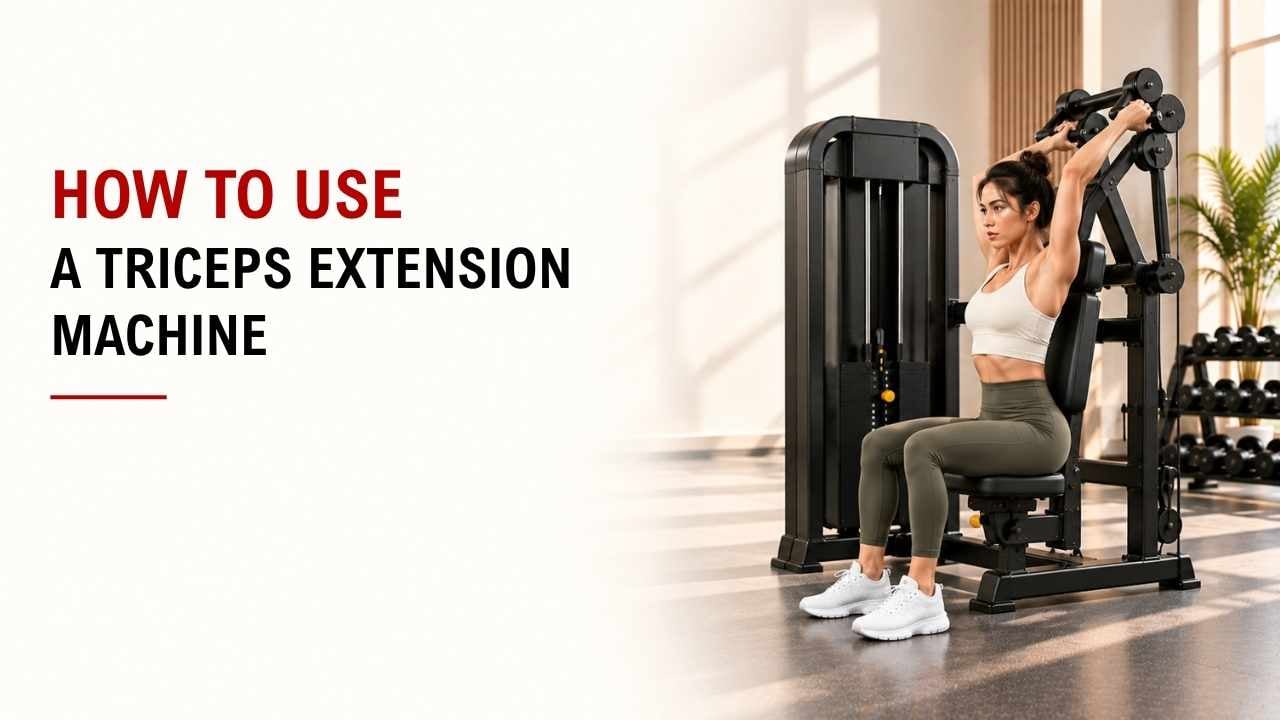

Not sure how to use a triceps extension machine without putting extra stress on your elbows or shoulders? The setup is simple once you know what to adjust.
The short answer is: set the seat, choose a manageable weight, keep your elbows stable, extend your arms, and return slowly. At YR Fitness, we work with strength equipment designed around controlled movement and practical training positions.
As an Exercise Physiology & Biomechanics Expert, I study how joint position and resistance affect muscle tension. I often see people improve their triceps reps simply by using less weight and keeping their upper arms still.
Below, I’ll show you how to use the machine in six simple steps. Follow them in order, and you can make each rep smoother and easier to control.
1. Adjust the Seat
Sit down with your back firmly against the pad.
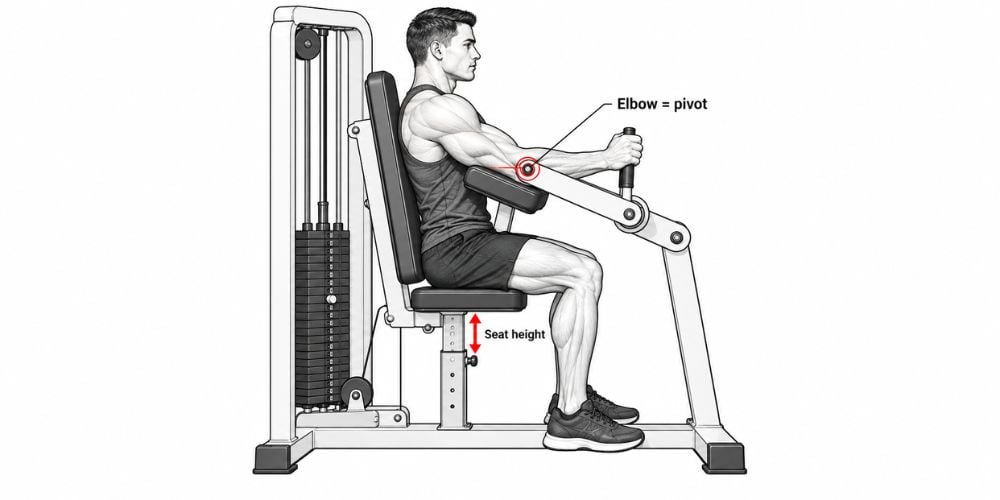
Adjust the seat until your elbows line up naturally with the machine’s pivot point. If your machine has an arm pad, rest your upper arms comfortably against it.
Keep your feet flat on the floor.
The ACE triceps extension guide follows the same basic setup: adjust the seat and resistance first, support the upper arms, then perform the movement from a stable seated position.
Quick check: Are your shoulders relaxed and your elbows comfortable? If yes, your seat height is probably close.
Setup Point | What You Want |
Back | Firmly against the pad |
Feet | Flat on the floor |
Upper arms | Stable on the support pad, if provided |
Elbows | Comfortable and aligned with the machine |
Shoulders | Relaxed, not lifted |
I always recommend fixing your position before worrying about the weight. A poor setup can make even light resistance feel awkward.
2. Choose a Comfortable Weight
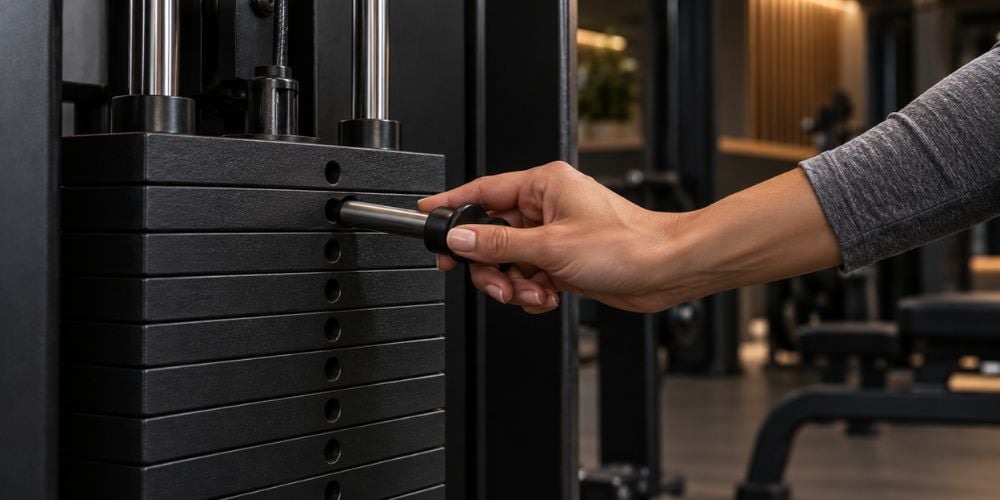
Start with a weight you can control from beginning to end.
If you are new to the machine, go lighter than you think you need. You should be able to:
- Extend your arms smoothly
- Control the return
- Keep your upper body still
- Finish the set without losing form
If your shoulders start moving or your elbows shift, the weight may be too heavy.
Here is why this matters: Mayo Clinic’s weight-training guidance recommends using a weight you can lift with proper form and reducing the load when your technique starts to break down. It also recommends moving the resistance in a controlled way rather than rushing.
3. Position Your Arms
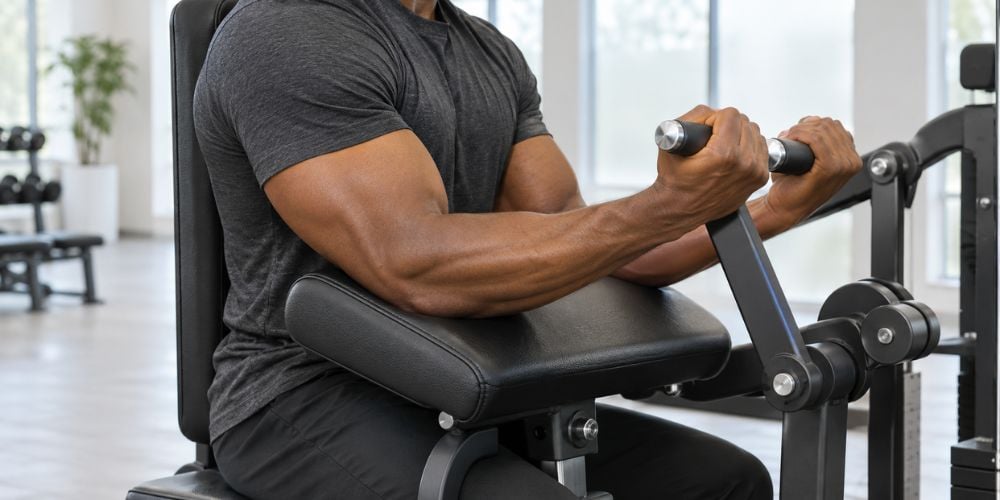
Place your arms in the machine’s starting position.
Keep your upper arms stable against the support pad if one is provided. Hold the handles comfortably and keep your wrists fairly neutral.
Your elbows should stay in roughly the same position throughout the exercise.
What should you avoid? Do not lift your shoulders or move your torso just to push more weight.
I like to think of the elbow as the main hinge here. Your upper arm stays quiet while your forearm does most of the movement.
Want to see how this movement is handled on commercial strength equipment? Explore YR Fitness strength equipment to compare machine designs built around stable positioning and smooth resistance.
4. Extend Your Arms
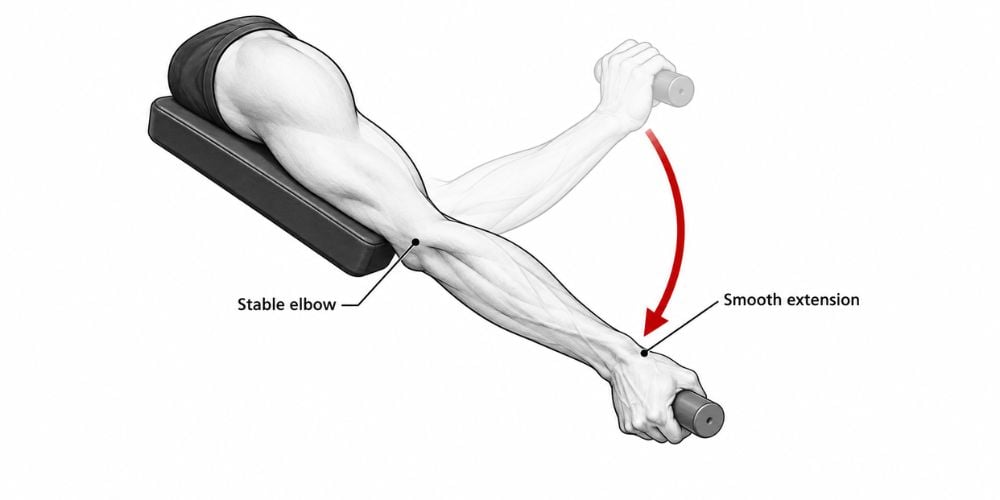
Push the handles by straightening your elbows.
Move smoothly until your arms are almost fully extended. Tighten your triceps near the end of the movement.
Do not aggressively snap your elbows into a locked position.
Keep your:
- Back against the pad
- Shoulders relaxed
- Elbows stable
- Movement controlled
You should feel most of the work along the back of your upper arms.
Not feeling your triceps? Check your weight first. Going too heavy can make it tempting to bring your shoulders and torso into the movement.
5. Return Slowly
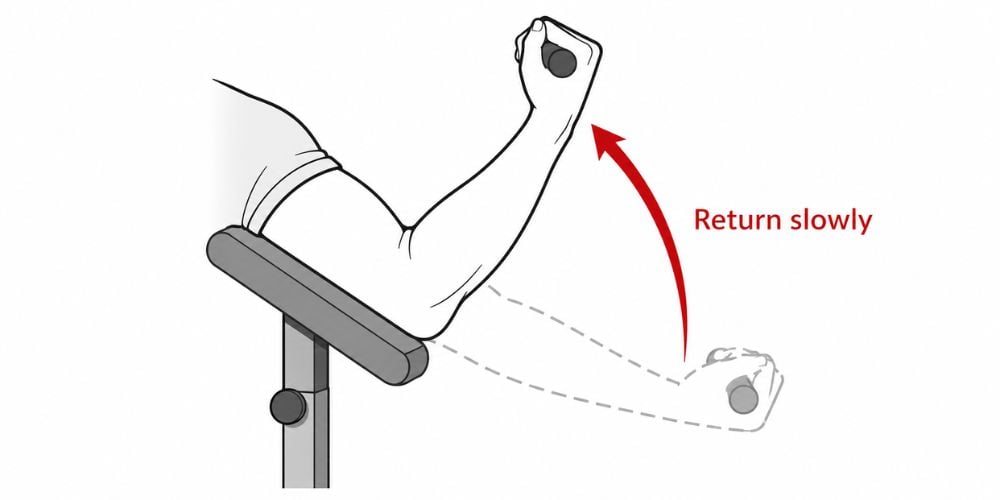
Let your elbows bend as the handles return toward the starting position.
Do not simply release weight. Control the return so your triceps stay under tension and you remain in position for the next repetition.
I often see people focus only on pushing weight. The return matters just as much when you want clean, controlled reps.
A simple rhythm works well: extend smoothly, pause briefly, then return under control.
6. Use the Right Sets and Reps
You do not need a complicated plan.
Here are simple starting ranges:
Goal | Sets | Reps |
Beginner practice | 2–3 | 10–15 |
Muscle building | 3–4 | 8–12 |
Higher-rep training | 2–4 | 12–15 |
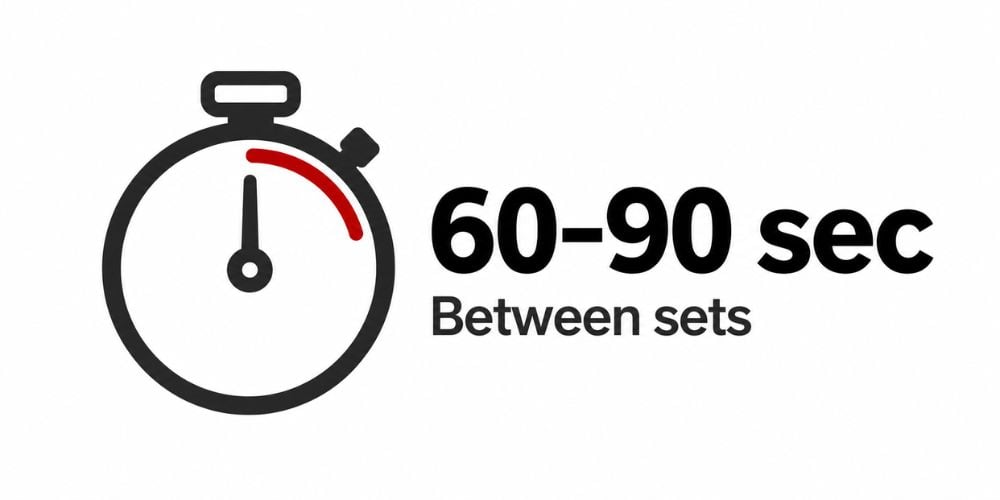
Rest around 60–90 seconds between sets for normal muscle-focused training.
Choose a weight that makes the last few reps challenging while you can still control the movement. If your elbows start moving or your shoulders begin helping, reduce the weight.
Programming does not have to be perfect either. The American College of Sports Medicine’s resistance-training guidance emphasizes consistency and matching your resistance-training approach to your goal rather than making the routine unnecessarily complicated.
Conclusion
Using a triceps extension machine is simple: adjust the seat, choose a manageable weight, keep your elbows stable, extend your arms, and return slowly.
Focus on smooth reps before adding more resistance. If you want to explore more strength-training machines for different movements, visit YR Fitness and compare the available equipment options.
Related articles:



