








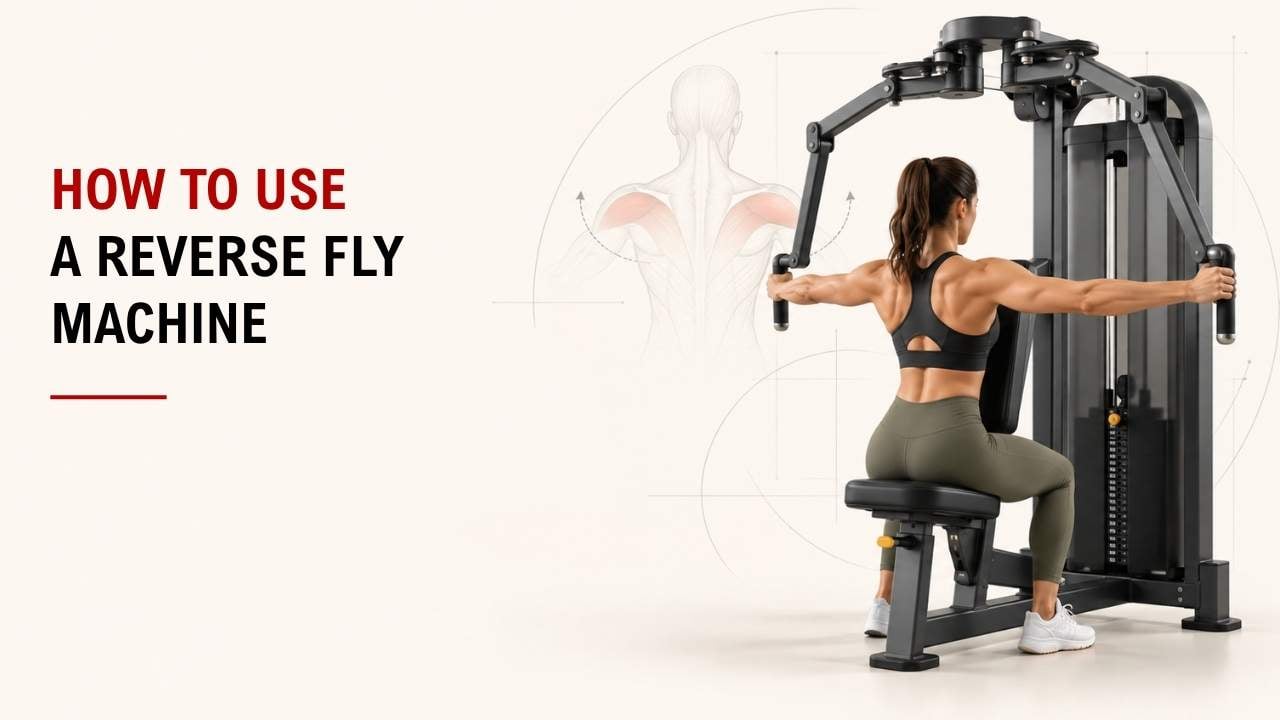

Not sure how to use a reverse fly machine correctly? A good setup makes the movement much easier to control.
The quick answer: set the handles around shoulder height, keep your chest supported, pull your arms back, and return slowly. This mainly works your rear deltoids and upper back.
As an Exercise Physiology & Biomechanics Expert at YR Fitness, I study how joint position, resistance, and machine movement affect exercise. I’ve seen that small changes in seat position and weight can make a big difference in both comfort and form.
Below, I’ll show you seven simple steps to do the reverse fly correctly. Keep reading and use them on your next set.
1. Adjust the Seat Height
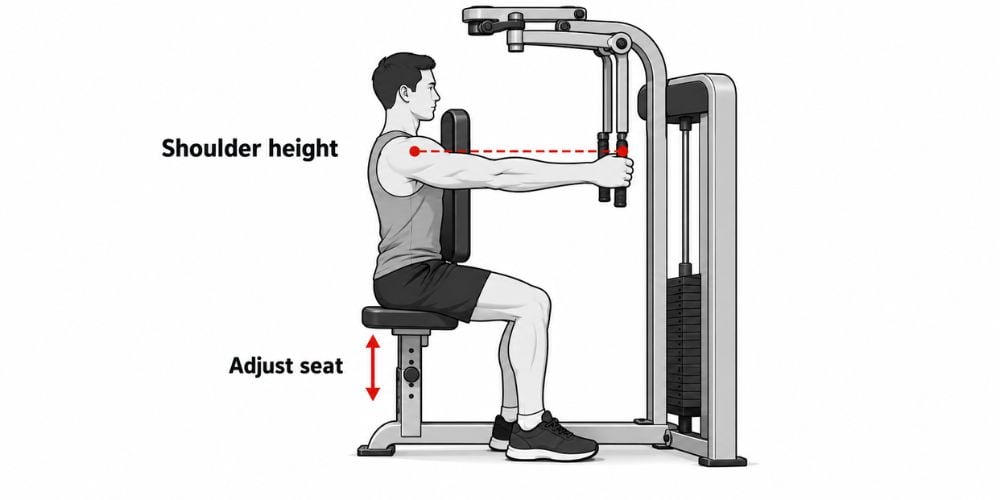
Sit facing the chest pad and adjust the seat until the handles are roughly level with your shoulders.
Keep your feet flat on the floor and your chest comfortably against the pad. Your arms should be able to move outward without forcing your shoulders up or down.
Seat too low? You may start shrugging your shoulders.
Seat too high? The movement may feel awkward around the shoulder joint.
2. Choose a Manageable Weight
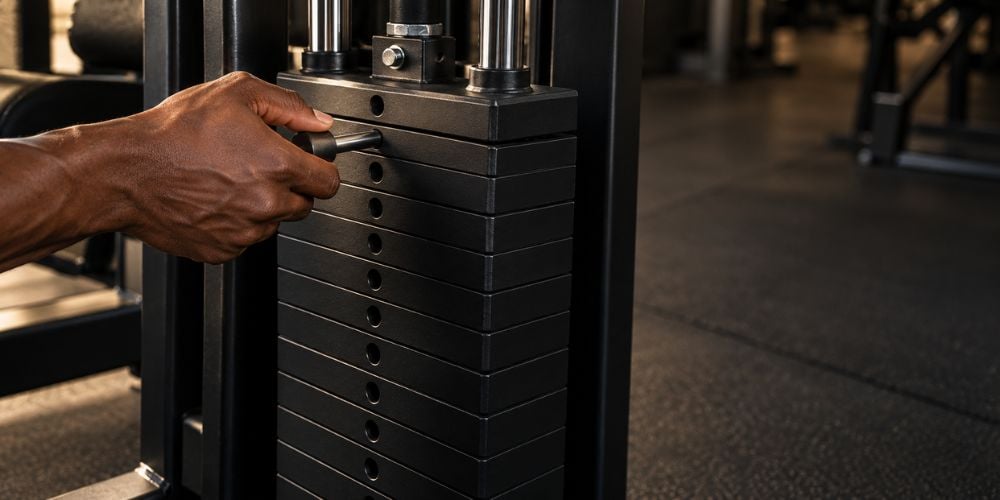
Start lighter than you think you need.
Choose a weight that lets you complete every rep without swinging, jerking, or pulling with your whole body. If your form breaks down, reduce the resistance.
That matches general Mayo Clinic weight-training guidance, which recommends using manageable resistance and moving weights in a controlled way.
I prefer checking the movement with a lighter load first. If the final few reps still feel easy and your form stays clean, increase the weight gradually.
3. Position Your Chest and Hands
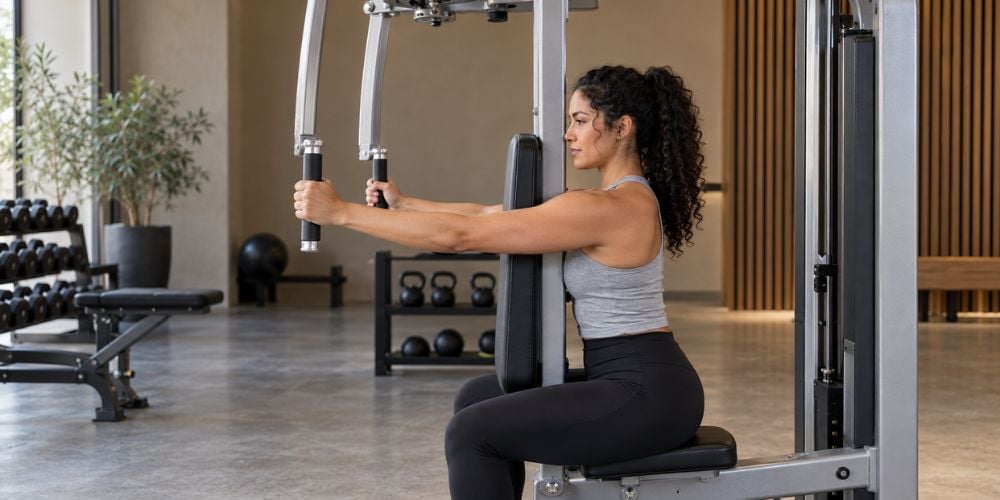
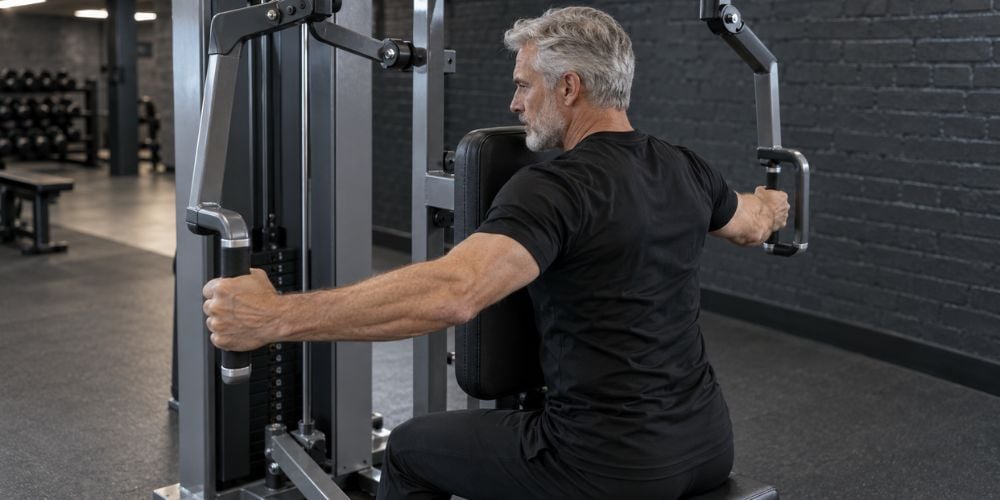
Keep your chest against the support pad and sit tall.
Hold the handles comfortably with a slight bend in your elbows. Keep your wrists neutral and your shoulders relaxed.
Does your machine offer different hand positions? A PubMed study on the reverse-fly machine found that hand position can change posterior-shoulder muscle activity, including activity in the posterior deltoid and infraspinatus.
The exact setup can vary from one machine to another, so use the position that lets you move comfortably without twisting your wrists or shoulders.
Quick Setup Check
Check | What You Want |
Seat | Handles around shoulder height |
Chest | Supported against the pad |
Feet | Flat on the floor |
Elbows | Slightly bent |
Wrists | Neutral and comfortable |
Shoulders | Relaxed, not shrugged |
Once these points feel right, keep your torso still and start the movement.
4. Pull Your Arms Back
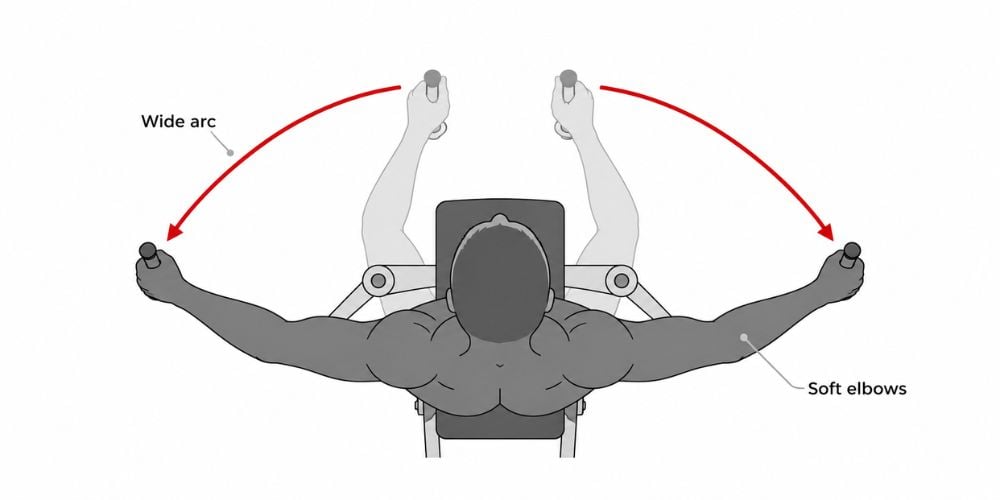
Pull the handles outward and backward in a wide arc.
Think about moving your upper arms, rather than simply pulling with your hands. Keep the slight bend in your elbows throughout the rep.
Do not turn the movement into a row. If your elbows bend heavily and move close to your sides, more of the work shifts toward your back muscles.
What should you feel?
You should mainly feel tension around the back of your shoulders and across your upper back. Research comparing shoulder exercises has found particularly high posterior-deltoid activation during the reverse pec deck.
If you need to swing your torso to finish the rep, reduce the weight.
We design our strength machines around stable positioning, practical adjustments, and controlled movement paths. If you want to compare how different commercial machine designs handle exercises like the reverse fly, explore the YR Fitness strength equipment range and see which setups feel most practical for training.
5. Squeeze Your Upper Back
When your arms reach the open position, pause briefly.
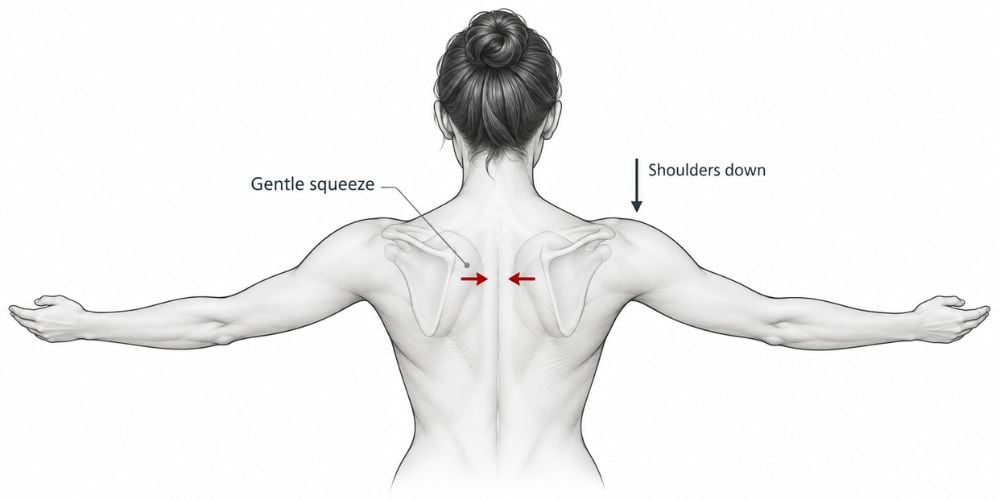
Gently squeeze your shoulder blades toward each other while keeping your shoulders down. You do not need to force your arms as far backward as possible.
I often see people chase extra range because they assume farther is better. A comfortable range with good control is more useful than forcing the shoulder into an awkward position.
Hold for about a second, then begin the return.
6. Return Slowly
Do not let the weight pull your arms forward.
Return to the starting position slowly while keeping your chest against the pad. Try to maintain tension instead of letting the weight stack drop.
A simple rhythm works well:
Pull back → brief squeeze → slow return.
Why slow down? Controlled resistance training helps reduce your reliance on momentum and makes it easier to keep the intended muscles working.
If the weight stack crashes down after every rep, the resistance is probably too heavy or you are moving too quickly.
7. Use the Right Sets and Reps
You do not need a complicated plan.
Training Goal | Sets | Reps | Main Focus |
Beginner practice | 2–3 | 10–12 | Learn the movement |
General muscle training | 3–4 | 8–15 | Controlled resistance |
Light, controlled training | 2–3 | 12–15 | Smooth technique |
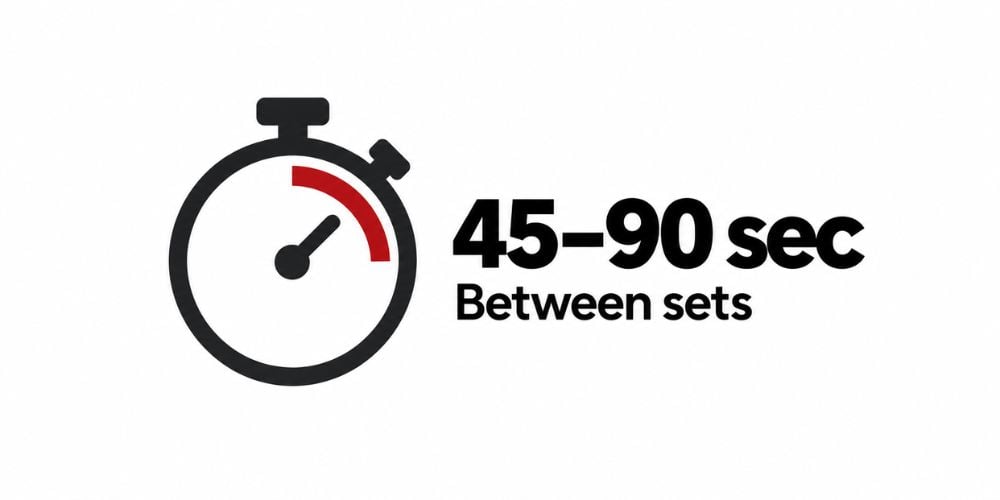
Rest around 45–90 seconds between sets.
If you are new to the reverse fly, start with 2–3 sets and focus on clean technique. Increase the resistance only when you can complete your reps without shrugging, swinging, or shortening the movement.
The latest ACSM resistance-training guidance also emphasizes matching resistance-training variables to your goal rather than treating one setup as ideal for everyone.
I would rather see 12 smooth reps with a moderate weight than six messy reps with a heavier stack.
Conclusion
Using a reverse fly machine is simple: set the seat correctly, keep your chest supported, pull your arms back smoothly, squeeze your upper back, and return slowly.
Start light and focus on control before adding more weight.
If you want to compare commercial strength-machine designs and movement setups, you can also explore YR Fitness and find equipment built for smooth, stable strength training.
Related articles:



