





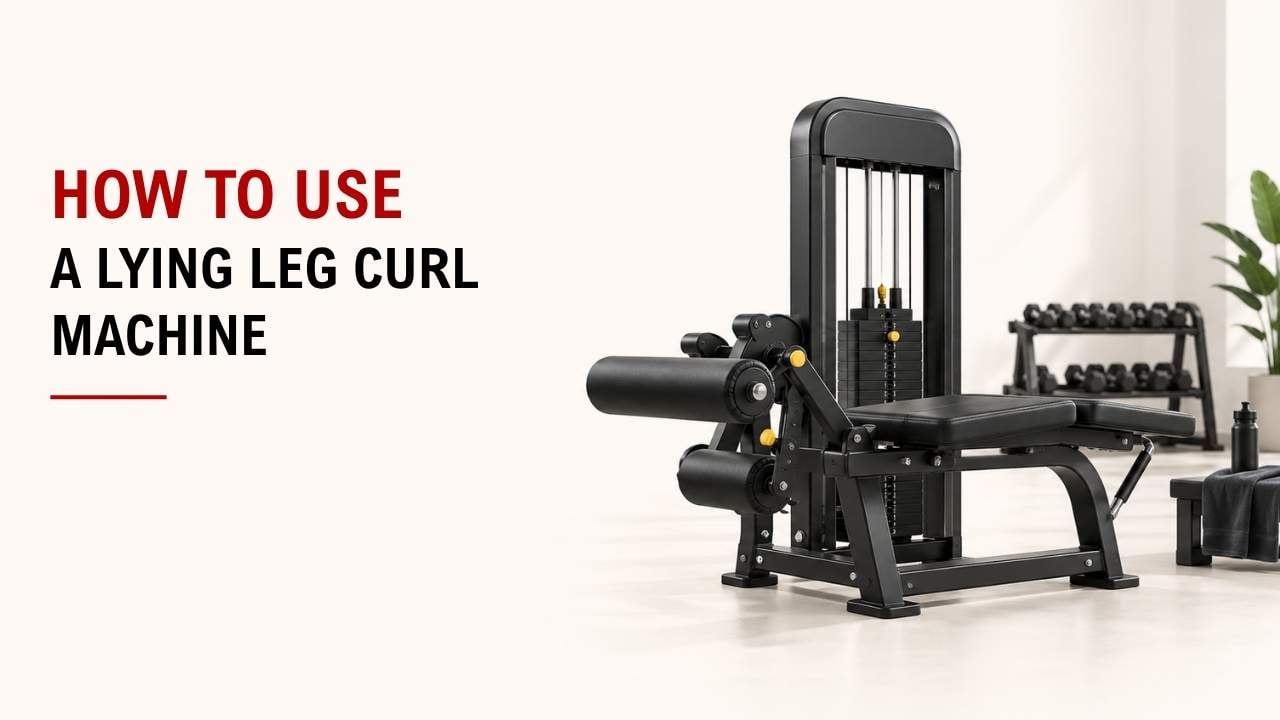
Have you ever wondered if you are using the lying leg curl machine correctly? Small setup mistakes can make the movement feel awkward.
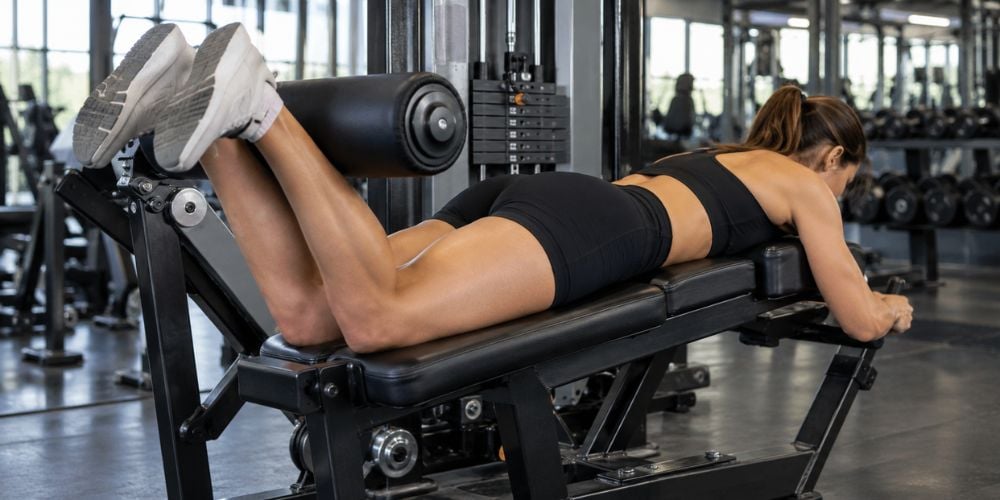
The basic form is simple: keep your hips flat, place the roller just above your heels, curl your legs up, and lower the weight slowly.
As the founder of YR Fitness, I have spent decades studying strength equipment design and body movement. I know how much proper setup can affect both comfort and exercise quality.
In this guide, I’ll show you how to set up the machine, perform each rep, and choose the right sets and reps.
1. Adjust the Lying Leg Curl Machine
Start by fitting the machine to your body.
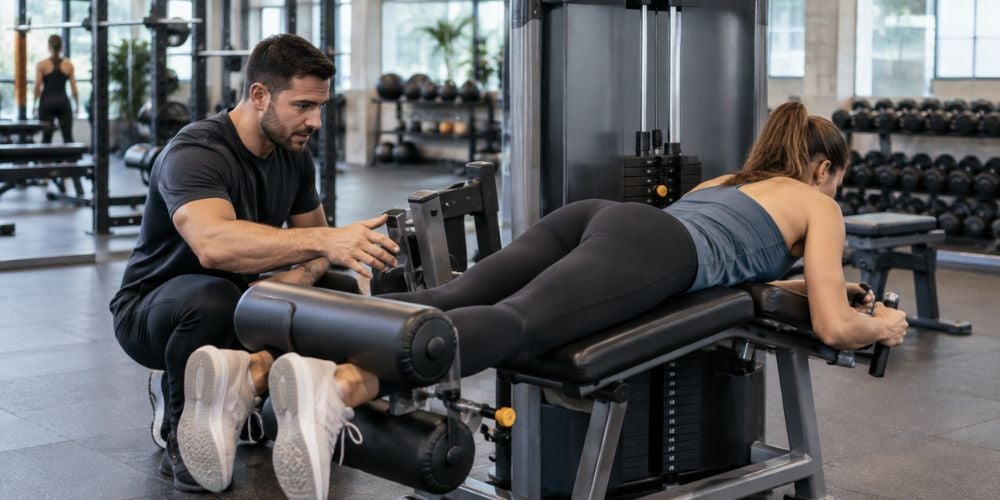
Lie face down and check where your knees sit. Your knee joints should be close to the machine’s pivot point, which helps your legs follow the machine’s intended path.
Next, check the roller.
It should sit low on the back of your lower legs, just above the heels rather than directly on them. The ACE setup guide similarly places the resistance pad on the lower part of the leg and recommends keeping it away from direct heel contact.
Then select a light or moderate weight.
I often see beginners choose too much weight before they have found the right position. Starting lighter makes it easier to learn the movement without swinging or lifting your hips.
Setup Point | What to Do |
Knees | Keep them close to the machine’s pivot point |
Roller Pad | Place it low on the lower legs, just above the heels |
Hips | Keep them flat against the bench |
Weight | Choose a load you can move smoothly |
Too heavy already? If you have to shift your body before the first few reps are finished, reduce the weight.
2. Get Into the Correct Starting Position
Once the machine is adjusted, lie flat on your stomach.
Grip the handles if they are available. Keep your chest, hips, and thighs against the bench, with your legs almost straight but without forcefully locking your knees.
Keep your head comfortable. Looking down or slightly forward usually works well.
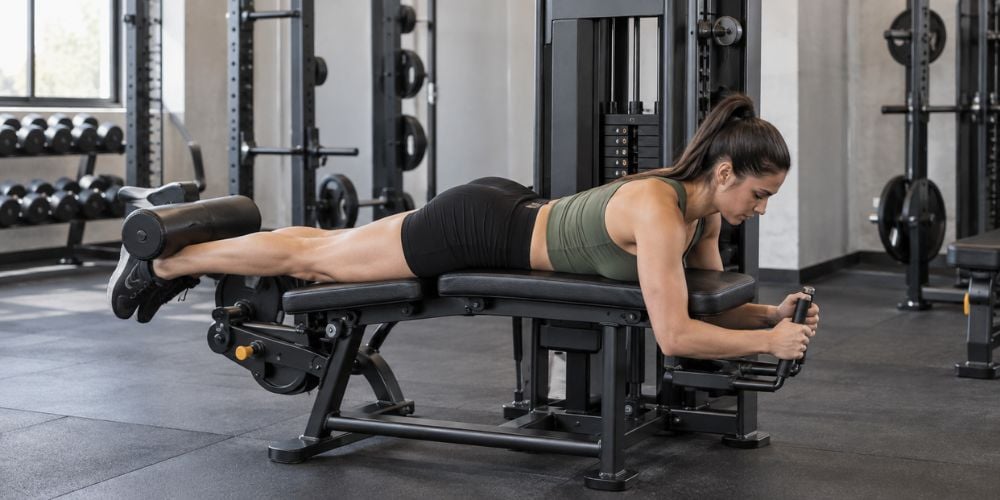
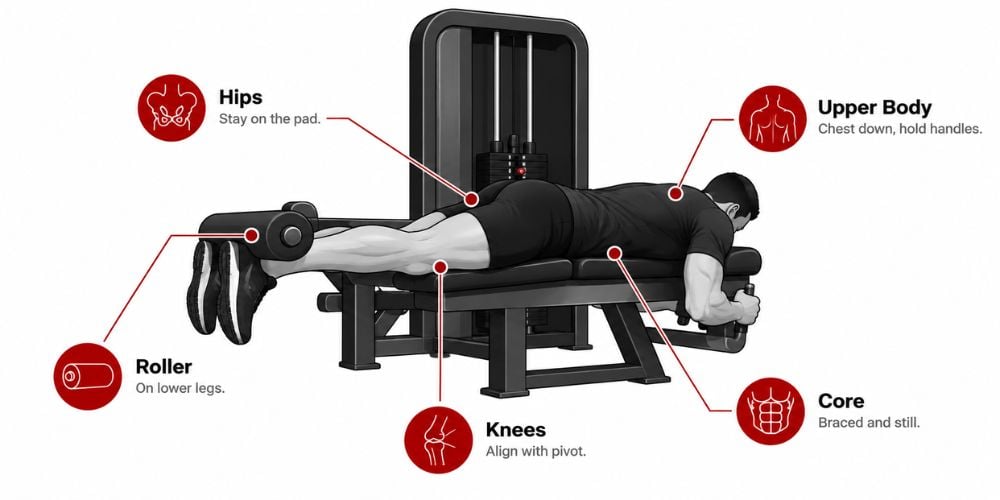
Before your first rep, check these points:
- Hips: Keep them pressed into the pad.
- Upper Body: Keep it still.
- Knees: Keep them lined up with the machine.
- Roller: Let it sit securely against your lower legs.
- Core: Brace it lightly.
ACE also recommends lightly bracing your abdominal muscles to limit unwanted movement through the lower back during the curl.
What should you feel? Mostly your hamstrings working, not your lower back doing the lifting.
3. Curl Your Legs Up
Now start the repetition.
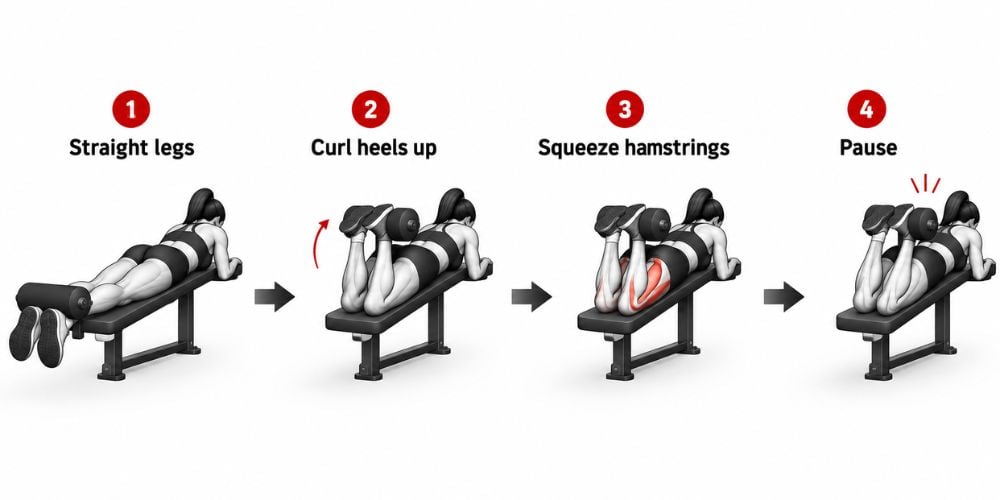
Bend your knees and bring your heels toward your glutes. Move smoothly instead of trying to throw the weight upward.
Keep your hips against the bench as you curl.
Continue until your knees are comfortably bent and you feel a strong contraction in your hamstrings. You do not need to force your heels all the way into your glutes.
Pause briefly at the top.
Straight legs → Curl heels up → Squeeze hamstrings → Pause
In my decades of equipment design work, this is one of the first movement problems I notice: people often try to create more range by lifting the hips. If your hips start coming off the bench, reduce the load and keep the movement smaller.
Want to see how this movement is set up on a commercial machine? At YR Fitness, we build our strength equipment around controlled movement and practical user positioning. You can view our Leg Extension / Lying Leg Curl machine to compare the exercise layout and machine design.
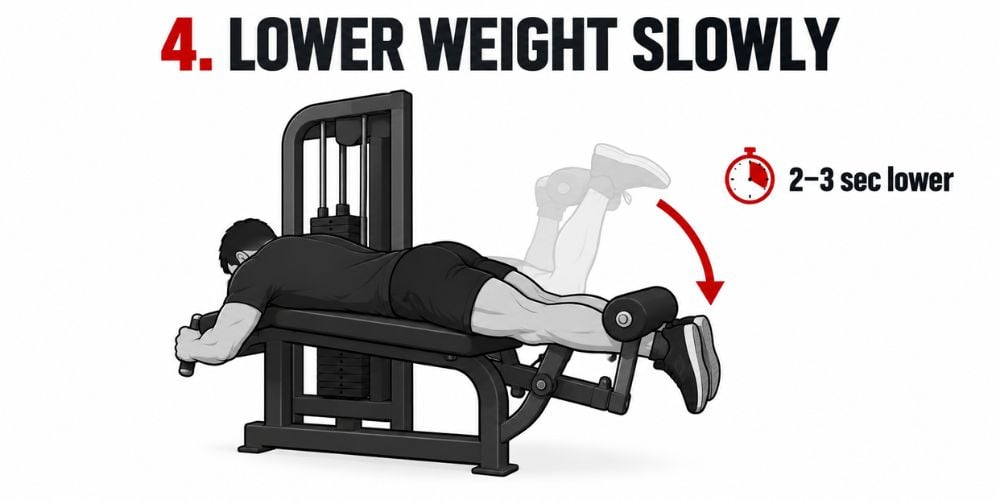
4. Lower Weight Slowly
Do not let the weight drop back to the starting position.
After reaching the top, slowly straighten your legs while keeping control of the roller. A controlled return is also part of the standard technique described in ACE’s machine-based hamstring curl instructions.
Take about two to three seconds to lower the weight.
I often see people focus only on curling the weight up. The lowering part deserves just as much attention because it helps you stay in control from one rep to the next.
Use this rhythm:
Curl up with control → Pause → Lower slowly → Repeat
Avoid letting the weight stack slam between repetitions.
Stop just before your knees fully lock, then begin the next rep.
Can’t lower it slowly? That is a good sign the weight may be too heavy.
The same idea applies across strength training. Mayo Clinic’s weight-training guidance recommends reducing the weight or number of repetitions if you cannot maintain proper form.
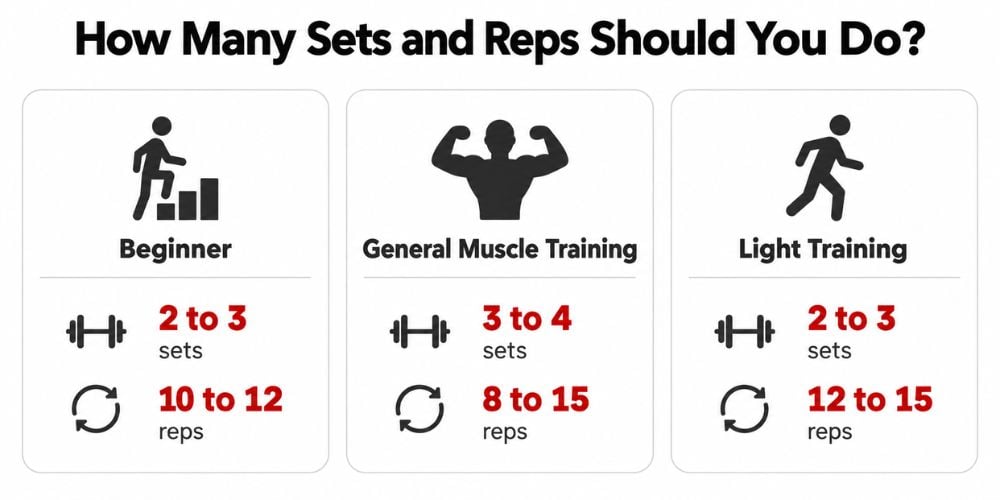
5. How Many Sets and Reps Should You Do?
You do not need a complicated plan.
For most fitness lovers, these ranges are a practical place to start:
Training Goal | Sets | Reps |
Beginner | 2 to 3 | 10 to 12 |
General Muscle Training | 3 to 4 | 8 to 15 |
Light Training | 2 to 3 | 12 to 15 |
Rest for about 60 to 90 seconds between sets.
Choose a weight that lets you control every repetition. The final few reps should feel challenging, but your hips should stay down and your movement should remain smooth.
If you can easily complete 15 reps, add a small amount of weight during your next workout. If you cannot complete 8 controlled reps, lower the weight.
These numbers are guidelines, not strict rules. The latest American College of Sports Medicine resistance-training position stand supports progressive resistance training and reports benefits from manipulating load, sets, range of motion, and training volume based on the goal.
For a simpler beginner reference, Mayo Clinic’s strength-training guide suggests choosing resistance that makes roughly 12 to 15 repetitions challenging and gradually increasing the load as you get stronger.
Conclusion
Using a lying leg curl machine is simple once the setup feels right.
Keep these 5 points in mind: set your knees near the pivot point, position the roller low on your lower legs, and lower the weight for about two to three seconds.
Good technique matters more than heavy weight. I would rather see 10 controlled reps with a moderate load than rushed reps where the hips keep lifting off the bench.
If you want to compare more strength-machine designs after learning the movement, browse the YR Fitness strength equipment range and see how different lower-body machines are laid out for commercial training.
Related articles: