




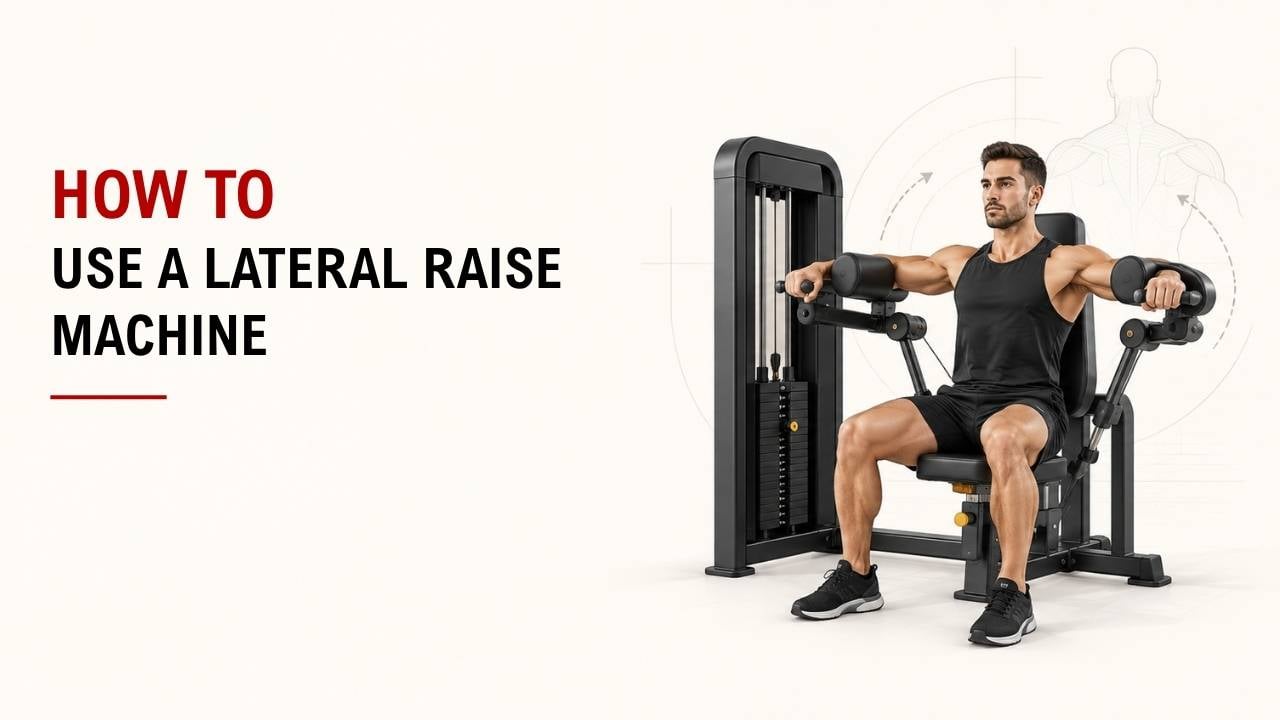

Not sure how to use a lateral raise machine without shrugging or swinging? A few small setup changes can make the exercise feel much smoother.
The quick answer is simple: adjust the seat, position your arms on the pads, choose a manageable weight, raise to shoulder height, and lower slowly. Keep every rep controlled instead of chasing heavier weight.
As an Exercise Physiology & Biomechanics Expert at YR Fitness, I study how body position, resistance, and machine movement affect exercise form. I often see lateral raises improve as soon as people lower the weight and stop shrugging their shoulders.
Below, I’ll show you six simple steps for using the machine correctly. Follow them in order, and you can clean up your form before your next shoulder workout.
1. Adjust the Seat
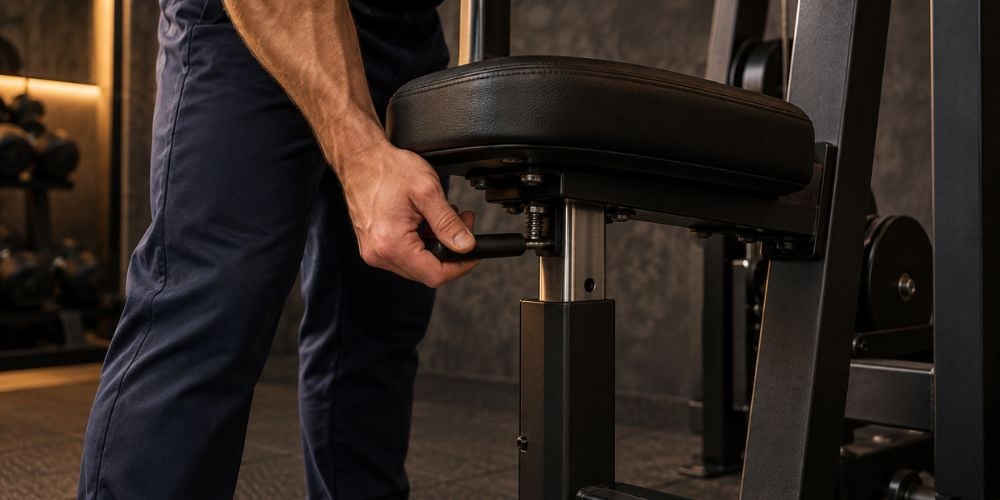
Start by sitting on the machine and adjusting the seat height.
Your shoulders should line up naturally with the machine’s movement path. Rest your upper arms or elbows comfortably against the pads without forcing yourself to lean.
Keep:
- Your back against the pad
- Your chest relaxed
- Your feet flat on the floor
- Your head facing forward
How do you know if the seat is wrong?
If you need to shrug just to reach the pads, adjust the seat. The same applies if the pads sit too high or too low.
Take a few seconds to get this right before adding weight.
Different machines use slightly different arm and pivot designs. The American Council on Exercise recommends setting up a machine lateral raise with the pads sitting just above the elbows and the arms comfortably bent before you begin.
Here is why this matters: a good starting position makes it much easier to control the rest of the rep.
2. Position Your Arms on the Pads
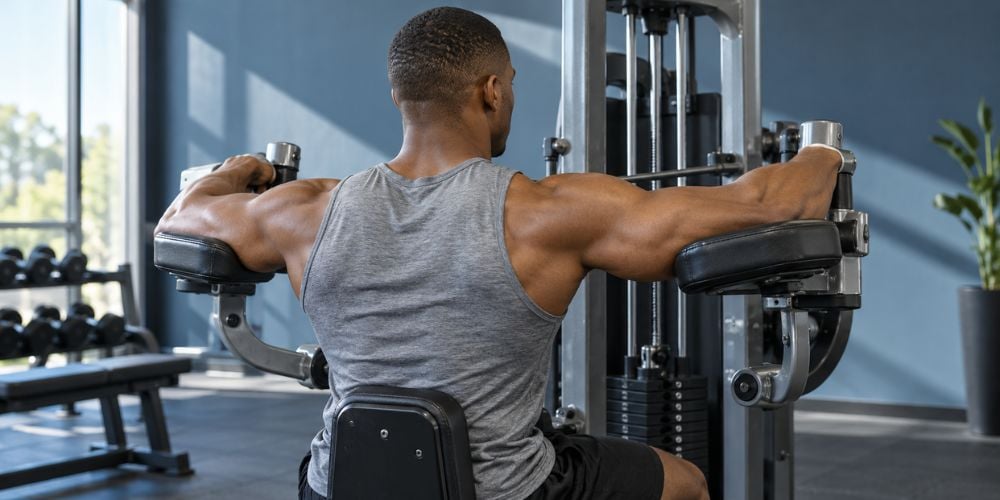
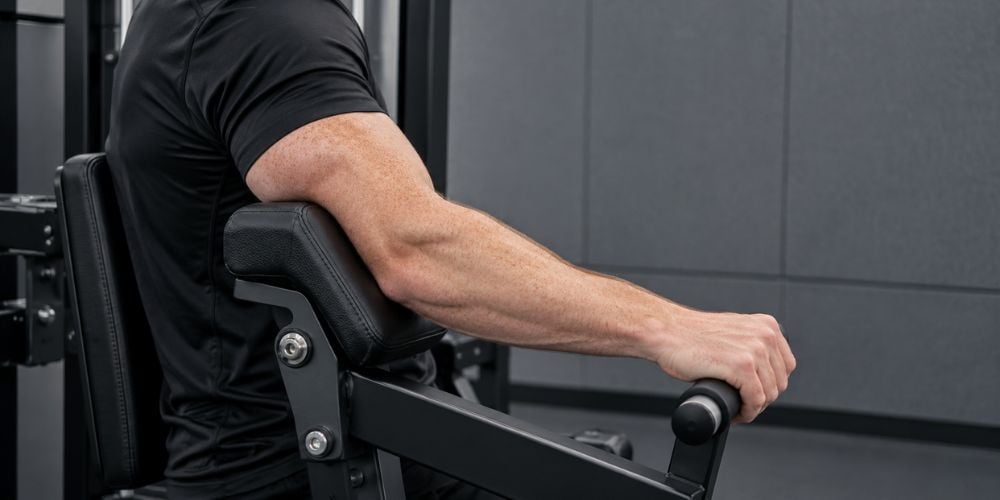
Place your arms comfortably against the pads.
On many machines, the pads sit around the upper arm or elbow area. Keep a slight bend in your elbows instead of locking your arms straight.
Keep your shoulders down and relaxed.
I often tell people to think about moving the upper arms outward, not throwing the hands upward. That simple cue usually makes the movement easier to control.
Before starting, make sure both arms feel evenly positioned.
If one side feels awkward, reset your position before beginning the set.
Quick Setup Check
Check | What You Want |
Back | Supported against the pad |
Feet | Flat on the floor |
Arms | Comfortable against the pads |
Elbows | Slightly bent |
Shoulders | Down and relaxed |
If all five feel right, you are ready to add resistance.
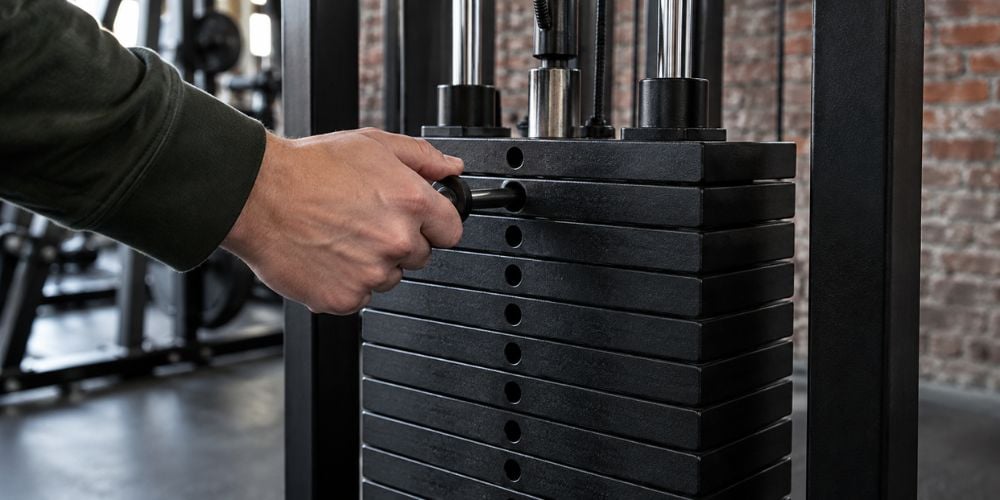
3. Choose a Manageable Weight
Now choose your weight.
This is where many people make the exercise harder than it needs to be.
Use a load that lets you move without:
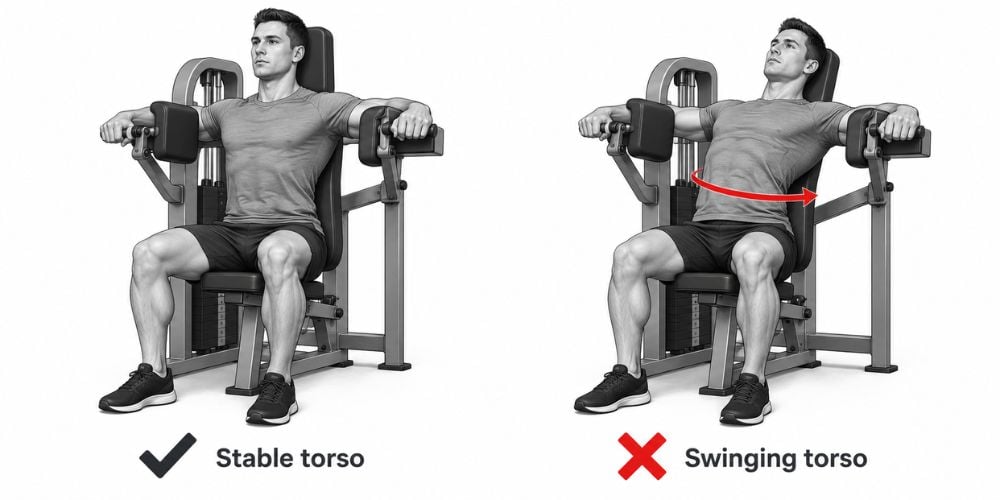
- Swinging your torso
- Shrugging your shoulders
- Jerking the weight upward
- Cutting the movement short
- Dropping the weight back down
Should lateral raises feel heavy?
They should feel challenging, but you should still stay in control. You do not need extremely heavy resistance to make your shoulders work.
If your whole body starts helping you move the machine, reduce the weight.
General ACSM resistance-training guidance also emphasizes good form and controlled lifting and lowering rather than simply moving as much weight as possible. That is a useful rule to follow here.
For beginners, I prefer a simple approach: start lighter, learn the movement, then increase the weight gradually.
Want to see how a dedicated lateral raise machine guides this movement? Explore the YR Fitness lateral raise machine and look at the adjustable seat, arm position, and movement path before your next shoulder session.
4. Raise Your Arms to Shoulder Height
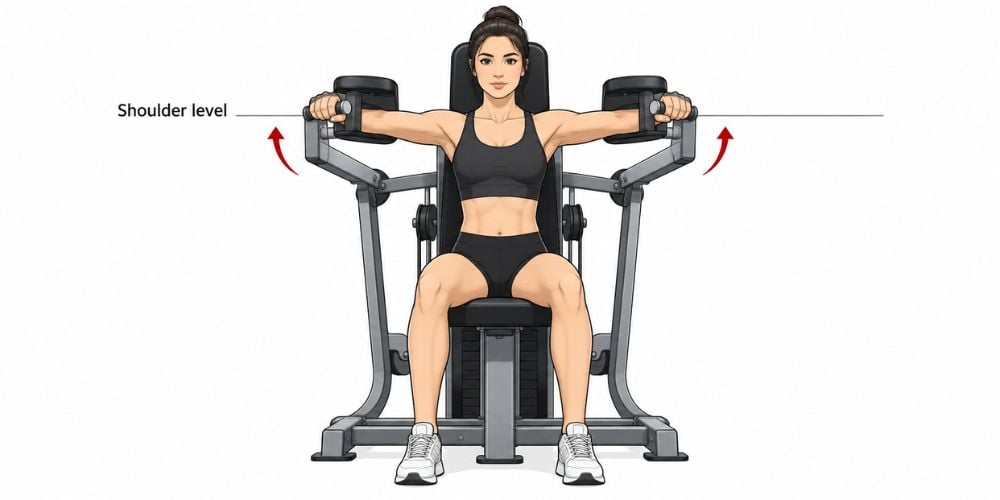
Start raising your arms outward against the pads.
Move smoothly until your upper arms are about level with your shoulders.
During the movement:
- Keep your back supported
- Keep your torso still
- Maintain a slight elbow bend
- Keep your shoulders away from your ears
- Move both sides at a similar speed
You normally do not need to raise much higher than shoulder level.
Why stop around shoulder height?
Because the goal is not to make the movement as large as possible. The goal is to challenge your shoulders through a comfortable, controlled range.
ACE’s guidance for the lateral raise movement similarly brings the arms to around shoulder level while keeping the torso controlled.
If you start shrugging near the top, stop slightly earlier.
I often see people perform the first part correctly, then lift their shoulders at the top just to move a little higher. That extra movement usually adds very little to the exercise.
5. Lower Weight Slowly
Reaching the top is only half the rep.
Lower your arms slowly back to the starting position. Do not relax and let the weight stack pull your arms down.
A simple rhythm works well:
Raise under control → brief pause → lower under control.
You do not need to count every second. Just make sure the weight does not drop.
Why slow down?
Because the lowering phase is still part of the exercise. Staying controlled also makes it easier to keep your body in the same position from rep to rep.
If the weight stack keeps slamming down, reduce the weight.
This is one of the easiest form checks I use: if you cannot control the return, the load is probably too heavy.
6. Use the Right Sets and Reps
Once your form feels comfortable, keep the workout simple.
Training Level | Sets | Reps | Rest |
Beginner | 2–3 | 10–15 | 45–90 sec |
Regular lifter | 3–4 | 8–15 | 45–90 sec |
You do not need to reach failure on every set.
Choose a weight that makes the last few reps challenging while still allowing you to keep your form.
If every rep feels easy, add a small amount of weight next time. If your technique starts breaking down halfway through the set, lower the load.
I would rather see 12 smooth reps with a lighter weight than six messy reps with a heavier one.
Conclusion
Using a lateral raise machine is simple once you set it up correctly. Adjust the seat, position your arms correctly, choose a manageable weight, raise to shoulder height, and lower under control.
The biggest mistake is usually making the exercise heavier instead of making each rep cleaner. Good shoulder training comes from controlled movement, not from moving the biggest number on the stack.
If you want to see how YR Fitness approaches this exercise, browse our lateral raise machine range and compare the different seated designs, arm systems, and adjustment options.
Related articles: