




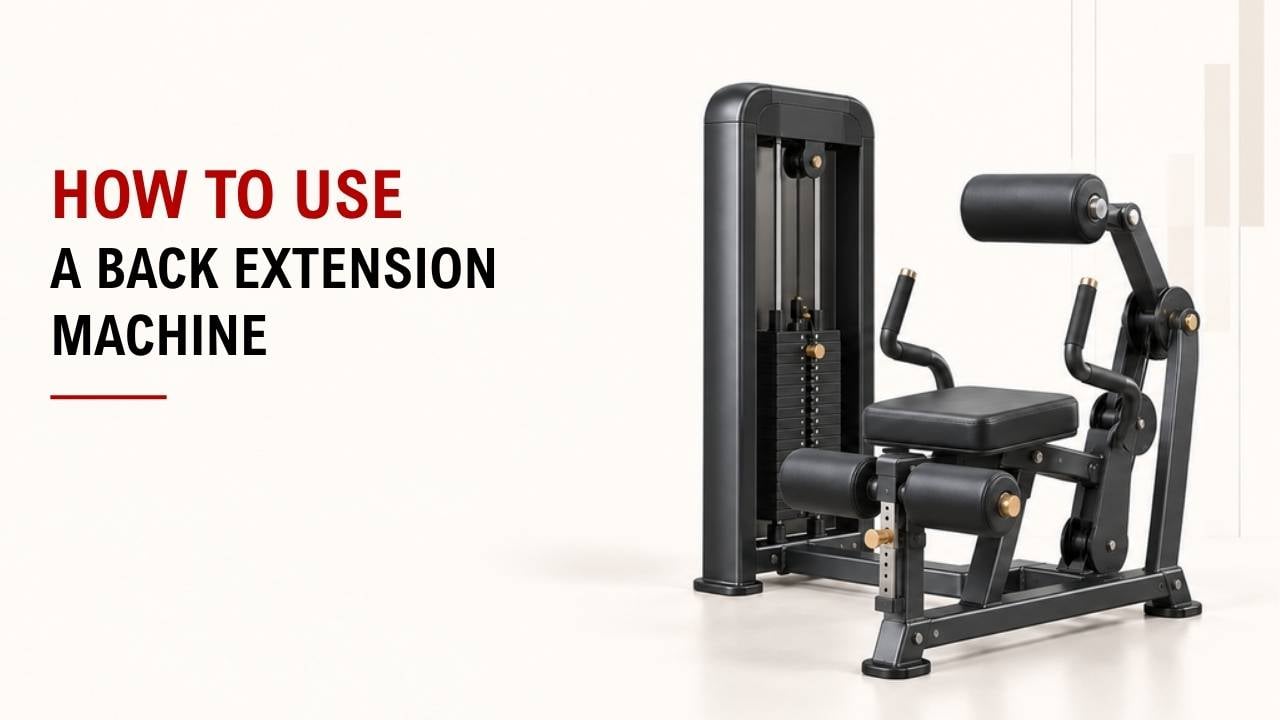

Not sure how to use a back extension machine without putting too much pressure on your lower back? Many people get the movement wrong simply because their setup or range of motion is off.
The short answer is simple: set the pad correctly, hinge from your hips, lower with control, and stop when your body returns to a straight position. You do not need to lean backward or start with heavy weight.
As an Exercise Physiology & Biomechanics Expert at YR Fitness, I focus on how exercise machines guide movement and how body position affects muscle loading. I often see small setup mistakes turn a simple exercise into an uncomfortable one.
In this guide, I’ll show you how to adjust the machine, position your body, perform each rep, and choose the right sets and reps. Follow the six steps below and keep the movement controlled.
1. Adjust the Back Extension Machine
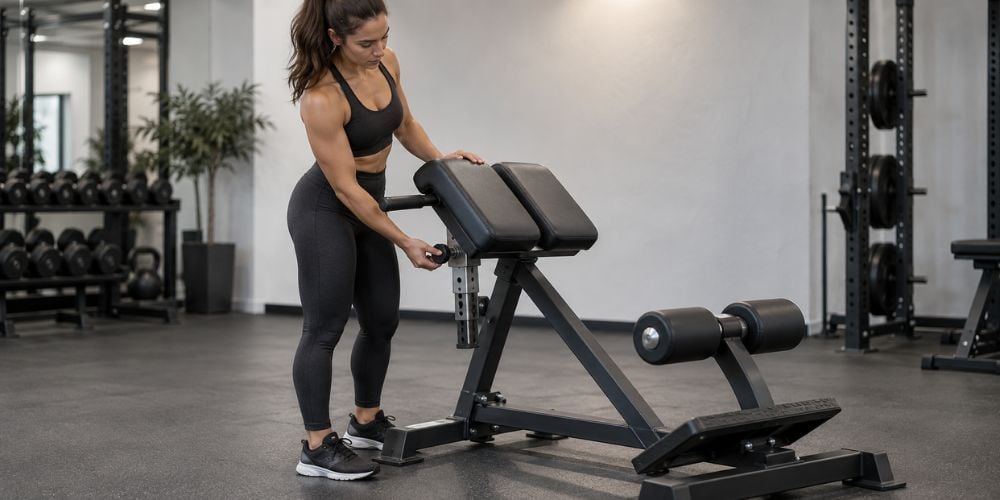
Start with the hip pad.
Set the top of the pad around your upper thighs, just below your hip crease. Your hips need enough freedom to bend forward without the pad pressing into your stomach.
Then:
- Place your feet firmly on the foot platform.
- Position your ankles against the support pads.
- Make sure your legs feel secure.
- Check that your hips can move freely.
Quick check: Can you hinge forward comfortably while your lower body stays stable?
If yes, your setup is probably closed.
Here is why this matters: exercise should work around your hip hinge rather than turn into uncontrolled bending through your lower back. NASM also emphasizes maintaining a neutral spine and hinging from the hips during posterior-chain exercises.
I always recommend spending a few extra seconds here. A good setup usually makes every rep feel smoother.
2. Get Into the Starting Position
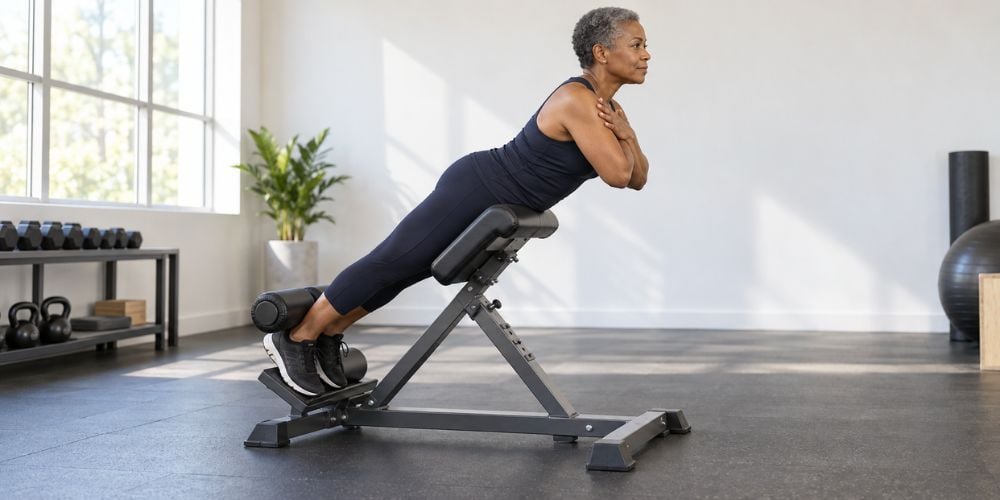
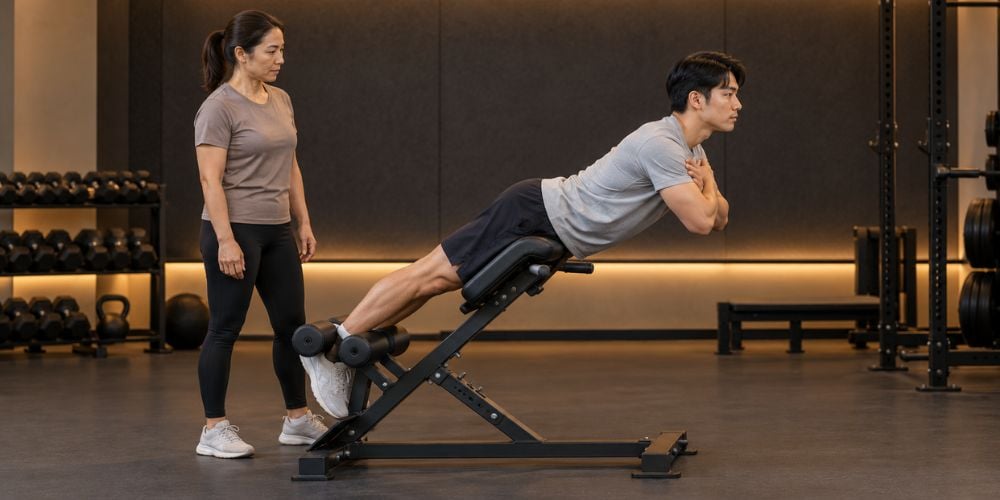
Once the machine fits your body, get stable before you move.
Keep your:
- Feet: secure
- Legs: steady
- Hips: against the pad
- Core: lightly braced
- Back: neutral
- Head: in line with your spine
You can cross your arms over your chest when starting.
Avoid pulling on the back of your head. Your neck should stay relaxed and follow the line of your spine.
Want a simple way to check yourself before the first rep? Use this table.
Body Area | Good Position | Avoid |
Feet | Firmly supported | Loose or shifting |
Hips | Supported but free to hinge | Pad pressing into stomach |
Core | Lightly braced | Completely relaxed |
Back | Controlled, neutral position | Forced rounding |
Head | In line with spine | Looking sharply upward |
Arms | Crossed over chest | Pulling on the neck |
Do you need a perfect-looking posture? No. You need a stable position that lets you control the movement comfortably.
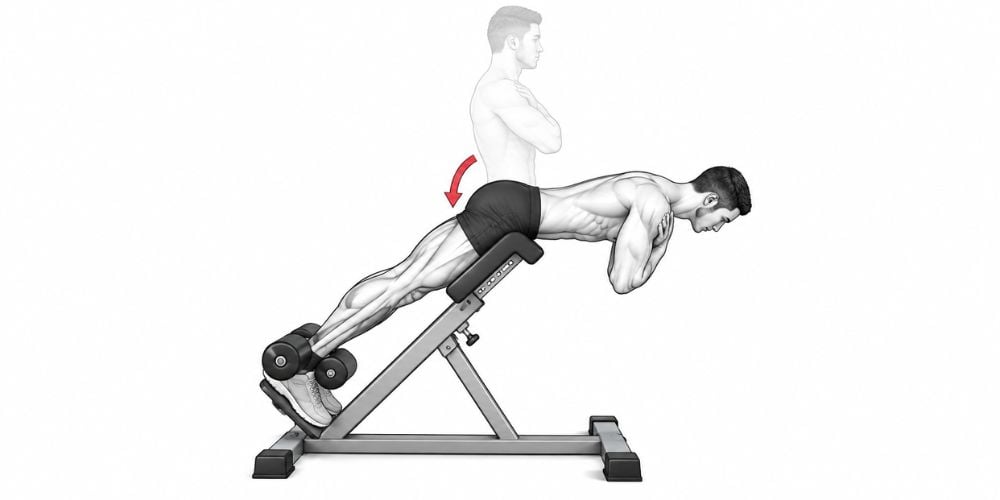
3. Lower Your Upper Body
Now begin the rep.
Slowly hinge forward from your hips. Think about keeping your hips supported while your torso moves downward.
Lower until you feel a comfortable stretch through your hamstrings and glutes.
You do not need to go as low as possible.
Your comfortable range can vary based on flexibility and machine design. Forcing extra depth does not automatically make the exercise better.
Should your back round?
A small natural change in spinal position can happen, but avoid forcing yourself into a deep rounded position. Think hip hinge first, rather than simply trying to bring your head toward the floor.
This matches the basic idea behind good resistance-training form: control the movement rather than rushing or relying on momentum. Mayo Clinic also recommends controlled lifting and lowering, along with reducing resistance when good form cannot be maintained.
4. Raise Your Body Back Up
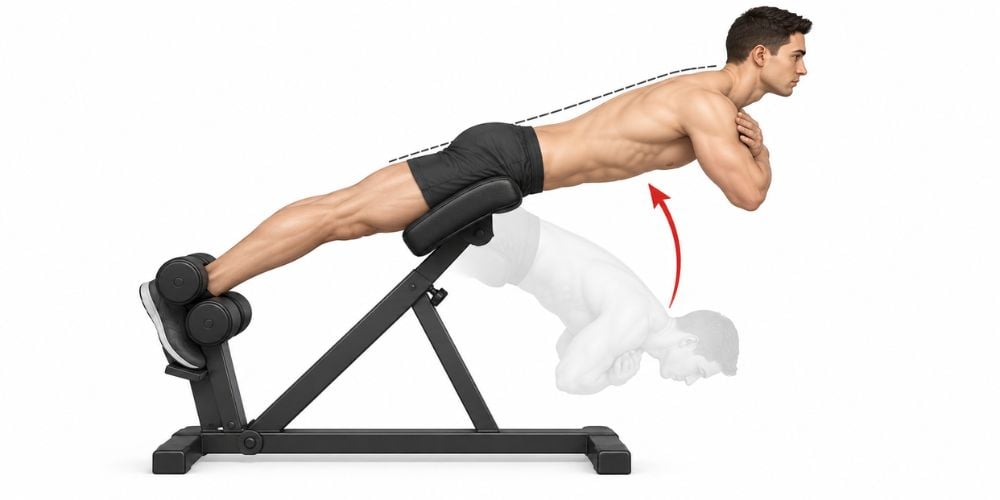
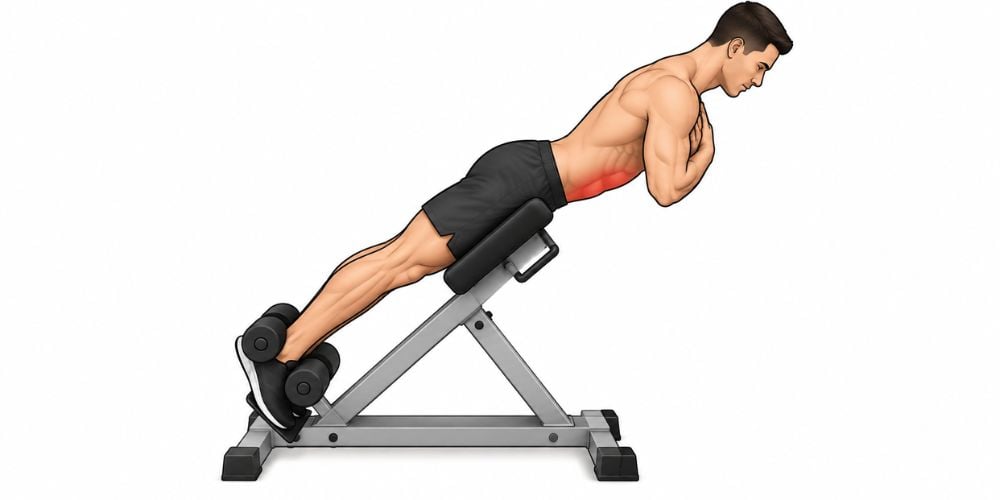
From the bottom position, tighten your glutes and begin lifting your torso.
Push your hips gently into the pad and return to your:
- Legs
- Hips
- Torso
form roughly one straight line.
Stop there.
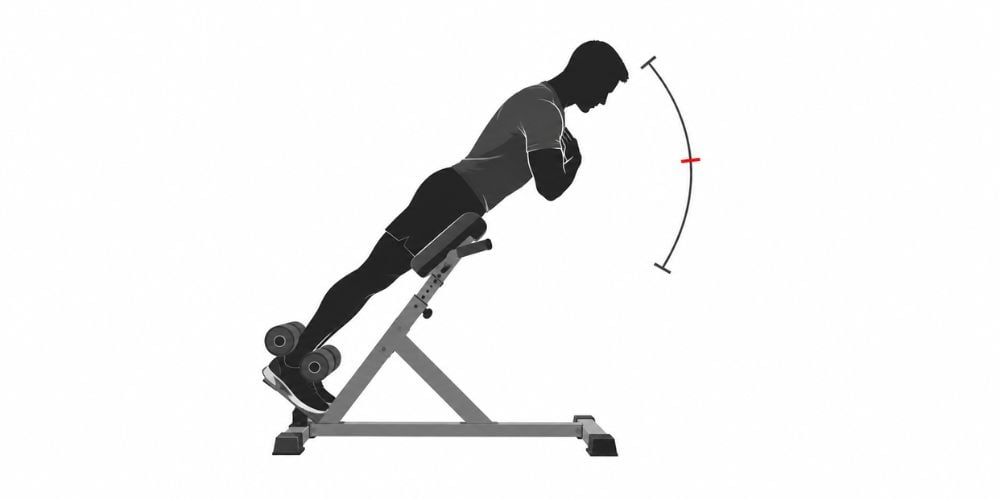
Do not keep leaning backward.
I often see people rise too high because they think more movement means more muscle work. In practice, excessive extension can simply add unnecessary stress to the lower back.
Where should you feel back extensions?
You will normally feel the:
- Lower back muscles
- Glutes
- Hamstrings
working together.
If you feel sharp or unusual lower-back pain, stop the exercise and check your setup and technique. Mayo Clinic similarly advises stopping exercise if it causes pain rather than simply pushing through it.
At YR Fitness, we design our back extension equipment with adjustable starting positions, stable foot support, and controlled movement in mind. You can view our back extension machines here if you want to compare how different machine designs support this exercise.
5. Use the Right Sets and Reps
You do not need heavy resistance to make back extensions useful.
If you are new to exercise, start with body weight and learn movement first.
Training Goal | Sets | Reps | Main Focus |
Beginner practice | 2–3 | 10–12 | Learn the movement |
General strength | 3 | 10–15 | Controlled resistance |
Muscular endurance | 2–4 | 15–20 | Consistent technique |
Keep every repetition controlled.
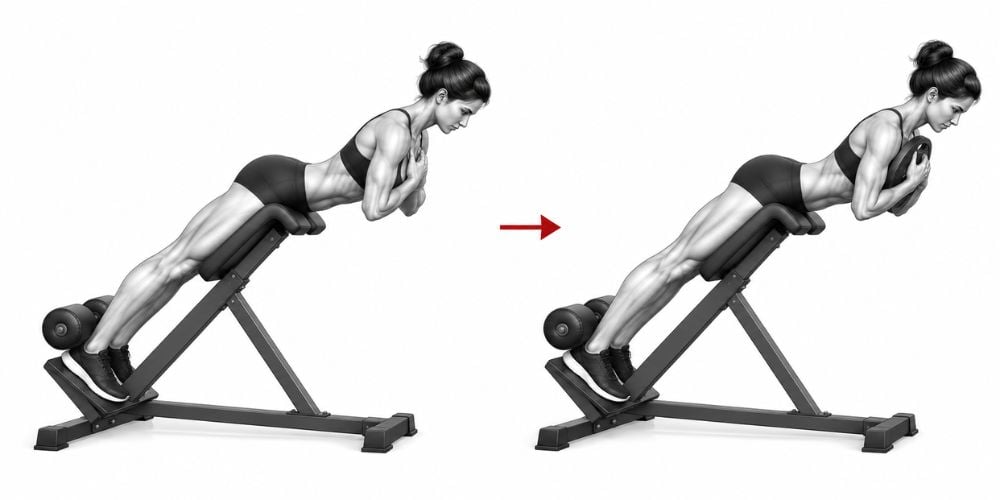
Once 15 clean repetitions feel easy, you can gradually increase the challenge. One simple option is holding a light weight plate against your chest.
The broader principle is simple: progress gradually instead of chasing weight too early. Current ACSM resistance-training guidance also stresses consistency, individualization, and matching training volume and resistance to your goal rather than making a routine unnecessarily complicated.
I would rather see 12 clean bodyweight reps than 12 fast reps with too much resistance.
6. Simple Tips for Better Back Extensions
You do not need to overthink this exercise. Keep these six cues in mind.
Move Slowly
Do not swing your upper body.
Momentum makes it harder to tell whether you are actually controlling the movement. Slow down enough to feel what your hips, glutes, hamstrings, and lower back are doing.
Keep Your Core Active
Lightly brace your stomach before you lower.
You do not need to squeeze as hard as possible. Just create enough tension to keep your torso controlled.
Hinge From Your Hips
Think about folding at the hips instead of simply bending your back.
That one cue often makes the exercise easier to understand.
Conclusion
Using a back extension machine is straightforward: adjust the pad below your hip crease, secure your feet, hinge forward slowly, and return until your body is straight.
Keep the movement smooth and avoid turning the top of the rep into an exaggerated backward lean.
If you want to compare machine designs, adjustment options, and back-training equipment, explore the back extension range from YR Fitness and choose a setup that supports comfortable, controlled movement.
Related articles: