









Does your treadmill feel rough, noisy, or harder to walk on? The deck may be running dry.
The quick answer: check for dryness, rough movement, unusual noise, extra heat, and motor strain. These signs can point to too much friction between the belt and deck.
As a Machinery & Structural Engineer at YR Fitness, I work closely with treadmill belts, decks, rollers, and motors. I often see these early warning signs before friction turns into a bigger mechanical problem.
Below, I’ll show you six simple signs to check. Use them to decide whether your treadmill may need lubrication.
1. The Belt Feels Dry Underneath
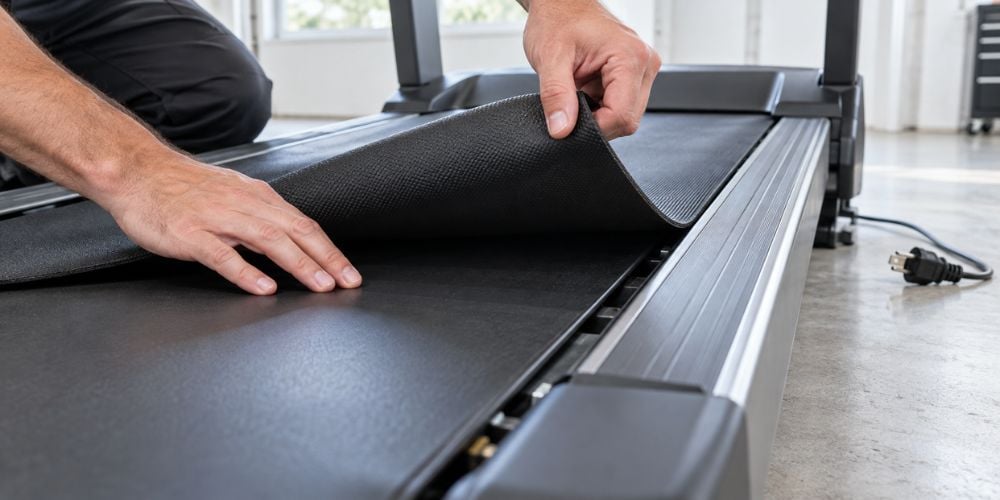
Want the quickest check? Feel underneath the running belt.
Turn off and unplug the treadmill first. Lift the belt slightly near the middle, then carefully feel the underside of the belt and the deck surface.
If both feel very dry, lubrication may decrease. SOLE, for example, recommends checking between the belt and deck and lists a dry surface as a sign that lubrication is needed.
I usually start here because you are checking the area where the friction actually occurs.
One Important Exception: do not assume every treadmill needs lubricant. Horizon notes that some treadmills use waxed running surfaces designed to be maintenance-free, so your owner’s manual should always come first.
2. The Belt Feels Less Smooth While Walking
Does the belt suddenly feel different under your feet?
A properly operating treadmill should move smoothly. If the belt starts dragging, hesitating, or feeling less fluid, friction may increase.
You might notice:
- Slight jerking while walking
- Less fluid belt movement
- More resistance under your feet
- A different feel at your normal speed
Lubrication is only one possible cause. Belt tension, alignment, rollers, and other components can create similar symptoms.
Quick Symptom Check
What You Feel | What to Check |
Belt feels dry | Lubrication level |
Belt drags | Belt/deck friction |
Belt jerks | Lubrication, tension, or drive system |
Belt moves sideways | Belt alignment |
Belt feels unusually tight | Belt tension |
Movement feels different at normal speed | Belt, deck, rollers, and drive system |
Here is why this matters: adding lubricant will not fix a badly adjusted belt. Check the basic mechanical condition before assuming dryness is the only problem.

3. The Treadmill Becomes Louder
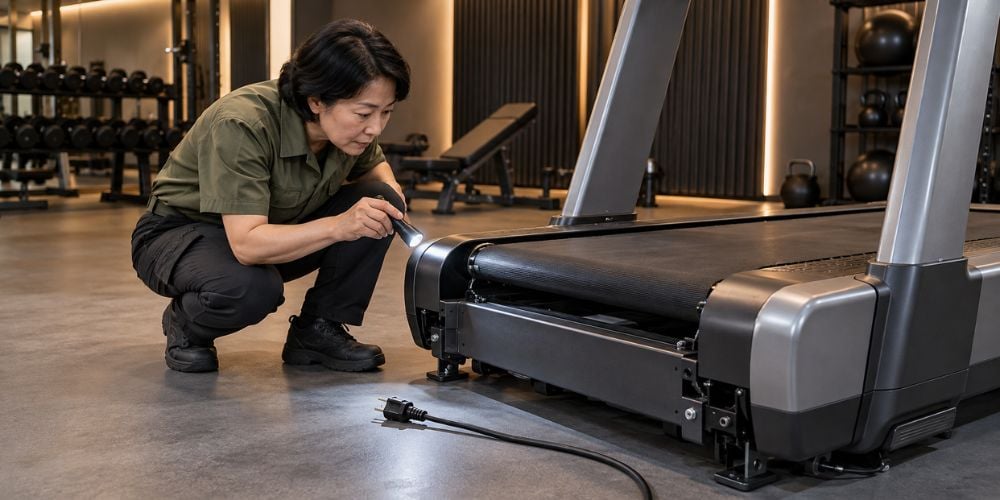
Hear a new squeak or rubbing sound?
A dry belt and deck can become noisier as friction increases. Both SOLE and NordicTrack include increased noise or unwanted friction among the signs that treadmill maintenance may be needed.
I pay more attention to a change in sound than the treadmill’s normal volume. If a machine that was quiet last week suddenly starts rubbing or squeaking, I want to know what changed.
The noise could also come from:
- Rollers
- Bearings
- Belt alignment
- Loose hardware
- Drive components
So, does squeaking automatically mean “add lubricant”? No.
Treat the sound as a reason to inspect the belt and deck first. NordicTrack also advises checking lubrication regularly instead of waiting until unwanted friction becomes noisy.
4. The Motor Seems to Work Harder
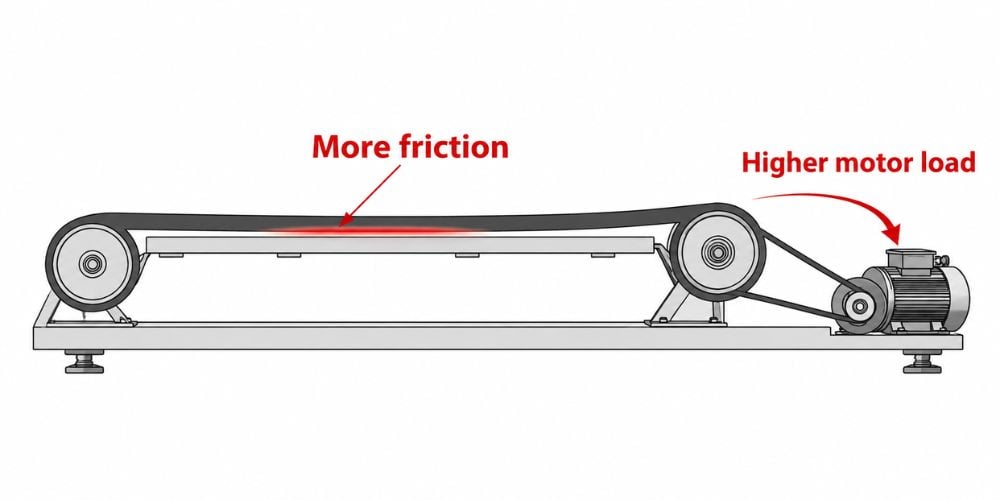
The motor has to pull the running belt while you walk or run.
When friction between the belt and deck increases, the drive system faces more resistance. SOLE specifically notes that a dry deck increases friction and can force the motor to work harder.
The basic idea is:
More belt-to-deck friction → more resistance for the drive system
You may notice that the motor sounds more strained or the treadmill no longer feels as smooth at your normal speed.
I often see people focus on the motor first when the real issue starts underneath the running belt. That is why checking the belt and deck can save you from chasing the wrong problem.
At YR Fitness, we design our cardio equipment with long-term mechanical reliability in mind because belt, deck, roller, and drive-system performance all affect how a treadmill feels in daily use. If you are comparing durable treadmill designs, you can explore our commercial fitness equipment and see how we approach equipment built for frequent training.
5. You Notice More Heat Around the Deck
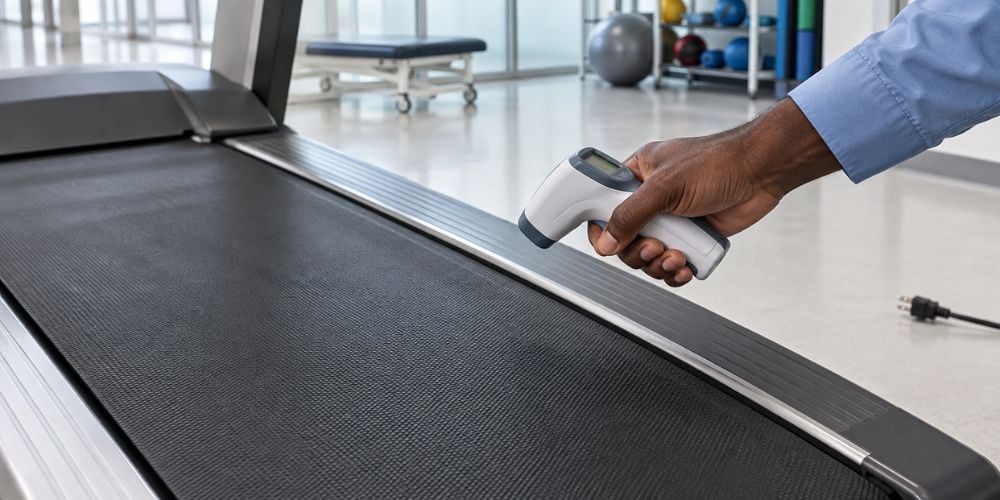
Friction produces heat, so an unusually warm belt or deck area deserves attention.
Some warmth after a workout can be normal. What matters is a clear change from how your treadmill normally behaves, especially when it appears alongside rough movement or extra motor strain.
Before checking anything closely:
- Stop the treadmill
- Unplug the power
- Stay away from internal electrical components
- Do not touch moving parts
If the belt feels rough and you notice more heat than usual, belt-to-deck friction is worth checking.
But do not keep adding lubricant just because the treadmill feels warm. Heat can also point to belt tension, motor, roller, or other mechanical problems.
6. It Has Been a Long Time Since the Last Lubrication
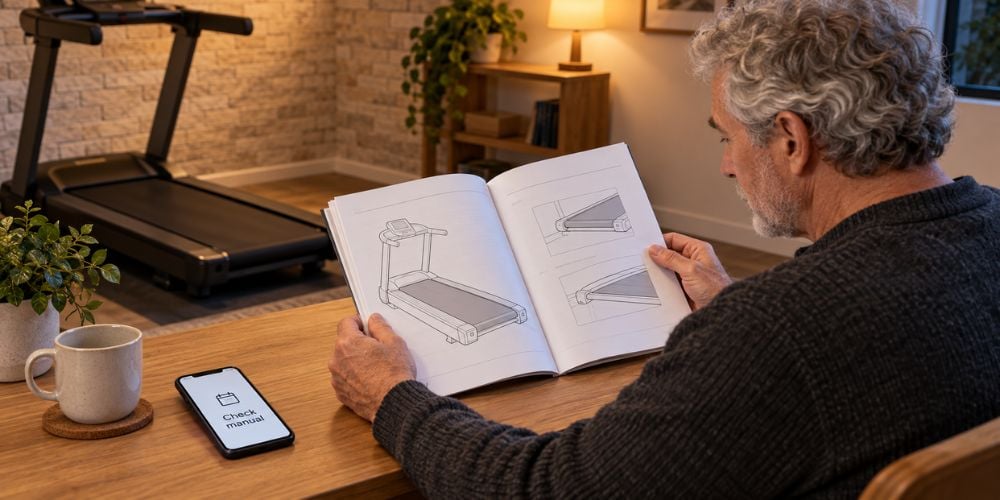
Can’t remember the last time you checked it? That alone is a good reason to open the manual.
Lubrication intervals vary by treadmill.
That is why I would never give every treadmill the same maintenance schedule.
Your interval can depend on:
- Treadmill model
- Belt and deck design
- Workout frequency
- Workout duration
- Manufacturer recommendations
A simple phone note can help. Record the date whenever you inspect or lubricate the treadmill.
What Do the Main Signs Mean?
Sign | Lubrication Could Be Involved? | Also Check |
Belt feels dry underneath | Yes | Manufacturer’s maintenance instructions |
Walking feels rough | Yes | Belt tension and rollers |
New rubbing or squeaking | Yes | Bearings, alignment, loose parts |
Motor sounds more strained | Yes | Drive system and belt tension |
Deck area seems unusually warm | Possibly | Motor, rollers, belt tension |
Maintenance is overdue | Yes | Correct interval for your model |
So, Does Your Treadmill Need Lubrication?
Look for several signs together, not just one.
A dry surface plus rough belt movement and increased noise is much more useful information than a squeak by itself. If several symptoms appear together, check your treadmill’s lubrication instructions before your next long workout.
Use only the lubricant recommended for your particular treadmill. Horizon, for example, specifies 100% silicone oil for certain models, while some waxed running surfaces should not have lubricant added at all.
Too much lubricant can also cause problems. Follow the amount and procedure given by your treadmill manufacturer rather than guessing.
Conclusion
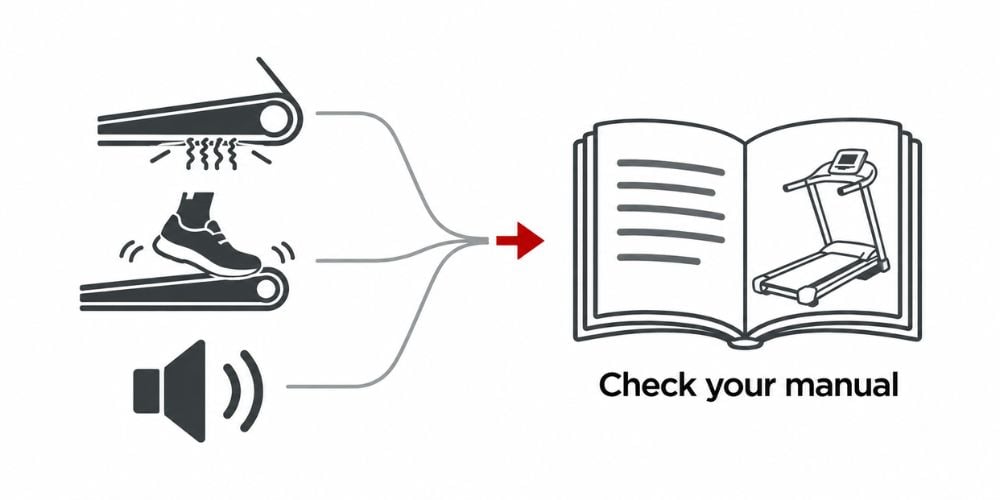
Your treadmill deck may need lubrication if the belt feels dry, movement becomes rougher, noise increases, the motor works harder, or unusual heat develops. If maintenance is also overdue, it is a good time to check the manufacturer’s instructions.
From my experience working with treadmill structures and moving components, simple checks like these can help you catch friction problems early.
If you are also looking at equipment designed for reliable long-term training, you can explore YR Fitness through our commercial gym equipment range.
Related articles:



