
Does your body keep bouncing up and down when you use a stair climber? It can make your workout feel awkward and harder to control.
To stop bouncing, slow down, keep your feet flat, and take smooth, controlled steps. These small changes can improve your balance and make each step more comfortable.
As an Exercise Physiology and Biomechanics Expert at YR Fitness, I often see beginners focus too much on speed instead of proper form. I’ve found that controlling each step makes a big difference in how steady your body feels.
In this guide, you’ll learn six simple ways to stop bouncing on a stair climber. Follow these tips to improve your posture, stepping rhythm, and overall control.
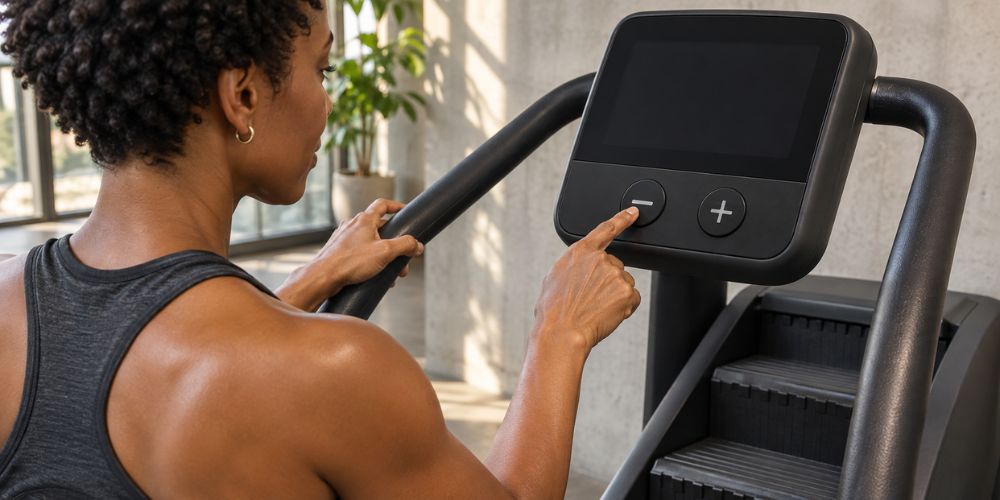
1. Slow Down Your Stepping Speed
Stepping too fast is one of the main reasons people bounce on a stair climber. When the machine moves faster than you can control, your steps become rushed and uneven.
Here’s what to do:
- Lower the speed to a comfortable level.
- Take one controlled step at a time.
- Keep your movements steady instead of rushing.
- Increase the speed gradually as your balance improves.
The American College of Sports Medicine’s stair stepper guide also recommends starting at a manageable stepping rate.
Quick Tip: Still bouncing? Slow down until your movements feel smooth again.
If you’re new to the machine, this stair climber setup guide can help you get started.
2. Keep Your Whole Foot on Each Step
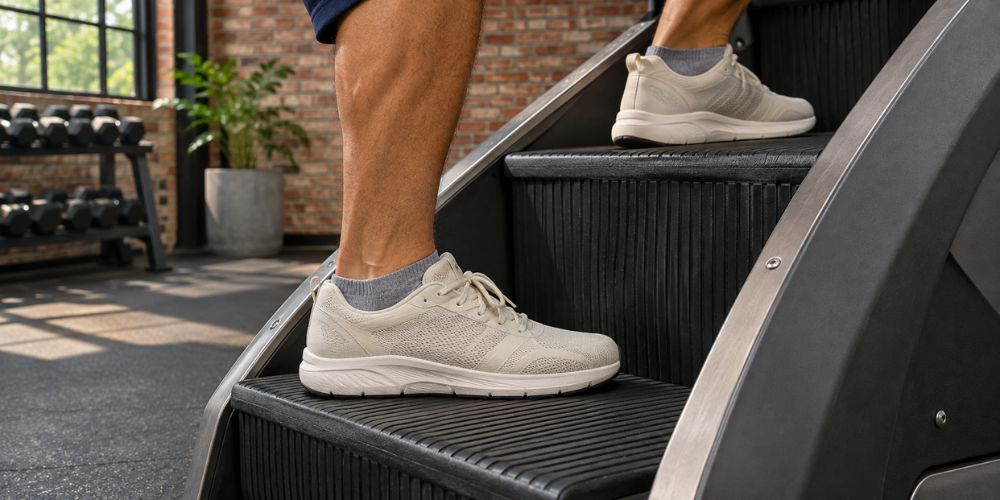
Stepping only on your toes can make you push upward with every movement. Keeping more of your foot on the step gives you better support and balance.
Try these adjustments:
- Place your whole foot on the step when space allows.
- Keep your heel supported as much as possible.
- Push through your midfoot and heel.
- Avoid constantly rising onto your toes.
I recommend checking your foot placement whenever you notice bouncing. Sometimes, this small adjustment is enough to make your steps feel steadier.
For more details, see this stair climber proper form guide.
Quick Tip: Think about pressing the step downward instead of pushing your body upward.
3. Keep Your Upper Body Steady
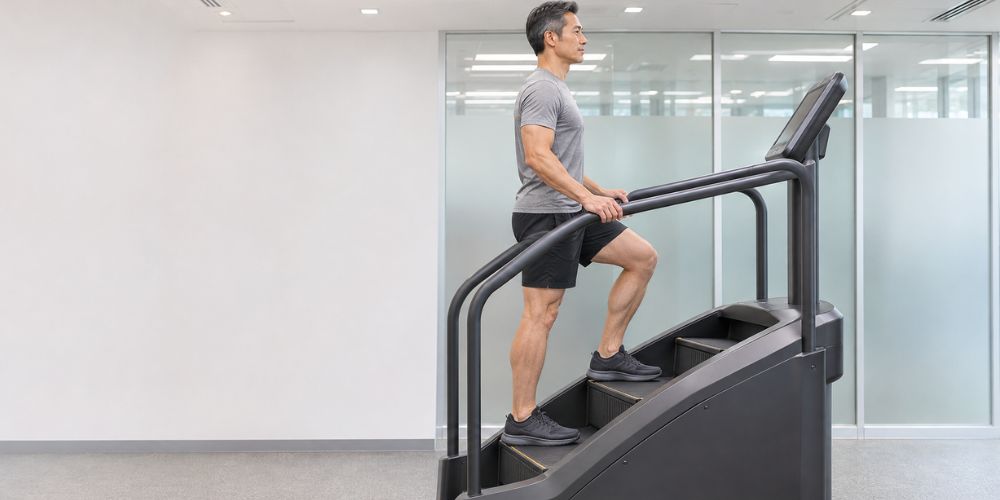
Your legs should do most of the work while your upper body stays relatively stable.
If your shoulders, chest, or hips move too much, maintaining a smooth rhythm becomes harder.
Follow these steps:
- Stand tall with your chest comfortably lifted.
- Keep your shoulders relaxed.
- Engage your core to support your posture.
- Look forward instead of constantly looking down.
- Avoid leaning too far forward or backward.
How do you know what’s causing the bouncing?
Use this quick table to check your form.
What You Notice | Possible Cause | Quick Fix |
Body jumps upward | Pushing too hard | Press downward smoothly |
Heels keep lifting | Stepping on your toes | Use more of your foot |
Upper body rocks | Poor posture or balance | Stand tall and engage your core |
Steps feel rushed | Speed is too high | Lower the speed |
Arms carry your weight | Leaning on the handrails | Use a lighter grip |
Quick Tip: Imagine keeping your head at nearly the same height throughout your workout. A little natural up-and-down movement is normal.
4. Stop Pushing Yourself Up Between Steps
Do you feel like you’re jumping slightly every time you take a step?
That usually means you’re pushing upward too aggressively instead of controlling the movement.
Here’s how to fix it:
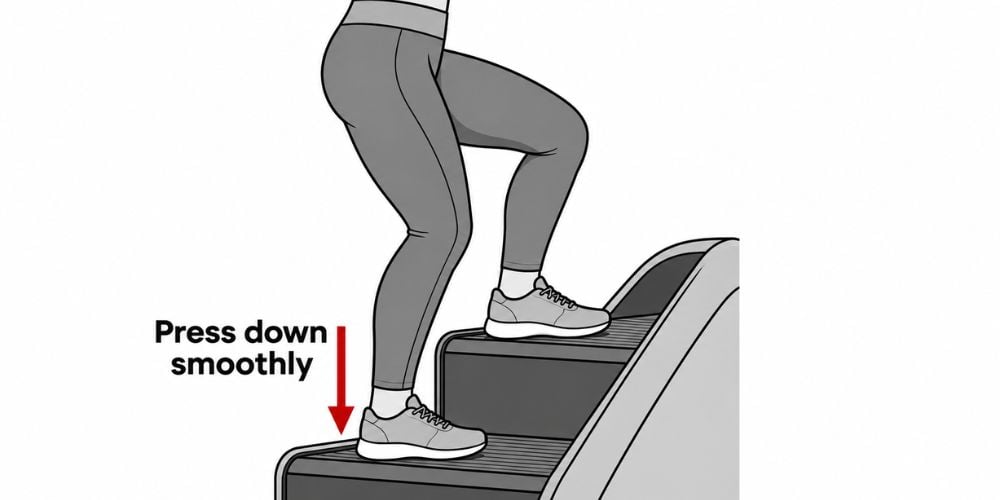
- Avoid jumping or springing upward.
- Keep your knees slightly bent instead of locking them.
- Press each step downward smoothly.
- Transfer your body weight gradually between your legs.
I often remind beginners to focus on stepping down rather than climbing up quickly. This helps reduce sudden upward movements.
Stair climbing still works your glutes, quadriceps, hamstrings, and calves, even at a controlled pace. You can learn more about its role in combined cardio and strength workouts.
Quick Tip: If your body lifts sharply between steps, lower the speed and focus on softer movements.
5. Use the Handrails for Balance, Not Support
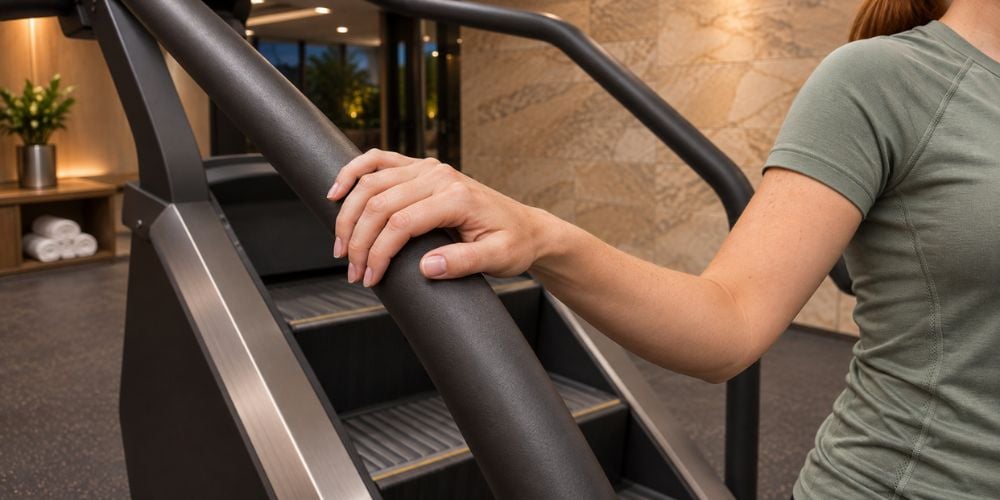
Handrails help you stay balanced, but they shouldn’t carry most of your body weight.
Holding them too tightly or pulling yourself upward can affect your posture and stepping technique.
Use them correctly:
- Hold the rails lightly when you need balance.
- Keep your shoulders relaxed.
- Avoid leaning heavily on the handles.
- Let your legs do most of the stepping work.
Why does this matter?
When you rely too much on the rails, your legs do less work. According to Cleveland Clinic’s guide to stair climber benefits, using less handrail support can challenge your core and balance, but you should do so carefully to avoid falling.
Quick Tip: If you need to grip the rails tightly just to keep up, reduce your speed.
At YR Fitness, we design commercial cardio equipment for regular daily workouts, with a focus on durability and reliable performance. If you’re interested in how different machines support steady training, explore our commercial cardio equipment guide to compare your options.
6. Practice a Smooth Stepping Rhythm
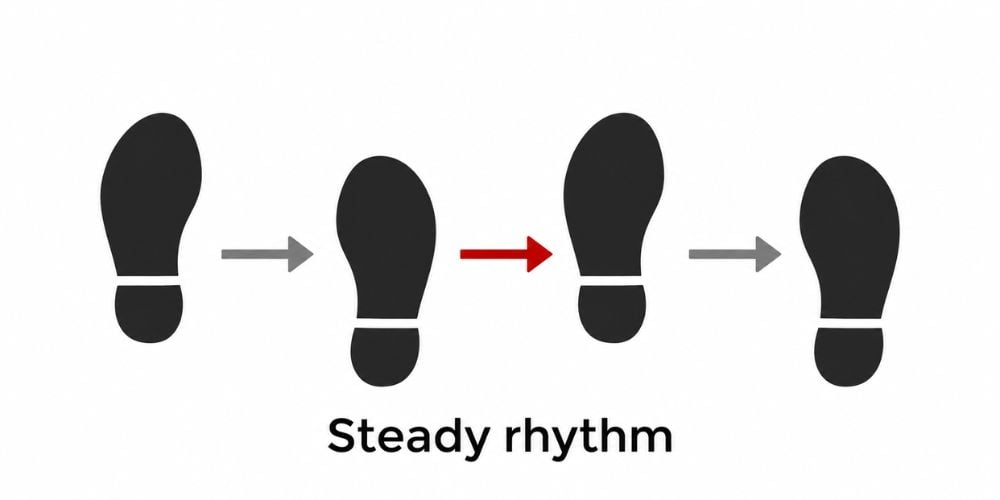
A steady rhythm makes it easier to control your body and avoid unnecessary bouncing.
When your steps become uneven, your body may start making sudden movements to keep up.
Try this simple 2–3-minute practice routine:
Time | What to Do | Main Focus |
First 30 seconds | Start at a slow, comfortable speed | Find your balance |
Next 60–90 seconds | Keep your feet positioned and upper body upright | Smooth, controlled steps |
Final 30–60 seconds | Maintain your rhythm without jumping upward | Steady movement |
After completing the routine, gradually increase the speed if your form feels comfortable.
I suggest practicing this at the beginning of every stair climber workout. Once your movements feel natural, you can slowly challenge yourself with a faster pace.
Quick Tip: If you start bouncing again, slow down and return to a steady rhythm.
If the machine feels jerky even when you’re stepping carefully, stop using it and ask gym staff to check it.
Conclusion
Stopping bouncing on a stair climber doesn’t require complicated techniques. Slow down, keep your feet properly positioned, maintain good posture, and control each step.
Remember, smooth, controlled steps matter more than speed. Once your balance improves, you can gradually increase the intensity without losing proper form.
At YR Fitness, we believe good equipment and proper technique work together to create a better workout experience. Explore our commercial fitness equipment to learn more about machines built for comfortable and reliable daily workouts.
Related articles: