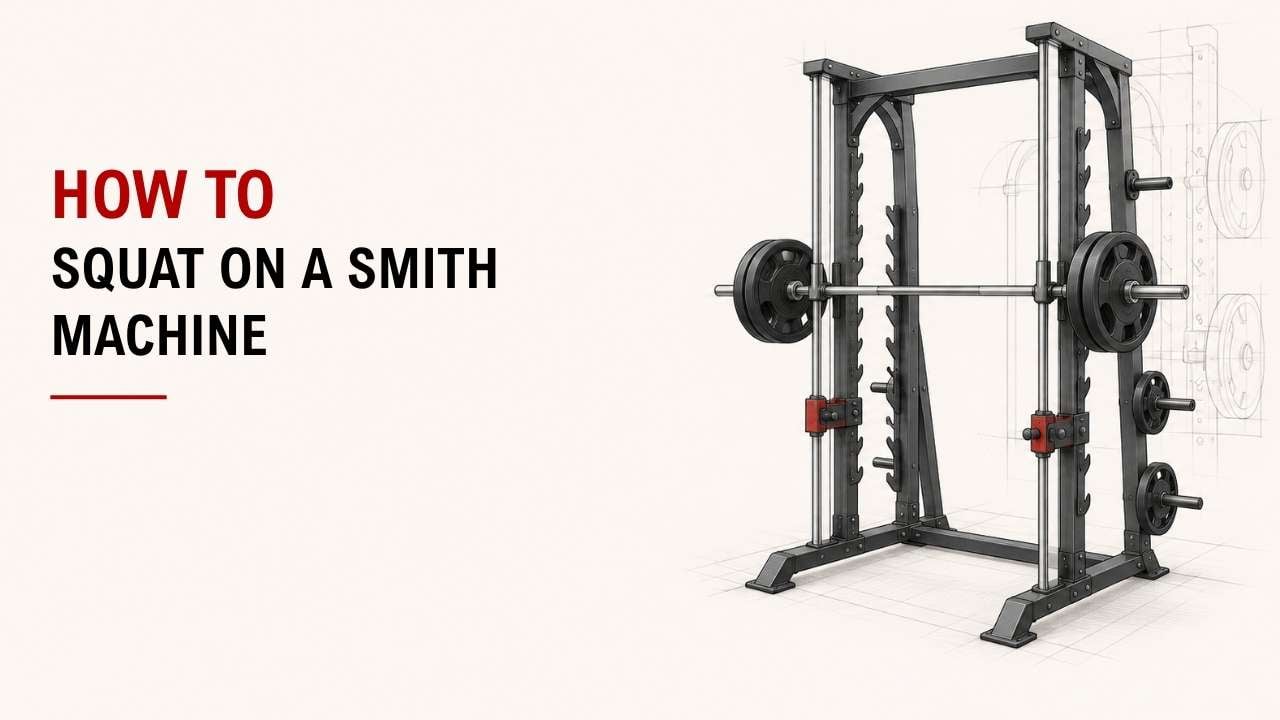
Not sure how to squat on a Smith machine? The setup can feel confusing at first.
The basic steps are simple: set the bar, place it across your upper back, move your feet slightly forward, squat down, and push back up. Start light until the movement feels comfortable.
As the founder and chief designer of YR Fitness, I have spent decades working with strength equipment and movement design. In my experience, good setup matters more than using heavy weight.
Below, I will show you how to squat on a Smith machine in seven simple steps. Follow them in order and take them straight into your next workout.
1. Set the Bar at the Right Height
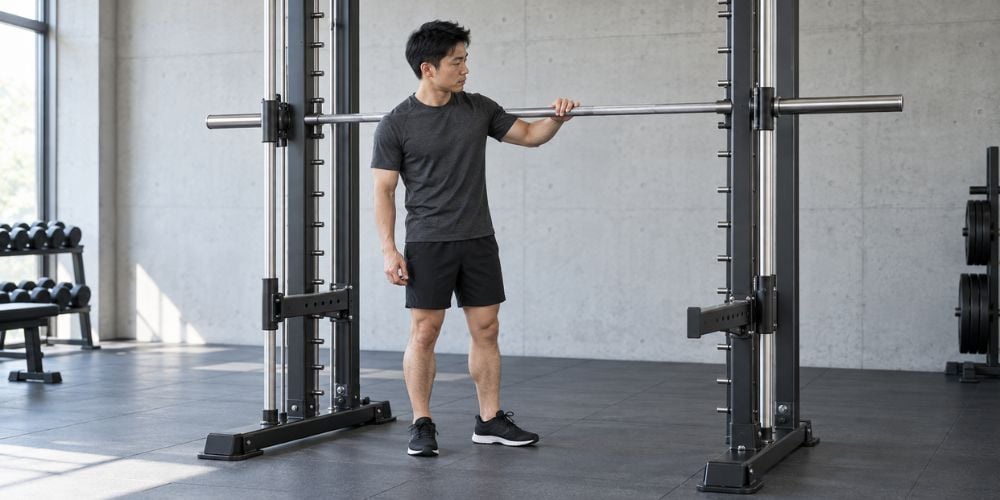
Start by setting the bar around shoulder height.
You should be able to step underneath it with your knees slightly bent. If you need to stand on your toes to reach the bar, move it lower.
Before you squat:
- Check that both sides are at the same height.
- Set safety stops.
- Start with the empty or lightly loaded bar.
- Learn how locking hooks work.
How high should the bar be?
Low enough that you can comfortably get underneath it and stand up slightly to unrack it.
Starting light is worth it. Mayo Clinic’s weight-training guidance recommends using a weight you can control with good form and reducing the load when your technique starts to break down.
2. Position the Bar Across Your Upper Back
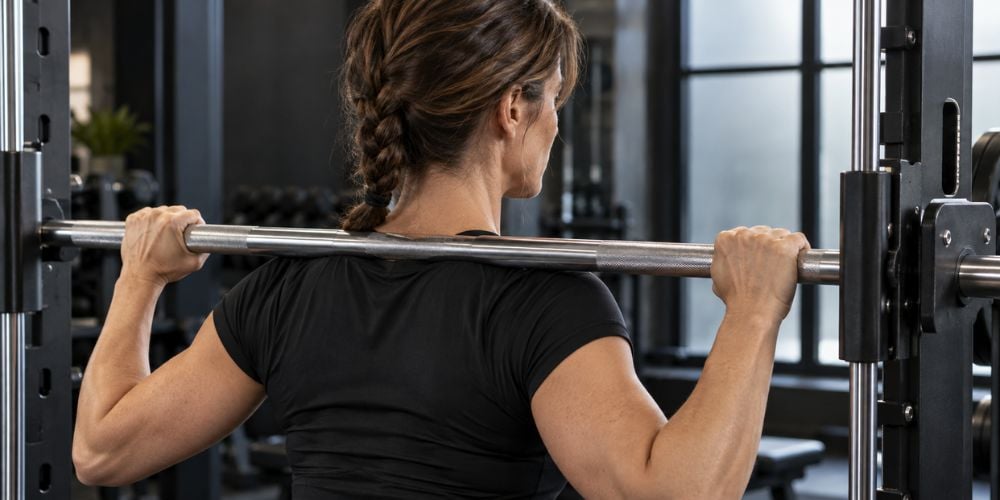
Step underneath the bar and place it across the muscular part of your upper back.
Do not rest it directly on your neck or spine. A high-bar position normally sits across your upper traps.
Grip the bar slightly wider than shoulder width, then:
- Pull your shoulders slightly back.
- Keep your chest up.
- Brace your core.
- Keep your head in a natural position.
I often see beginners worrying about foot position while the bar is still sitting awkwardly on their back. Get comfortable under the bar first.
3. Place Your Feet Slightly Forward
Now set your feet.
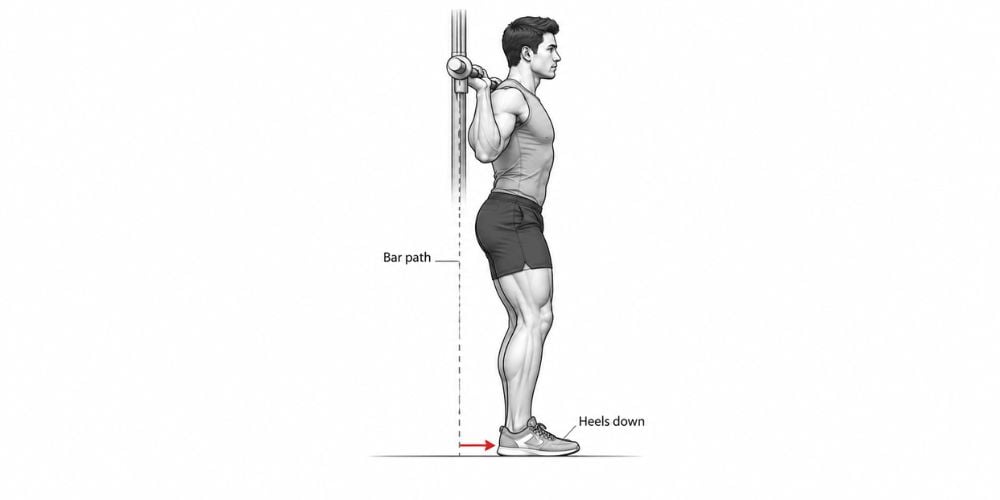
Place them about shoulder-width apart and slightly in front of the Smith machine bar path. Turn your toes slightly outward if that feels more natural.
Keep your heels firmly on the floor.
Setup | Good Starting Point |
Foot width | About shoulder width |
Foot position | Slightly forward |
Toes | Slightly outward |
Heels | Flat on the floor |
Knees | Follow the direction of your toes |
Your exact stance can change with your height, leg length, mobility, and the angle of the machine. You do not need to copy someone else’s foot position exactly.
What matters most?
Your knees should move in the same general direction as your toes, and your heels should stay down. ACE’s squat guidance recommends choosing a comfortable stance that allows the knees to track with the toes without the heels rising.
At YR Fitness, we pay close attention to movement paths because they affect how your body lines up with the resistance. Our 7333 Smith Machine also uses a patented wrist-controlled hook mechanism and counterbalanced design, so you can lock and release the bar with a simple wrist movement. See the YR Smith Machine here.
4. Unlock the Smith Machine Bar
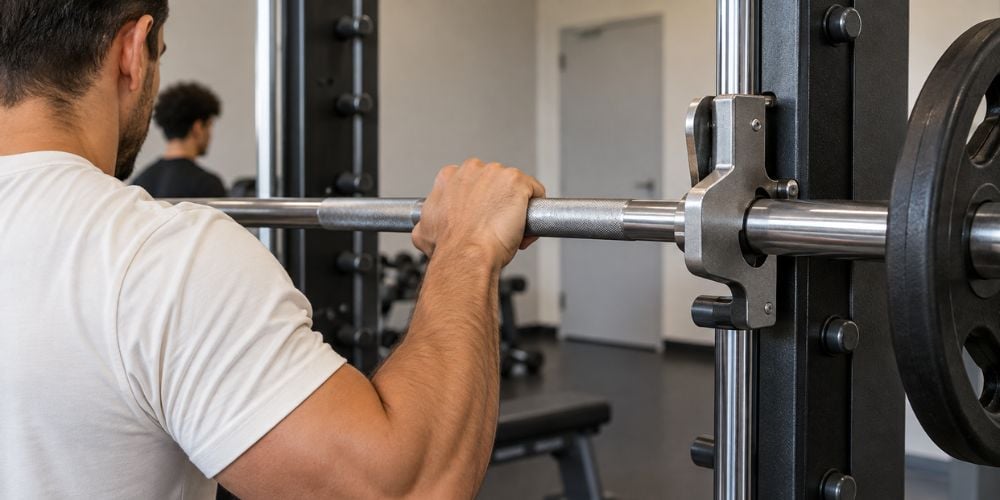
Once your feet are set, stand tall enough to take the weight of the bar.
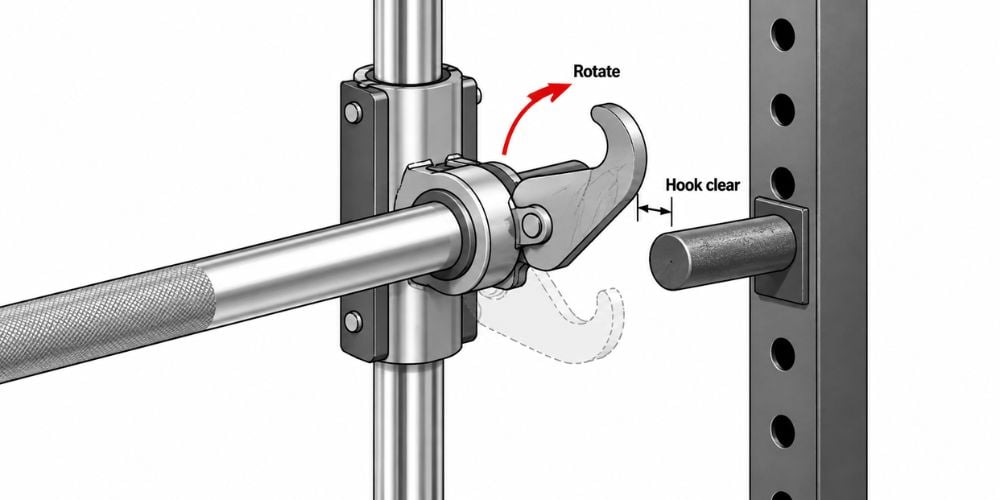
Most Smith machines use rotating hooks. You normally unlock the bar by rotating your wrists until the hooks move away from the rack.
Keep your core tight while you do this.
Do not start your first rep until you know the bar is completely free. The exact unlocking direction can vary between machines, so test the mechanism before loading heavy weight.
New to the machine?
Practice locking and unlocking an empty bar a few times first. It is much easier to learn the mechanism without plates distracting you.
5. Lower Into the Squat
Now you are ready to squat.
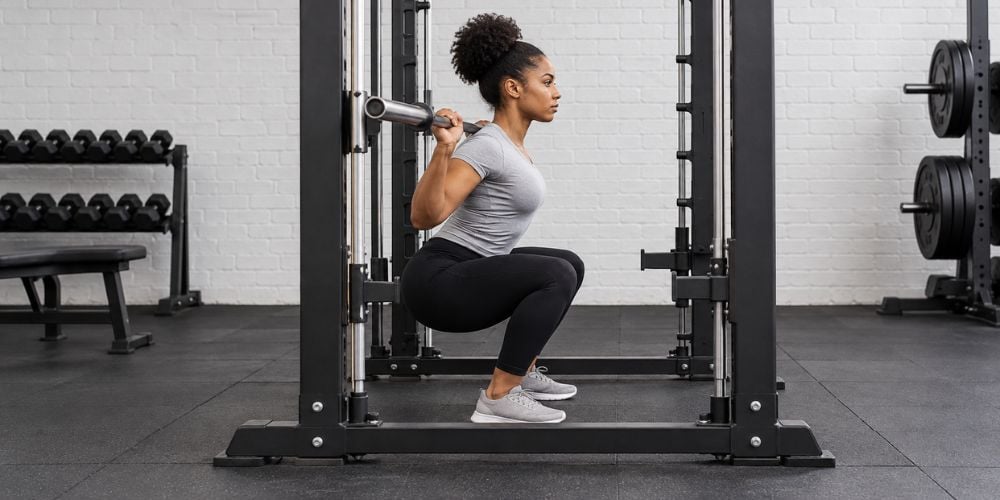
Bend your knees and hips as you lower yourself. Keep your chest up, core braced, and whole foot planted.
Think about sitting down and slightly back rather than simply dropping straight toward the floor.
As you descend:
- Keep your knees following your toes.
- Keep your heels down.
- Lower yourself under control.
- Avoid bouncing at the bottom.
- Keep your upper back firmly against the bar.
Controlled movement matters here. Mayo Clinic advises against rushing weight-training repetitions because moving too quickly can make you rely more on momentum than controlled muscular effort.
How Deep Should You Squat?
A good starting target is around thighs parallel to the floor.
Can you comfortably go lower? You can, as long as you keep control and your position does not fall apart.
If your heels start lifting, your knees collapse inward, or you lose control, shorten the range slightly and check your stance.
In my decades of design experience, I have found that forcing a range of motion rarely makes a movement better. Use the deepest squat you can control well.
6. Push Back Up
Once you reach the bottom, push the floor away from you.
Drive through your whole foot as you extend your knees and hips together. Your shoulders and hips should rise smoothly rather than one shooting upward before the other.
Keep this cue in your head:
Feet planted → knees follow toes → chest up → push smoothly.
Do not push only through your toes. You also do not need to aggressively snap your knees into a locked position at the top.
Return to a stable standing position, reset your brace, and begin the next rep.
Something feels wrong?
Do not automatically add more weight.
7. Re-Rack the Bar Safely
Your set is not finished until the bar is secure.
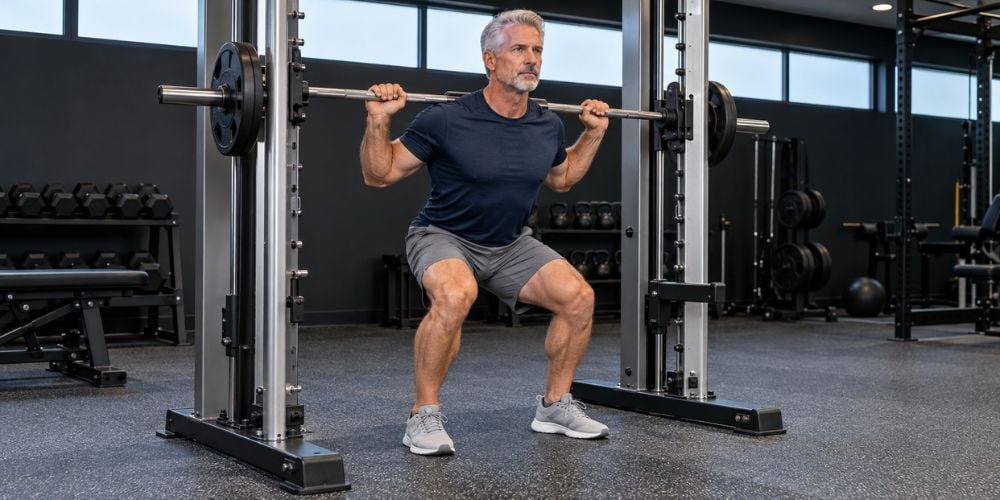
Stand fully upright and make sure you are balanced. Then rotate the bar toward the rack until the hooks catch.
Before stepping away:
- Check that the hooks are engaged.
- Make sure both sides are secure.
- Slowly release tension.
- Step out only after the bar is fully supported.
This takes a second, but do not rush it.
Proper technique still matters when replacing weights or returning equipment to the rack, which is also highlighted in Mayo Clinic’s strength-training safety advice.
Conclusion
The Smith machine squat is simple once your setup feels right. Set the bar correctly, place it across your upper back, move your feet slightly forward, squat under control, and re-rack the bar securely.
Start light and focus on smooth, repeatable reps before adding more weight.
If you want a Smith machine built for controlled strength training, at YR Fitness, we can help you choose a commercial-grade setup with a smooth bar path, secure hook system, and practical safety features for regular training.
Related articles: