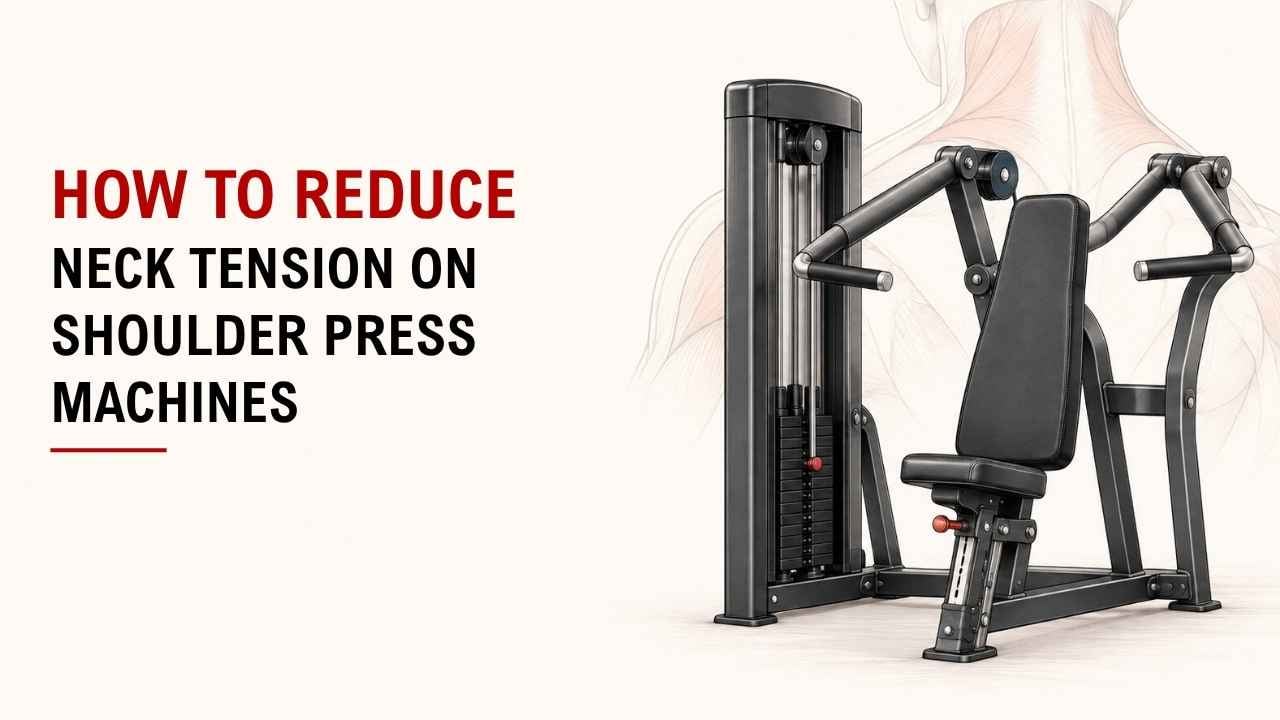

Does your neck feel tight during shoulder presses? Poor positioning or heavy weights could be the cause.
The fix is simple: adjust your seat, relax your shoulders, keep your neck neutral, and use lighter weights. These changes can make pressing more comfortable.
As an Exercise Physiology & Biomechanics Expert at YR Fitness, I focus on proper movement and exercise technique. I’ve seen how small adjustments can reduce neck strain and improve pressing form.
Below are seven simple ways to reduce neck tension on shoulder press machines. Follow them to press more comfortably and with better control.
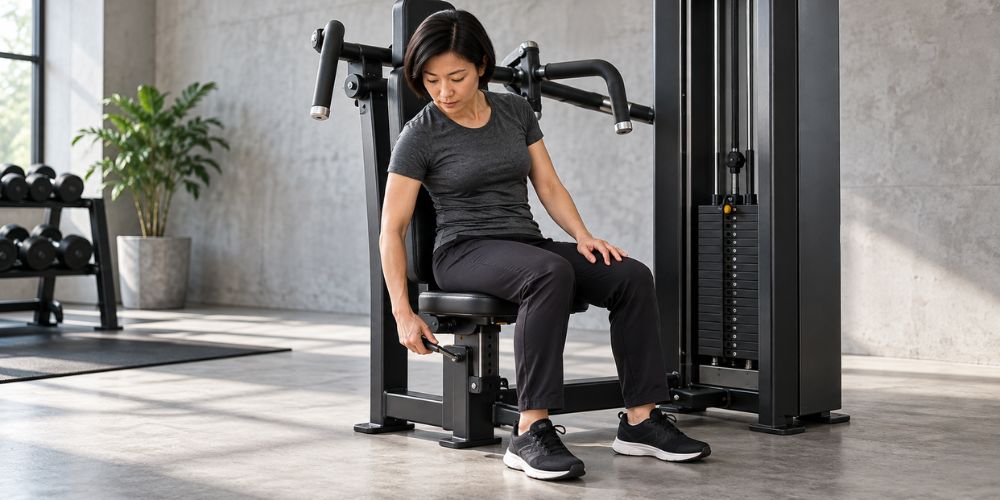
1. Adjust Your Seat Height
Is your seat too high or too low? The wrong height can force your shoulders and neck into an uncomfortable position.
Here’s how to adjust it:
- Set the handles around shoulder or ear level, depending on the machine.
- Keep both feet flat on the floor.
- Rest your back comfortably against the backrest.
- Make sure you can reach the handles without stretching your neck.
The American Council on Exercise (ACE) recommends adjusting the seat so the handles are level with or slightly above your shoulders.
Quick Tip: Try a few light repetitions after adjusting your seat. If the movement feels awkward, change the height before adding weight.
2. Keep Your Head and Neck Neutral
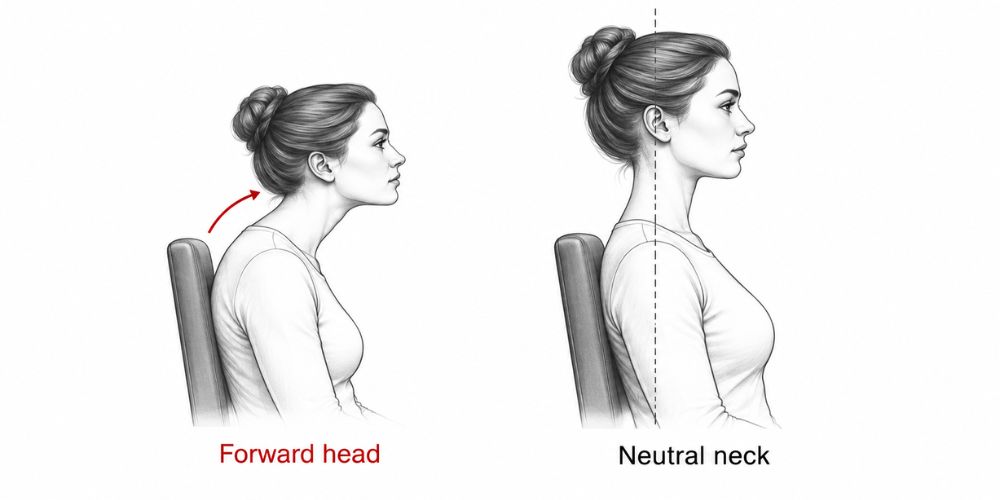
Pushing your head forward or tilting it backward can increase neck tension during shoulder presses.
Keep your neck in a natural position:
- Look straight ahead while pressing.
- Keep your chin in a comfortable, neutral position.
- Avoid pushing your head forward.
- Keep your upper back supported against the pad.
I often notice people pushing their heads forward when the weight gets heavy. Keeping your head aligned with your spine helps reduce unnecessary strain.
Quick Tip: Imagine keeping your head in the same position from your first repetition to your last.
3. Relax Your Shoulders
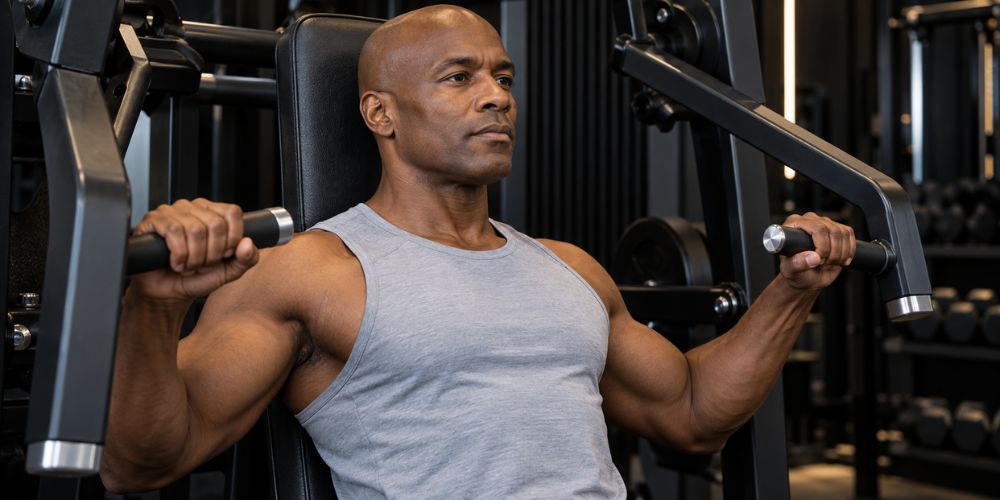
Do your shoulders rise toward your ears when pressing? Excessive shrugging can make your upper trapezius muscles work harder and contribute to neck tension.
Try these adjustments:
- Avoid intentionally shrugging your shoulders.
- Keep your neck relaxed during each repetition.
- Allow your shoulder blades to move naturally.
- Avoid tightening your upper traps unnecessarily.
Your shoulder blades need to rotate upward during overhead pressing, so don’t force them downward throughout the movement.
Here are some common mistakes to watch for.
Common Mistake | What to Do Instead |
Shrugging excessively | Reduce weight and avoid forcing the shoulders upward |
Pushing your head forward | Keep your head aligned with your spine |
Tightening your neck | Relax your neck and jaw |
Forcing shoulders downward | Allow natural shoulder blade movement |
Quick Tip: If your neck tightens every time you press, stop and reset your position before continuing.
4. Reduce the Weight
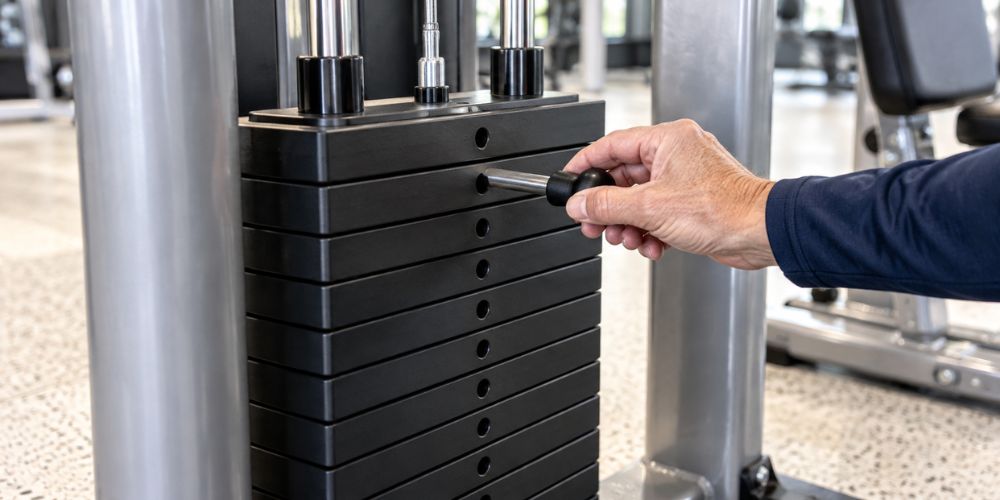
Lifting too much weight can make you tense your neck, shrug your shoulders, or push your head forward.
The easiest fix is to choose a weight you can control.
- Start with manageable resistance.
- Aim for 8–12 controlled repetitions.
- Reduce the weight if your neck starts tightening.
- Increase resistance gradually as your form improves.
The Mayo Clinic’s weight-training guidelines recommend using a weight you can lift comfortably while maintaining proper technique.
In my experience, people often improve their pressing technique faster when they focus on control instead of heavier weights.
Quick Tip: If you cannot finish your repetitions without changing your head or shoulder position, lower the weight.
5. Adjust Your Grip and Elbow Position
An uncomfortable grip can affect shoulder movement and make your neck work harder than necessary.
Try these adjustments:
- Choose a comfortable grip width.
- Keep your wrists aligned with your forearms.
- Position your elbows slightly forward if the machine allows.
- Avoid forcing your elbows too far behind your body.
- Try neutral-grip handles if available and comfortable.
Here is why this matters: your grip and elbow position affect the path your arms follow when pressing.
Quick Tip: Test different handle positions with light resistance. Choose the grip that allows smooth pressing without discomfort.
Why Machine Design Matters
Not every shoulder press machine feels the same. Seat adjustments, handle positions, and pressing angles can affect your comfort during exercise.
At YR Fitness, we design commercial strength machines with carefully developed movement angles, stable frames, and adjustable features. Explore our commercial strength equipment to see what features to look for when choosing a shoulder press machine that supports comfortable, controlled movement.
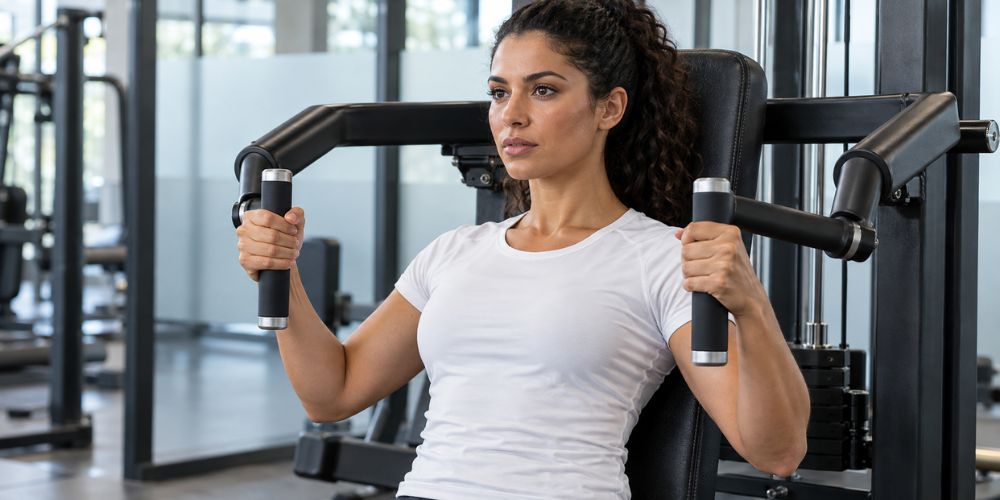
6. Press Slowly and With Control
Pressing too quickly can make your body tense up and reduce control over the movement.
Instead, focus on smooth repetitions.
- Press the handles upward without jerking.
- Avoid snapping your elbows straight at the top.
- Lower the handles slowly.
- Keep your head and back stable.
- Stop the repetition if you cannot maintain proper form.
How fast should you press? Use a pace that lets you control the handles throughout the movement.
Movement | Suggested Time | Focus |
Press upward | 1–2 seconds | Smooth movement |
At the top | Brief pause | Avoid locking elbows forcefully |
Lower downward | 2–3 seconds | Control the resistance |
Before the next rep | Brief reset | Check neck and shoulder tension |
These times are practical suggestions, not strict requirements.
Quick Tip: Don’t rush to finish your set. Slow down if you notice your shoulders shrugging or your neck tightening.
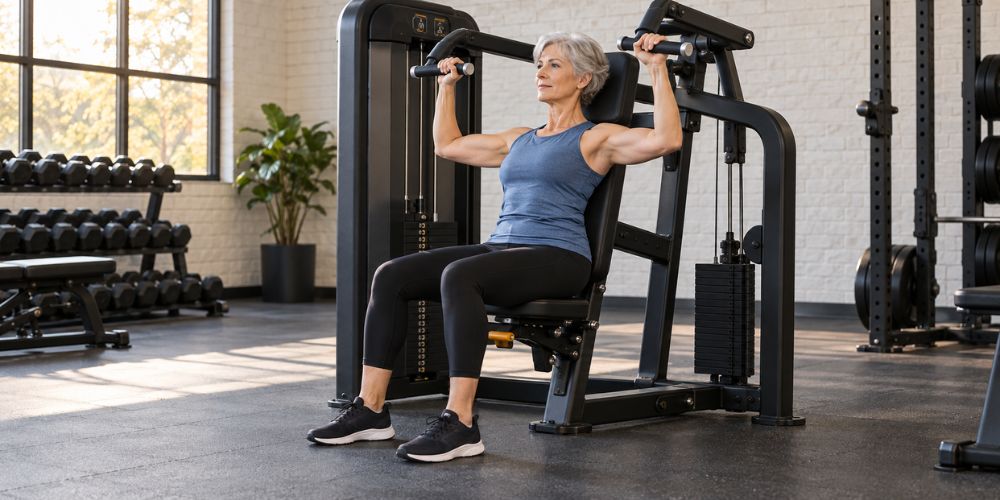
7. Breathe Properly During Each Rep
Holding your breath unnecessarily can increase body tension during shoulder presses.
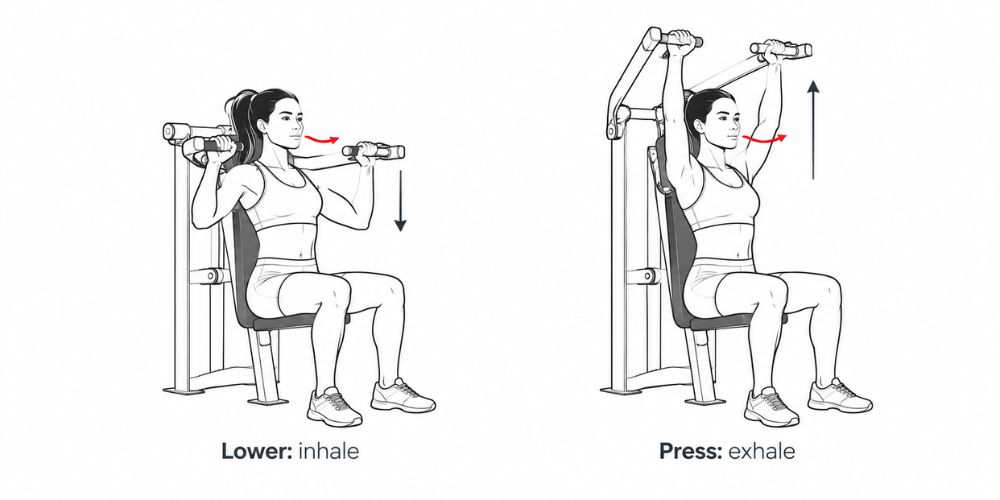
Use this simple breathing pattern:
- Inhale as you lower the handles.
- Exhale as you press upward.
- Keep your breathing steady.
- Avoid clenching your jaw or tightening your neck.
The National Academy of Sports Medicine (NASM) also explains how poor shoulder movement and early shrugging can indicate compensation during overhead movements.
Quick Tip: Match your breathing with each repetition. This helps you maintain a steady rhythm without unnecessary tension.
What If Your Neck Still Feels Tight?
Still feeling uncomfortable after making these adjustments? Stop the exercise and check your seat height, weight, and pressing position.
Don’t push through sharp pain, tingling, or persistent discomfort. Ask a qualified trainer or healthcare professional for guidance, especially if symptoms continue or spread into your arms.
Conclusion
To reduce neck tension on shoulder press machines, adjust your seat, keep your neck neutral, relax your shoulders, use lighter weights, and press with control. Focus on comfortable movement instead of lifting heavier weights.
A comfortable machine setup also matters. Explore YR Fitness commercial gym equipment to learn about strength machines designed for stable, controlled, and comfortable training.
Related articles: