









Are you unsure what to charge for semi-private personal training? You want a price that feels fair to clients and still makes sense for your business.
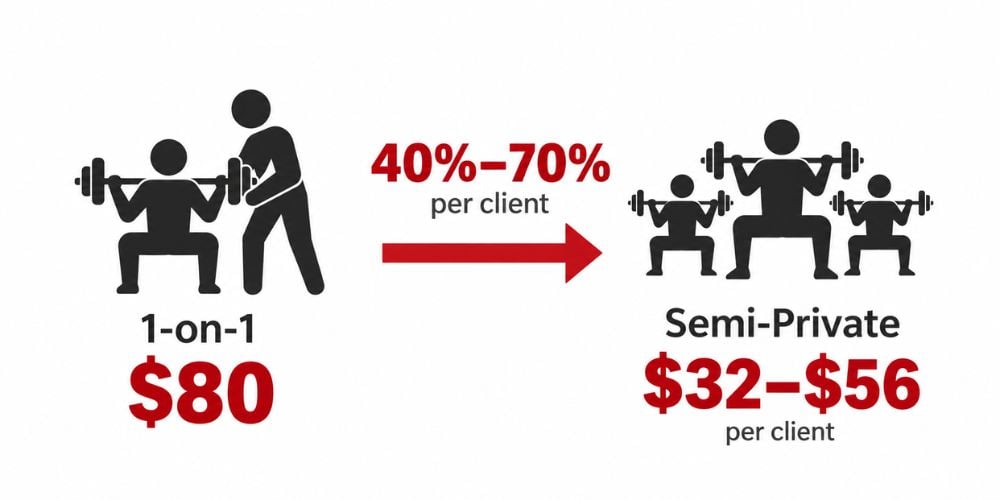
A simple starting point is 40% to 70% of your one-on-one rate per person. Then adjust based on group size, costs, and your target income.
As the founder of YR Fitness, I have spent decades working with trainers, gym owners, and commercial fitness facilities. That experience has shown me that simple pricing is usually easier to manage and easier for clients to understand.
Below, I will show you how to set your rate, calculate session revenue, cover your costs, and build clear training packages.
1. Start With Your One-on-One Training Rate
Your private training rate gives you the simplest starting point.
A practical rule is to charge each semi-private client around 40% to 70% of your one-on-one price.
If you charge $80 for one-on-one training, for example:
Group Size | Price Per Person | Total Session Revenue |
2 clients | $50 | $100 |
3 clients | $45 | $135 |
4 clients | $40 | $160 |
With four clients:
4 × $40 = $160 per session
That is twice the revenue of one $80 private session, while every client pays less.
Should you simply copy another trainer’s price?
No. Local pricing is worth checking, but your own costs, experience, and service matter too. ACE Fitness’ guide to pricing training services also recommends looking at local rates while considering the value and costs behind your service.
Do not cut the price too far just because several people train together. You are still providing programming, coaching, corrections, and personal attention.
2. Calculate Your Revenue Per Session
Now ask yourself one simple question:
How much should this training hour earn?
Use:
Price per person × number of clients = total session revenue
Here is the same pricing model at a glance:
Clients | Price Each | Session Revenue |
2 | $50 | $100 |
3 | $45 | $135 |
4 | $40 | $160 |
5 | $35 | $175 |
You can also calculate the price backward.
Suppose you want to generate $160 per session and expect four people:
$160 ÷ 4 = $40 per person
I like this approach because you start with the revenue you actually need instead of guessing at a price.
NASM describes group personal training as training multiple clients in the same time slot, with its current program covering groups of two to ten clients. The basic business idea is similar: serving several people at once can increase hourly earning potential while lowering the cost for each participant.
See NASM’s overview of group personal training
What about equipment?
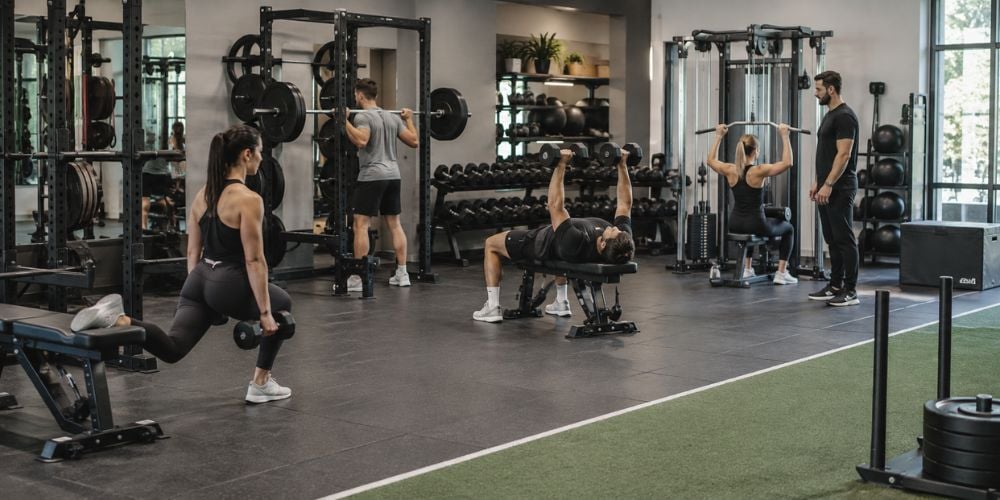
If four people are training together, they should not spend half the session waiting for the same bench or cable station.
Think about whether you have enough:
- Benches and racks
- Dumbbells
- Cable stations
- Functional training equipment
- Cardio equipment
- Open training space
At YR Fitness, we build commercial strength, cardio, and fitness equipment for facilities that handle repeated daily training. If you are planning a semi-private training area, explore our commercial gym equipment and training solutions to see what could fit your space, training style, and budget.
3. Include Your Coaching and Gym Costs
A full schedule does not automatically mean a profitable schedule.
You need to know what each session costs you to deliver.
A simple cost check might look like this:
Cost Area | What to Include |
Facility | Studio rent, gym rent, utilities |
Operations | Cleaning, booking software, payment fees |
Business | Marketing, insurance |
Training | Programming time and coaching time |
Equipment | Purchase cost, repairs, maintenance |
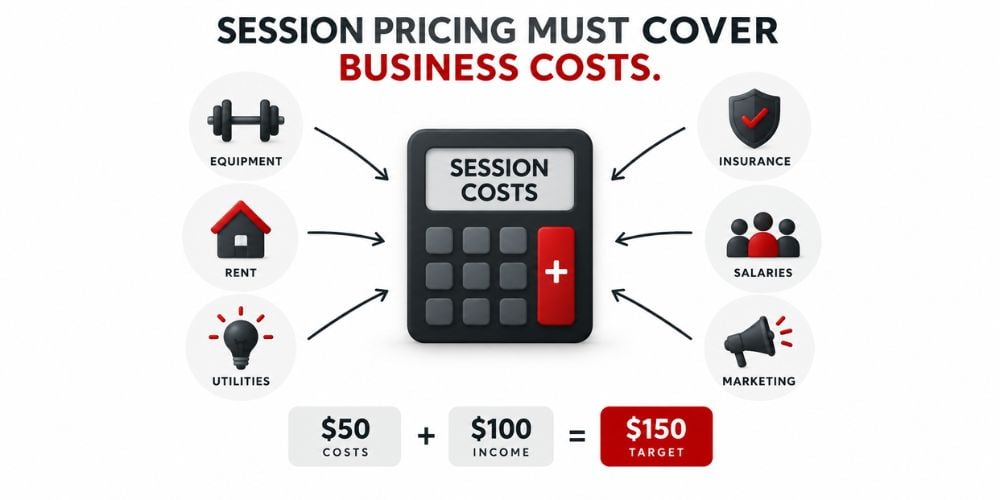
The U.S. Small Business Administration recommends identifying costs such as equipment, rent, utilities, insurance, salaries, and marketing when working out the financial side of a business.
Now put that into a simple example.
Suppose one session costs around $50 to operate, and you want to earn $100 after those costs:
$50 costs + $100 income = $150 target revenue
With four clients:
$150 ÷ 4 = $37.50 per person
You could round that to $40 per person.
I often see trainers focus on what clients are willing to pay but forget to calculate what the session actually costs. That can leave you busy all week without making the income you expected.
If you operate independently in the U.S., it is also worth understanding how business expenses are treated for tax purposes. The IRS Small Business Tax Guide explains that qualifying business expenses generally need to be ordinary and necessary for the business.
4. Set Different Prices Based on Group Size
Should everyone pay the same amount regardless of group size?
Usually, no.
As the group becomes larger, the price per person can come down because each client receives less individual attention.
Group Size | Price Per Person | Total Revenue |
2 people | $50 | $100 |
3 people | $45 | $135 |
4 people | $40 | $160 |
5 people | $35 | $175 |
Notice what happens.
With two clients, you make $100.
With four clients, you make $160.
With five clients, you make $175.
The client pays less, but your total hourly revenue rises.
That is the main reason semi-private training can work well for both sides.
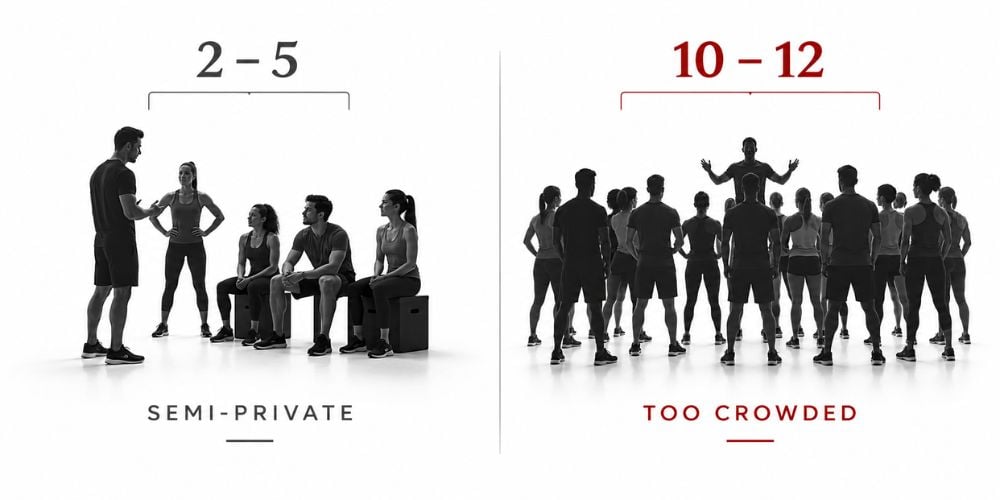
How Big is Too Big?
Set the maximum before you start selling the program.
If one trainer is coaching 10 or 12 people, clients may start seeing the session as a regular group class rather than semi-private training. Keep the group small enough that people still receive individual coaching and corrections.
5. Sell Monthly Packages Instead of Single Sessions
Single-session pricing is easy to understand, but monthly packages can make your offer simpler to manage.
Here is one possible structure:
Package | Monthly Price | Effective Price Per Session |
4 sessions | $180 | $45 |
8 sessions | $320 | $40 |
12 sessions | $420 | $35 |
The more sessions a client buys, the lower the effective session price can become.
You could also structure your program around:
- 2 sessions per week
- 3 sessions per week
- Monthly memberships
- 8-week training blocks
- 12-week transformation programs
Do you need six different packages?
Probably not. In my experience, three clear choices are usually easier for people to compare than a long pricing menu.
The goal is simple: let clients understand the difference between the options within a few seconds.

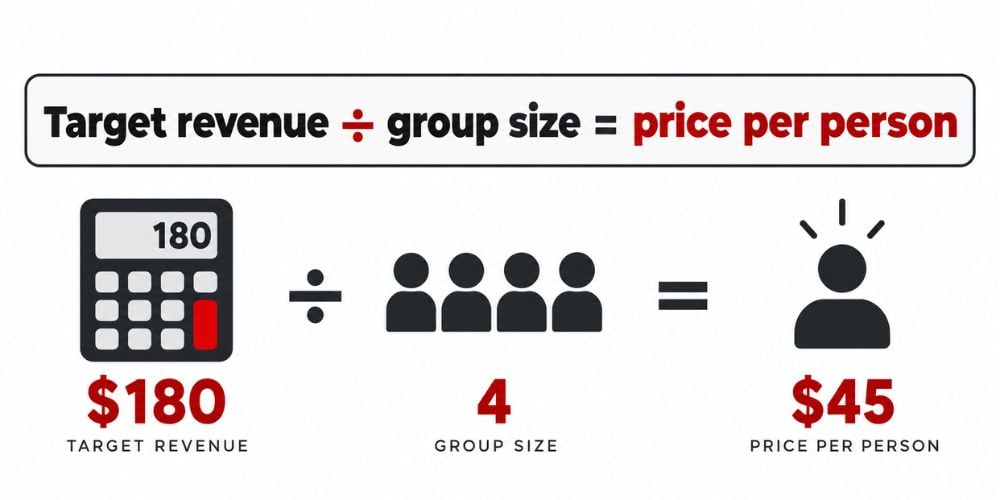
6. A Simple Pricing Formula to Remember
If you remember only one calculation, use this:
Target revenue per session ÷ expected group size = price per person
For example:
Calculation | Amount |
Target session revenue | $180 |
Expected clients | 4 |
Price per person | $45 |
Because:
$180 ÷ 4 = $45 per person
Then compare $45 with your private training price, local rates, and actual costs.
If the number covers your costs, meets your income target, and still feels reasonable to the client, you have a solid starting point.
Final Thoughts
Semi-private personal training pricing does not need a complicated formula. Start around 40% to 70% of your one-on-one rate per person, calculate your total session revenue, include your real costs, and lower the individual rate as the group becomes larger.
Then put your sessions into simple monthly packages and watch what happens.
Your training setup matters too.
If you are building or upgrading a space for personal and semi-private sessions, YR Fitness offers commercial strength, cardio, and fitness equipment for regular facility use. Explore YR Fitness equipment and training-space solutions
Related articles:



