








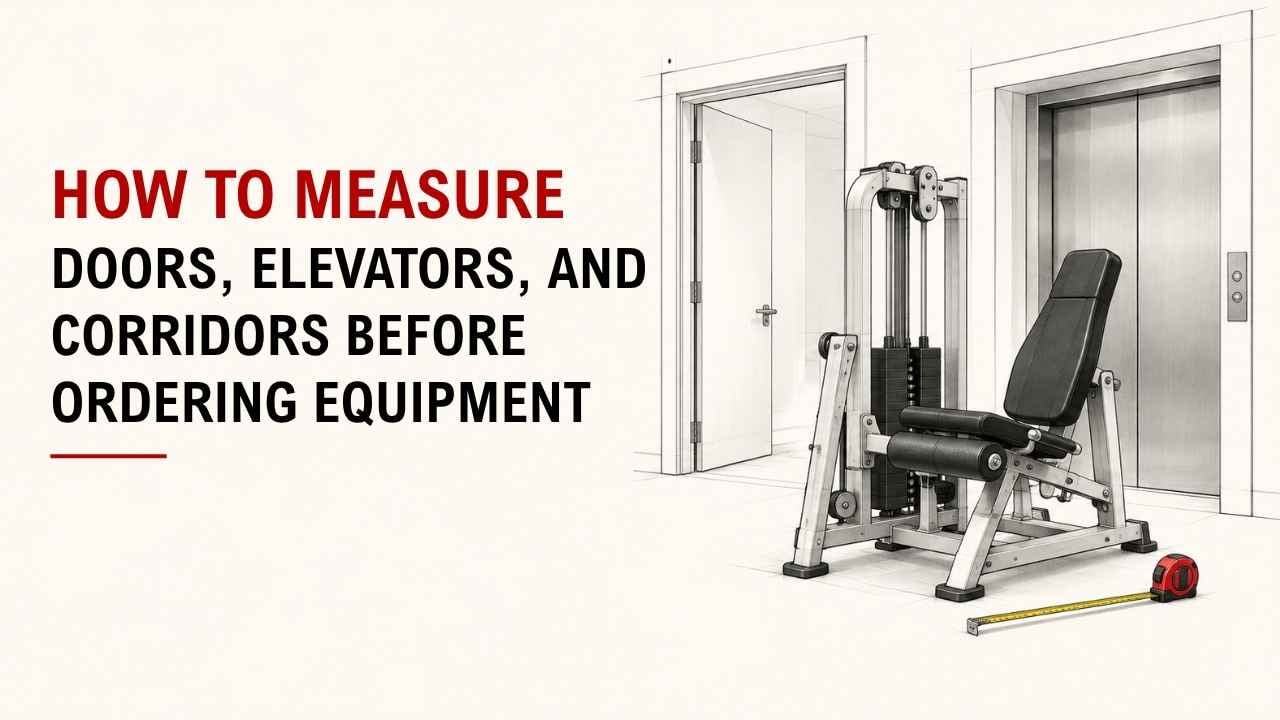

Will your gym equipment actually fit through the building? A machine can fit your workout area but still get stuck on the way in.
The simple answer is: measure the machine, then check every door, elevator, corridor, corner, stair, and landing. Compare everything with the tightest point.
As a Machinery & Structural Engineer at YR Fitness, I work with equipment dimensions, frame sizes, and installation clearance. I’ve seen many delivery problems caused by one missed doorway or tight corner, so these checks really matter.
Below, I’ll show you the six measurements to take before you order. They are simple, quick, and can save you a lot of trouble later.
1. Start With the Equipment Dimensions
Before measuring your building, get the exact machine dimensions.
You need:
- Length
- Width
- Height
- Weight
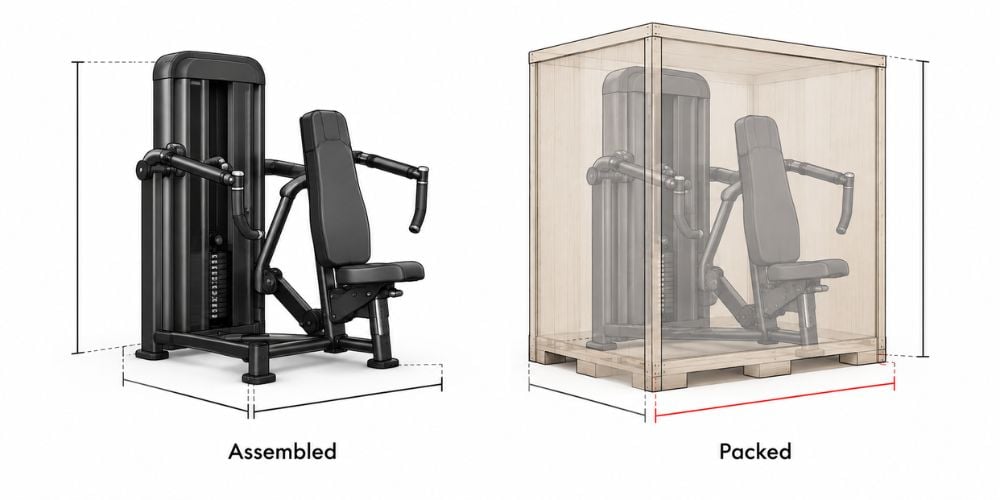
- Shipping dimensions, if available
Do not check only the assembled size.
Some machines arrive partly assembled, while others come in large sections. The shipping package may therefore be wider, taller, or longer than the finished machine.
Dimensions to Check First
Measurement | Why You Need It |
Length | Helps you judge turns and landings |
Width | Helps you check doors and corridors |
Height | Helps with doors and low ceilings |
Weight | Important for elevators and handling |
Shipping size | Shows the actual delivery clearance needed |
What should you ask the supplier?
Ask for both the assembled dimensions and the delivery or packing dimensions.
I always start here. Once you know the real delivery size, every other measurement becomes easier.
2. Measure Every Door
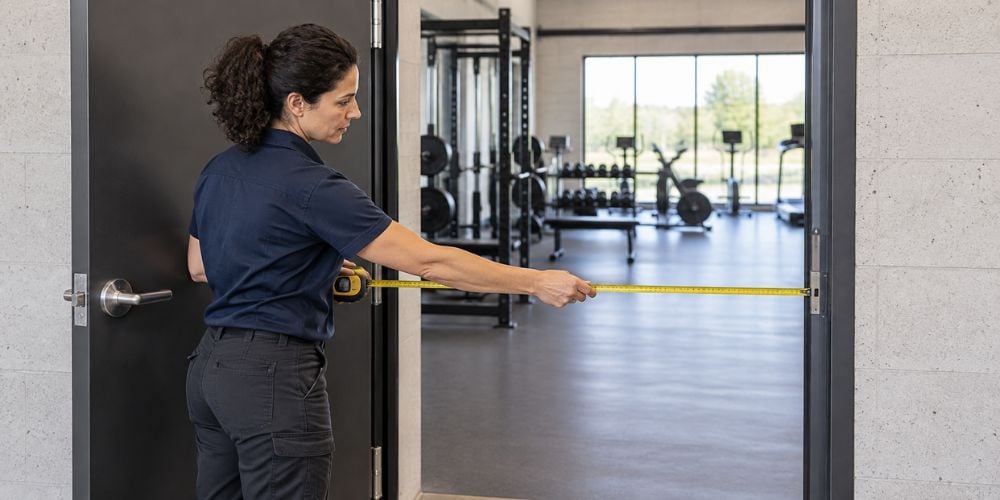
Measure every door the equipment must pass through.
Focus on the clear opening, not the outside dimensions of the door frame.
Check:
- Clear door width
- Clear door height
- Door handle position
- Door closer
- Threshold
- Space before the door
- Space after the door
Open the door fully before measuring.
For swinging doors, a useful reference is the U.S. ADA guidance on door clear width, which measures clear width between the face of the open door and the opposite stop. That same measurement method is practical when checking whether bulky equipment can pass through.
Which number matters most?
The smallest one.
If one doorway is only 80 cm wide, that point may control the whole delivery even if every other doorway is 100 cm wide.
Also check whether the door itself can be removed. In some situations, temporarily removing it can give you valuable extra clearance.
3. Measure the Elevator
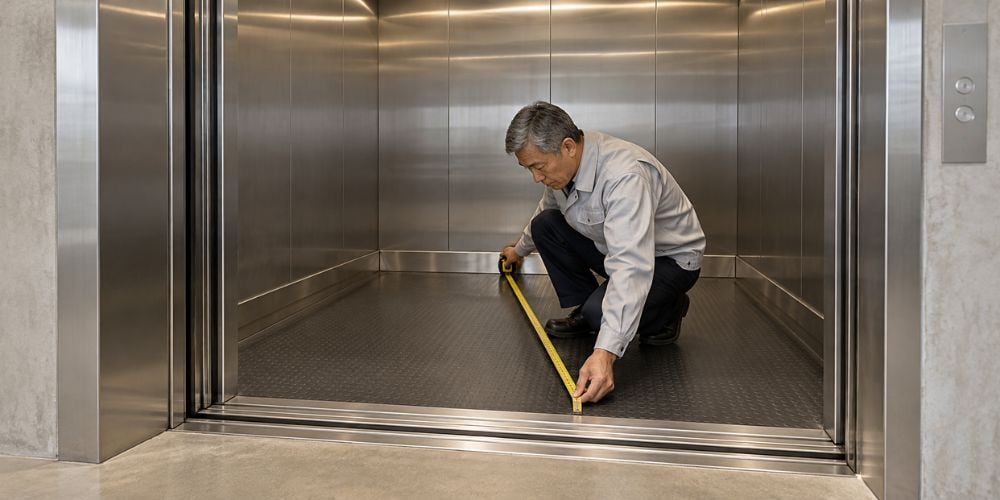
If the machine needs to go to another floor, do not measure only the elevator cabin.
Check both the door opening and the usable space inside.
Elevator Area | What to Measure |
Door opening | Width and height |
Cabin | Inside width |
Cabin | Inside depth |
Cabin | Inside height |
Load rating | Maximum permitted weight |
Landing area | Space outside the elevator |
The weight rating matters just as much as physical size.
A machine may fit inside but still be too heavy once you include the equipment, packaging, trolley, and people handling it.
Elevator dimensions can also vary by design. The ADA elevator car dimension tables are a useful example of why you should check both the door opening and actual cabin dimensions instead of assuming all elevators are the same size.
I also check the landing outside the elevator. A long machine might fit inside perfectly but become difficult to turn when you try to bring it out.
If your doorway or elevator measurements look tight, compare them with the exact machine dimensions before buying. At YR Fitness, we recommend checking the delivery route together with equipment dimensions so you can choose a machine that fits both your training needs and your available access space. Browse YR Fitness commercial gym equipment.
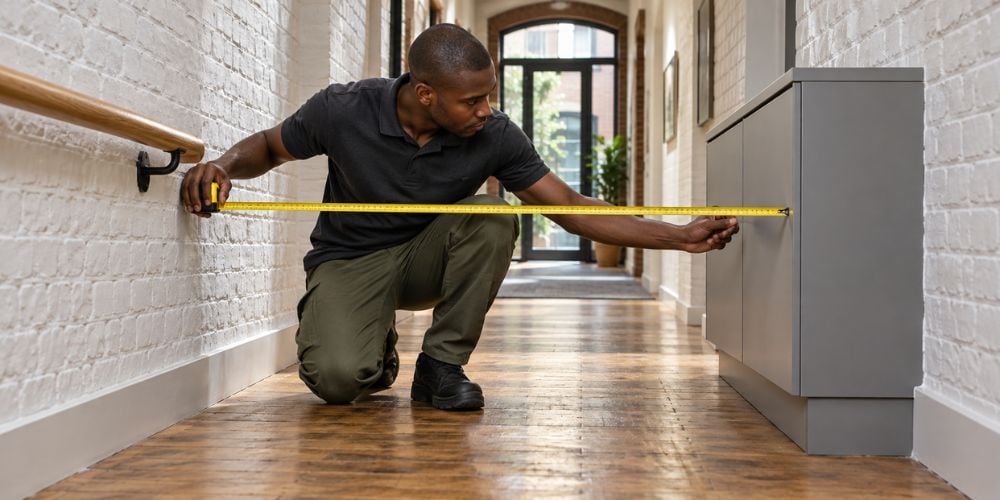
4. Measure Corridors
Corridors often look wider than they really are.
Measure the narrowest usable space, not simply wall to wall.
Watch for:
- Handrails
- Fire extinguishers
- Cabinets
- Wall decorations
- Columns
- Pipes
- Low ceilings
- Doors opening into the corridor
For example, a corridor may measure 120 cm from wall to wall, but a handrail and cabinet could reduce the usable width to 100 cm.
Here is why this matters: moving a large machine needs enough space at both straight sections and turns.
OSHA’s guidance for material handling also recommends maintaining safe clearances in aisles, doorways, and turning areas when equipment or materials are being moved.
What about machine length?
Do not ignore it.
A long frame may move through a straight corridor but become impossible to rotate once you reach the end.
5. Check Corners and Turning Space
This is one of the easiest checks to miss.
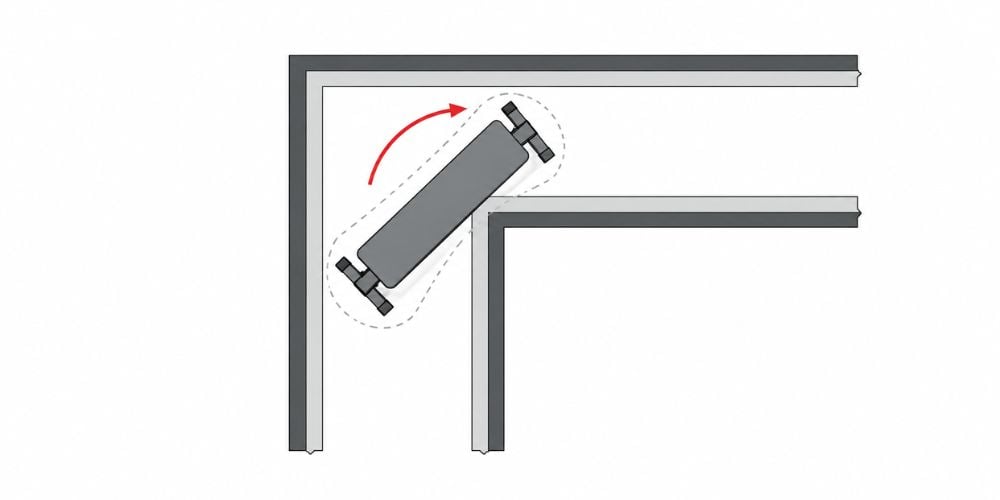
A machine does not move only in a straight line. At some point, you may need to rotate it.
Check every:
- 90-degree turn
- Corridor intersection
- Door immediately after a corner
- Elevator entrance
- Room entrance
Measure the width on both sides of the turn.
Then compare those numbers with the machine’s length and width.
Why does length matter?
Think about carrying a long bench through a hallway. It may fit while moving straight but hit both walls when you try to turn.
Large gym machines can cause the same problem.
When I see a tight 90-degree corner, I treat it as a separate measurement point. I never assume the corridor width alone tells the full story.
Take photos of difficult turns too. A supplier or installer can understand the problem much faster from a photo combined with your measurements.
6. Measure Stairs and Landings
If stairs are part of the delivery route, measure them carefully.
Check:
- Stair width
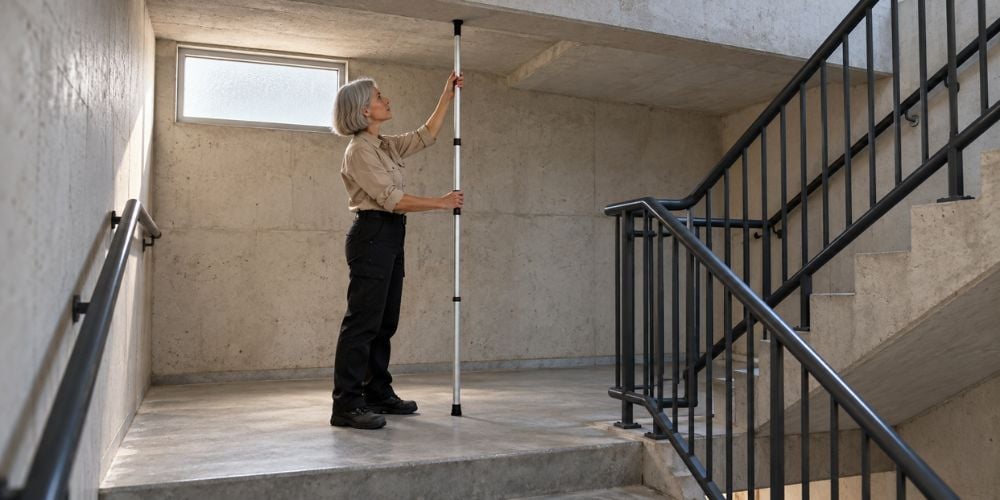
- Ceiling clearance
- Landing width
- Landing depth
- Handrail position
- Doorways at the top
- Doorways at the bottom
Pay special attention to the landing.
A machine may fit up the stairs but still be too long to rotate at the landing.
Also look overhead. For reference, OSHA’s U.S. stairway standard requires at least 6 ft 8 in (203 cm) of vertical clearance above stair treads in covered workplaces. Your building may follow different local rules, but the practical lesson is the same: check overhead clearance before trying to move tall equipment upstairs.
And what about weight?
Commercial fitness equipment can be heavy.
Moving it upstairs may require professional handlers, several people, or mechanical moving equipment. Just because a machine physically fits does not mean it is safe to carry it manually.
Before ordering, walk the entire delivery route from the unloading point to the final workout area.
Write down these four numbers:
- Narrowest doorway
- Tightest turning point
- Smallest elevator opening
- Lowest ceiling clearance
That quick check can prevent most access problems.
Conclusion
Before buying gym equipment, measure more than your workout area. Check doors, elevators, corridors, corners, stairs, and landings, then compare every tight point with the machine’s real delivery dimensions.
I would rather see you spend ten extra minutes measuring than discover a problem when the equipment arrives.
When you are ready to compare machine sizes, explore YR Fitness commercial equipment and check the dimensions against your delivery route before ordering.
Related articles:



