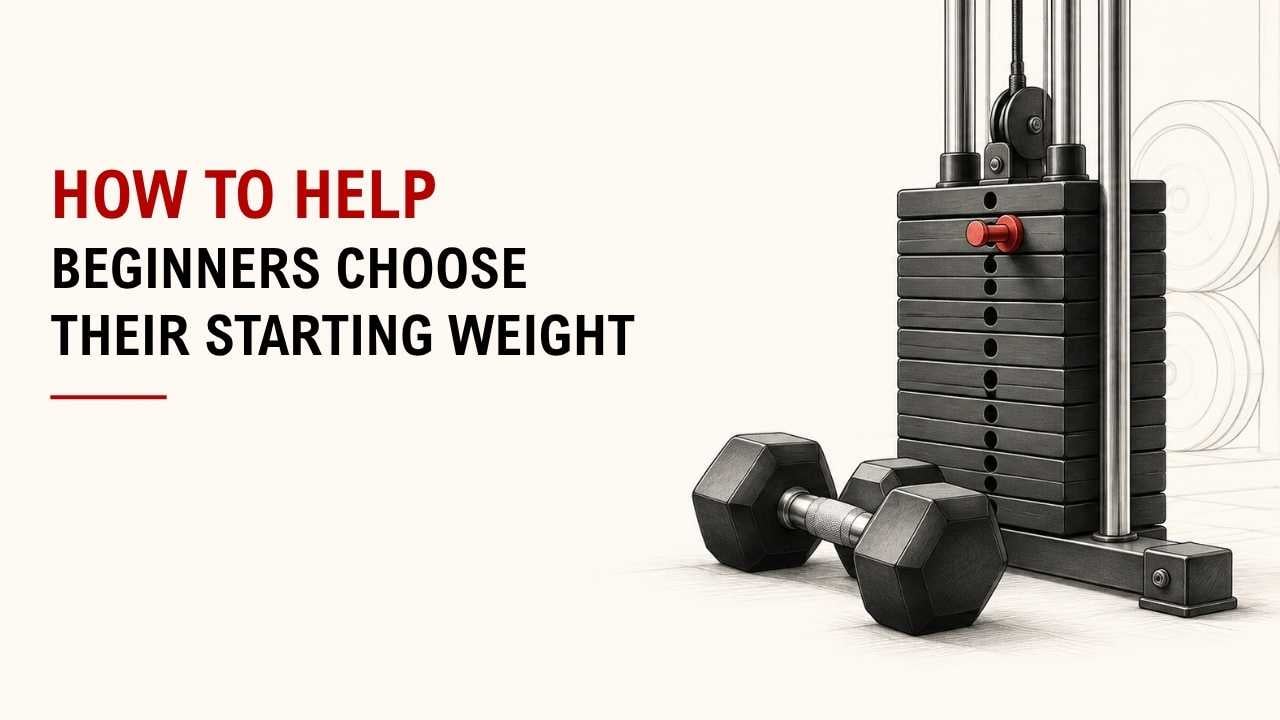

Not sure how to help beginners choose their starting weight? Lifting too heavy can affect their form and control.
Start light, test 8–12 reps, and increase the weight gradually. Focus on proper technique before lifting heavier.
As an Exercise Physiology & Biomechanics Expert at YR Fitness, I understand how weight selection affects movement and safety. I’ve seen how choosing the right weight helps beginners train with better control and confidence.
Here are six simple steps to help beginners choose their starting weight. Follow them to make strength training safer and easier.
1. Start With a Light Weight
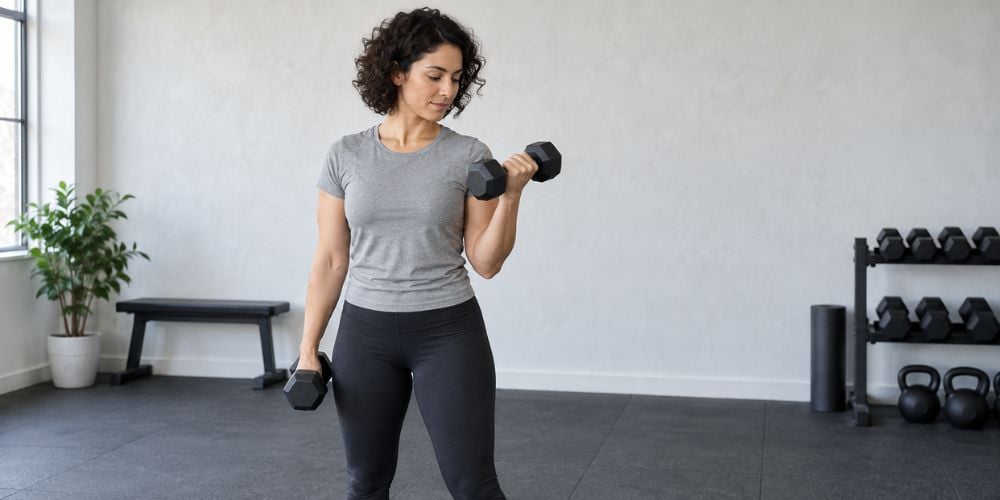
Help beginners choose a weight they can lift comfortably. The goal is to learn the movement before adding more resistance.
Here’s what to do:
- Choose a light weight: Start with a light dumbbell or the lowest suitable machine setting.
- Test the movement: Ask them to perform a few slow repetitions.
- Check their range of motion: Make sure they can move comfortably without forcing their joints.
- Focus on control: Keep the weight light until their technique looks consistent.
How light should they start?
Light enough to complete every rep without struggling, excessive shaking, or swinging the weight.
According to Mayo Clinic’s weight training guidelines, beginners can start with a weight they can comfortably lift 12–15 times. Proper technique should always come before heavier resistance.
I often see beginners improve their confidence when they stop worrying about lifting heavy and focus on getting each movement right.
2. Ask Them to Perform 8–12 Reps
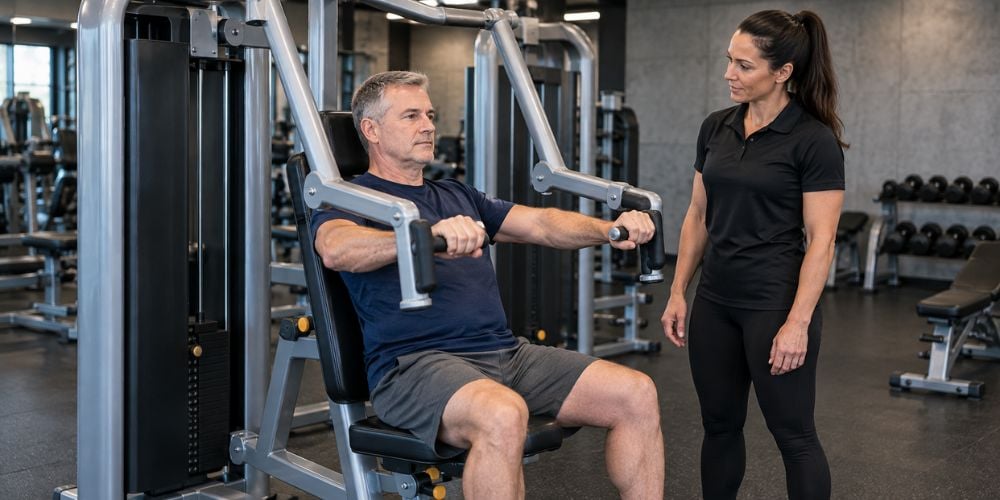
Once beginners understand the movement, ask them to complete 8–12 controlled repetitions. This helps you judge whether their starting weight is suitable.
Follow these steps:
- Prepare the equipment: Adjust the machine or select the dumbbells.
- Test 8–12 reps: Ask them to lift slowly and steadily.
- Watch their posture: Check for swinging, excessive leaning, or uncontrolled movements.
- Check their technique: Make sure they can finish the set without losing proper form.
What if they cannot complete 8 reps?
The weight may be too heavy. Let them rest, lower the resistance, and try again.
The American Council on Exercise’s repetition guide explains how repetition ranges relate to training goals and resistance levels.
Remember, 8–12 reps is a useful starting range, not a strict rule for everyone.
3. Check the Last Few Reps
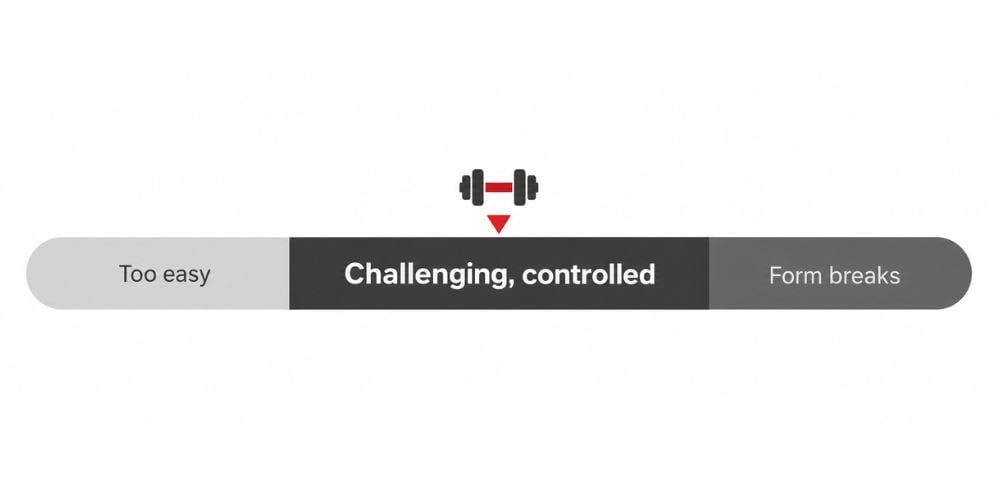
The final 2–3 reps help you decide whether the weight is suitable. They should feel challenging without forcing beginners to sacrifice proper technique.
Use this quick guide:
What Happens | What It Means | What to Do |
Cannot complete 8 reps with good form | Weight may be too heavy | Reduce the weight |
Completes 8–12 reps with control and some effort | Weight is likely suitable | Keep the weight |
Completes 12 reps very easily | Weight may be too light | Increase slightly |
Feels pain or loses control | Exercise needs reassessment | Stop and check technique |
Should the last rep feel difficult?
Yes, but beginners should still be able to control the weight. They don’t need to lift until they cannot complete another repetition.
I recommend leaving about 2–3 good reps in reserve while learning proper technique.
Here’s why this matters: beginners need enough resistance to challenge their muscles, but not so much that they lose control.
4. Increase the Weight Gradually
When beginners can complete their target reps comfortably with good form, they may be ready for a small weight increase.
Here’s how to help:
- Increase slowly: Add the smallest practical weight increment.
- Allow recovery: Let them rest before testing the heavier weight.
- Repeat the reps: Check whether they can still complete their target range.
- Watch their form: Lower the resistance if their technique starts to break down.
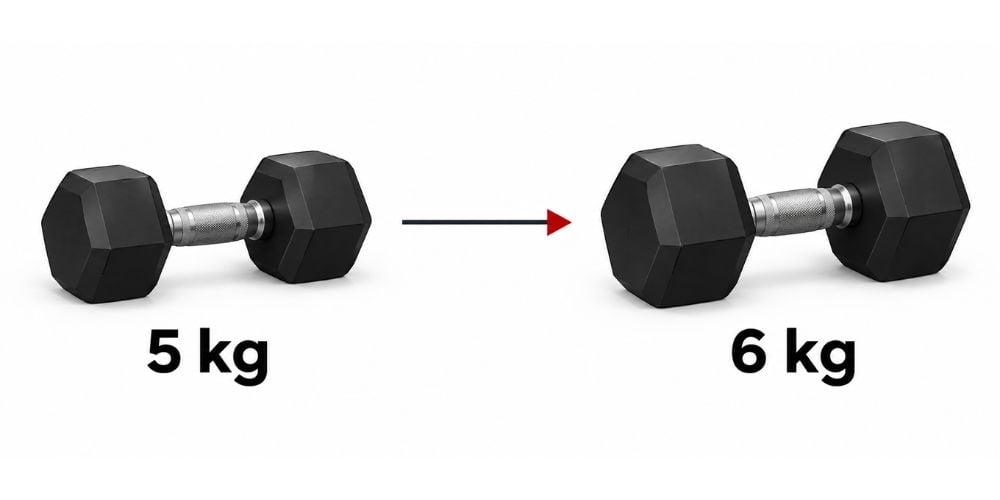
For example, if someone easily completes 12 reps with 5 kg dumbbells, they might try 6 kg next, if available.
How often should beginners increase weight?
Only when they can consistently complete their target reps with proper form across sessions. There is no need to increase weight every workout.
At YR Fitness, we design commercial strength equipment with adjustable resistance and controlled movement paths. Our goal is to make weight adjustments practical so users can focus on proper movement and gradual progress.
Looking for strength machines that support different fitness levels? Explore our commercial gym equipment to see options for controlled strength training.
5. Adjust the Weight for Each Exercise
Beginners should choose a suitable starting weight for each exercise. Different movements involve different muscle groups, so one weight won’t work for everything.
Here’s a simple guide:
Exercise | Starting Weight Tip |
Chest Press | Start light and press with control |
Lat Pulldown | Choose a weight that doesn’t require excessive leaning |
Leg Press | Use a manageable load and comfortable range of motion |
Shoulder Press | Start lighter to maintain shoulder control |
Biceps Curl | Avoid weights that cause swinging |
Can beginners lift heavier weights with their legs than their arms?
Often, yes. Larger muscle groups can generally handle more resistance, but the right weight depends on individual strength, technique, and equipment.
I suggest testing each exercise separately instead of copying the weight used for another movement.
Also, don’t forget recovery. The CDC recommends muscle-strengthening activities on at least two days each week for adults.
Beginners can work toward this goal while allowing their muscles enough time to recover between workouts.
6. Record Their Starting Weight
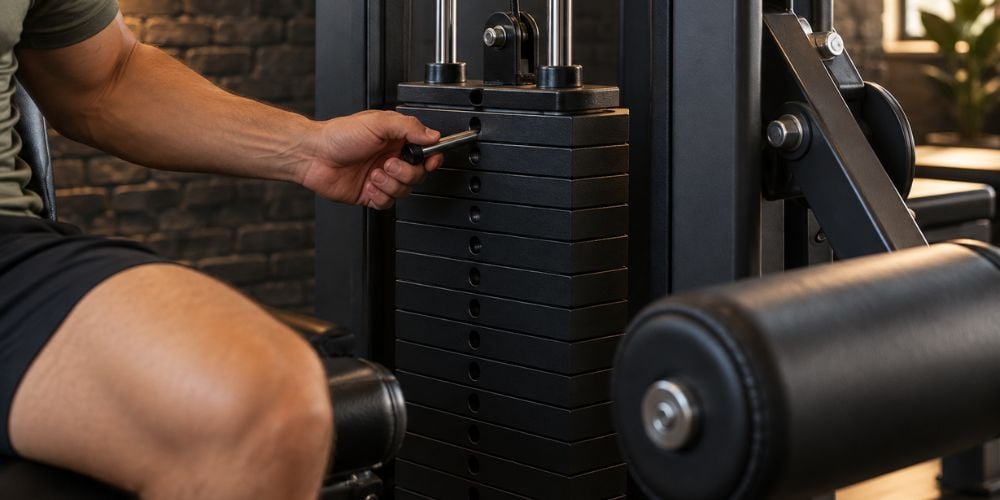
Once beginners find a comfortable weight, help them write it down. This makes it easier to track progress and plan future workouts.
Record these details:
- Exercise name: What movement did they perform?
- Weight used: How much resistance did they lift?
- Sets completed: How many sets did they finish?
- Repetitions: How many reps did they complete?
- Difficulty: Did the exercise feel easy, moderate, or challenging?
For example, a beginner’s workout record might look like this:
Exercise | Weight | Sets | Reps |
Chest Press | 10 kg | 2 | 10 |
Lat Pulldown | 15 kg | 2 | 10 |
Biceps Curl | 4 kg | 2 | 12 |
Note: These are example weights, not fixed recommendations for every beginner.
Why record their weights?
Because tracking removes the guesswork. Beginners can see their progress and know when they’re ready to increase resistance.
When they consistently complete their target reps with good form, they can consider adding a little more weight.

Conclusion
Helping beginners choose their starting weight doesn’t need to be complicated. Start light, aim for 8–12 controlled reps, check their form, and increase gradually.
Focus on technique before lifting heavier, and track progress along the way. For a better understanding of adjustable strength machines, explore YR Fitness strength equipment and find options that support controlled training.
Related articles: