
Does your barbell move unevenly during bench presses? Poor bar movement can affect your balance and shoulder comfort.
To fix your bar path, adjust your shoulders, grip, elbows, and pressing direction. These changes help you lift with better control.
As an Exercise Physiology & Biomechanics Expert at YR Fitness, I specialize in proper lifting mechanics and body positioning. I’ve seen how correcting small technique mistakes helps lifters improve stability and avoid unnecessary shoulder strain.
Here are six simple ways to fix your bench press bar path. Follow them to make every rep smoother and more controlled.
1. Set Your Shoulder Blades Before Lifting
Your shoulders need to stay stable during a bench press. If they roll forward, controlling the bar becomes harder.
Here’s how to position your shoulders:
- Lie on the bench with your eyes roughly under the bar.
- Pull your shoulder blades together and gently down.
- Keep your upper back firmly against the bench.
- Avoid rolling your shoulders forward while pressing.
Quick tip: Keep your chest up and shoulders steady throughout each repetition.
Why does this matter? A stable upper back gives you a stronger base for pressing and helps maintain a consistent bar path.
The American Council on Exercise (ACE) also recommends pulling your shoulder blades back and down to create a stable pressing position.
2. cAdjust Your Grip Width
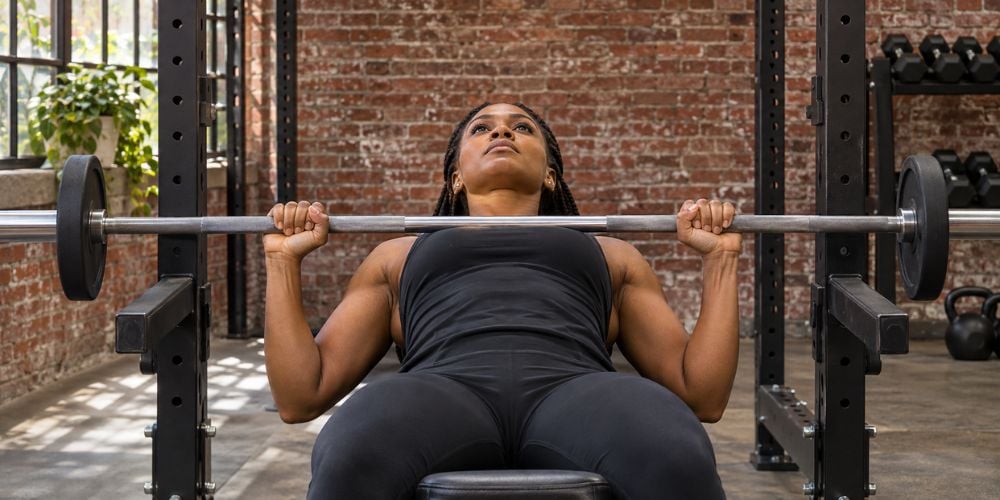
Is your grip too wide or too narrow? Either can affect your elbow position and make the bar harder to control.
I often recommend starting with a grip slightly wider than shoulder-width. Adjust it based on your arm length and comfort.
Follow these steps:
- Hold the bar slightly wider than your shoulders.
- Keep your wrists straight and stacked above your forearms.
- Position both hands evenly on the bar.
- Adjust your grip if your wrists or shoulders feel uncomfortable.
Here are some common grip problems and how to fix them:
Grip Problem | Simple Fix |
Grip too wide | Move your hands slightly inward |
Grip too narrow | Widen your hands a little |
Wrists bending backward | Keep wrists stacked above forearms |
Uneven hand placement | Use bar markings to match both sides |
Quick tip: At the bottom of the press, your forearms should be nearly vertical when viewed from the front.
The National Academy of Sports Medicine (NASM) also recommends a grip slightly wider than shoulder-width, along with stable shoulders and a controlled pressing movement.
3. Keep Your Elbows at a Comfortable Angle
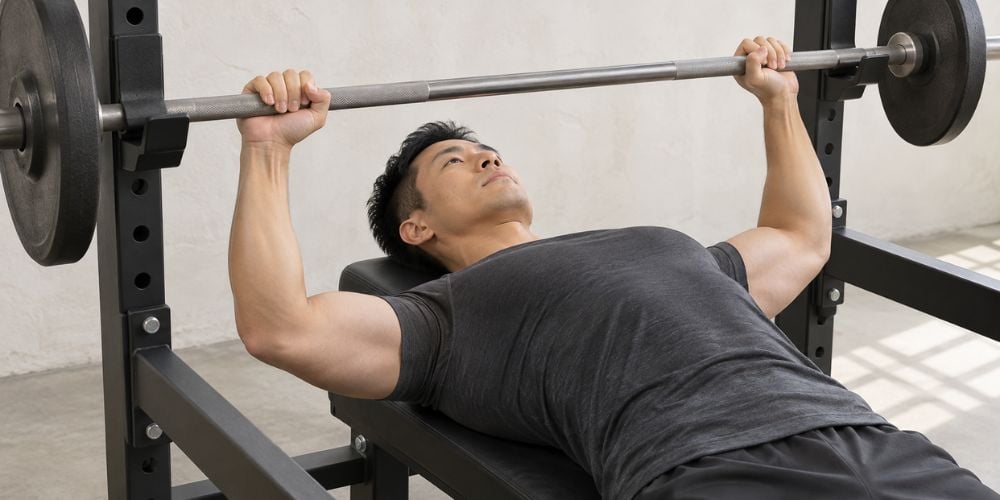
Do your elbows flare too far outward when you lower the bar? This can increase shoulder stress and affect your pressing movement.
Here’s how to fix your elbow position:
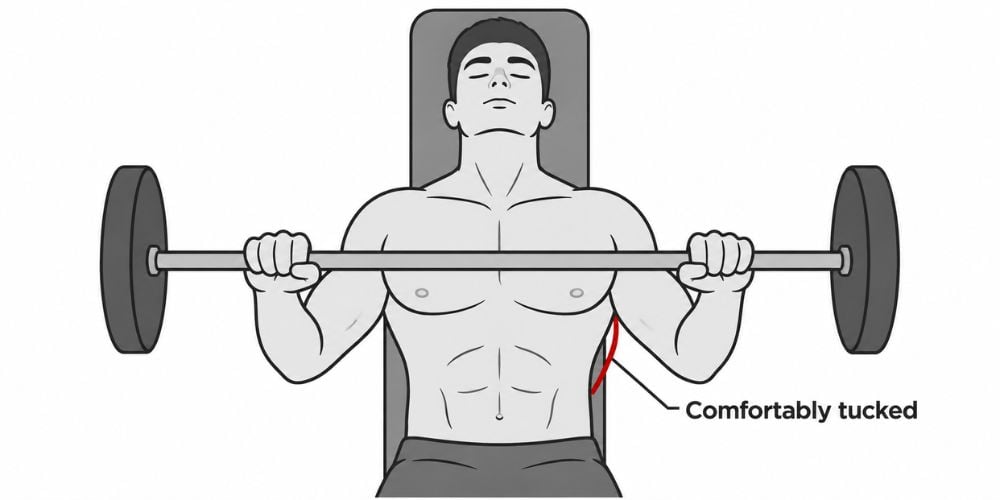
- Keep your elbows roughly 45–75 degrees away from your torso.
- Avoid pointing your elbows straight outward.
- Keep your wrists positioned above your elbows.
- Maintain a comfortable elbow angle during each repetition.
Quick tip: Think about keeping your elbows slightly tucked as you lower the bar.
I usually suggest practicing with lighter weights first. This makes it easier to find a natural elbow position without struggling to control the bar.
4. Lower the Bar Toward Your Lower Chest
Where should the bar touch your chest?
For many lifters, the lower chest or sternum is a good starting point. The exact position depends on your arm length, grip, and body structure.
Follow these steps:
- Start with the bar above your shoulder area.
- Bend your elbows and lower the bar slowly.
- Guide the bar toward your lower chest or sternum.
- Keep your wrists and forearms aligned.
- Touch your chest lightly without bouncing the bar.
Quick tip: Control the bar on the way down instead of letting it drop quickly.
Avoid lowering the bar too high toward your neck. Choose a comfortable touch point that you can repeat consistently.
The Cleveland Clinic’s bench press guide also explains why controlled movements, shoulder stability, and proper setup matter during pressing exercises.
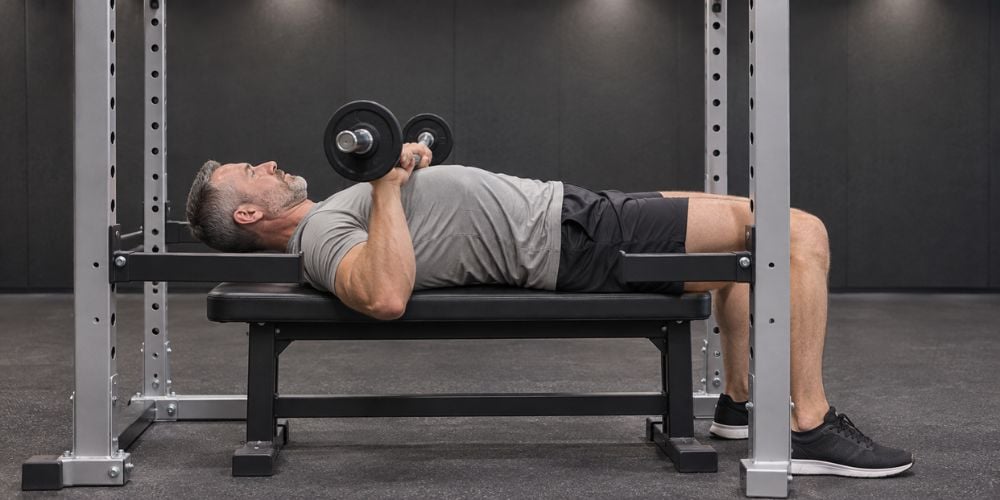
A stable bench helps you maintain your body position while practicing your bar path. At YR Fitness, we build commercial-grade strength equipment with solid materials and designs made for regular use.
Want a more stable training setup? Explore our commercial strength equipment to find benches and strength machines that support comfortable, controlled workouts.
5. Press the Bar Slightly Back Toward Your Shoulders
Should the bar move perfectly straight up and down?
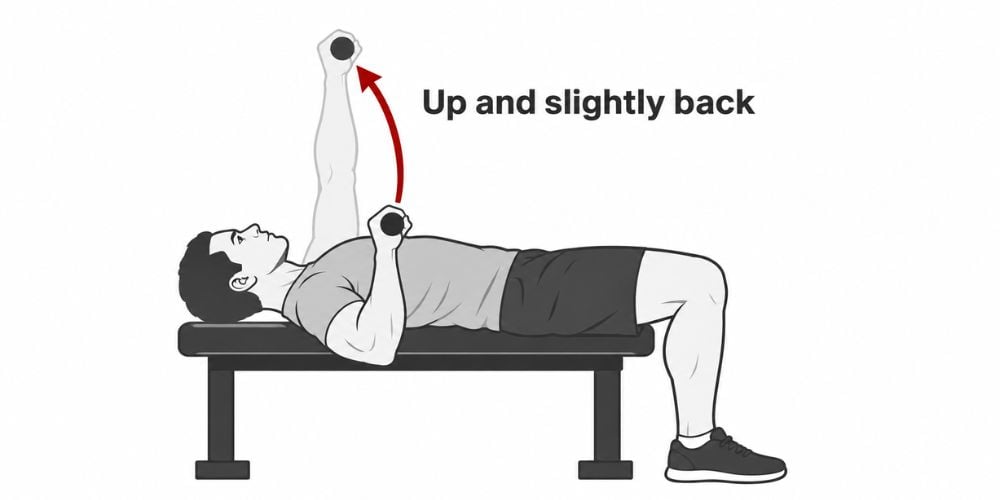
Not necessarily. During a normal barbell bench press, the bar often follows a slightly curved path.
Here’s how to improve your pressing direction:
- Start with the bar touching your lower chest.
- Press upward and slightly back toward your shoulders.
- Keep your elbows and wrists aligned.
- Finish with the bar balanced above your shoulders.
- Avoid pushing the bar too far forward or backward.
Use this table to check your bar movement:
Pressing Phase | Bar Direction |
Starting position | Above shoulder area |
Lowering phase | Down toward lower chest |
Bottom position | Light contact with lower chest |
Pressing phase | Upward and slightly back |
Lockout | Balanced above shoulders |
Quick tip: Record your bench press from the side to check your bar path.
I’ve found that watching a recording makes it easier to spot uneven movement. Look for a smooth, repeatable path instead of forcing the bar to move perfectly straight.
6. Keep Your Feet Planted and Body Stable
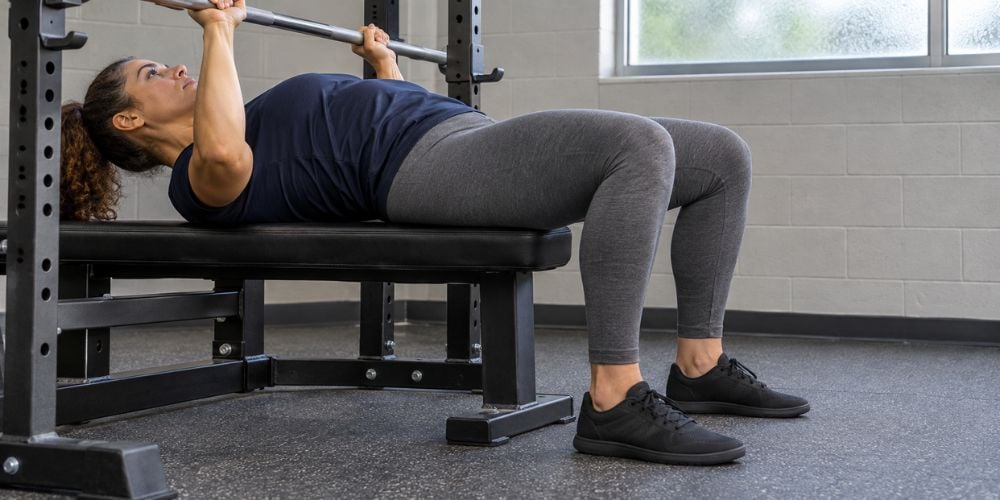
Your feet help keep your entire body stable during a bench press. If they move around or your hips lift, controlling the bar becomes harder.
Here’s how to stay stable:
- Keep both feet firmly planted on the floor.
- Position your feet where you feel balanced.
- Keep your glutes in contact with the bench.
- Tighten your core before lowering the bar.
- Apply steady pressure through your feet while pressing.
Quick tip: Use your legs for stability, but don’t push so hard that your hips lift off the bench.
A stable lower body helps you maintain your shoulder position. This makes it easier to follow the same bar path during every repetition.
If the weight makes your technique difficult to control, reduce it and practice with lighter loads. Use a spotter or properly positioned safety bars when bench pressing.
Conclusion
Fixing your bench press bar path comes down to stable shoulders, proper grip width, controlled elbows, and a smooth pressing direction. Start with lighter weights and focus on consistent movement before lifting heavier.
A stable bench also supports better training control. Explore YR Fitness for commercial-grade strength equipment designed for comfortable and consistent workouts.
Related articles: