








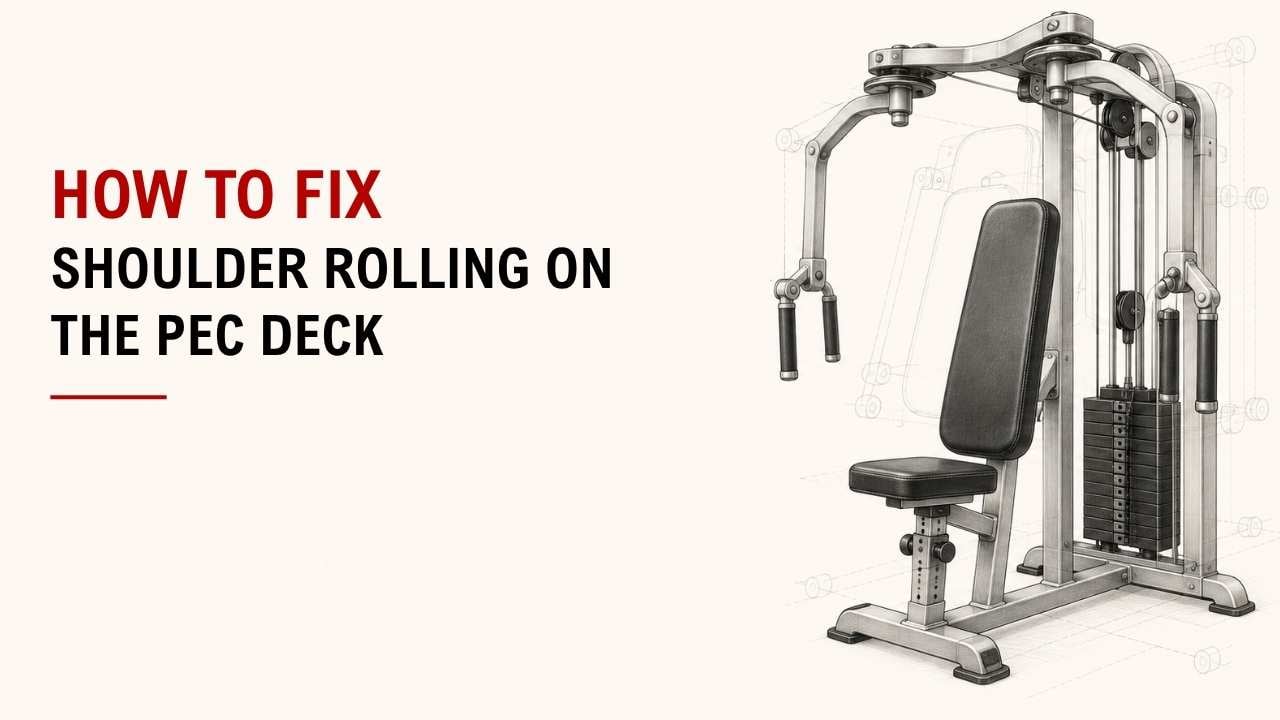

Do your shoulders roll forward on the pec deck? This can make your chest workout uncomfortable and harder to control.
The fix is simple: adjust your seat, keep your chest up, lower the weight, and move slowly. These changes help improve your form and shoulder comfort.
As an Exercise Physiology & Biomechanics Expert at YR Fitness, I focus on proper body positioning and exercise movement. I often see shoulder rolling improve with simple setup changes and better weight control.
Below, I’ll share seven easy ways to fix shoulder rolling on the pec deck. Use these tips during your next chest workout.
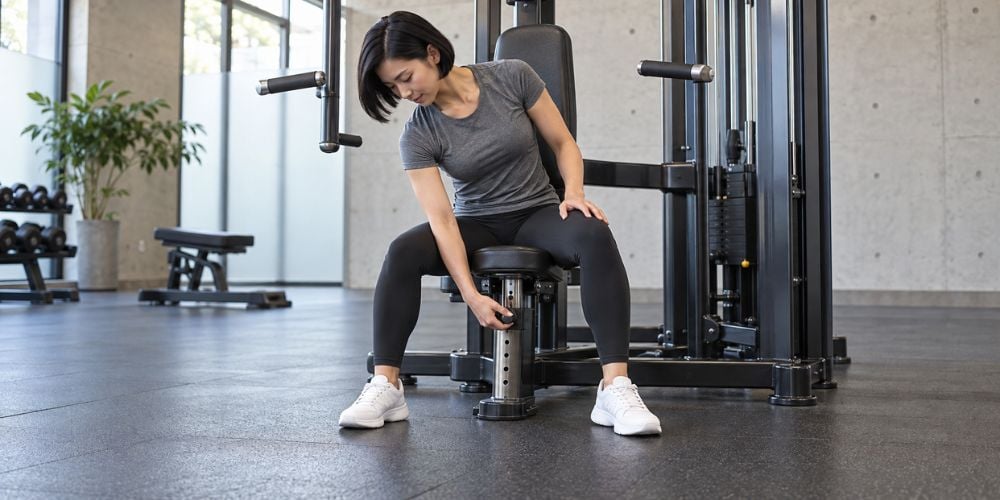
1. Adjust the Seat Height
Your seat height affects how your arms and shoulders line up with the machine. If the seat is too high or too low, your shoulders may move awkwardly during exercise.
Here’s how to adjust it:
- Sit with your back against the pad.
- Keep both feet flat on the floor.
- Adjust the seat until the handles or arm pads align around your mid-chest.
- Keep your upper arms around shoulder height or slightly below.
- Test the movement with a light weight.
The American Council on Exercise (ACE) recommends keeping your feet flat and your back supported while performing the pec deck exercise.
Quick tip: If your shoulders feel pushed upward, adjust the seat before starting.
A proper setup helps your arms move comfortably without unnecessary shoulder movement.
2. Keep Your Chest Up and Back Against the Pad
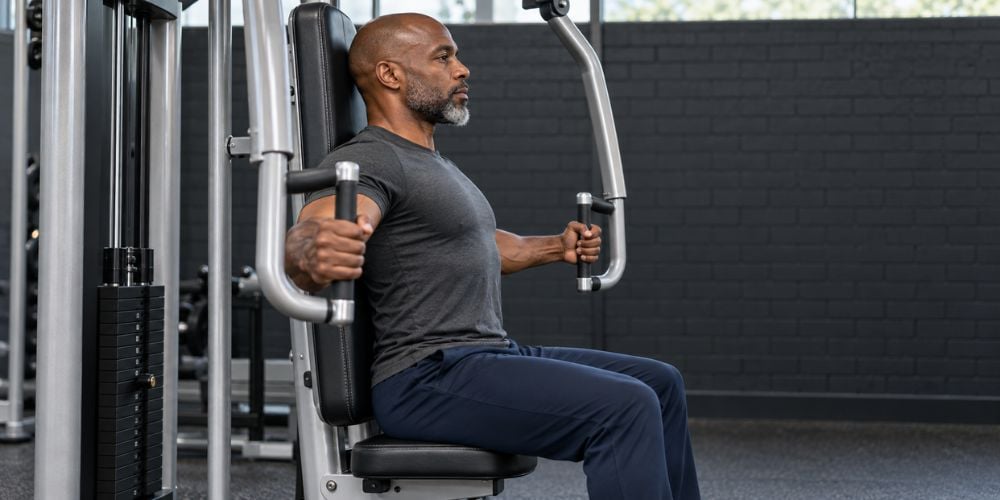
When your chest drops and your upper back rounds, your shoulders may roll forward.
Keeping your upper body supported makes it easier to control exercise.
Follow these tips:
- Sit upright with your back against the pad.
- Keep your chest gently lifted.
- Maintain a natural curve in your spine.
- Avoid leaning forward when closing your arms.
- Keep your head in a neutral position.
Should you arch your back to keep your chest up?
No. Keep your chest lifted naturally without creating a large arch in your lower back.
I often remind people that good posture should feel stable, not forced. You want your chest working while your back stays supported.
The key is to maintain that position throughout the repetition, especially when the weight starts feeling heavy.
3. Keep Your Shoulders Stable
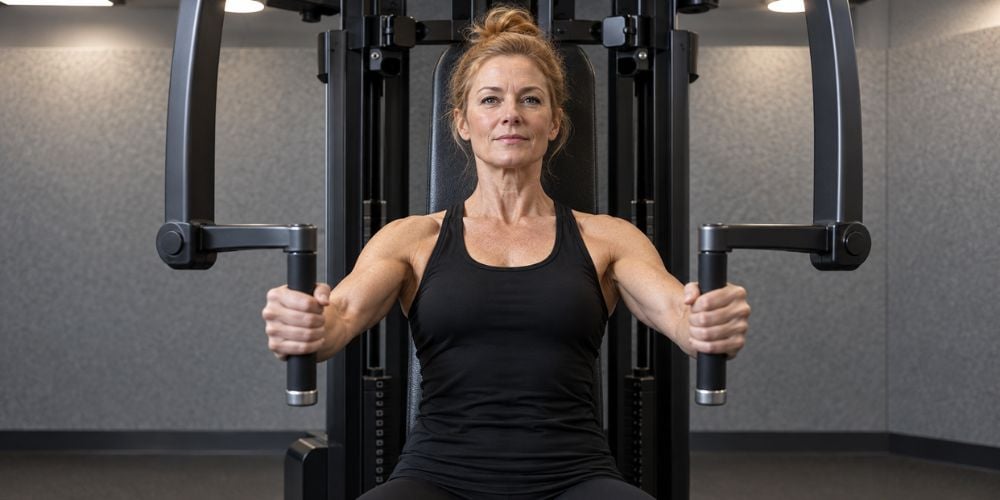
Your shoulders naturally move during the pec deck exercise. The problem starts when they roll excessively forward or shrug upward.
The goal is to control your shoulder position without making your upper body stiff.
Here’s what to do:
- Relax your shoulders away from your ears.
- Gently position your shoulder blades back.
- Keep your chest lifted as your arms move together.
- Avoid pushing your shoulders forward to finish the movement.
- Return slowly without losing control.
Should you squeeze your shoulder blades together?
Not too tightly. Your shoulder blades should move naturally, so avoid forcing them into a locked position.
The National Academy of Sports Medicine (NASM) also identifies rounding the shoulders forward and losing postural control as common mistakes during cable crossovers, a similar chest fly movement.
I often see people improve their form when they stop forcing the handles together. A comfortable, controlled movement is more important than closing the machine completely.
4. Reduce Weight
Heavy weights can make your shoulders roll forward, especially during the last few repetitions.
If you need to shrug, lean, or use momentum to finish a rep, the resistance may be too heavy.
Try these adjustments:
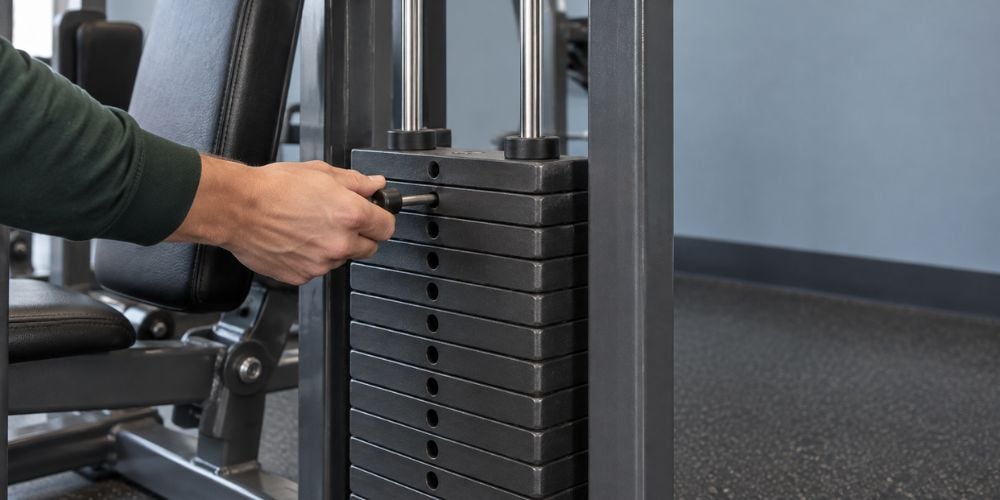
- Lower the weight by one or two stack increments.
- Keep your chest lifted throughout the movement.
- Bring your arms together without jerking.
- Return slowly to the starting position.
- Increase the weight only when your form stays controlled.
Signs You’re Using Too Much Weight
Here are the most common warning signs and how to correct them.
Warning Sign | Quick Fix |
Shoulders roll forward | Lower the weight |
Upper back leaves the pad | Keep your back supported |
You swing the handles | Slow down |
Shoulders shrug upward | Relax your shoulders |
You lose control during the return | Reduce the resistance |
How heavy should you lift?
Choose a weight that challenges your chest without making you lose your posture.
Machine design also affects how comfortably you can control the exercise. Smooth resistance and suitable movement angles can help you maintain a consistent technique.
At YR Fitness, we design commercial strength machines with carefully developed movement angles, durable materials, and smooth operating mechanisms. We focus on practical equipment that helps users maintain control during daily training.
Explore our commercial gym equipment to learn how machine design can support more comfortable strength workouts.
5. Adjust Your Elbow Position
Your elbow position can affect how comfortably your shoulders move.
If your elbows sit too high or your arms feel awkward, you may struggle to maintain good form.
Here’s how to fix it:
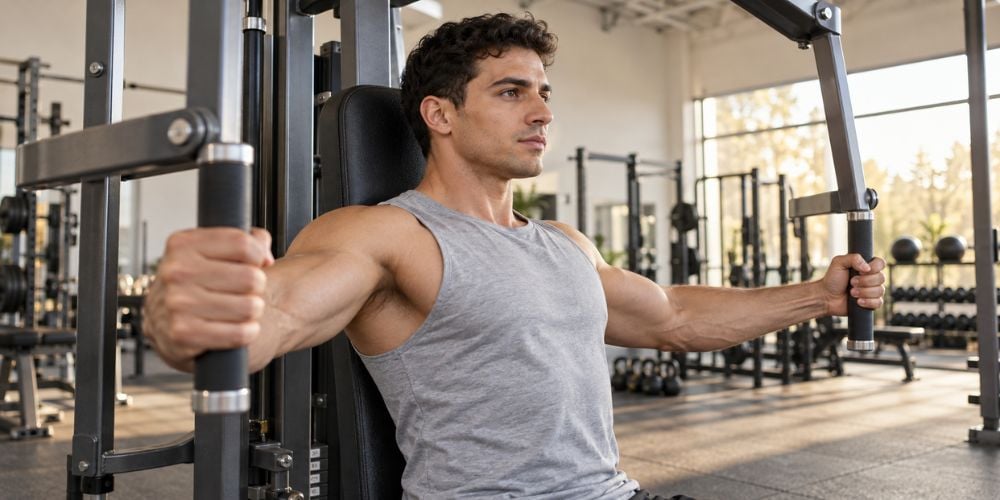
- Keep your elbows slightly bent on a handle-style pec deck.
- Position your upper arms at a comfortable height.
- Avoid lifting your elbows excessively high.
- Maintain a consistent elbow bend.
- Follow the machine’s intended movement path.
For pec deck machines with vertical forearm pads, keep your forearms comfortably supported.
Should your elbows be completely straight?
No. On a handle-style pec deck, a slight bend usually feels more comfortable and helps you control the movement.
Try adjusting your elbow position with a light weight first. Even a small change can improve shoulder comfort.
6. Shorten Your Range of Motion
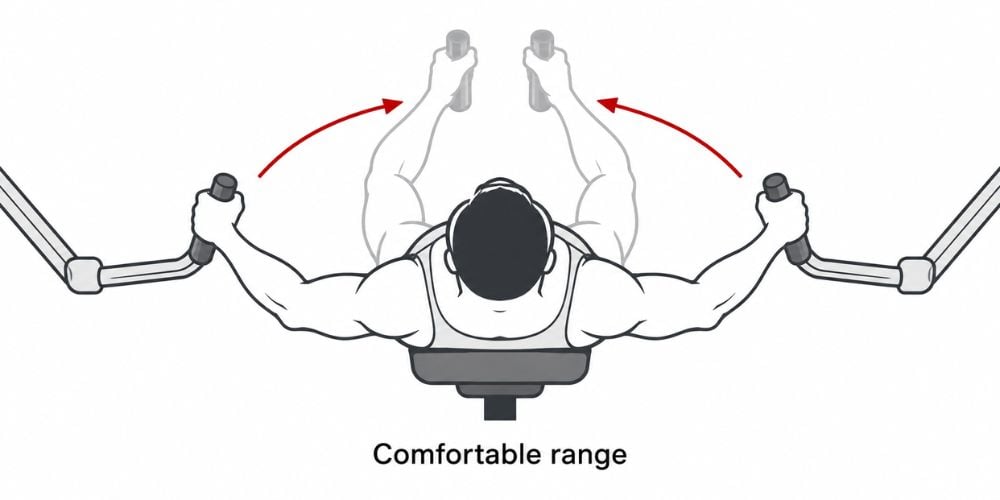
You don’t need to stretch your arms as far back as possible or force the handles together.
An excessive range of motion can make your shoulders uncomfortable and harder to control.
Try this instead:
- Start with your arms in a comfortable position.
- Avoid letting your arms travel too far behind your chest.
- Bring your arms together slowly.
- Stop before your shoulders roll excessively forward.
- Return without losing control.
Common Range-of-Motion Mistakes
Use this table to identify where your movement may need adjustment.
Mistake | Better Approach |
Arms stretch too far backward | Limit the starting position |
Handles are forced together | Stop at a comfortable position |
Shoulders roll forward | Shorten the closing range |
Arms return too quickly | Slow down |
Sharp shoulder pain | Stop the exercise |
Can a shorter range still train your chest?
Yes. A controlled, comfortable range can still challenge your chest muscles.
In fact, the ACE pec deck exercise guide emphasizes controlled movement and warns against using excessive weight that compromises technique.
As your form improves, you can gradually increase your range without forcing your shoulders into uncomfortable positions.
7. Practice Slow, Controlled Repetitions
Moving too quickly makes it harder to notice when your shoulders roll forward.
Slowing down helps you keep your chest engaged and maintain better control.
Follow this simple technique:
- Sit upright and prepare your shoulder position.
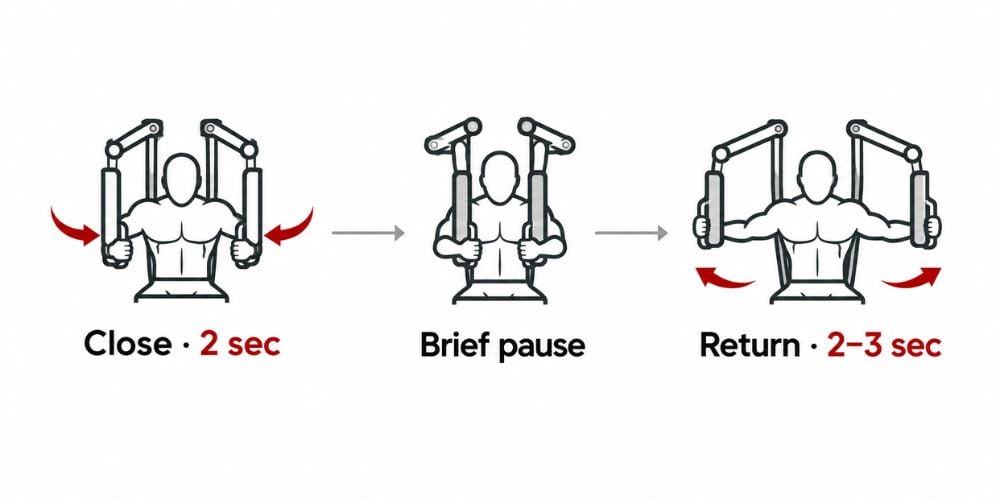
- Bring your arms together over about two seconds.
- Pause briefly when your chest contracts.
- Return slowly over two to three seconds.
- Repeat without bouncing or swinging.
These timings are a starting point. Adjust your speed to maintain comfortable, controlled movement.
Quick tip: Think about bringing your upper arms together instead of pushing the weight with your hands.
From my experience, this simple cue helps people focus more on their chest and less on forcing the handles forward.
Conclusion
To fix shoulder rolling on the pec deck, adjust your seat, keep your chest lifted, lower the weight, and move slowly. Focus on control rather than forcing every repetition.
Proper technique and comfortable machine design work together. Explore YR Fitness strength equipment to see how thoughtful machine design can support smoother, more comfortable chest workouts.
Related articles:



