
Do your shoulders feel unstable or uncomfortable when you bench press? Your shoulder blade position might be the reason.
The fix is simple: pull your shoulder blades back and slightly down, then keep your upper back stable as you press. This gives you a stronger base and helps you control the bar.
As an Exercise Physiology & Biomechanics Expert at YR Fitness, I understand how shoulder positioning affects pressing movements. I’ve seen how small setup changes can make the bench press feel more stable and comfortable.
In this guide, I’ll show you six simple steps to fix your shoulder blade position. You’ll also learn common mistakes to avoid and a quick drill to practice before your next workout.
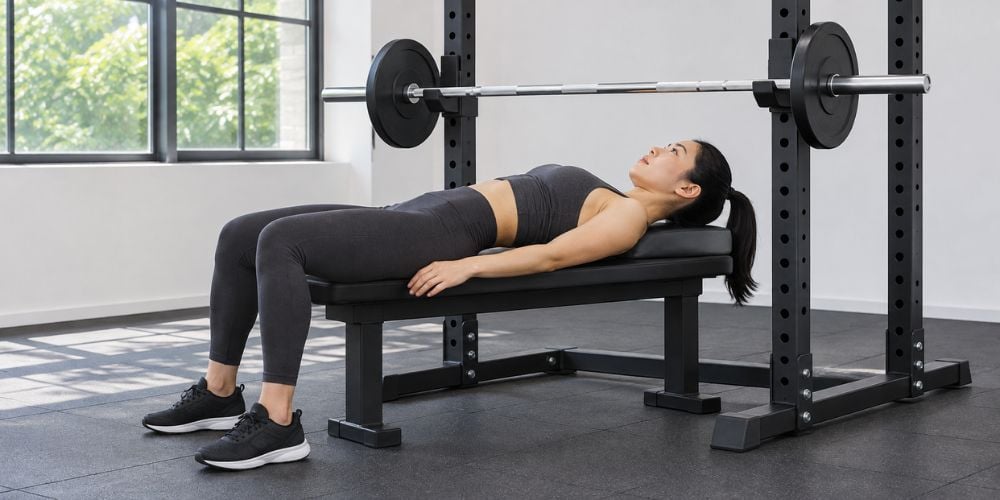
1. Lie Flat and Set Your Upper Back
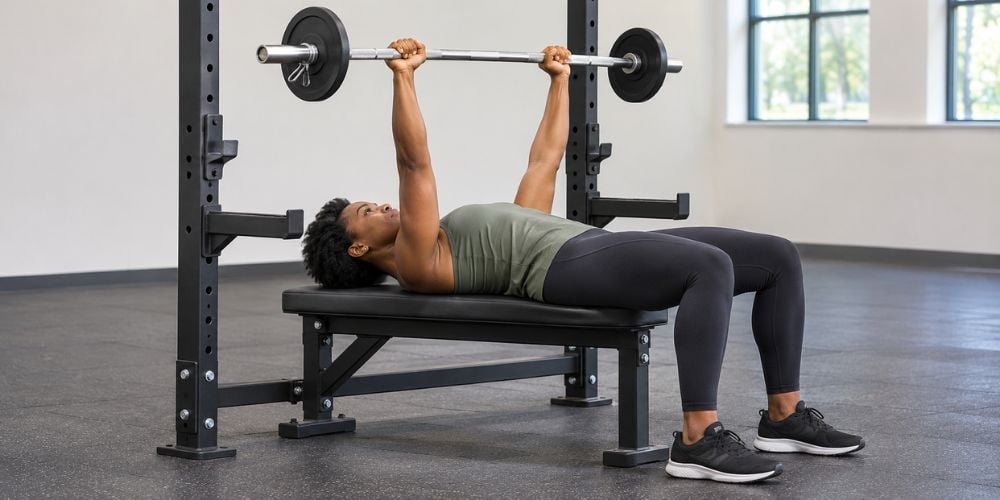
Start by lying on the bench with your head, upper back, and hips supported. A stable setup makes it easier to control your shoulders throughout the lift.
Here’s how to get into the position:
- Lie on the bench with your eyes roughly under the bar.
- Plant both feet firmly on the floor.
- Keep a comfortable, natural arch in your lower back.
- Press your upper back against the bench.
Avoid lifting your hips or twisting your body while preparing to press.
Why does this matter? If your upper back moves around, keeping your shoulder blades in place becomes much harder.
The American Council on Exercise’s bench press guide also recommends keeping your feet planted and lowering the bar with control.
Quick Tip: Your upper back should feel stable before you even touch the bar.
2. Pull Your Shoulder Blades Back
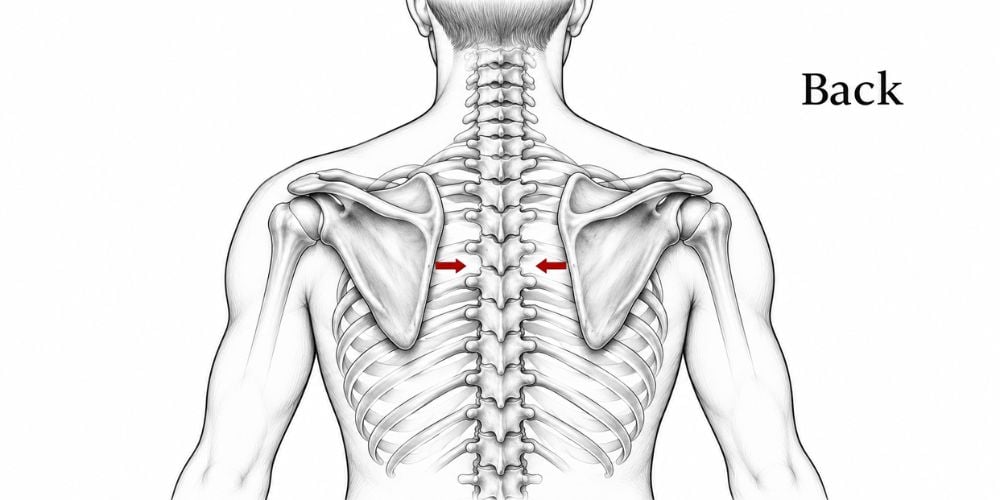
Now, bring your shoulder blades toward each other. This movement is called scapular retraction, and it helps create a firm base for pressing.
Follow these steps:
- Imagine squeezing a pencil between your shoulder blades.
- Gently pull both shoulder blades toward your spine.
- Lift your chest slightly.
- Hold the position without tightening your neck.
I often suggest practicing this movement without a bar first. It helps you recognize the correct position before adding weight.
What if your shoulders still feel loose? You might relax your upper back as soon as you grip the bar.
Pull your shoulder blades back again before unracking the weight.

3. Move Your Shoulder Blades Slightly Down
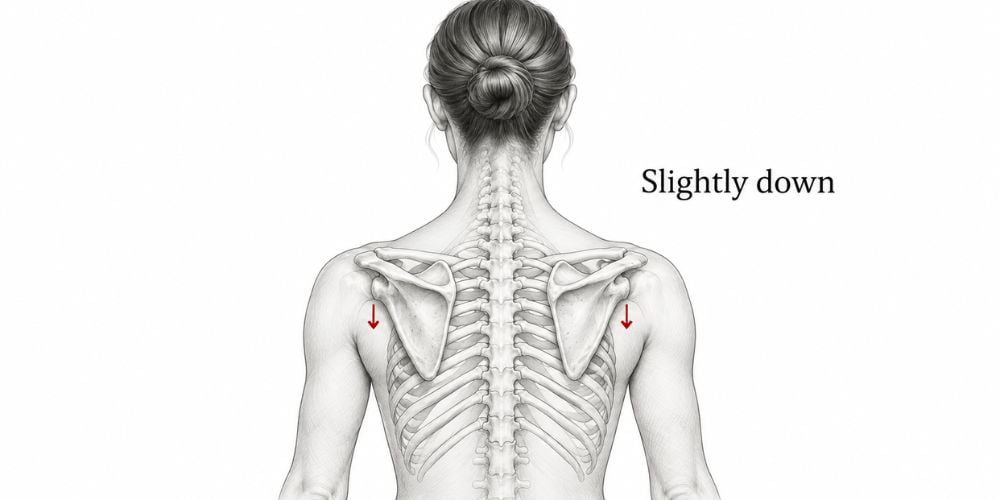
After pulling your shoulder blades back, move them slightly downward. This movement is called scapular depression.
Here’s what to do:
- Imagine sliding your shoulder blades toward your back pockets.
- Keep your shoulders away from your ears.
- Maintain a gentle squeeze between your shoulder blades.
- Avoid forcing your shoulders too far downward.
Your upper back should feel firm, but your shoulders should remain comfortable.
Quick Tip: Think “back and slightly down.” You don’t need to squeeze as hard as possible.
Common Shoulder Blade Mistakes and Quick Fixes
Still unsure whether you’re doing it correctly? Use this table to spot common mistakes.
Common Mistake | How to Fix It |
Shoulders shrug toward your ears | Pull your shoulder blades slightly down |
Shoulders round forward | Retract your shoulder blades before lifting |
Chest drops during the lift | Keep your chest slightly raised |
Upper back feels loose | Reset your shoulder blades and press into the bench |
Shoulders feel overly tight | Reduce the squeeze and avoid forcing the position |
The goal isn’t to lock your shoulders as tightly as possible. It’s to create a comfortable, stable position you can maintain.
4. Keep Your Position While Lowering the Bar
Once your shoulder blades are set, try to keep them stable as you lower the bar.
Follow these steps:
- Unrack the bar without reaching your shoulders forward.
- Keep your chest lifted and upper back firm.
- Lower the bar slowly toward your mid-to-lower chest.
- Keep your elbows at a comfortable angle instead of pointing them straight out.
- Avoid letting your shoulders roll forward at the bottom.
Here’s why this matters.
A study published in the Journal of Biomechanics and available through PubMed found that shoulder blade retraction reduced certain shoulder joint forces during the bench press. The results suggest that shoulder blade position may influence shoulder loading and injury risk.
Common Mistake: Losing shoulder blade tension as the bar approaches your chest.
Quick Fix: Reduce the weight and focus on keeping your upper back stable throughout the movement.
Does Your Bench Affect Shoulder Blade Position?
Yes. A bench that slides, wobbles, or provides poor upper-back support can make it harder to maintain your setup.
Here’s what to look for in a stable bench:
- A sturdy frame that doesn’t wobble.
- Firm padding that supports your upper back.
- A comfortable bench height that lets you plant your feet.
- Non-slip feet that help keep the bench in place.
A stable bench won’t automatically correct your technique, but it can make your setup easier to maintain.
Looking for a More Stable Training Bench?
At YR Fitness, we build commercial-grade gym equipment that supports consistent strength training. Our Multifunctional Flat Bench uses Q235-grade steel, high-density foam padding, and rubber anti-skid pads for a firm training surface.
You can also explore our flat bench collection or compare different workout angles with our Multifunction Adjustable Bench. Choose the option that fits your exercises and available space.
5. Press Up Without Losing Stability
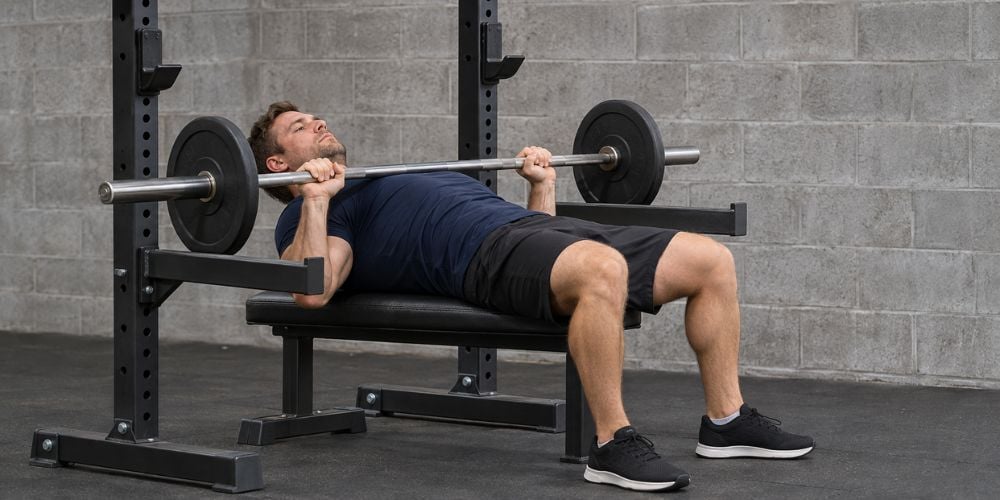
Your shoulder blades should stay stable as you push the bar upward. Avoid reaching your shoulders forward just to finish the rep.
Here’s how to press correctly:
- Push the bar upward with control.
- Keep your upper back firmly against the bench.
- Maintain your shoulder blade position.
- Avoid pushing your shoulders forward excessively at the top.
- Finish with your arms extended comfortably.
What if your shoulders move forward at the top?
You may be reaching too far instead of simply extending your elbows.
Focus on pressing the bar up while keeping your upper back supported. A slight natural movement is fine, but avoid deliberately rounding your shoulders forward.
I usually recommend lowering the weight when shoulder position becomes difficult to control. Clean repetitions are more useful than forcing extra weight with poor form.
6. Quick Drill to Practice Shoulder Blade Position
You don’t need heavy weights to improve your shoulder blade control. A simple drill can help you learn the movement before bench pressing.
Shoulder Blade Squeeze Drill
- Sit or stand upright with your arms relaxed.
- Pull your shoulder blades gently back and slightly down.
- Hold for 3–5 seconds.
- Relax your shoulders.
- Repeat 8–10 times.
Once you’re comfortable, lie on a bench and practice the same movement without weight.
I recommend adding this drill to your bench press warm-up, especially if you often lose upper-back stability during your sets.
Conclusion
Fixing your shoulder blade position on the bench press comes down to three things: pull your shoulder blades back, move them slightly down, and keep your upper back stable.
Practice with lighter weights until you can maintain that position throughout every rep. Remember, pressing with control matters more than lifting heavier weights too soon.
A stable bench also helps support good technique. If your current equipment feels uncomfortable or unstable, explore the YR Fitness Olympic Flat Bench collection to find a bench that supports your pressing workouts.
Related articles: