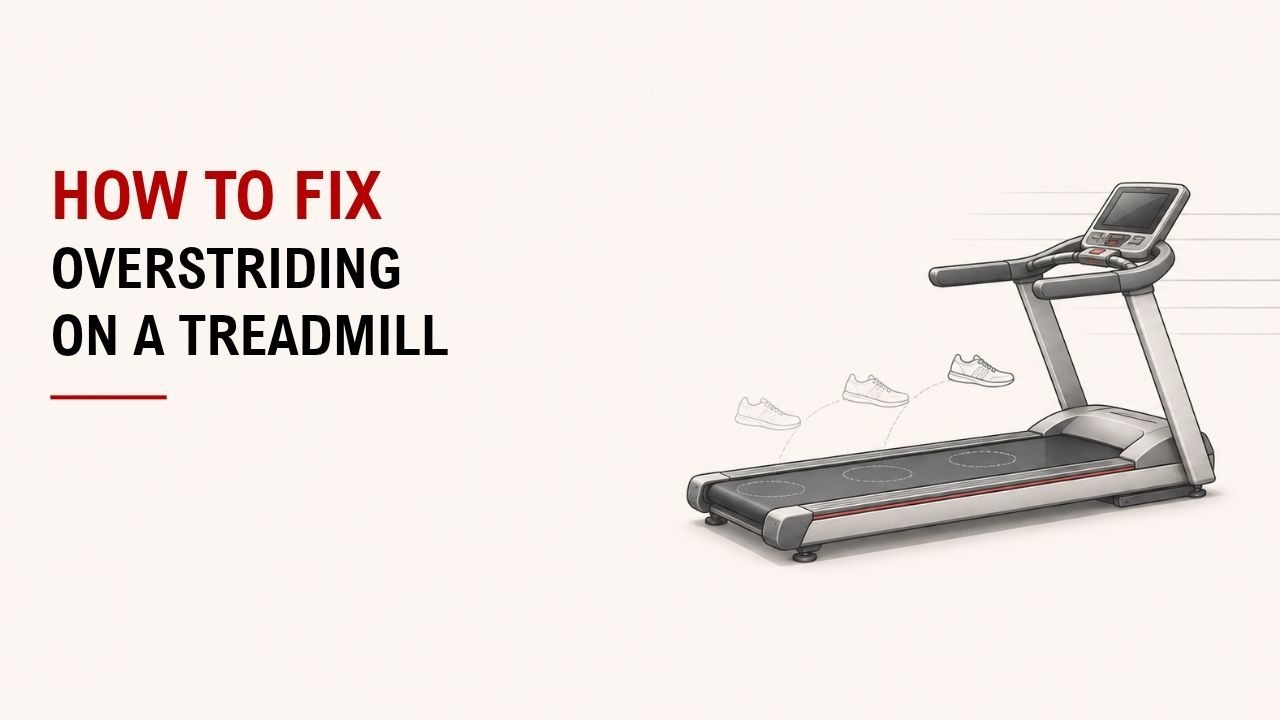

Do your feet land too far in front of your body when running on a treadmill? This is called overstriding, and it can make your steps feel heavy and uncomfortable.
To fix overstriding, shorten your steps, increase your cadence slightly, and adjust your treadmill speed. These small changes can help you run more smoothly without forcing your movements.
As an Exercise Physiology & Biomechanics Expert at YR Fitness, I focus on how running mechanics affect movement and comfort. I often see runners taking longer steps when shorter, controlled steps would work better.
In this guide, you’ll learn how to correct your stride, improve your posture, and practice better running habits. You’ll also learn how to check whether your running form is improving.
1. Shorten Your Stride
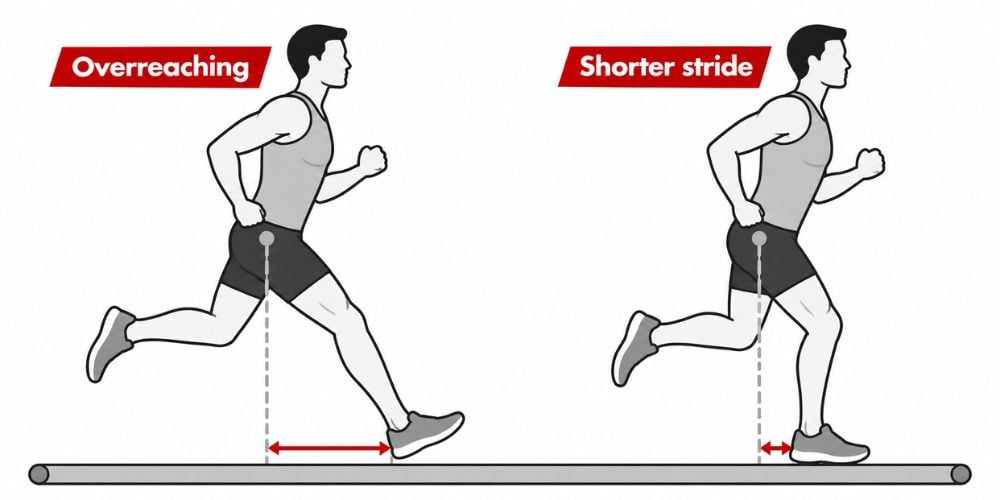
The first thing to fix is your stride length. When your foot lands too far ahead of your body, it can create extra braking force and make running feel harder.
Here’s how to shorten your stride:
- Take shorter, more natural steps.
- Let your feet land closer beneath your hips.
- Keep your knees slightly bent when landing.
- Avoid reaching your legs too far forward.
- Keep your movements smooth and relaxed.
Why does this matter?
Research on foot position and braking forces during running found that landing farther ahead of the hips was associated with greater braking forces.
But don’t force your feet to land directly beneath your hips. Just focus on reducing how far forward you reach.
For more helpful posture and foot-placement tips, see this guide on how to run on a treadmill with better form.
Quick Tip: Imagine your feet landing closer to your body instead of reaching toward the front of the treadmill.
2. Increase Your Step Cadence
Cadence is the number of steps you take per minute. Increasing it slightly can help you shorten your stride without running faster.
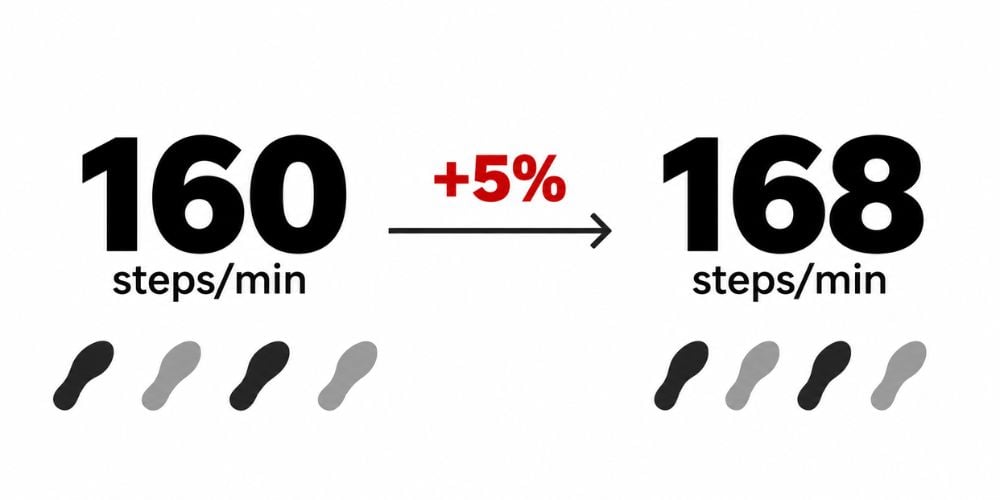
I recommend starting with a small increase of around 5%. You don’t need to change your entire running rhythm.
Try these steps:
- Count every step you take for 30 seconds.
- Multiply that number by two.
- Increase your cadence by about 5%.
- Use a metronome or music to maintain your rhythm.
- Keep your steps short and comfortable.
For example, if you normally take 160 steps per minute, try increasing to around 168 steps per minute.
A systematic review on running step rate found that increasing cadence can shorten step length and reduce certain braking and joint-loading measures. However, the long-term effects on injuries and performance are still uncertain.
Do you need to reach 180 steps per minute?
No. There’s no single cadence that works for everyone. Focus on a rhythm that feels comfortable and natural.
3. Adjust Your Treadmill Speed
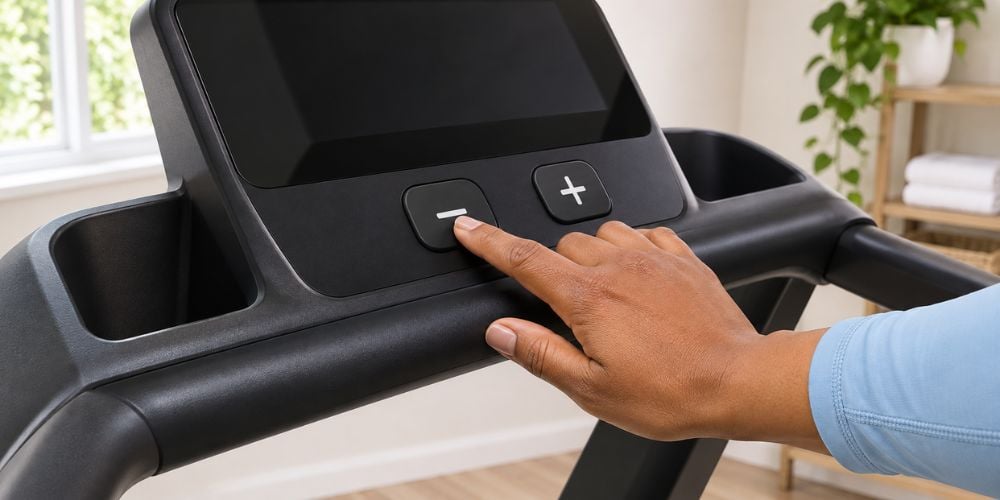
Running too fast can make it harder to control your steps. If you keep reaching your feet forward, slow the treadmill down.
Here’s what to do:
- Start with a comfortable jogging speed.
- Lower the speed if your steps feel too long.
- Focus on landing closer beneath your body.
- Keep a steady rhythm before increasing speed.
- Increase your speed gradually as your form improves.
A treadmill with easy speed adjustments makes this practice more convenient.
For example, the YV8 commercial treadmill has adjustable speed settings, allowing users to choose a pace that matches their running ability.
You can also learn about curved vs. motorized treadmill speed control to understand how different treadmills affect pacing.
Quick Tip: Don’t rush to increase your speed. Get comfortable with shorter steps first.
Looking for Better Treadmill Speed Control?
At YR Fitness, we build commercial treadmills with adjustable speed settings and user-friendly controls to support comfortable daily workouts. Our YA75 commercial treadmill offers smooth speed adjustments, a clear LED display, and precise incline control, making it easier to find a pace that suits your running style.
4. Improve Your Running Posture
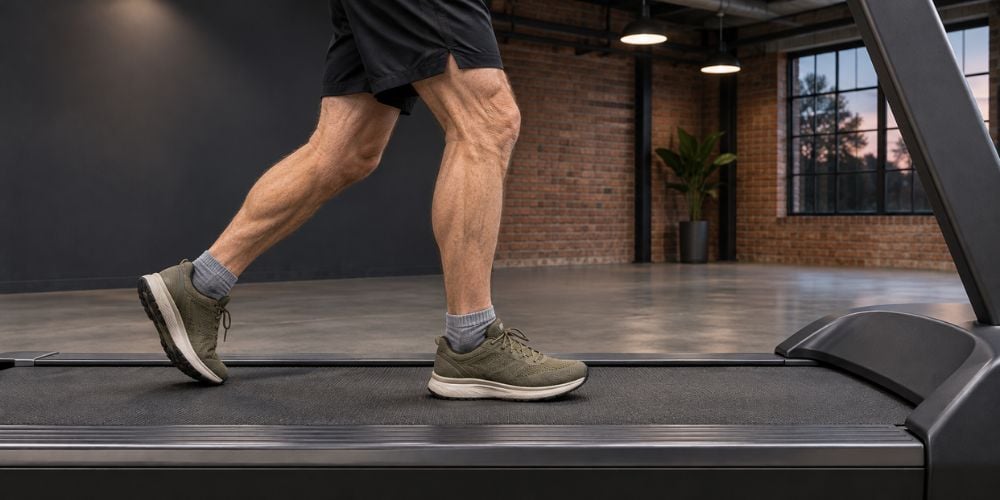
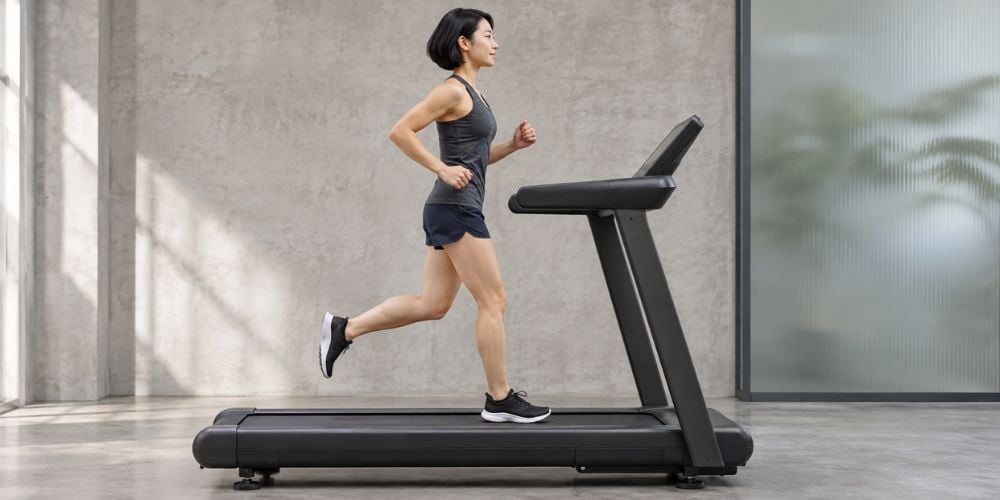
Your posture affects where your feet land. Leaning backward or reaching forward with your legs can make overstriding more noticeable.
Keep your body relaxed and balanced while running.
Focus on these simple adjustments:
- Head: Look straight ahead instead of down at your feet.
- Shoulders: Keep them relaxed.
- Back: Maintain a comfortable, upright position.
- Hips: Keep them aligned with your upper body.
- Arms: Swing naturally beside your body.
- Feet: Let them land closer beneath your hips.
You can lean slightly forward from your ankles, but avoid bending too much at your waist.
Also, avoid holding the treadmill handrails while running unless you briefly need them for balance or safety.
Not sure if your posture is correct?
Imagine standing tall while your feet move naturally beneath you. If you feel yourself leaning backward or reaching too far forward, slow down and reset your posture.
5. Practice Shorter Steps Regularly
You won’t fix overstriding in one workout, and that’s fine. Your body needs time to get comfortable with a new running pattern.
I suggest starting with a short treadmill drill instead of changing your stride for an entire workout.
Simple 5-Minute Treadmill Drill
Time | What to Do |
0–2 minutes | Walk or jog at an easy pace |
2–3 minutes | Practice shorter steps |
3–4 minutes | Return to your comfortable running rhythm |
4–5 minutes | Practice shorter steps again |
After the drill, continue with easy walking or jogging to cool down.
Repeat this practice during your regular treadmill sessions. As your steps become more natural, gradually increase how long you maintain the shorter stride.
What if your steps still feel awkward?
That’s normal when changing a familiar movement. Slow down, relax your legs, and focus on one adjustment at a time.
A steady treadmill belt and comfortable running surface can also help you focus on your technique.
6. How to Tell If You’ve Fixed Overstriding
You don’t need special equipment to check your progress. Pay attention to where your feet land and how your running feels.
Here are some changes to look for:
Before | After |
Feet land too far forward | Feet land closer beneath your body |
Steps feel long and heavy | Steps feel shorter and smoother |
Legs reach forward with each step | Feet move naturally beneath your hips |
Running rhythm feels inconsistent | Running rhythm becomes steadier |
Stride feels difficult to control | Stride feels more comfortable |
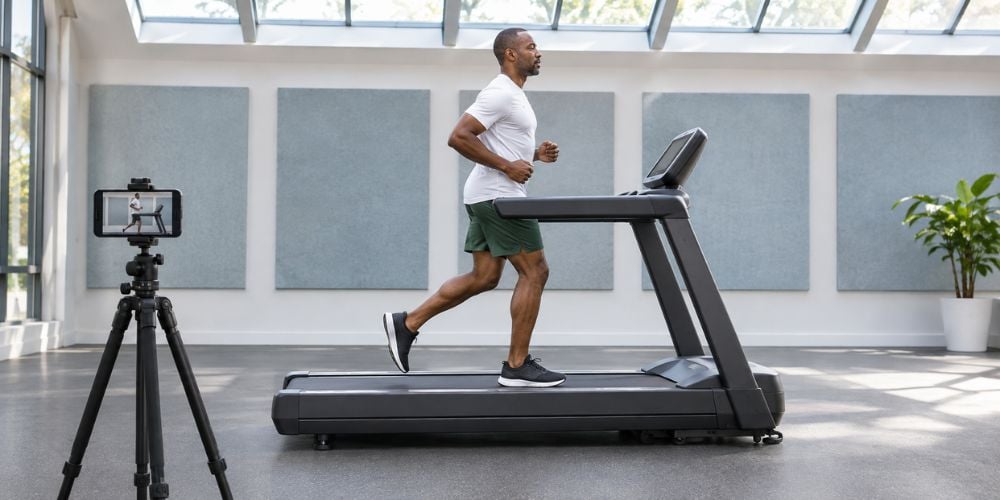
You can also record a short side-view video of yourself running. Just make sure your phone is safely positioned away from the treadmill.
Watch the video and check whether your feet are landing closer beneath your body instead of reaching too far forward.
Does every runner need the same stride length?
No. Everyone has a different natural stride length. The goal is to reduce excessive reaching, not force your feet into one exact landing position.
If changing your technique causes pain, stop and return to a comfortable movement pattern. Seek advice from a qualified professional if the pain continues.
Conclusion
Fixing overstriding on a treadmill doesn’t need to be complicated. Start with shorter steps, increase your cadence slightly, and adjust your speed until your running feels comfortable.
Pay attention to your posture and practice regularly. With time, these small changes can help you develop a smoother and more controlled running stride.
At YR Fitness, we believe comfortable running starts with good technique and dependable equipment. If you want to explore more treadmill features that support controlled workouts.
Related articles: