









Do your knees cave inward on the leg press? This usually means your weight, stance, or knee control needs a small adjustment.
The quick fix is simple: use less weight, keep your knees in line with your toes, and control every rep. Small setup changes can move feel much more stable.
As an Exercise Physiology & Biomechanics Expert at YR Fitness, I regularly study how foot position, joint alignment, and resistance affect exercise movement. I often see knee caves improve quickly once the load and setup are corrected.
Below are seven simple fixes you can try right away. Start with the first one and work down the list.
1. Lower the Weight First
Start here.
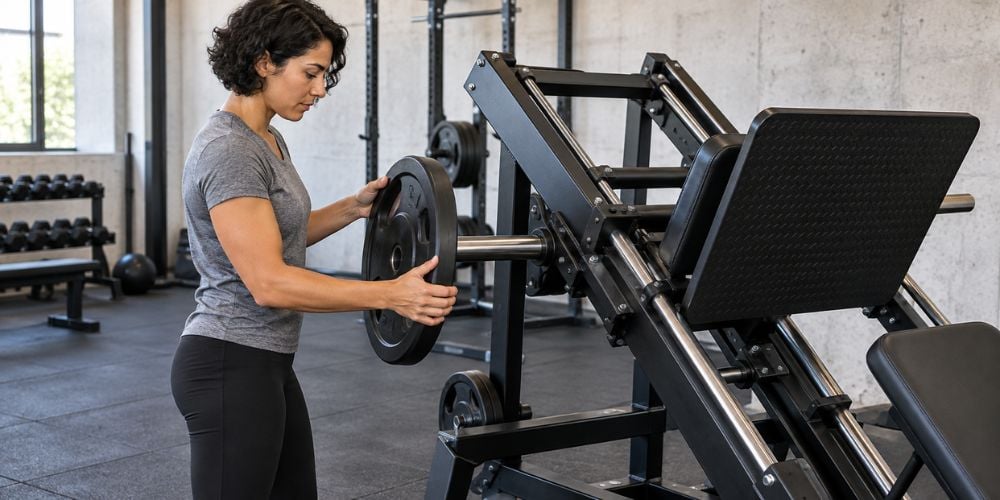
If your knees stay stable with a light load but cave inward when the weight gets heavier, the load is probably too high.
Reduce the weight until you can complete every rep without your knees drifting toward each other. The NASM leg press exercise guide also lists excessive weight and inward knee collapse as common leg press mistakes.
I would always choose a lighter, controlled press over a heavier rep with poor knee position.
Quick check: Can you keep both knees stable from the bottom to the top?
If not, reduce the load.
2. Keep Your Knees in Line With Your Toes
Watch where your knees travel.
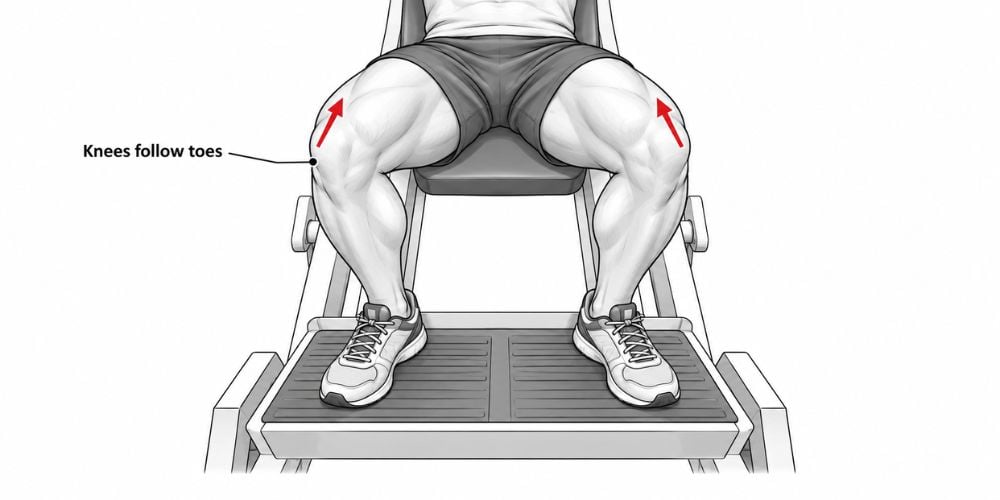
Your knees should generally move in the same direction as your toes instead of collapsing toward the center.
A simple cue I use is:
“Keep your knees over your toes.”
You do not need to force your knees far outward. Just keep them from falling inward.
Why does this matter? Knee valgus, or the knees moving inward, can be related to poor movement control and hip muscle function. NASM’s guide to the biomechanics of squatting discusses glute activation, hip strengthening, and mobility as common corrective approaches when the knees cave inward.
3. Adjust Your Foot Width
Are your feet too close together?
A very narrow stance can make knee control harder for some people.
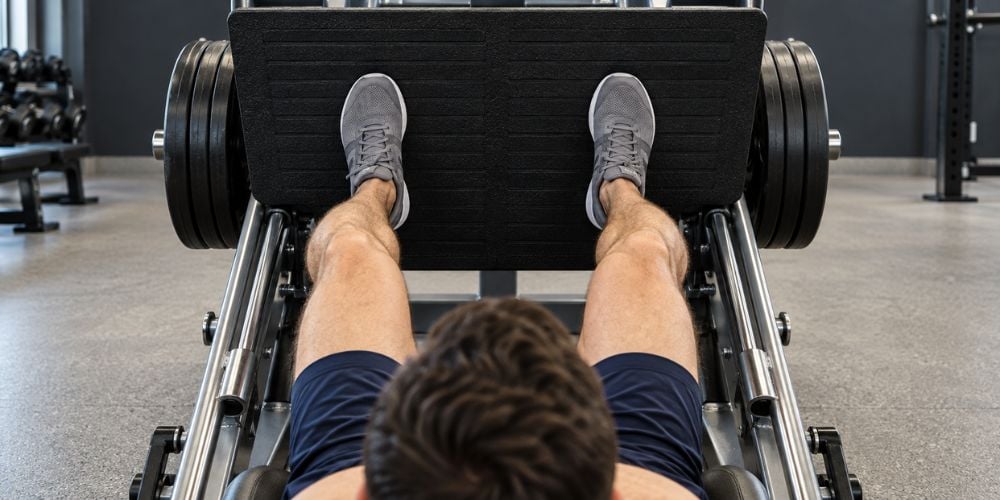
Start with your feet around shoulder-width apart. Then move them slightly wider or narrower until your hips, knees, and feet feel comfortable.
I often see people find better knee control with only a small stance adjustment.
Check Your Setup
What to Check | What You Want |
Foot width | Around shoulder-width to start |
Toe direction | Slightly outward if comfortable |
Knee path | Following the direction of the toes |
Heel position | Firmly against the platform |
Rep speed | Slow and controlled |
What should you look for?
Your knees should move smoothly without falling inward or being forced outward.
Machine setup can also affect how comfortable your leg position feels. At YR Fitness, we design commercial strength equipment with practical movement paths, stable platforms, and adjustment options to help users find a controlled training position. Explore our strength equipment if you want to compare different leg-training machine designs.
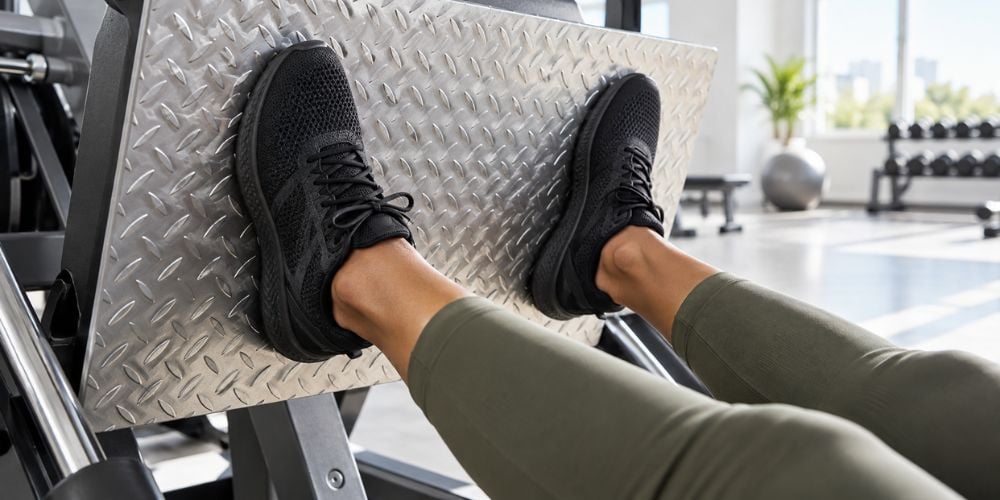
4. Slightly Turn Your Toes Out
Your feet do not always need to point perfectly straight ahead.
Try turning your toes slightly outward. For many people, this gives the hips and knees a more natural path during the press.
The main rule is simple:
Your knees should follow the direction of your toes.
Do not turn your feet out aggressively. A small adjustment is usually enough.
5. Control the Bottom Position
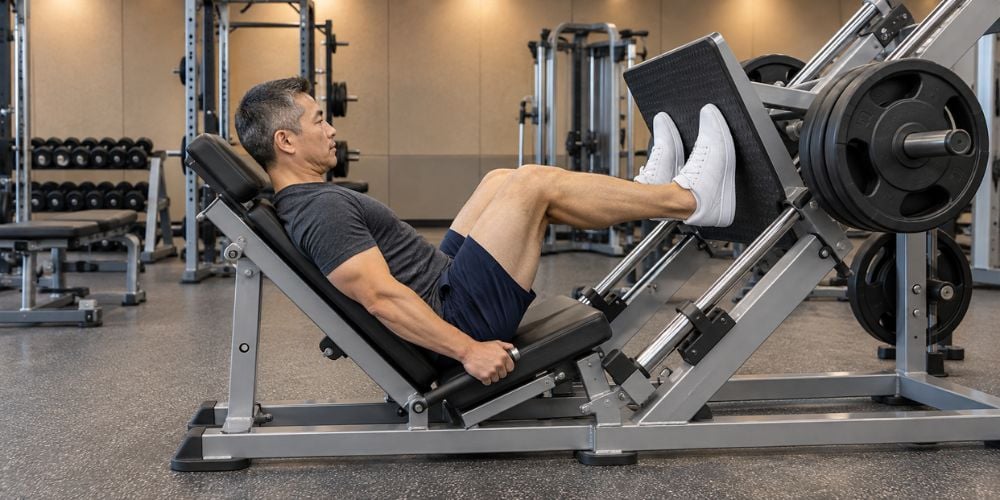
Knee cave often gets worse near the bottom of the leg press.
This is where your hips and knees are more deeply bent, so controlling your position becomes harder.
Do not lower the sled further than you can control. I often tell people to stop just before their knees start moving inward or their hips begin losing position.
The ACE seated leg press guide also recommends a slow, controlled return while keeping the heels against the platform and avoiding excessive depth that causes the upper thighs to compress against the torso.
Do you need maximum depth?
No.
Use the deepest range you can control comfortably.
6. Push Through the Whole Foot
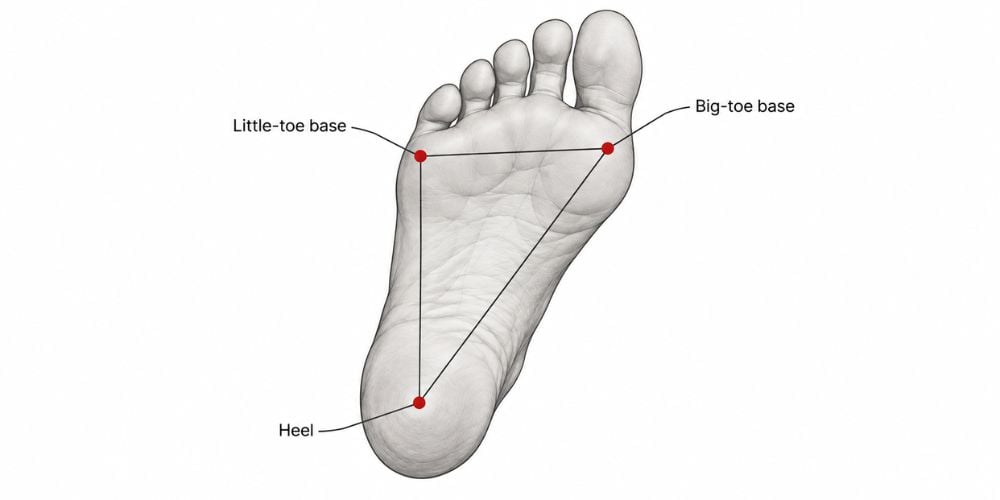
Keep your whole foot connected to the platform.
Think about maintaining pressure through three points:
- Your heel
- The base of your big toe
- The base of your little toe
Avoid letting the inside of your foot collapse as you push.
Here is why this matters: when your foot stays stable, controlling the knee above it becomes easier.
Do not think only about pushing through your toes or only through your heels. Aim for firm, balanced contact with the platform.
7. Slow Down Your Reps
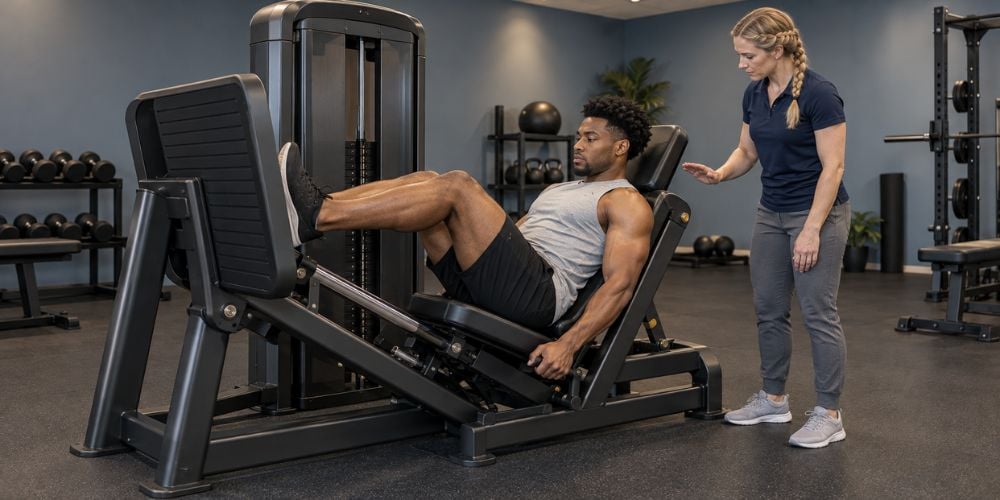
Fast reps can hide poor knee control.
Lower the sled slowly and watch what your knees are doing.
A simple rhythm works well:
- Lower under control
- Pause briefly at the bottom
- Check your knee position
- Press smoothly back up
- Avoid bouncing
I often see lifters spot the exact moment their knees start moving inward once they slow the exercise down.
That makes the problem much easier to correct.
When Should You Be More Careful?
A small technique problem is one thing. Pain is different.
If your knee caving comes with sharp pain, swelling, repeated instability, or discomfort that does not improve after adjusting your setup and weight, stop forcing the exercise.
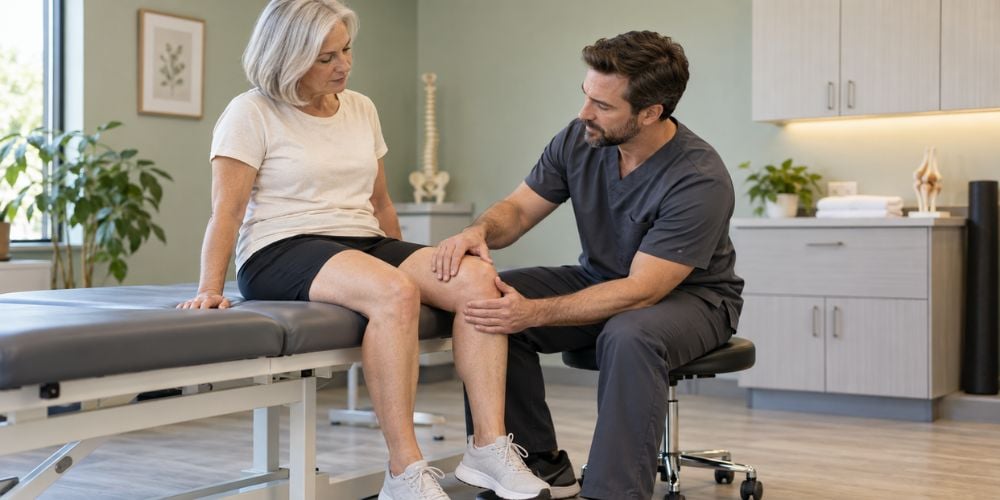
A qualified physical therapist, sports medicine professional, or other healthcare provider can assess whether something beyond your leg press technique is contributing to the problem.
Conclusion
Fixing knee cave on the leg press usually comes down to less weight, better foot position, proper knee tracking, and slower reps. Make those changes before thinking about adding more load.
Good equipment setup can also make controlled movement easier to repeat.
Explore YR Fitness strength equipment if you want to compare leg-training machines built around stable positioning, practical movement paths, and controlled resistance.
Related articles:



