


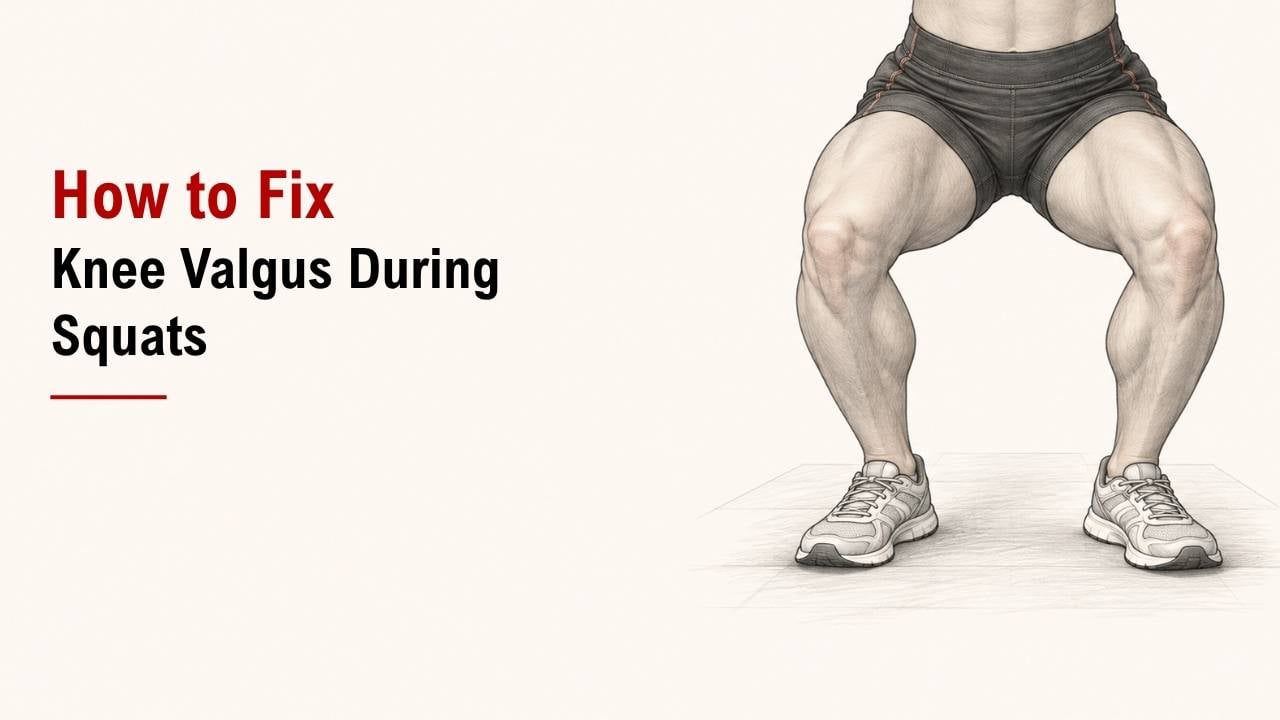

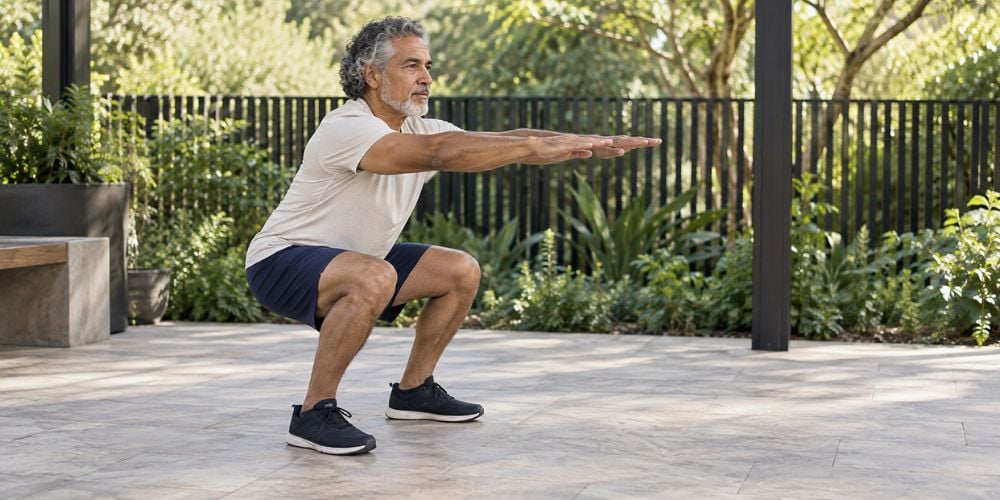
Do your knees cave inward when you squat? This is called knee valgus, and it can make your squats harder to control.
To fix knee valgus, reduce the weight, adjust your stance, align your knees with your toes, strengthen your glutes, improve ankle mobility, and slow down your squats. These six changes can help improve knee stability.
As an Exercise Physiology & Biomechanics Expert at YR Fitness, I focus on how body positioning affects exercise movement. I’ve seen how small technique changes can help people squat with better control.
Below, I’ll show you six simple ways to correct knee valgus during squats. Follow these steps to improve your form and feel more stable.
1. Reduce the Weight
Lifting too much weight can make it harder to control your knees. If they repeatedly collapse inward during squats, try reducing the load.
Here’s what to do:
- Lower the weight until you can maintain good control.
- Practice bodyweight squats before adding resistance.
- Keep your feet firmly planted throughout the movement.
- Increase the weight gradually as your technique improves.
How do you know the weight is too heavy?
If your knees repeatedly cave inward and you cannot correct them, the weight may be too challenging.
The American Council on Exercise (ACE) bodyweight squat guide also recommends keeping your knees aligned with your feet and progressing gradually.
In my experience, starting lighter makes it easier to correct knee positioning. Focus on controlled repetitions before lifting heavier.
2. Adjust Your Foot Position
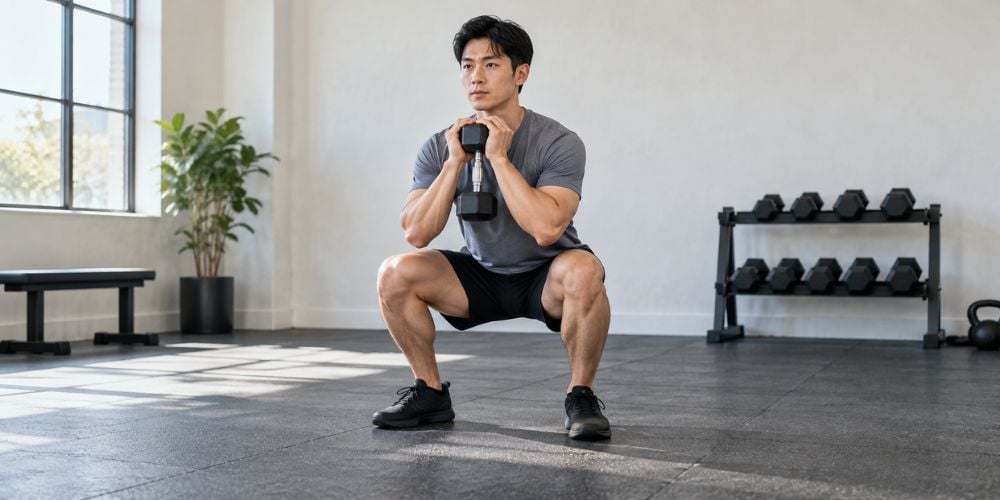
Your foot position affects how your knees move during squats. A comfortable stance helps you maintain balance and control.
Follow these steps:
- Stand with your feet around shoulder-width apart.
- Point your toes slightly outward if comfortable.
- Keep your heels and the balls of your feet planted.
- Squat slowly and check your knee movement.
Should your feet point straight ahead?
Not necessarily. A slight outward toe angle may feel more natural for your hips and knees.
Try adjusting your stance width until you can squat comfortably without forcing your knees into an awkward position.
3. Keep Your Knees Aligned With Your Toes
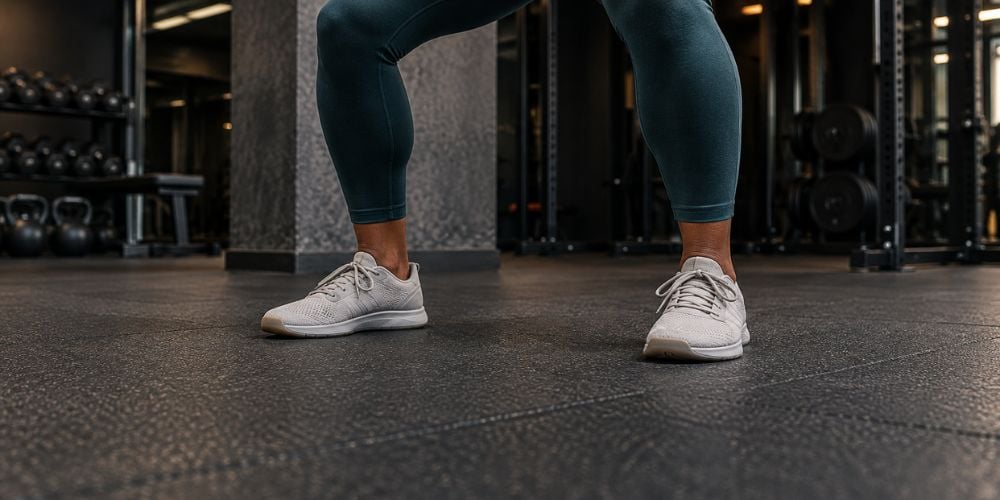
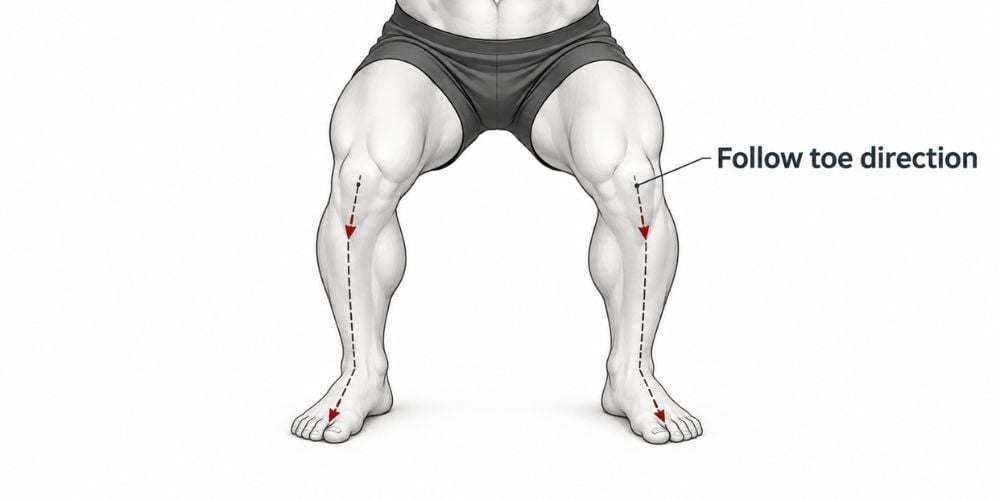
Your knees should generally move in the same direction as your toes during squats. This helps you maintain control as you lower and raise your body.
Here’s what to do:
- Start with your feet firmly planted.
- Bend your hips and knees together.
- Guide your knees toward the same direction as your toes.
- Avoid sudden inward knee collapse.
- Maintain control as you stand up.
How can you check your knee position?
Record yourself squatting from the front. Watch whether your knees stay controlled throughout the movement.
The National Strength and Conditioning Association (NSCA) also identifies knees moving toward each other and losing alignment over the feet as a common squat technique error.
You can practice with light goblet squats or supported squat variations before progressing to heavier weights.
Struggling to control your knees during squats? Strengthening your legs and hips with different exercises can help you build a stronger foundation.
At YR Fitness, we design commercial strength equipment with controlled movement paths and durable construction for everyday gym training. Our squat machines and leg presses can support lower-body strength workouts alongside regular squat practice.
Explore our commercial strength equipment to find training options that can complement your squat routine.
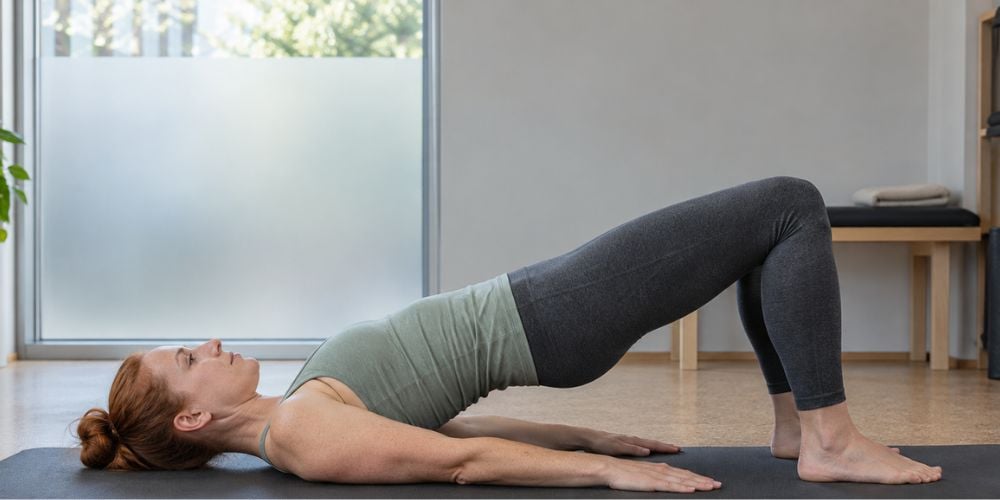
4. Strengthen Your Glutes
Your glutes help control hip movement during squats. Strengthening them may help you maintain better knee positioning.
Try these exercises:
Exercise | How to Do It | Suggested Volume |
Glute bridges | Lift your hips while keeping your feet planted | 2–3 sets × 10–15 reps |
Clamshells | Open your top knee while keeping your feet together | 2–3 sets × 10–15 reps per side |
Banded lateral walks | Step sideways while maintaining band tension | 10–15 steps each direction |
Hip abductions | Move your leg outward with control | 2–3 sets × 10–15 reps per side |
These are starting recommendations, not fixed requirements. Choose a level that allows comfortable, controlled movement.
Do you need all four exercises?
No. Pick two exercises and include them in your lower-body workout.
I often suggest glute bridges and lateral walks because they’re easy to learn. Focus on controlled repetitions rather than rushing through the movement.
5. Improve Ankle Mobility
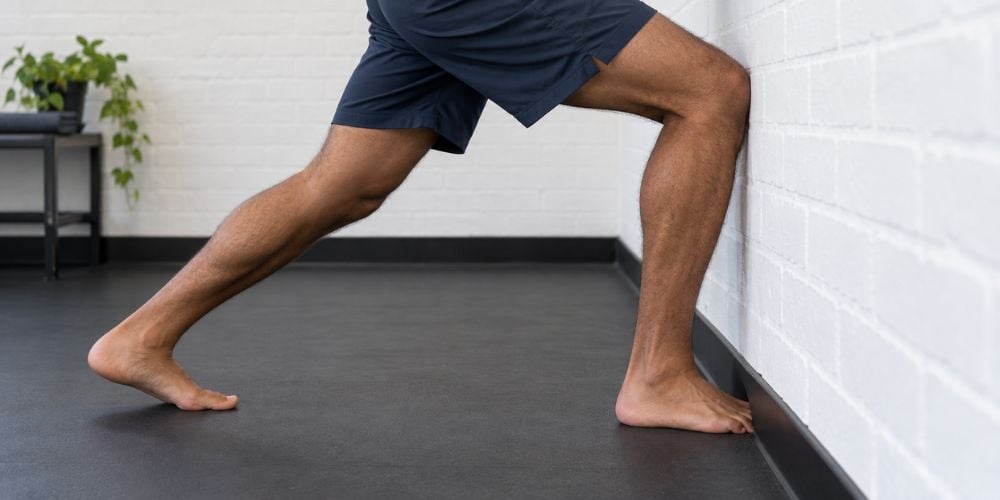
Limited ankle mobility can make squatting uncomfortable and affect how your knees move. Improving ankle movement may help you maintain better balance and positioning.
Try the knee-to-wall exercise:
- Stand facing a wall.
- Place one foot a short distance from it.
- Keep your heel firmly on the floor.
- Move your knee forward toward the wall.
- Return and repeat 10–15 times per ankle.
What if your heels lift during squats?
Reduce your squat depth until you can keep your feet planted. Continue practicing ankle mobility without forcing the movement.
According to ACE’s guidance on knee pain and mobility, limited ankle dorsiflexion can change how the knees and feet move during exercise.
However, ankle stiffness is not always the cause of knee valgus. Your stance, hip strength, and squat technique also matter.
6. Slow Down Your Squats
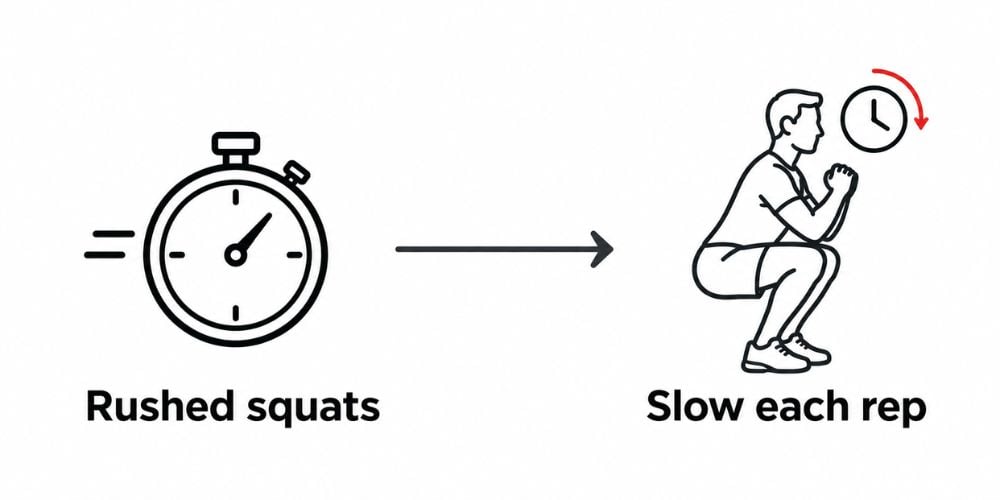
Squatting too quickly can make it harder to notice when your knees move inward. Slowing down gives you more time to control each repetition.
Here’s how to practice:
- Lower your body slowly for about 2–3 seconds.
- Keep your knees moving in line with your toes.
- Pause briefly at a comfortable depth.
- Push through your feet to stand up.
- Avoid bouncing at the bottom.
Why does slowing down help?
It gives you time to notice changes in your knee position and correct your movement.
I’ve seen people improve their squat control simply by slowing down. If your knees still collapse inward, reduce the weight or squat depth and try again.
Quick Tips to Fix Knee Valgus
Not sure which adjustment to try first? Use this table to match the problem you notice with a simple correction.
Common Problem | Simple Fix |
Weight feels too heavy | Reduce the load |
Feet feel uncomfortable | Adjust stance width and toe angle |
Knees collapse inward | Guide knees in line with toes |
Poor hip control | Strengthen your glutes |
Heels lift during squats | Improve ankle mobility |
Squats feel rushed | Slow down each repetition |
Quick reminder: You don’t need to fix everything at once. Start with the adjustment that makes the biggest difference to your squat control.
Conclusion
Fixing knee valgus starts with lighter weights, better foot positioning, stronger glutes, and controlled movement. Practice these six adjustments regularly to improve your squat technique and stability.
At YR Fitness, we build commercial strength equipment that supports controlled lower-body training. Explore our strength training machines to find equipment that can complement your squat workouts.
Related articles:



