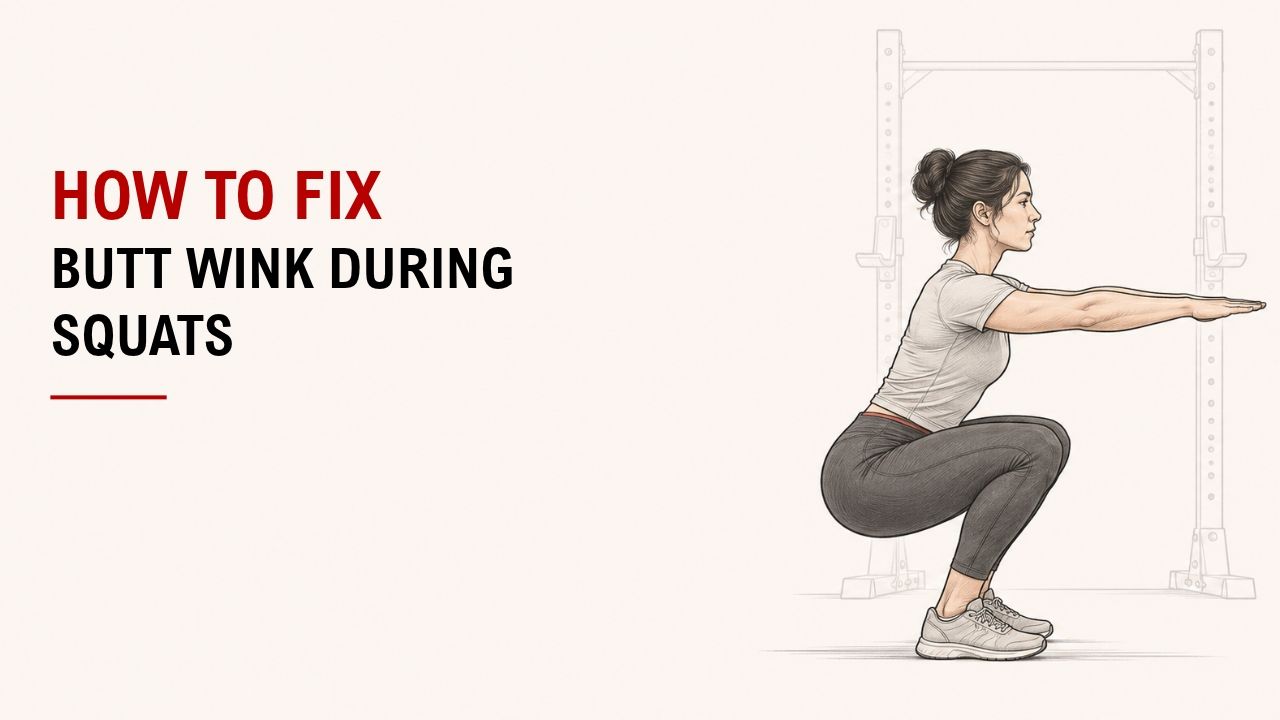

Does your lower back round at the bottom of a squat? This is called butt wink, and it happens when your pelvis tucks under.
To reduce butt wink, adjust your squat depth, stance, core bracing, and mobility. These changes can help you squat with better control.
As an Exercise Physiology & Biomechanics Expert at YR Fitness, I study how body positioning affects squat technique. I’ve seen how small adjustments help people squat more comfortably and avoid unnecessary strain.
Below are six simple ways to reduce butt wink during squats. Follow these tips to improve your squat form.
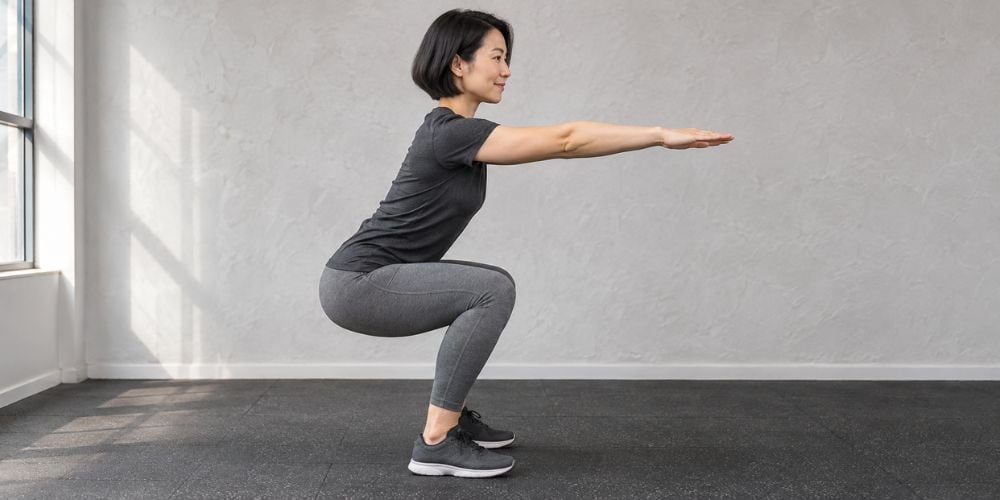
1. Reduce Your Squat Depth
Squatting deeper than your current mobility allows can make your pelvis tuck under. You don’t need to squat as low as possible to get a good workout.
Here’s what to do:
- Lower yourself slowly into a squat.
- Stop before your lower back starts rounding noticeably.
- Keep your feet flat and your body stable.
- Gradually increase your depth as your mobility and control improve.
How deep should you squat? Only as deep as you can comfortably control.
According to the National Academy of Sports Medicine (NASM), avoiding forced squat depth and improving movement control can help address excessive pelvic tucking.
Quick Tip: Record yourself squatting from the side to check your lower-back position. I often recommend this because it helps you see where your form starts changing.
2. Adjust Your Foot Position
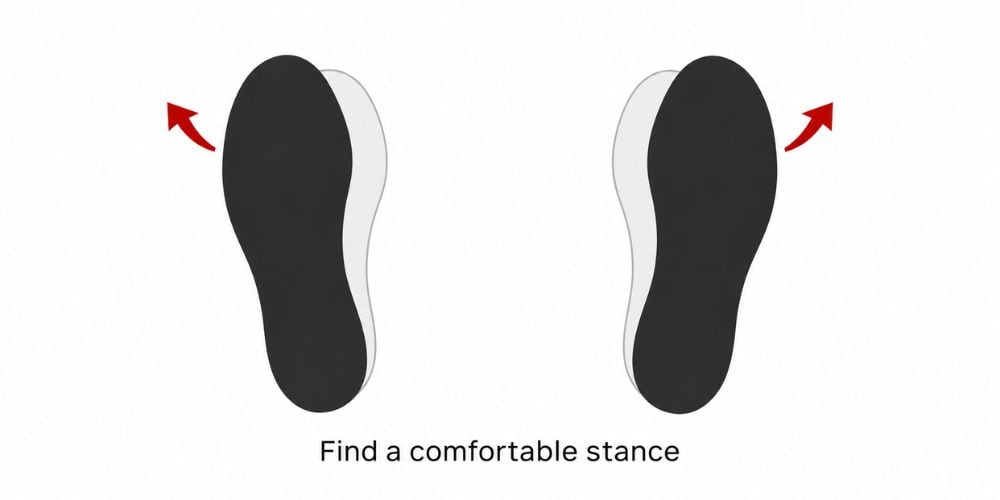
Your foot position affects how comfortably your hips move during squats. A stance that’s too narrow or uncomfortable can make deep squatting harder.
Try these adjustments:
- Place your feet around shoulder-width apart.
- Widen your stance slightly if needed.
- Point your toes slightly outward.
- Keep your knees moving in the same general direction as your toes.
Still uncomfortable? Make small adjustments until you find a stance that feels natural.
The American Council on Exercise (ACE) explains that squat stance should account for individual anatomy and comfort.
Here is a quick guide to common stance adjustments:
Squat Problem | What to Try |
Hips feel restricted | Widen your stance slightly |
Knees feel uncomfortable | Adjust your toe angle |
Heels lift off the floor | Check your ankle mobility |
Lower back rounds at the bottom | Reduce depth and test your stance |
Remember, everyone’s hip structure is different, so there’s no single perfect squat stance.
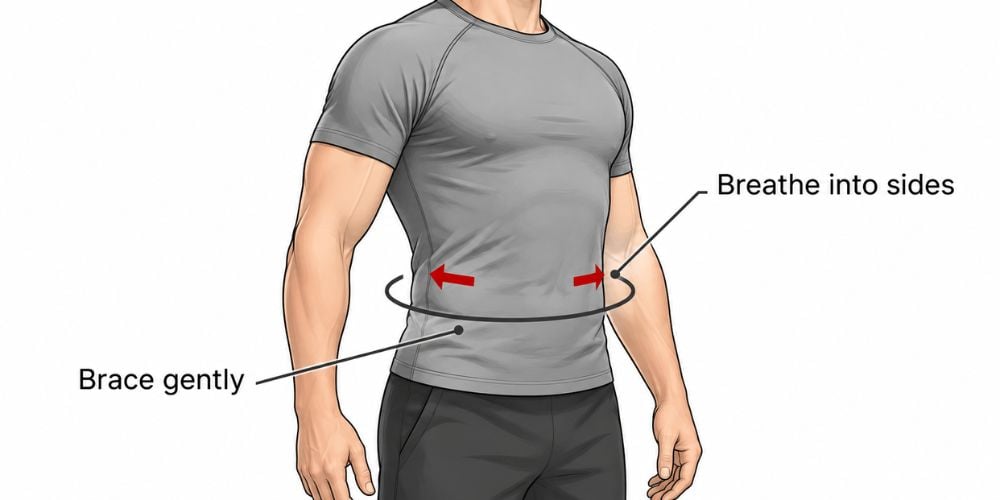
3. Brace Your Core Before Squatting
Your core helps keep your torso stable while squatting. Without proper bracing, controlling your lower-back position can become harder.
Follow these steps:
- Stand tall with your feet in your preferred position.
- Take a breath into your abdomen and sides.
- Tighten your core as if preparing for a gentle punch.
- Lower yourself while keeping your torso controlled.
- Exhale as you stand back up.
Avoid forcing your lower back into an exaggerated arch.
Quick Tip: Practice bracing during bodyweight squats before adding weights. In my experience, this makes it easier to maintain control during heavier squats.
4. Improve Your Ankle Mobility
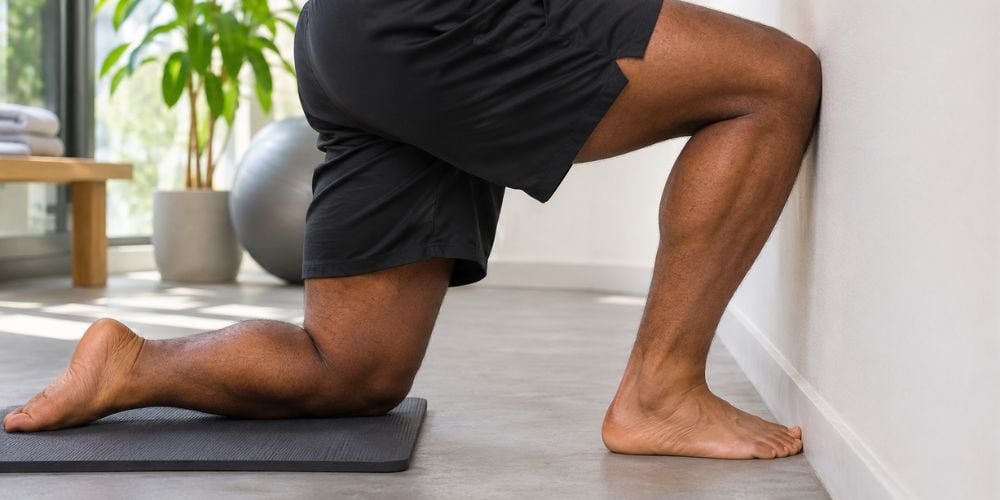
Limited ankle mobility can make it harder for your knees to move forward during squats. This may cause your body to compensate by changing your hip or torso position.
Try these exercises:
- Knee-to-wall stretch: Move your knee toward a wall while keeping your heel planted.
- Ankle rocks: Slowly move your knee forward over your toes.
- Heel-elevated squats: Try a small, stable heel elevation to see if your squat position improves.
Start with 8–12 controlled repetitions of each mobility exercise, using a comfortable range.
Why does ankle mobility matter? When your ankles cannot move forward enough, reaching a deeper squat may become harder.
Squat University’s guide to pelvic movement explains how ankle restrictions and hip anatomy can influence pelvic position during squats.
Want a more stable setup for strength training? At YR Fitness, we design commercial squat racks, Smith machines, and other strength equipment for regular gym use.
Explore our equipment to find training options that support controlled squat exercises, while keeping proper technique your first priority.
5. Work on Your Hip Mobility
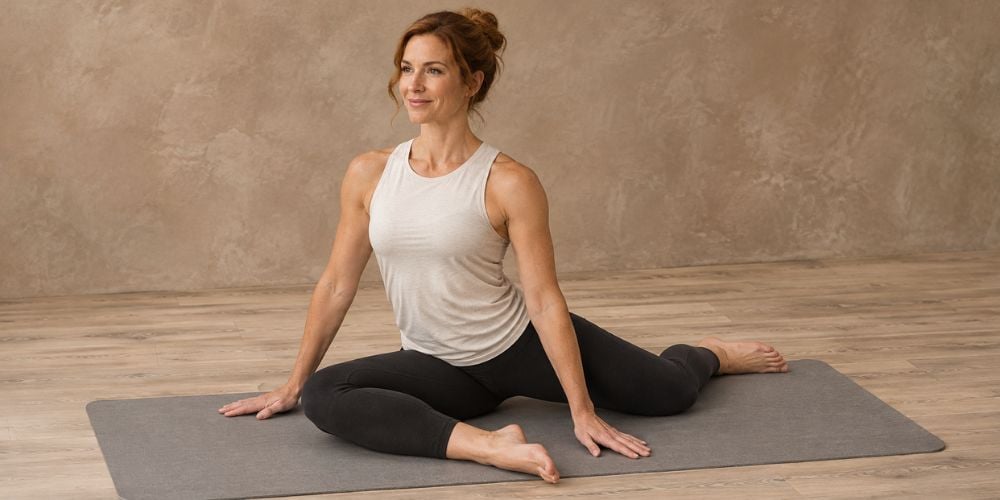
Your hips need enough freedom to move into a comfortable squat position. Limited mobility or your natural hip structure can affect how deeply you squat.
Try these exercises:
Exercise | How to Do It | Suggested Amount |
Deep squat hold | Hold a comfortable squat position | 15–30 seconds |
90/90 hip rotations | Slowly rotate your hips between positions | 8–12 reps |
Hip flexor stretch | Gently stretch the front of your hips | 15–30 seconds per side |
Bodyweight squats | Squat through a comfortable range | 8–12 reps |
These are starting suggestions, not fixed requirements.
Should you stretch deeper every time? No, especially if you feel pinching or pain.
I often suggest improving hip mobility gradually instead of trying to reach a full-depth squat immediately. Your hip structure may naturally limit how deep you can go, even with good flexibility.
6. Lower the Weight and Control Your Movement
Lifting too heavy can make it harder to control your squat position. If your lower back rounds more as the weight increases, reduce the load and focus on technique.
Here’s what to do:
- Lower the weight until you can squat comfortably.
- Descend slowly instead of dropping into the squat.
- Pause briefly at a depth you can control.
- Push through your feet to stand back up.
- Add weight gradually as your technique improves.
When should you increase your weight? Once you can complete your repetitions with consistent depth, balance, and control.
You can also practice with bodyweight squats before returning to heavier weights. Stable, properly maintained equipment helps create a more reliable training setup.
Conclusion
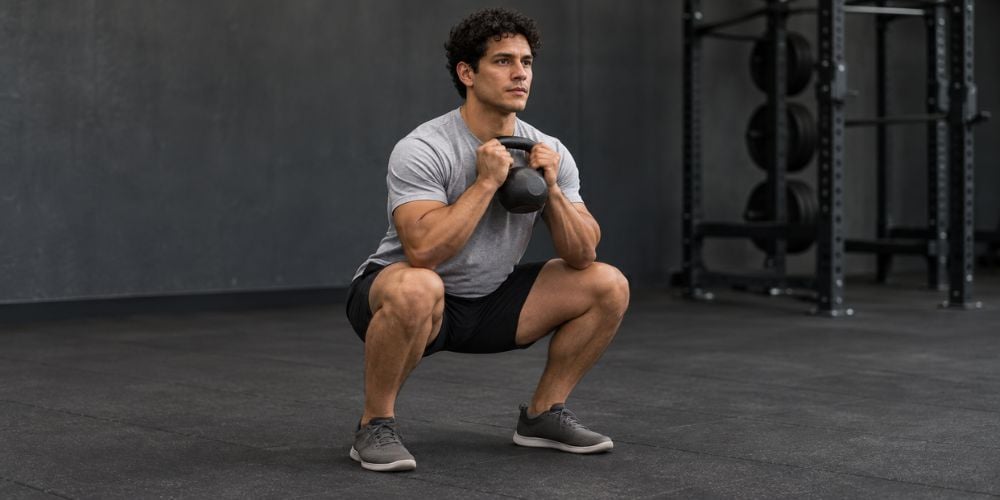
Butt wink isn’t always a problem, and some pelvic movement during deep squats is normal. Focus on comfortable squat depth, better mobility, proper bracing, and controlled weights rather than forcing a perfectly straight lower back.
Want to improve your squat training? Explore the commercial strength equipment at YR Fitness to find reliable options that support your strength goals.
Related articles: