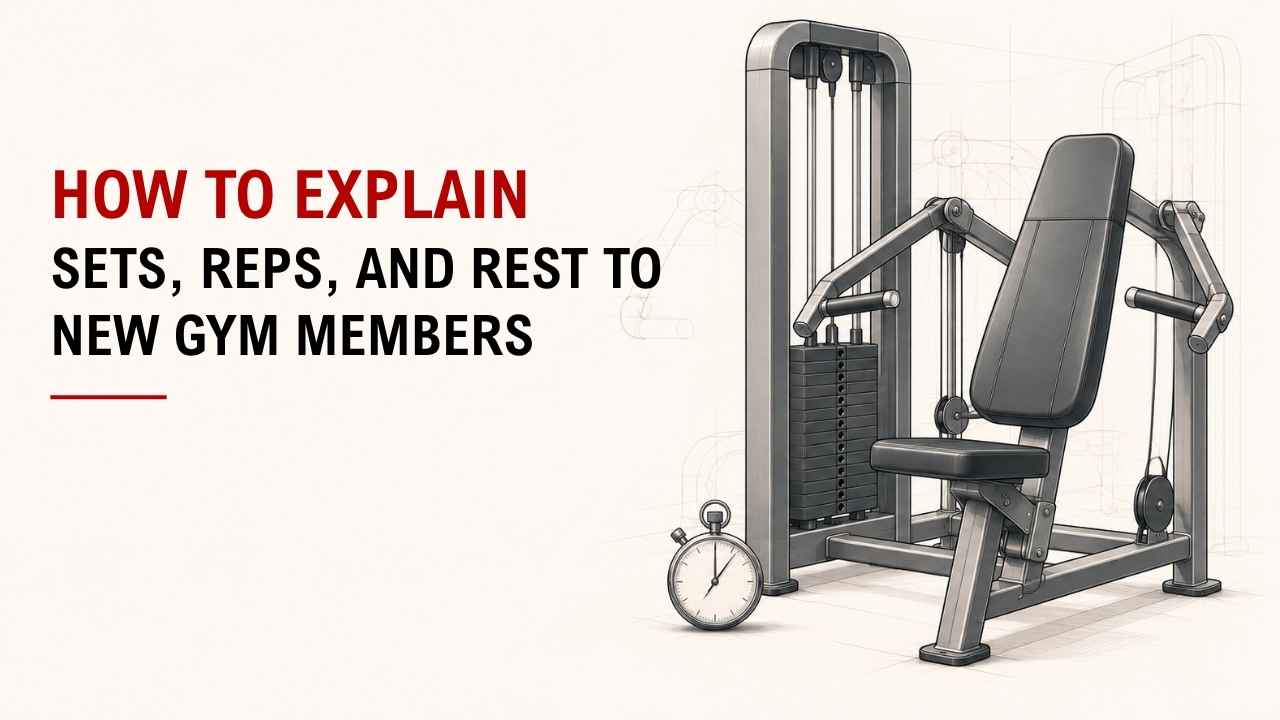

Confused about sets, reps, and rest at the gym? Here’s what each term means.
Reps are individual movements, sets are groups of reps, and rest is the break between sets. Knowing these basics makes workouts easier to follow.
As an Exercise Physiology & Biomechanics Expert at YR Fitness, I help beginners understand proper exercise techniques. I’ve seen how clear instructions improve their confidence and control during workouts.
Below, I’ll explain sets, reps, and rest in six simple steps. Use these examples to follow your next workout with confidence.
1. Explain What Reps Mean
A rep, short for repetition, is one complete movement of an exercise.
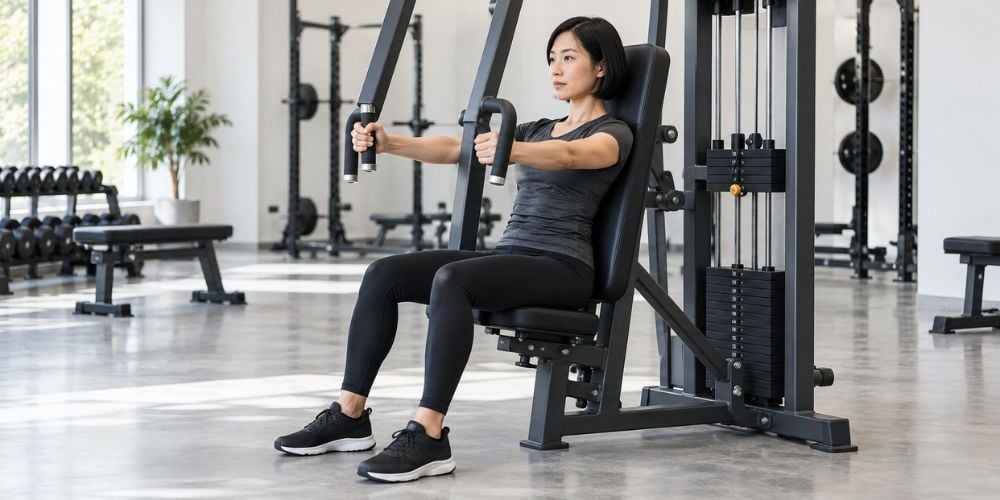
For example, pushing the handles forward on a chest press machine and returning them to the starting position counts as one rep.
How do you count reps?
- Start in the correct exercise position.
- Complete one full movement.
- Return to the starting position.
- Count that movement as one rep.
- Repeat until you reach your target.
If your workout says 10 reps, perform the movement 10 times.
Does speed matter?
Yes. Moving too quickly can make it harder to control the weight.
I often remind beginners that proper form matters more than finishing quickly. Focus on smooth movements and avoid swinging or jerking the weight.
Quick tip: Count each rep only after completing the full movement with control.
2. Explain What Sets Mean
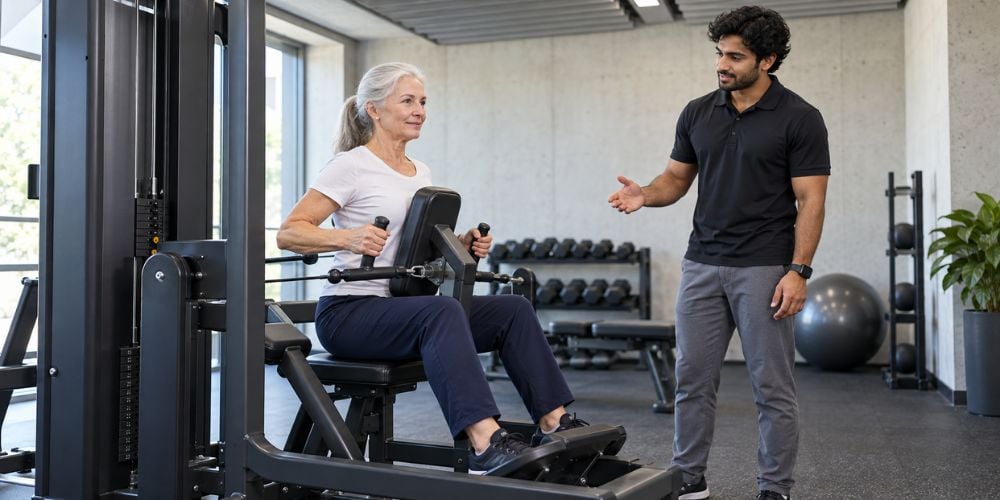
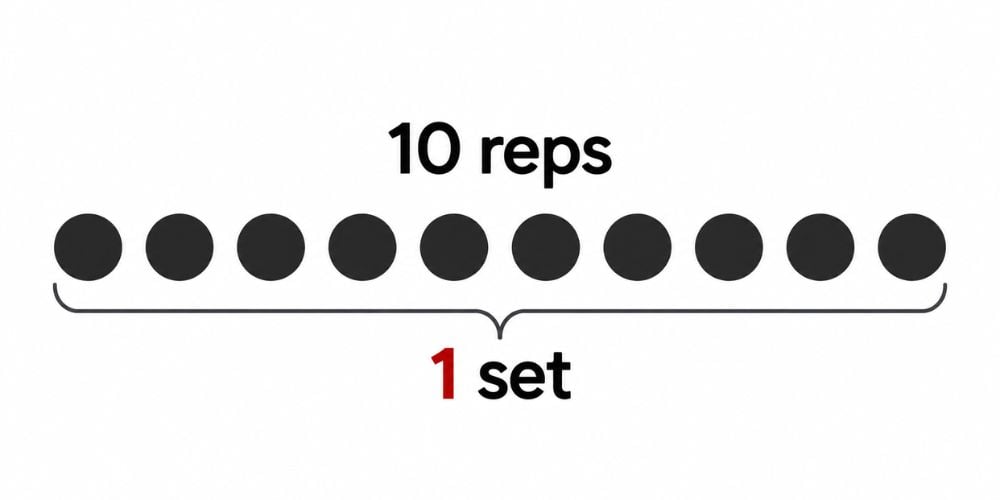
A set is a group of repetitions completed before taking a break.
For example, completing 10 chest presses without stopping counts as one set.
Here’s how sets work:
- 1 set × 10 reps: 10 chest presses.
- 2 sets × 10 reps: 20 chest presses total.
- 3 sets × 10 reps: 30 chest presses total.
You normally rest between sets before starting another round.
Set | Repetitions | What to Do |
Set 1 | 10 reps | Complete 10 chest presses |
Set 2 | 10 reps | Repeat after resting |
Set 3 | 10 reps | Complete the final round |
Why perform multiple sets?
Multiple sets help you practice the movement and complete more training work. However, beginners don’t need to start with many sets.
According to the American Council on Exercise (ACE), even one properly performed set can help people with little training experience make initial strength improvements.
Quick tip: Start with fewer sets and increase them as your strength improves.
3. Explain What Rest Means
Rest is the recovery time between exercise sets.
For example, after completing 10 chest presses, you might rest for 60–90 seconds before starting the next set.
Why is rest important?
- Helps your muscles recover.
- Allows you to regain energy.
- Helps maintain proper exercise technique.
- Prepares you for the next set.
What should you do during rest?
Relax your muscles, breathe normally, and prepare for your next set. You can also check your seat position or adjust the machine if needed.
For many moderate beginner exercises, 60–90 seconds is a useful starting point, although longer rest may be needed depending on the exercise.
Can you skip rest?
You can sometimes use shorter breaks during light exercises, but skipping rest when you’re tired may affect your next set.
Quick tip: Rest until you’re ready to complete another set with proper form.
4. Show How Sets, Reps, and Rest Work Together
Now, let’s put everything together.
Imagine your workout plan says:
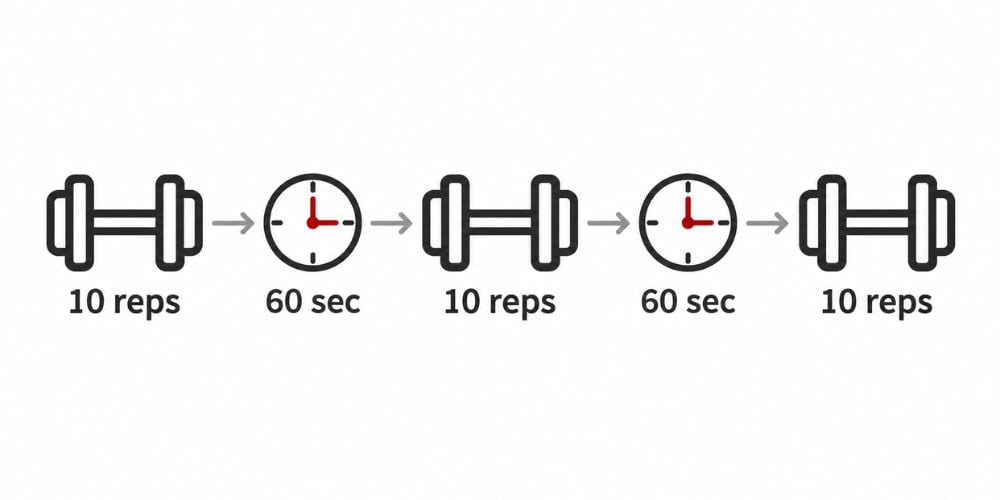
Chest Press: 3 sets × 10 reps, 60 seconds rest
Here’s exactly what you need to do:
- Sit on the chest press machine and adjust your position.
- Complete 10 controlled reps.
- Rest for 60 seconds.
- Complete another 10 reps.
- Rest for another 60 seconds.
- Finish your final 10 reps.
That’s it. You’ve completed 3 sets of 10 reps, or 30 repetitions in total.
You can follow the same process for leg presses, seated rows, lat pulldowns, and other strength exercises.
What if you cannot finish all 10 reps?
Stop when you can no longer maintain good form. Reduce the weight if needed before trying the next set.
At YR Fitness, we design commercial strength equipment with controlled movement paths, adjustable settings, and durable construction for daily training. We aim to make strength exercises comfortable and practical for different users, including beginners learning proper technique.
Explore our commercial gym equipment to discover common strength machines and become more familiar with the equipment used in gym workouts.
Quick tip: When reading a workout plan, check the sets first, reps second, and rest time last.
5. Teach Beginners How Many Sets and Reps to Start With
New to strength training? Keep your first workouts simple.
Start with 1–2 sets of 8–12 reps per exercise, using a weight you can control comfortably.
The American College of Sports Medicine (ACSM) identifies 8–12 repetitions as a common starting range for novice resistance training.
Here’s a beginner-friendly workout example:
Exercise | Sets | Reps | Rest |
Chest Press | 2 | 10 | 60–90 sec |
Leg Press | 2 | 10 | 60–90 sec |
Lat Pulldown | 2 | 10 | 60–90 sec |
Seated Row | 2 | 10 | 60–90 sec |
Shoulder Press | 1–2 | 8–10 | 60–90 sec |
These are suggested starting targets, not fixed rules. Adjust them based on your strength, comfort, and experience.
How do you know if the weight is right?
Ask yourself:
- Can I finish every rep with good form?
- Can I keep my posture steady?
- Do the last few reps feel challenging but manageable?
- Can I finish without swinging or jerking?
If the weight feels too heavy, reduce it. If every rep feels easy, consider increasing the resistance gradually.
In my experience, beginners make better progress when they understand the movement before focusing on heavier weights.
Quick tip: Start light, learn proper technique, and increase your workload gradually.
6. Explain When to Rest Longer
Not every exercise needs the same rest time.
Heavier weights and demanding exercises often require longer breaks because your muscles need more recovery.
When should you rest longer?
- After heavy leg presses or squats.
- When lifting heavier weights.
- When you’re breathing heavily.
- When your muscles feel too tired.
- When you struggle to maintain proper form.
Here’s a simple rest guide:
Exercise Situation | Suggested Rest |
Light, easy exercises | 30–60 seconds |
Moderate beginner exercises | 60–90 seconds |
Heavy strength exercises | 2–3 minutes or longer |
These are practical starting ranges, not strict rules.
For general muscular fitness, ACE’s beginner resistance training guide suggests around 2–3 minutes of rest between sets. Longer breaks can help you maintain performance, especially during demanding exercises.
Should you always follow the timer?
Not necessarily. If your workout says 60 seconds but you’re still tired, take more time.
The goal is to recover enough to complete your next set with proper control.
Quick tip: Rest according to the exercise difficulty and how ready you feel for the next set.
Conclusion
Sets, reps, and rest are simple: reps are individual movements, sets are groups of reps, and rest is the break between sets. Start with manageable weights, follow a basic workout plan, and focus on proper technique.
At YR Fitness, we believe simple training and reliable equipment help create a better workout experience. Explore our commercial gym equipment to discover strength machines designed for comfortable, controlled workouts.
Related articles: