









Not sure which gym machines to use or how to turn them into a proper workout? Walking around and choosing whatever machine is free can make your training harder to track.
The simple answer is: choose your goal, decide how many days you can train, cover the main muscle groups, pick 5–7 machines, then set your exercise order, sets, and reps. You do not need a complicated routine to get started.
As an Exercise Physiology & Biomechanics Expert at YR Fitness, I look closely at how exercise choice, resistance, and movement patterns work together. I often see beginners make better progress when they follow a simple routine they can repeat and improve over time.
Below, I will show you how to build your gym machine workout from scratch in six clear steps. Follow them in order, and you can walk into the gym knowing exactly what to do.
1. Decide Your Main Goal
Start with one question:
What do you want this workout to help you achieve?
Your main goal gives the rest of your plan some direction.
Common goals include:
- Building muscle
- Getting stronger
- Improving general fitness
- Supporting weight management
- Getting back into regular exercise
You can have more than one goal. Just choose one as your main focus.
For example, if you want to build muscle, controlled resistance exercises and gradual progression should take priority. If general fitness is your goal, you can keep the routine balanced and add cardio before or after your machine workout.
I would keep this simple. “I want to get stronger and train my whole body three times per week” is already a useful goal.

2. Choose How Many Days You Can Train
Next, look at your actual weekly schedule.
For most beginners:
- 2 days per week: Good if your schedule is busy
- 3 days per week: A practical option for full-body training
- 4 days per week: Better if you already exercise regularly
Should you automatically choose four days?
No. A routine only works if you can keep doing it.
The CDC’s adult physical activity guidance recommends muscle-strengthening activity on at least two days per week, alongside regular aerobic activity.
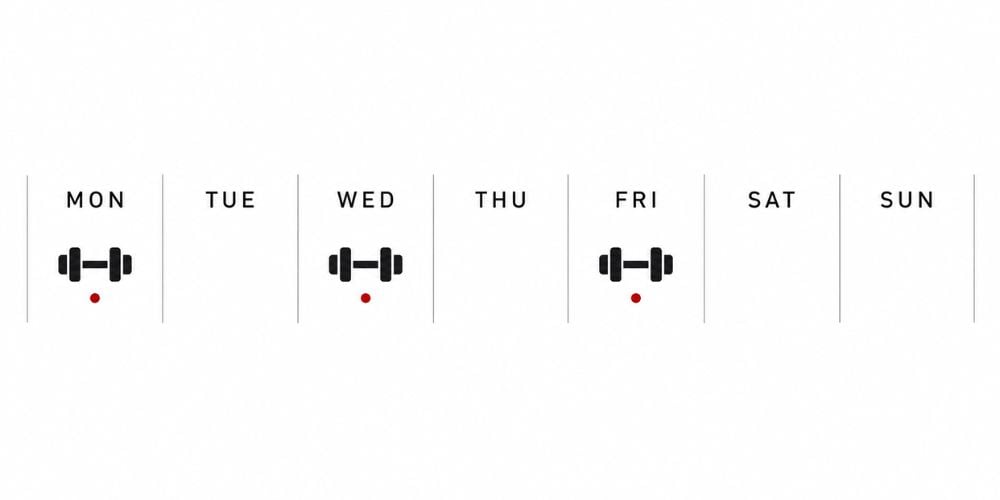
If three days fits your schedule, a Monday-Wednesday-Friday routine can work well. You train, recover, and then return for the next session.
I often prefer a realistic three-day routine over an ambitious five-day plan that gets abandoned after two weeks.
3. Start With the Main Muscle Groups
Before picking individual machines, check that your plan covers the major areas of your body.
Area | Basic Movement |
Legs | Pressing or knee flexion |
Chest | Pressing |
Back | Pulling |
Shoulders | Pressing or raising |
Arms | Curling or extending |
Core | Bracing or controlled trunk movement |
The CDC specifically includes the legs, hips, back, abdomen, chest, shoulders, and arms when describing major muscle groups for strengthening exercise.
You do not need one machine for every individual muscle.
A chest press, for example, trains your chest while also involving your shoulders and triceps. A lat pulldown works your back while your biceps help with the movement.
What is the easier way to plan?
Think about movement patterns, not dozens of separate muscles.
That keeps the workout simple without leaving out important areas.
4. Pick 5–7 Basic Gym Machines
Now choose your equipment.
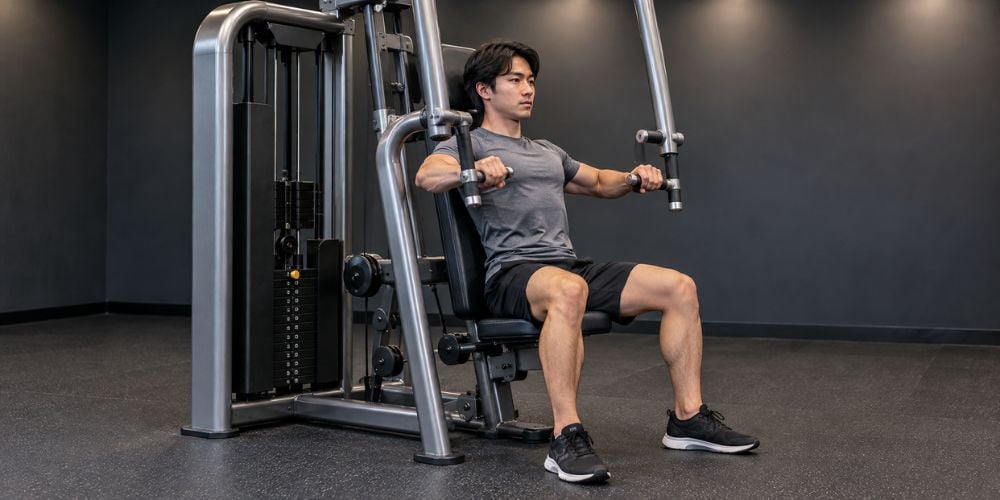
A simple beginner workout might include:
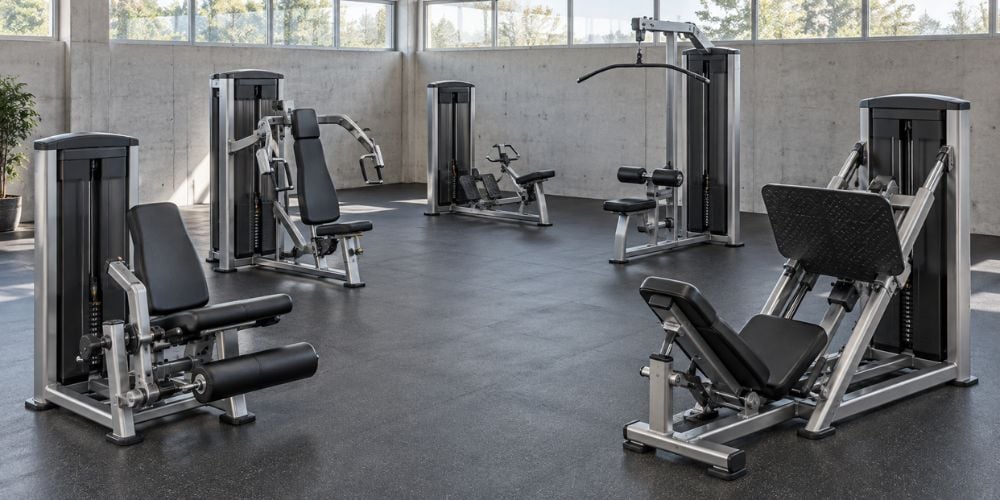
- Leg press
- Leg curl
- Chest press
- Lat pulldown
- Seated row
- Shoulder press
- Cable machine or abdominal machine
That is enough for a complete session.
You do not need to use every machine you see.
What if your gym does not have one of these machines?
Use a machine with a similar movement.
Missing Machine | Possible Alternative |
Leg Press | Hack squat |
Chest Press | Incline chest press |
Lat Pulldown | High row |
Seated Row | Low row |
Shoulder Press | Cable shoulder press |
Leg Curl | Seated or lying leg curl |
The exact machine is less important than keeping the same basic movement in your workout.
I often see beginners spend too much time looking for the “perfect” exercise. A machine you can use comfortably, control properly, and gradually progress on is usually the better choice.
At YR Fitness, we design our commercial strength equipment around common movements such as pressing, pulling, leg training, and cable exercises. If you want to see how these different machine types work together, browse our gym equipment options here before building your own machine list.
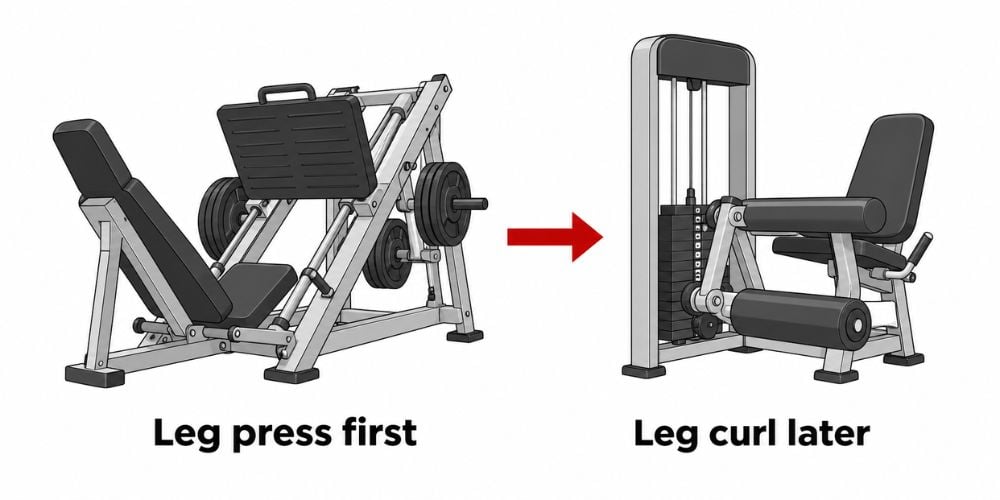
5. Put the Exercises in the Right Order
You have your machines. What should come first?
A useful rule is:
Do larger, more demanding exercises first. Leave smaller exercises for later.
For example:
- Leg press
- Chest press
- Lat pulldown
- Seated row
- Shoulder press
- Leg curl
- Cable or core exercise
Here is why this matters.
You normally have more energy at the beginning of your workout. Using that energy on larger movements can help you perform them with better control.
The American College of Sports Medicine’s resistance-training guidance has also recommended placing large-muscle-group and multi-joint exercises before smaller exercises when organizing resistance training.
Try not to tire your arms before your main pulling exercises. If you train your biceps first, for example, they may become tired before your back during lat pulldowns.
Do you need the same order every workout?
Not always.
But when you are starting out, consistency makes your progress much easier to track. You can tell whether you are getting stronger instead of wondering whether an exercise only felt harder because you performed it later.
6. Choose Your Sets and Reps
Finally, decide how much work you will do on each machine.
For a simple beginner routine, start with:
- 2–3 sets per exercise
- 8–12 reps per set
- 60–90 seconds of rest
- A weight you can control through full movement
The ACSM has long used 8–12 repetition maximum loading as a starting recommendation for novice resistance training. More recent ACSM resistance-training evidence also supports progressive resistance training and reports strength benefits from factors such as 2–3 sets and regular weekly training.
A basic session could therefore look like this:
- Leg press: 3 × 8–12
- Chest press: 3 × 8–12
- Lat pulldown: 3 × 8–12
- Seated row: 2–3 × 8–12
- Shoulder press: 2 × 8–12
- Leg curl: 2 × 10–12
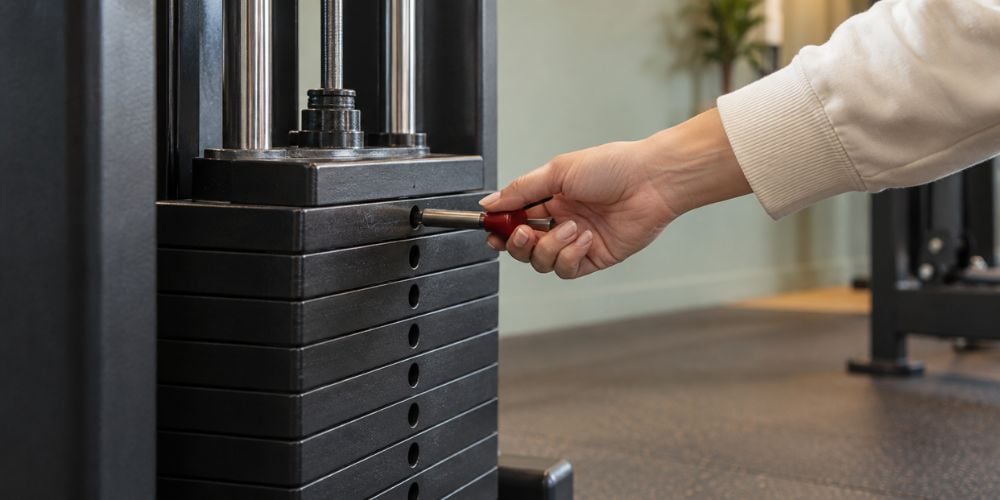
Do not rush to use the heaviest weight.
Choose resistance that makes the final few reps challenging while still allowing you to control the movement.
Once you can complete all your planned reps comfortably, increase the resistance slightly next time. That simple progression gives your body a new challenge without forcing you to rebuild your entire routine.
Conclusion
Building a gym machine workout plan does not need to be complicated. Choose your goal, train 2–4 days per week, cover the major muscle groups, use 5–7 machines, put the bigger exercises first, and start with manageable sets and reps.
Keep the routine simple enough that you can repeat it and track your progress. Small improvements from week to week matter more than constantly changing exercises.
If you are ready to put your own routine together, explore YR Fitness strength and cardio equipment to see the common machine types used for pressing, pulling, leg training, cardio, and full-body workouts.
Related articles:



