
Want to bench press with better control and less unnecessary shoulder stress? A few small changes to your setup can make the whole movement feel more stable.
The short answer is: plant your feet, tighten your upper back, lower the bar toward your chest, and press it back up without losing position. Start with a weight you can control instead of chasing heavier plates.
As an Exercise Physiology & Biomechanics Expert at YR Fitness, I study how body position, joint angles, and resistance affect strength exercises. I often see beginners improve quickly once they fix their setup before worrying about more weight.
Below, I’ll walk you through proper bench press form in seven simple steps. Follow them in order, and you will know what to check from the moment you lie down until the bar returns to the top.
1. Set Up Your Body on the Bench
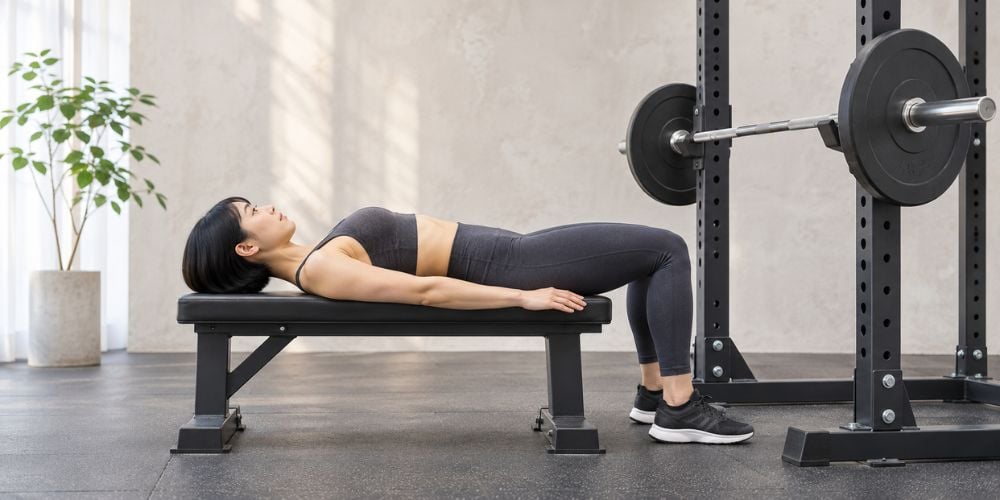
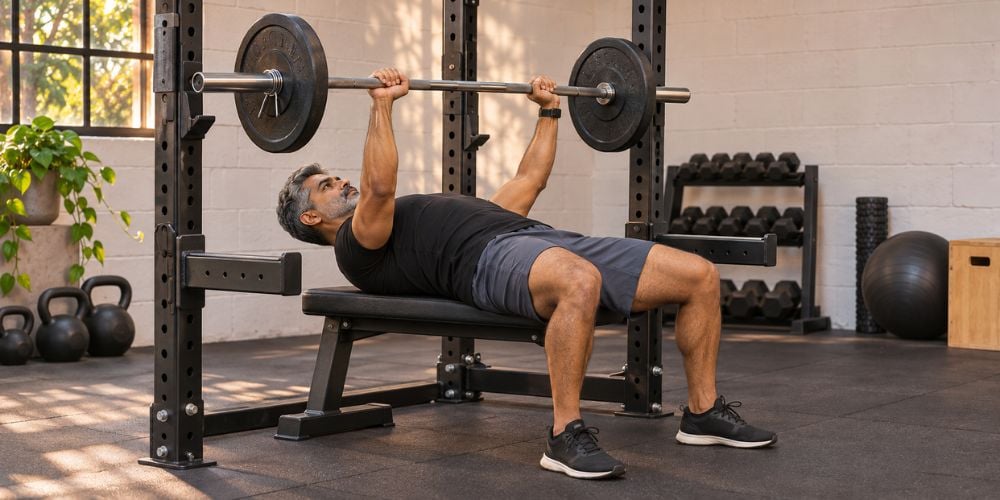
Lie on the bench with your eyes roughly under the bar.
Keep your:
- Head on the bench
- Upper back firmly supported
- Glutes on the bench
- Feet flat and stable on the floor
A small natural arch in your lower back is normal. You do not need to force an extreme arch.
Push your feet firmly into the floor before you unrack. This helps create a stable base for the press.
NASM’s barbell bench press guide also emphasizes stable foot placement, core engagement, and retracted shoulder blades during the exercise.
Quick check: Does your body feel loose on the bench? Fix your setup before touching the bar.
2. Grip the Bar Correctly
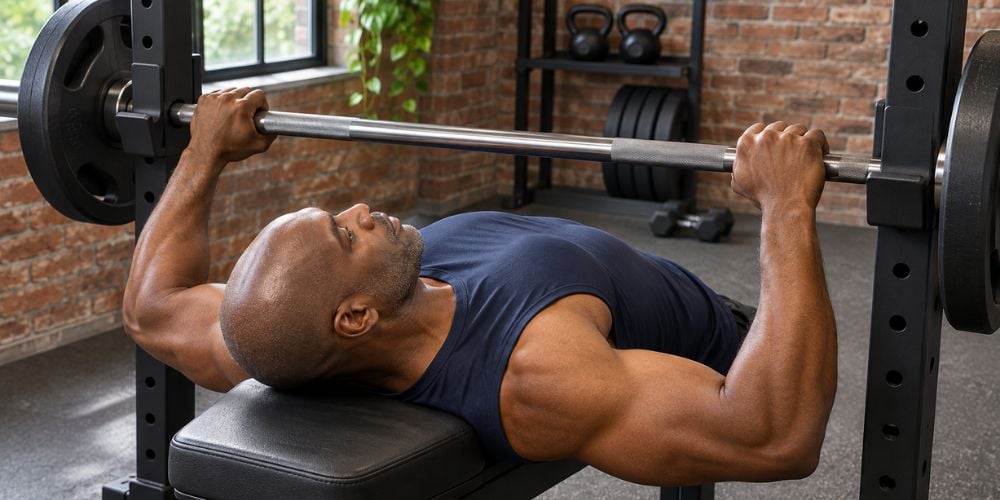
Use a grip slightly wider than shoulder width for a standard bench press.
Wrap your thumbs around the bar. Let the bar sit low in your palm so it stays more directly over your forearm.
Keep your wrists fairly straight. If they bend too far backward, the bar may feel less stable.
I often ask beginners to check their forearms near the bottom of the rep. They should be close to vertical instead of leaning sharply inward or outward.
Bench Press Setup at a Glance
Checkpoint | What to Do | What to Avoid |
Feet | Plant them firmly on the floor | Lifting or moving them |
Glutes | Keep them on the bench | Raising the hips |
Lower back | Keep a small natural arch | Forcing an extreme arch |
Grip | Slightly wider than shoulders | Going unnecessarily wide |
Wrists | Keep them fairly straight | Letting them fold backward |
Forearms | Keep them close to vertical | Leaning sharply in or out |
The ACE exercise library is also useful if you want visual references for chest presses and other strength exercises.
3. Pull Your Shoulder Blades Back
Before unracking, pull your shoulder blades back and slightly down.
Think about gently squeezing them together against the bench. This gives your shoulders a more stable base.
Keep your chest slightly lifted. Avoid letting your shoulders roll forward as the bar moves.
Here is why this matters: if your upper back becomes loose, your pressing position also becomes less stable.
Training on an unstable bench makes good form harder than it needs to be. At YR Fitness, we design commercial strength equipment around stable positioning and repeatable movement, so you can compare equipment that better supports your strength training.
4. Unrack the Bar with Control
Take a breath and brace your core before lifting the bar from the rack.
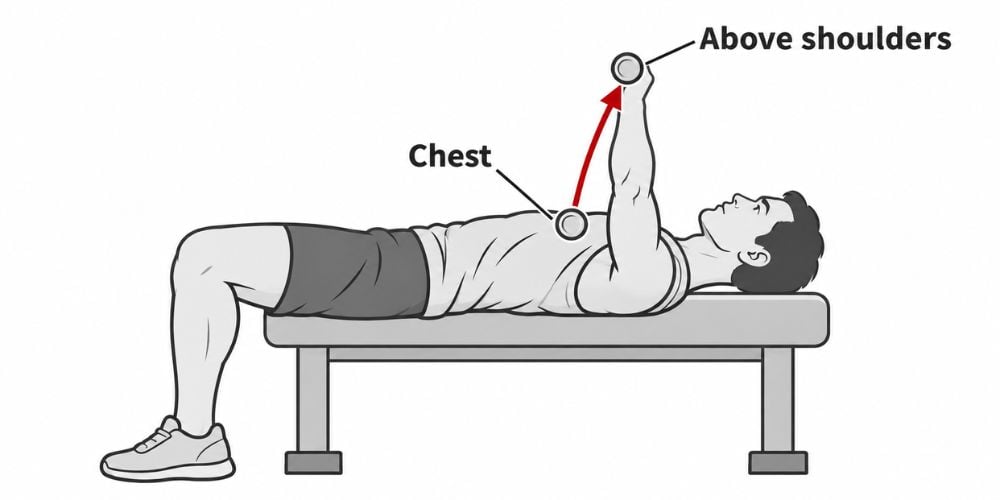
Straighten your arms and move the bar until it is positioned above your chest. Do not rush straight into the first rep.
Before lowering, check that:
- Your feet are still planted
- Your shoulder blades are tight
- Your wrists are stable
- The bar feels balanced
If the weight already feels difficult to control during the unrack, it may be too heavy.
When you start using heavier loads, use a spotter or properly positioned safety arms. Safety becomes more important as the load increases.
5. Lower the Bar Toward Your Chest
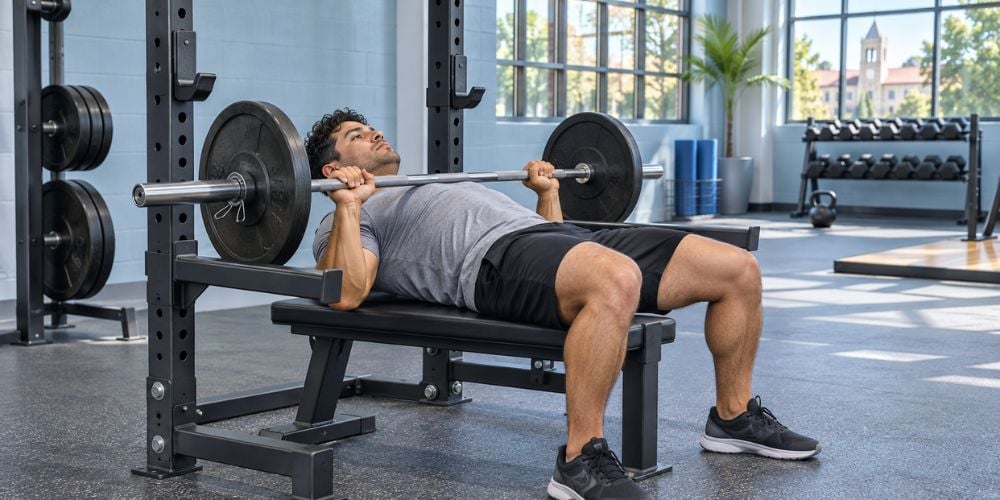
Lower the bar under control toward your lower-to-mid chest.
Do not simply let gravity drop it.
Your elbows should move slightly away from your body, but they should not flare straight out to the sides. Keep your wrists and elbows reasonably aligned as the bar comes down.
Bring the bar down until it lightly touches your chest. Do not bounce it.
Should you lower the bar slowly?
Yes, but you do not need an exaggerated tempo. You simply need enough control to decide exactly where the bar goes.
Mayo Clinic’s weight-training technique guidance also stresses using proper form, selecting manageable resistance, and reducing the weight when technique starts to break down.
6. Press the Bar Back Up
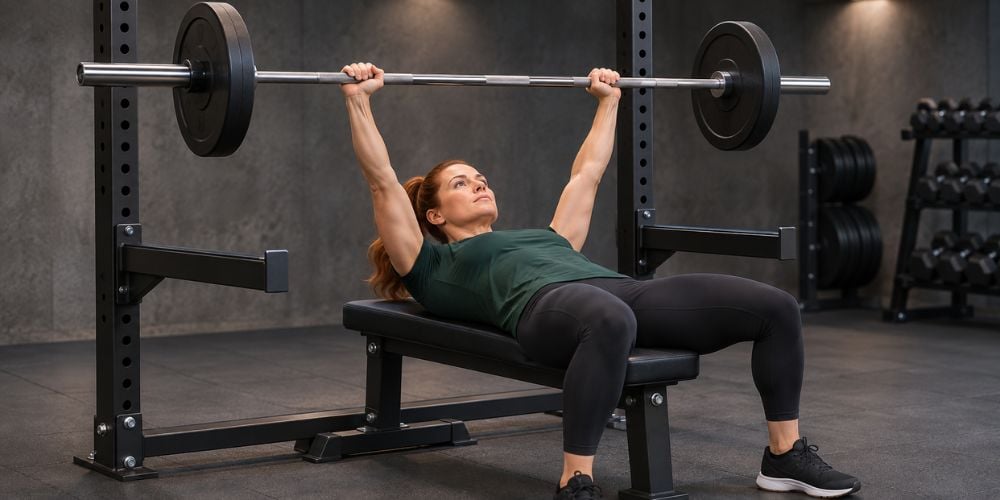
Once the bar reaches your chest, press it upward smoothly.
Drive your feet into the floor while keeping your upper back tight against the bench.
Keep your chest lifted and your glutes on the bench. Press until your arms are extended at the top without aggressively snapping your elbows into lockout.
A good rep should look controlled from start to finish.
What Should Stay Stable During the Rep?
Body Part | On the Way Down | On the Way Up |
Feet | Firm on floor | Keep driving into floor |
Upper back | Tight against bench | Stay tight |
Shoulder blades | Back and down | Do not roll forward |
Glutes | On bench | Keep them down |
Wrists | Fairly straight | Stay over forearms |
Bar | Controlled toward chest | Smooth press upward |
If one of these positions changes badly as you press, the weight may be more than you can currently control with good form.
7. Follow a Natural Bar Path
The bar does not usually travel perfectly straight up and down.
As you lower it, the bar normally moves slightly toward your chest. As you press, it moves slightly back toward the shoulder area.
Think of the movement as a small curve, not a completely vertical line.
Do not force the bar into an unnatural path just because you think it should stay perfectly straight. Your body proportions can change the exact path slightly.
I often see beginners worry so much about copying one exact bar path that they forget the bigger priorities. Keep your wrists, elbows, shoulders, and upper back controlled first.
Conclusion
Proper bench press form comes down to a few basics: stable feet, a secure grip, tight shoulder blades, a controlled descent, and a smooth press. Start with a manageable weight and make your setup consistent before adding more plates.
Your technique should look similar from the first rep to the last. If your position falls apart, reduce the load and rebuild the movement.
Need a more stable setup for bench pressing and other strength exercises? Explore YR Fitness strength equipment to compare training options designed for reliable, repeatable daily use.
Related articles: