









Have you ever used a gym machine that felt loose, noisy, or rough? That may be a sign it needs inspection.
The simple rule is: check before every workout, inspect basic parts daily, moving parts weekly, and the whole machine monthly. High-use equipment may need more frequent checks.
As a Machinery & Structural Engineer at YR Fitness, I work directly with cables, pulleys, frames, belts, and other machine components. I’ve seen how early inspections can catch small wear before it becomes a bigger problem.
Below, I’ll show you what to check at each interval. Follow these six simple steps to keep your workouts safer and your equipment in better condition.
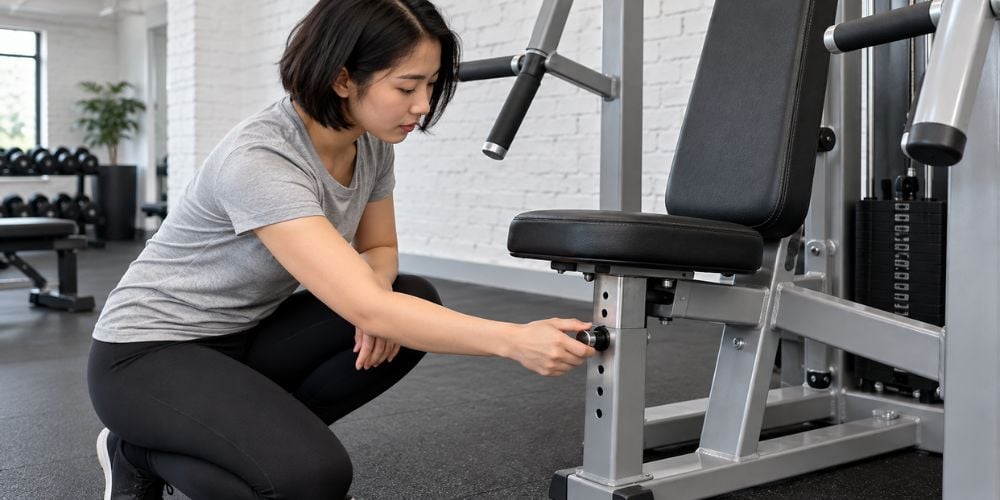
1. Check Equipment Before Every Workout
Before you exercise, spend a few seconds looking at the machine.
Check for:
- Loose handles
- Unstable seats
- Damaged cables
- Missing adjustment pins
- Off-center treadmill belts
- Unusual noises
- Rough or jerky movement
Then perform a light test rep before adding heavier resistance.
Something feels different? Stop and take another look rather than assuming the machine is fine.
I often see people ignore a new noise because the equipment still moves. A quick check is much easier than discovering a bigger problem halfway through your workout.
2. Do a Basic Inspection Daily
Equipment that gets used every day should also get a quick daily check.
You are mainly looking for visible changes:
Area | What to Check |
Handles | Loose or damaged grips |
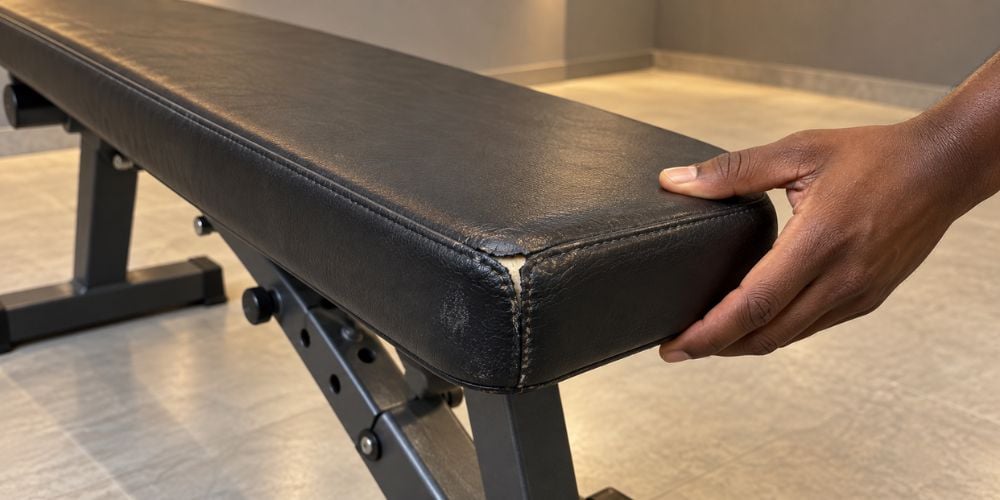
Upholstery | Tears, cracks, or loose pads |
Cables | Fraying or coating damage |
Pins | Missing or bent adjustment pins |
Treadmill belt | Slipping, drifting, or visible wear |
Machine movement | New noises or rough motion |
You do not need to take the machine apart. Just look for anything that has changed since the last time it was used.
Here is why this matters: manufacturer maintenance guidance can be quite specific. For example, Cybex preventive-maintenance guidance recommends inspecting strength-machine cables and belts daily.
3. Inspect Moving Parts Weekly
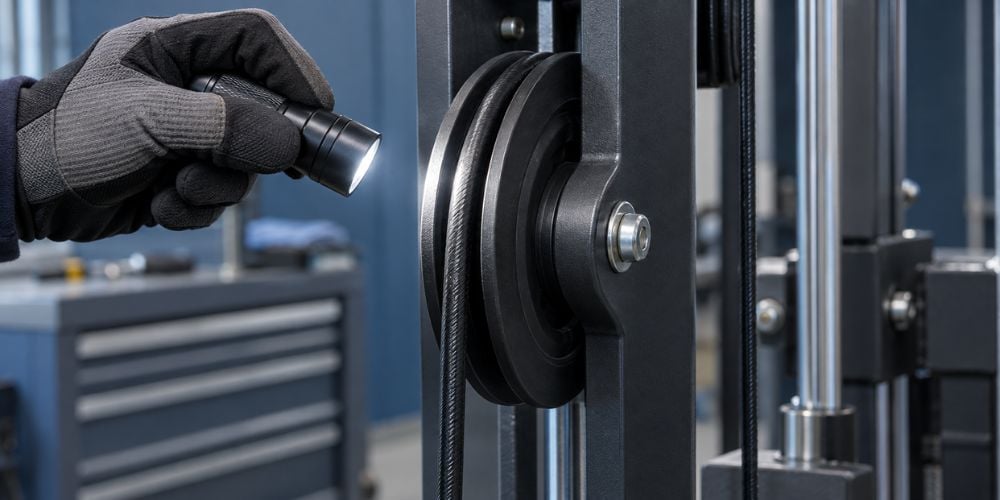
Once a week, take a closer look at the parts that move repeatedly.
Focus on:
- Cables
- Pulleys
- Weight stacks
- Bearings
- Pivot points
- Treadmill belts
- Rollers
- Pedals
- Moving handles
Why these parts?
They go through repeated movement every time someone exercises. Wear can build gradually, so a weekly check makes it easier to notice changes before they become obvious during training.
I pay particular attention to cables and pulleys. Small coating damage, rough cable movement, or unusual pulley noise can be easy to miss during a normal workout.
4. Perform a Detailed Inspection Monthly
Once a month, go beyond the quick visual check.
Look at:
- Frame condition
- Welds
- Bolts and fasteners
- Cable connections
- Pulley alignment
- Belt tension
- Electrical cords
- Console operation
- Adjustment mechanisms
- Unusual vibration
A professional preventive-maintenance checklist from Life Fitness includes checks for treadmill frames, belts, rollers, wiring, displays, and other operating components. It is a useful example of why a deeper inspection should cover more than the parts you normally touch.
Here is the full schedule at a glance:
Inspection Level | How Often | Main Purpose |
Quick user check | Before every workout | Spot immediate problems |
Basic check | Daily | Find visible wear |
Moving-part check | Weekly | Monitor mechanical components |
Detailed inspection | Monthly | Find deeper structural or mechanical issues |
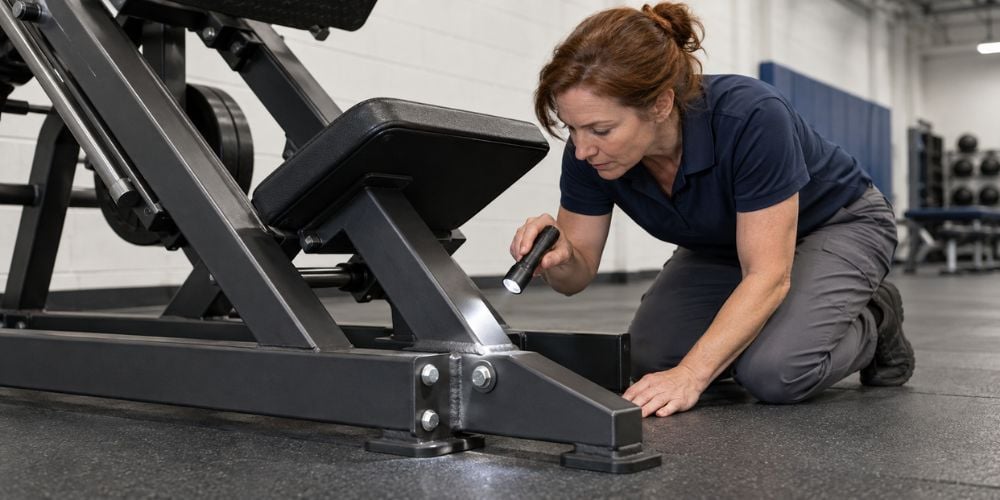
If you are comparing equipment for frequent daily training, we design our commercial strength and cardio machines at YR Fitness with heavy use and long-term operation in mind. You can explore our commercial gym equipment and compare different machine designs, movement systems, and equipment types.
5. Give High-Use Equipment Extra Attention
Not every machine wears at the same rate.
Equipment that gets heavy use may need more frequent inspections, especially:
- Treadmills
- Cable machines
- Leg presses
- Chest presses
- Exercise bikes
- Popular benches
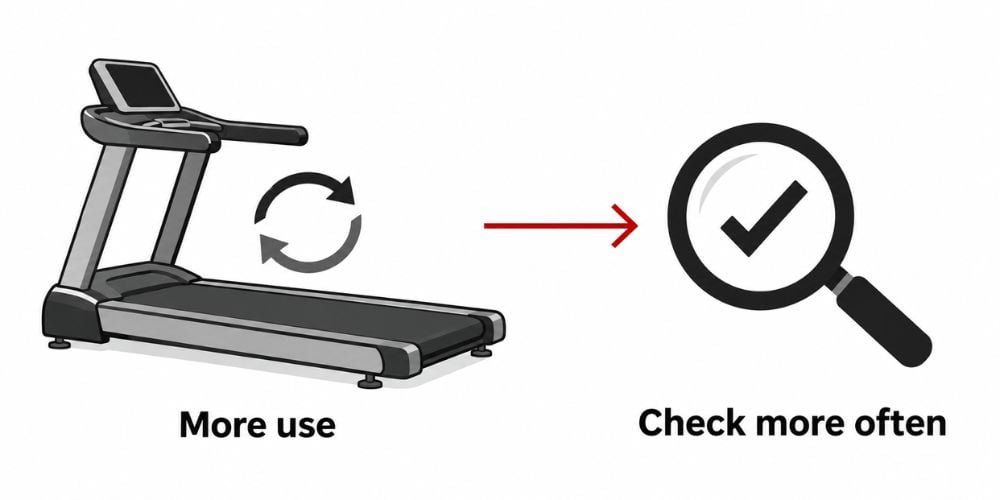
More use means more cable movement, bearing rotation, belt wear, adjustment cycles, upholstery wear, and stress on fasteners.
Should you wait until the next weekly check if something already feels wrong? No.
Treat the schedule above as a practical starting point. If a machine gets constant use or develops a new noise, vibration, loose part, or movement problem, check it sooner.
6. Follow the Manufacturer’s Maintenance Schedule
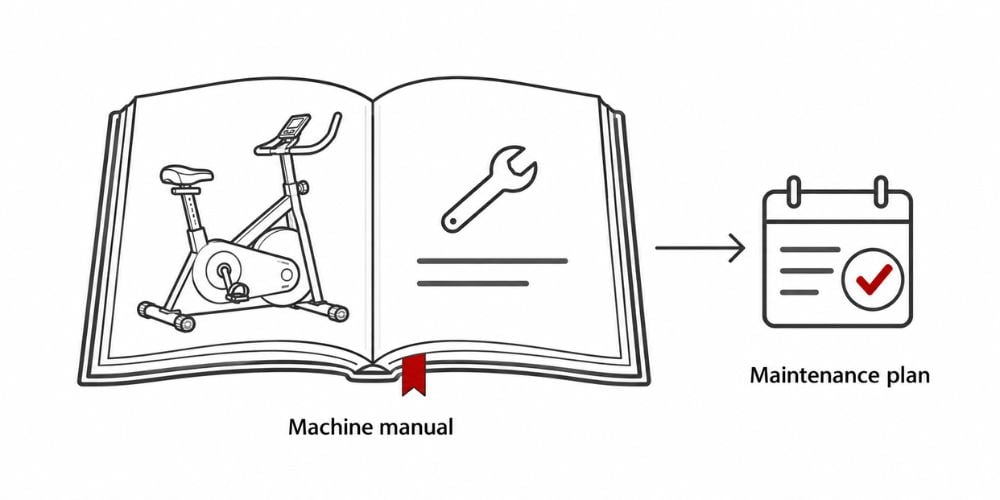
General inspection intervals are useful, but your machine’s manual should come first.
Different models may have different requirements for:
- Lubrication
- Cable inspection
- Belt adjustment
- Bolt tightening
- Cleaning
- Part replacement
- Professional servicing
Do not assume every treadmill, exercise bike, or cable machine requires exactly the same maintenance.
And what if an inspection turns into an actual repair?
Do not start reaching into moving or energized components without the right knowledge. OSHA’s lockout/tagout guidance highlights the hazards created by unexpected machine startup or stored energy during servicing and maintenance.
For normal fitness lovers, the practical rule is simple: spot the problem, stop using the machine when necessary, and leave deeper electrical or mechanical repairs to qualified personnel.
Conclusion
Keep it simple: check equipment before every workout, inspect obvious wear daily, check moving parts weekly, and perform a deeper inspection monthly. Increase the frequency when equipment gets unusually heavy use or starts behaving differently.
Good equipment is made to handle demanding training, but regular checks still matter.
If you want to compare YR Fitness machines built for frequent commercial use, explore our strength and cardio equipment here and find an option that fits your training environment.
Related articles:



