









Have you ever wondered if you should wipe down gym equipment after using it? Shared machines can collect sweat and dirt quickly.
The simple answer is: wipe high-touch surfaces after use, clean equipment daily, deep clean weekly, and do a detailed clean monthly. Clean spills or visible contamination immediately.
As the founder of YR Fitness, I have spent decades working with commercial gym equipment. In my experience, regular cleaning helps keep machines safer, cleaner, and easier to maintain.
Below, I will show you how often each part of gym equipment should be cleaned. Keep scrolling for a simple schedule you can follow.
1. Clean High-Touch Surfaces After Use or Throughout the Day
How often: After each use when possible.
You do not need to scrub the whole machine after every set. Focus on the places your hands and body actually touched.
That usually means:
- Handles and grips
- Seats and back pads
- Benches
- Touchscreens
- Control buttons
- Treadmill handrails
- Mats
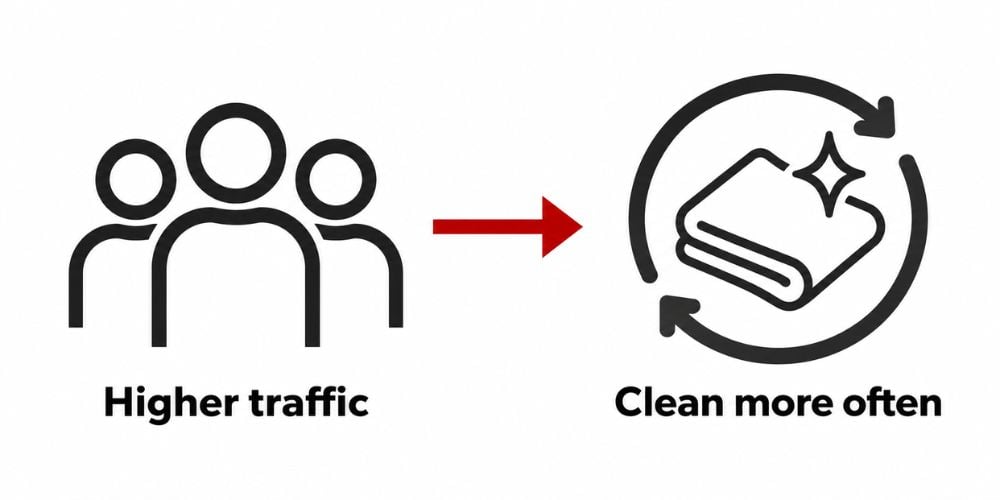
The CDC’s guidance for community facilities says high-touch surfaces should be cleaned regularly, with more frequent cleaning considered in high-traffic spaces.
There is even more specific advice for athletic facilities. The CDC recommends cleaning shared athletic equipment after each use and allowing it to dry before it is used again.
What should you do as a gym user?
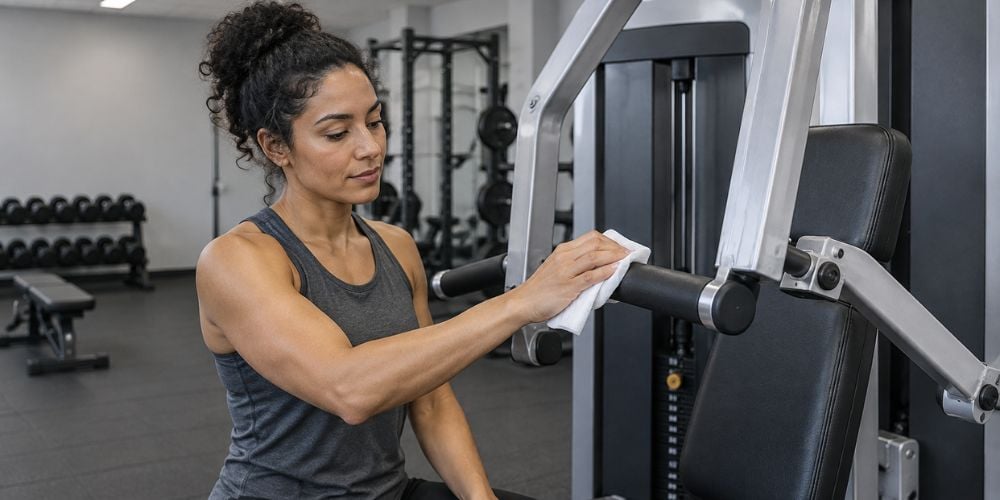
If wipes or cleaner are provided, give the areas you touched a quick wipe before you walk away. It takes very little time and leaves the machine ready for the next person.
2. Clean All Gym Equipment Daily
How often: At least once a day.
After-use wipes cover the main touch points. A general daily cleaning catches the sweat, dust, fingerprints, and dirt that build up across the rest of the equipment.
Frequently used equipment includes:
Equipment | Areas That Need Regular Attention |
Strength machines | Handles, pads, frames, adjustment points |
Treadmills | Handrails, console, buttons, exterior surfaces |
Other cardio machines | Handles, screens, pedals, seats |
Benches | Upholstery and adjustment handles |
Dumbbells and kettlebells | Grips and exterior surfaces |
Barbells | Shaft and frequently handled areas |
Weight plates | Hand grips and outer surfaces |
Mats and accessories | Surfaces that contact hands or skin |
Daily cleaning is not just a theoretical recommendation. Precor’s maintenance guidance, for example, calls for cleaning upholstery and equipment frames daily as part of routine equipment care.
One useful reminder: cleaning and disinfecting are not exactly the same thing. The CDC explains that routine cleaning with soap or detergent removes dirt and most harmful germs, while disinfecting is used when additional germ-killing is needed.
3. Deep Clean Equipment Weekly
How often: About once a week.
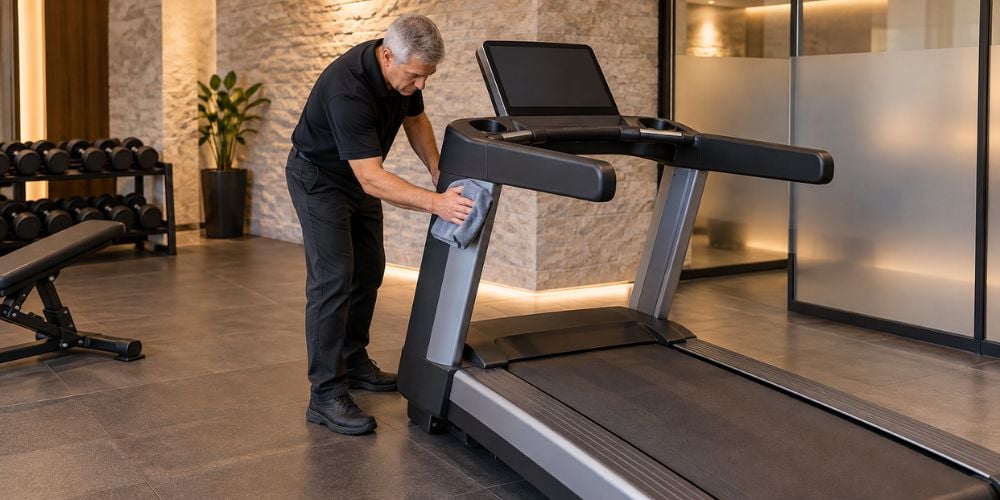
Daily wiping handles what you can easily see. Weekly cleaning should reach the areas that are normally missed.
These may include:
- Machine frames
- Weight stacks
- Foot platforms
- Machine bases
- Areas behind seats and pads
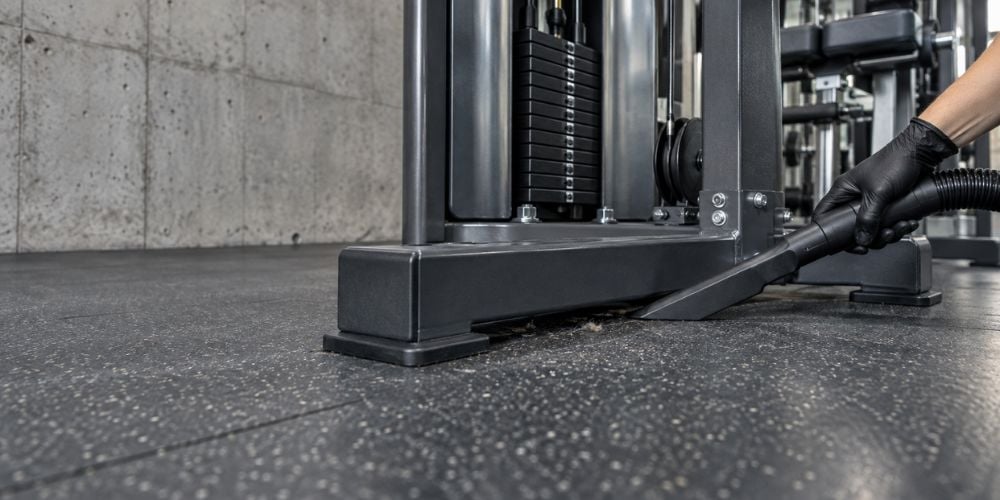
- Spaces underneath machines
- Less accessible handles
- Adjustment points
Why bother with these areas if nobody touches them much?
Because sweat, dust, hair, and dirt gradually collect around equipment. Weekly cleaning keeps that buildup from turning into a much bigger job later.
As a normal gym user, you probably will not be doing this yourself. Still, regularly seeing staff clean around frames, platforms, and equipment bases is a good sign that the gym is paying attention to its machines.
At YR Fitness, we design commercial strength equipment for repeated use in busy training environments. If you are comparing machines for a gym where cleaning and maintenance are part of the daily routine, you can explore our strength equipment and see how the different commercial series are built.
4. Perform a More Detailed Cleaning Monthly
How often: About once a month.
Monthly cleaning goes a little further than the weekly routine. It is a chance to reach areas that are easy to ignore during normal cleaning.
Pay attention to:
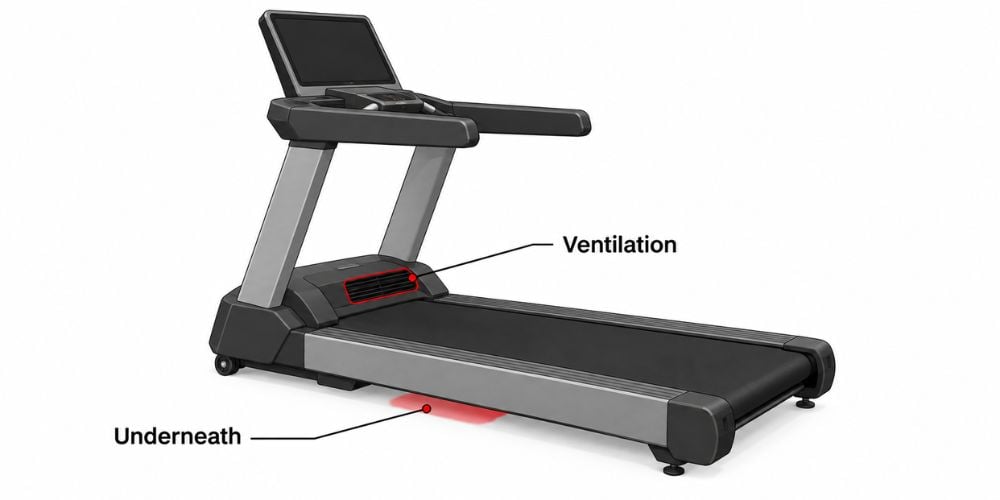
- Areas underneath machines
- Machine bases
- Ventilation areas on cardio equipment
- Dust around covers and guards
- Corners around weight stacks
- Areas close to pulleys and cables
Here is why this matters: cleaning gives staff a reason to look closely at the machine.
In my decades of design experience, small problems are often easier to notice when someone is already inspecting these harder-to-reach areas. Loose parts, damaged upholstery, unusual dust buildup, or worn components can stand out during a detailed clean.
What Is the Difference Between Weekly and Monthly Cleaning?
Weekly Cleaning | Monthly Cleaning |
Clean around frames and bases | Reach underneath and behind equipment |
Wipe weight stacks and platforms | Inspect corners and covered areas |
Clean accessible adjustment points | Check areas near pulleys and cables |
Remove normal dust and sweat buildup | Clean cardio ventilation areas |
Focus on routine deep cleaning | Combine detailed cleaning with a visual check |
There is no single universal schedule that fits every gym. A busy facility may need some of these jobs more often, while a smaller gym may find the weekly and monthly schedule enough.
5. Clean Immediately After Sweat, Spills, or Contamination
How often: Immediately.
Some situations should not wait until the next scheduled clean.
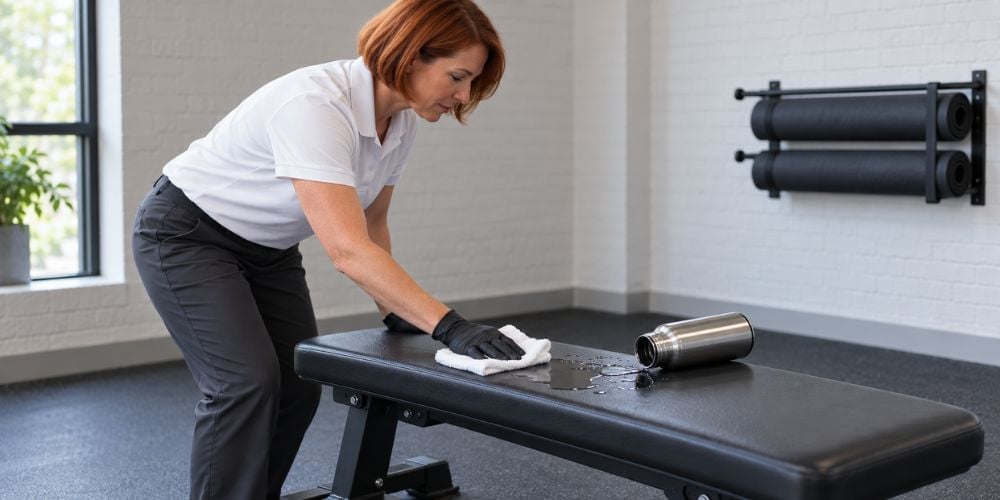
Clean or report the equipment straight away after:
- Heavy sweat
- A spilled drink
- Mud or visible dirt
- Blood or other bodily fluids
- Vomit or other contamination
For normal sweat, use the cleaning product provided by the gym and follow the label directions.
If someone has obviously been ill, the CDC recommends cleaning the surface before disinfecting it. For disinfectants, the EPA also stresses following the product label and its required contact time, meaning the surface may need to stay wet for a specific period for the product to work properly.
What about blood, vomit, or other bodily fluids?
Do not try to handle serious contamination yourself if you are simply using the gym. Tell a staff member so the area can be cleaned with the correct product and procedure.
Always follow the specific manufacturer’s instructions for the machine you are cleaning.
6. Use a Simple Gym Equipment Cleaning Schedule
Still wondering how often everything needs attention? Use this as the quick version.
Frequency | What Should Be Cleaned |
After use | Handles, pads, seats, benches, mats, and touch points |
Throughout the day | Frequently touched surfaces |
Daily | Frequently used strength and cardio equipment |
Weekly | Frames, bases, weight stacks, platforms, and hidden areas |
Monthly | Hard-to-reach areas and detailed equipment cleaning |
Immediately | Heavy sweat, spills, bodily fluids, and visible contamination |
The easiest way to remember it is: touch points after use, general cleaning daily, deeper cleaning weekly, and detailed cleaning monthly.
Higher traffic means more cleaning. If equipment becomes visibly dirty before the scheduled clean, do not wait for the calendar.
Conclusion
So, how often should gym equipment be cleaned?
High-touch surfaces should be cleaned after use or regularly throughout the day, commonly used equipment daily, deeper areas weekly, and hard-to-reach areas monthly.
Anything visibly dirty should be cleaned immediately. As a gym user, your part is simple: wipe the equipment you use and leave it ready for the next person.
If you want commercial equipment made for demanding daily training environments, at YR Fitness we can help you explore strength, cardio, and fitness equipment designed for repeated use and practical long-term operation.
Related articles:



