








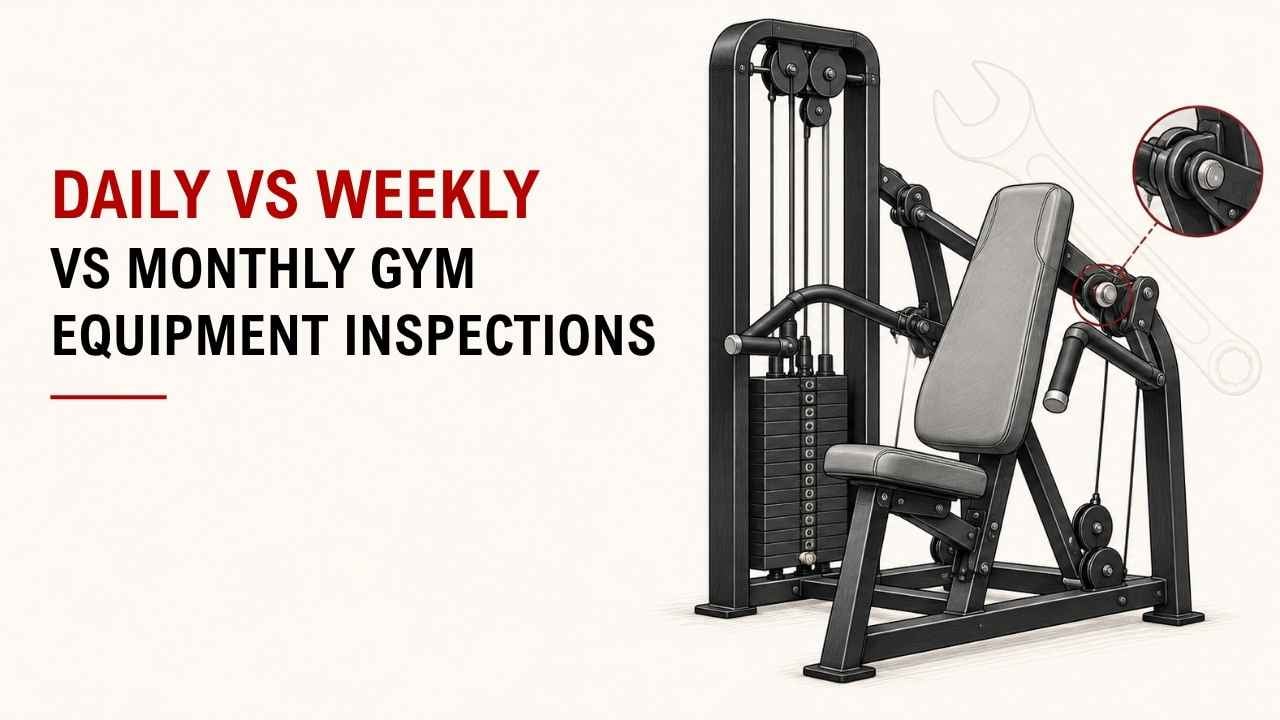

How often should gym equipment be inspected? The answer depends on what you are checking.
Check obvious problems daily, developing wear weekly, and deeper mechanical parts monthly. This simple schedule helps catch problems early.
As a Machinery & Structural Engineer at YR Fitness, I work closely with frames, cables, pulleys, bearings, and other machine components. My experience helps me spot the small warning signs that often appear before equipment develops a bigger problem.
Below, I’ll explain what to check daily, weekly, and monthly. You’ll also learn when a machine should be taken out of use.
1. Daily Gym Equipment Inspections
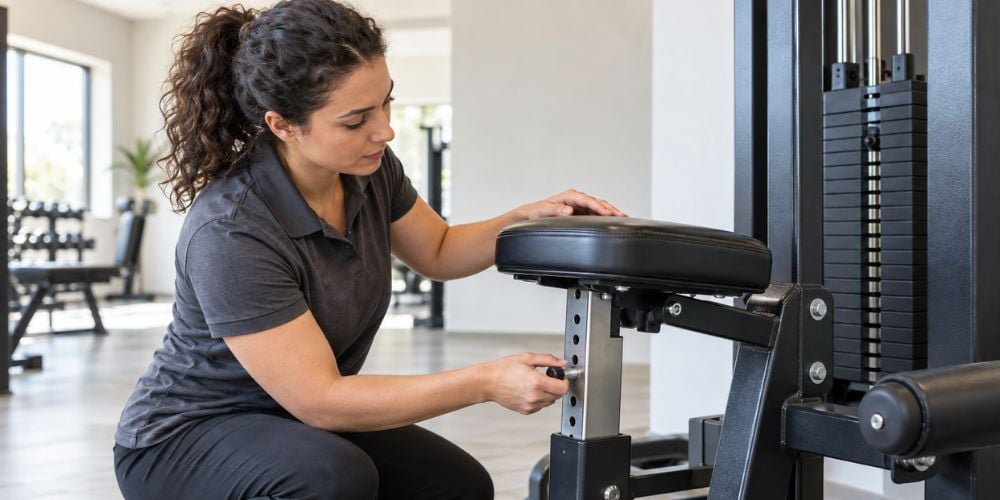
Daily checks should be quick. You are mainly asking one question: “Does anything look or feel wrong before I start?”
Before using a machine, check for:
- Loose handles
- Torn or badly damaged pads
- Frayed cables
- Missing adjustment pins
- Loose seats or backrests
- Unusual noises
- Slipping treadmill belts
- Wet or slippery surfaces
Most of these checks take only a few seconds. You usually do not need tools—just look at the machine, touch the main adjustment points, and make sure everything feels secure.
What if something feels wrong?
Do not ignore it just because the machine still moves.
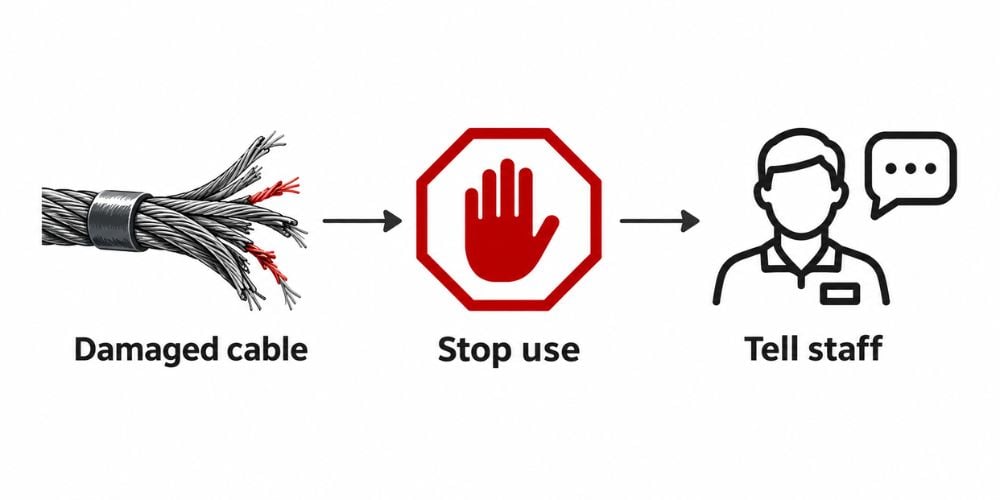
If a cable looks damaged, a seat moves unexpectedly, or the machine suddenly makes a loud noise, stop using it and tell gym staff. I would rather skip one exercise than keep training on equipment that may fail during a set.
2. Weekly Gym Equipment Inspections
Weekly inspections go a little deeper. The goal is to find wear that may not stand out during a normal workout.
Typical weekly checks include:
- Loose bolts and fasteners
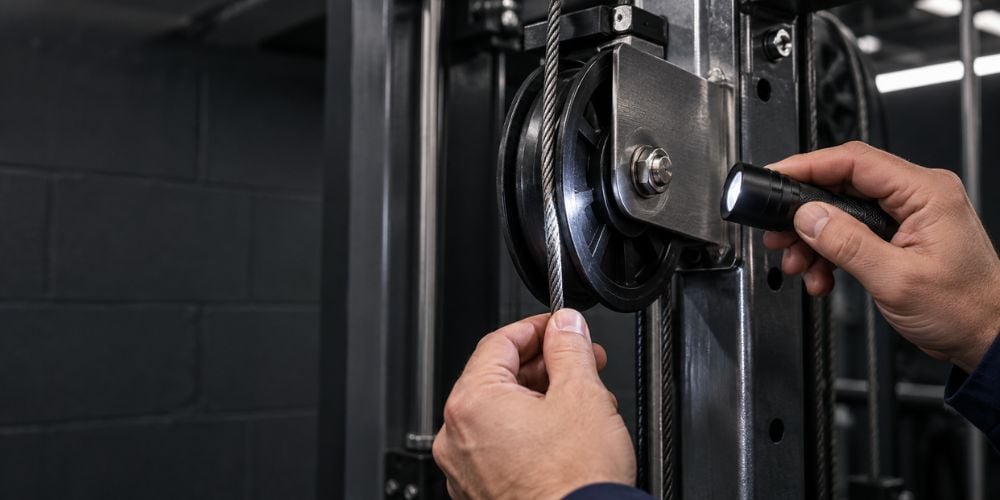
- Cable wear
- Pulley movement
- Weight-stack movement
- Seat adjustment mechanisms
- Pedals and footplates
- Treadmill belt alignment
- Squeaking or grinding sounds
For example, a cable can still work while small broken strands are beginning to appear. A pulley can also start moving roughly before it completely fails.
Precor’s current commercial fitness facility checklist also recommends weekly maintenance checks and paying attention to unusual noises or visible wear on high-traffic equipment.
Daily vs Weekly: What Changes?
Check | Daily | Weekly |
Visible damage | Yes | Yes |
Loose handles | Yes | Yes |
Cable condition | Quick look | Closer inspection |
Bolts and fasteners | Obvious looseness | More detailed check |
Moving parts | Basic movement | Smoothness and wear |
Treadmill belt | Slipping or obvious issue | Alignment and condition |
If you train in a commercial gym, staff will normally handle detailed maintenance. Still, knowing these signs helps you recognize when a machine may not be ready for another workout.
At YR Fitness, we build commercial strength and cardio equipment for repeated daily use, with durable frames, moving parts, and materials designed for demanding gym environments. If you want to compare equipment made for frequent training and easier long-term operation, explore our commercial gym equipment range.
3. Monthly Gym Equipment Inspections
Monthly inspections look at the machine as a complete system. This is where the checks move beyond obvious surface problems.
Typical areas include:
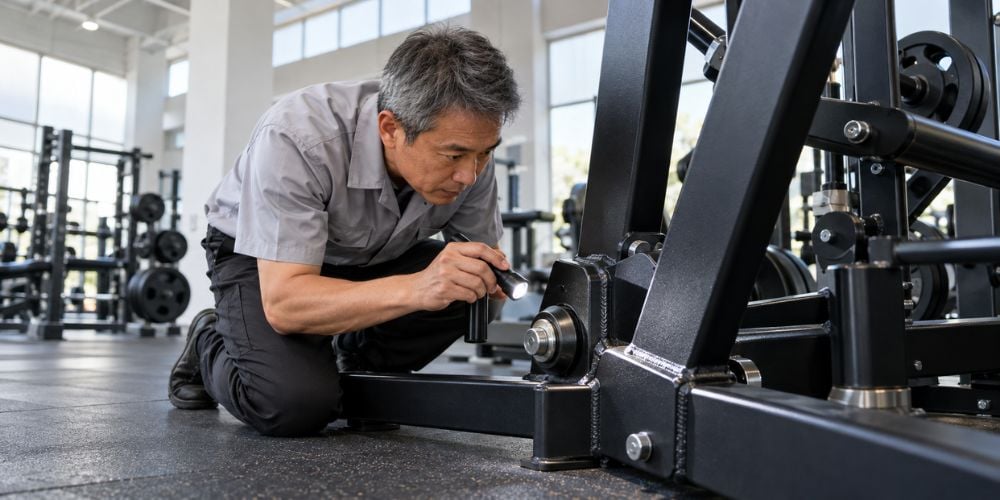
- Frames
- Welds
- Bearings
- Pivot points
- Cables
- Belts
- Pulleys
The goal is simple: find deeper wear before it starts affecting performance or safety.
What makes monthly checks different?
A daily check asks:
“Can I use this machine safely right now?”
A monthly inspection asks:
“Is something slowly wearing out?”
For example, a machine may still feel normal while a bearing is gradually wearing down. A cable connection or fastener may also need attention before you notice anything during your workout.
This is why organized preventive maintenance matters. ACSM’s Health/Fitness Facility Standards and Guidelines include equipment guidance, preventive maintenance schedules, and inspection checklists for fitness facilities.
Quick Inspection Schedule
Inspection | Main Purpose | Typical Time Needed | Main Focus |
Daily | Spot obvious problems | A few seconds per machine | Damage, looseness, noise |
Weekly | Find developing wear | Several minutes | Cables, bolts, belts, movement |
Monthly | Check deeper condition | More detailed inspection | Frames, bearings, wiring, lubrication |
One Important Point: these time frames are a practical framework, not a replacement for the machine’s manual. Maintenance frequency can vary by equipment type, usage level, and manufacturer instructions.
4. Which Equipment Needs More Frequent Attention?
Not every machine wears at the same rate. Equipment with more moving parts or heavier use usually deserves closer attention.
Treadmills
Treadmills combine belts, rollers, motors, decks, and electronic components.
Watch for:
- Belt slipping
- Belt moving to one side
- Unusual vibration
- Burning smells
- Grinding or knocking sounds
A treadmill gets thousands of repeated belt rotations during normal use. That is why a small tracking or noise problem is worth noticing early.
Cable Machines
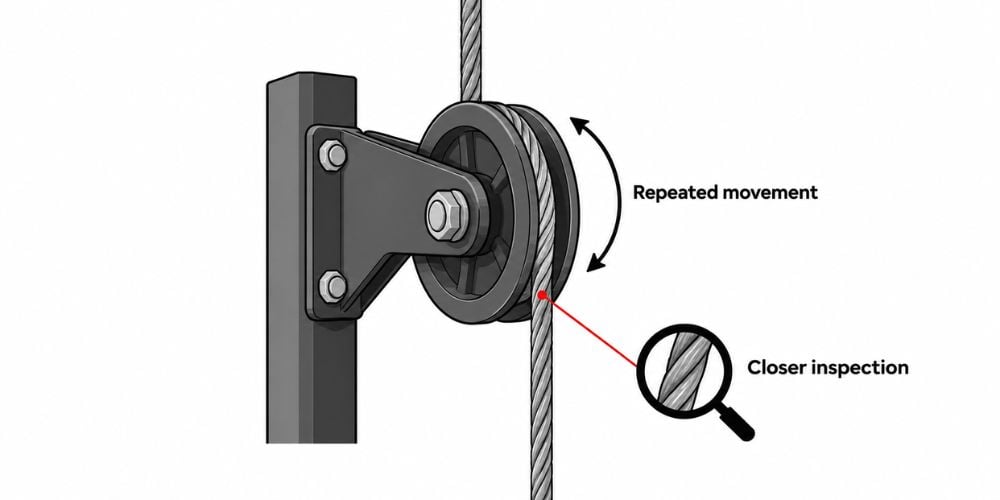
Cable machines need regular checks because the cables and pulleys move constantly under load.
Look for:
- Frayed cables
- Damaged cable coating
- Rough pulley movement
- Weight stacks that stick
- Loose attachments
I always pay extra attention to cables. A small damaged section may still feel fine during one workout but can worsen with repeated loading.
Adjustable Benches
Benches look simple, but their locking systems still matter.
Check that:
- The backrest locks properly
- The seat does not move unexpectedly
- Pins are fully inserted
- The frame feels stable
Bikes and Ellipticals
These machines have pedals, cranks, bearings, and resistance systems moving again and again.
Pay attention to new clicking, wobbling, or rough resistance. If the movement suddenly feels different, there is usually a reason.
5. When Should You Stop Using a Machine?
You do not need to be an engineer to recognize a serious warning sign. Some problems are enough reason to stop immediately.
Stop using the equipment if you notice:
- A badly frayed cable
- A cracked frame
- A damaged weld
- A loose structural component
- A seat that will not lock
- A handle that moves unexpectedly
- Loud grinding or knocking
- A strong electrical or burning smell
- A treadmill belt that slips badly
Should you finish the set first? No.
Resistance, speed, or your body weight can make a small equipment problem more serious. ACE also advises that damaged or broken equipment should be repaired or removed from use rather than left available for training.
If you are unsure, tell a staff member and choose another exercise. That is usually the simplest and safest choice.
Conclusion
Gym equipment inspections do not need to be complicated. Check obvious problems daily, look for wear weekly, and perform deeper mechanical inspections monthly.
From my work with commercial equipment at YR Fitness, I have seen how consistent checks can catch wear long before a major failure happens. If a machine feels loose, sounds different, or moves strangely, stop using it instead of waiting for the next inspection.
Ready to compare equipment built for repeated daily training? Explore the YR Fitness commercial strength and cardio range and choose machines designed for reliable long-term use.
Related articles:



