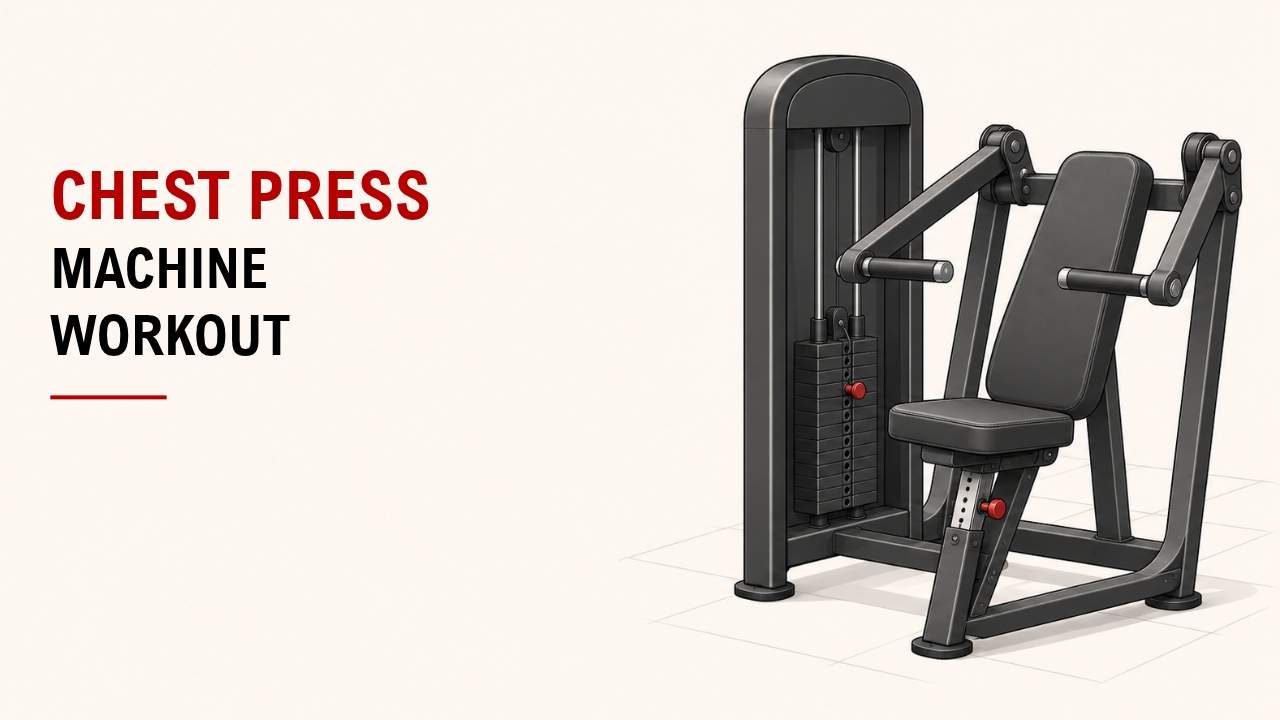

Want to build a stronger chest without using free weights?
A chest press machine workout helps you train your chest, shoulders, and triceps with controlled movements.
The machine supports your back and makes pressing movements easier to manage. It’s a good choice whether you’re new to the gym or already train regularly.
As an Exercise Physiology & Biomechanics Expert at YR Fitness, I recommend chest press machines for building upper-body strength with proper support. Below, you’ll find five simple exercises and practical tips to improve your next chest workout.
1. Standard Seated Chest Press
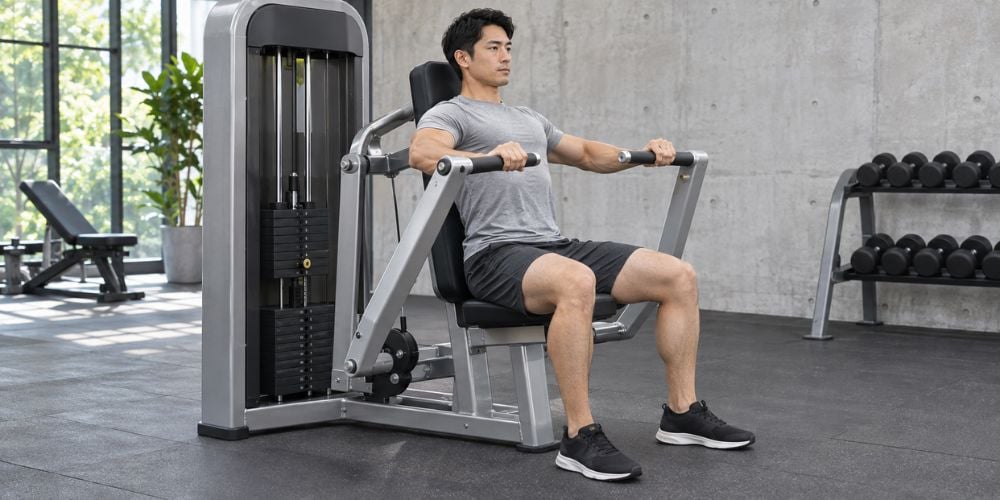
The standard seated chest press is a good starting point for building chest strength. It mainly works your pectoralis major (chest muscles), while your front shoulders and triceps help with the press.
How to do it:
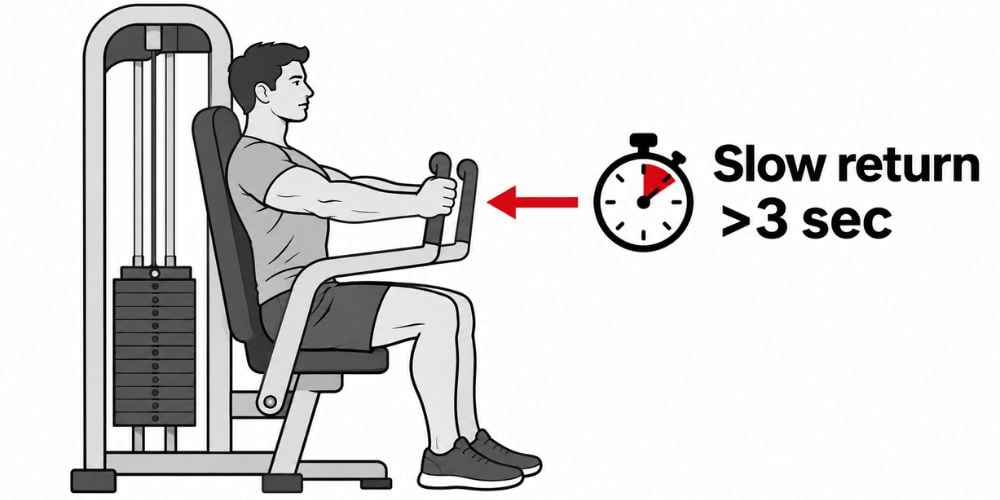
- Sit with your back against the pad.
- Adjust the seat until the handles are at mid-chest level.
- Keep both feet flat on the floor.
- Push the handles forward until your arms are nearly straight.
- Slowly bring the handles back to the starting position.
Sets and reps: 3 sets of 10–12 reps.
Tip: Keep your shoulders down and your back against the pad. Start with a lighter weight until you feel comfortable controlling each rep.
Not sure whether your seat is at the right height? Follow this chest press machine setup guide to check your handle position, posture, and pressing technique.
2. Incline Machine Chest Press
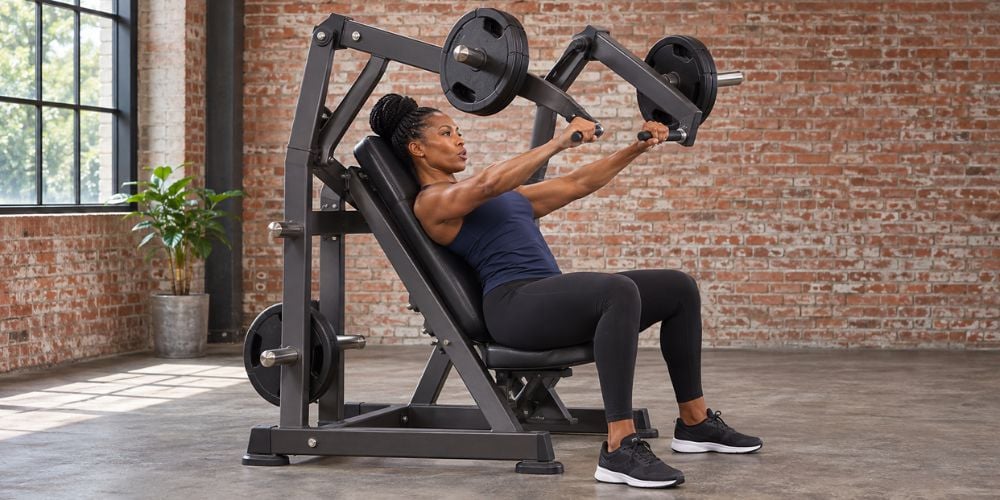
Want to focus more on your upper chest? The incline machine chest press changes the pressing angle to place more emphasis on your upper chest muscles.
Your front shoulders and triceps also help during movement.
How to do it:
- Sit on the incline chest press machine.
- Adjust the seat until the handles are near your upper chest.
- Keep your back against the pad.
- Push the handles upward and forward.
- Lower the handles slowly.
Sets and reps: 3 sets of 10–12 reps.
Tip: Avoid lifting your lower back or pushing your shoulders forward. Keep your body steady throughout the exercise.
Different machine angles can change how a chest press feels. For example, the 7306 Incline Chest Press uses independent, converging arms to support upper-chest training.
3. Single-Arm Machine Chest Press
The single-arm chest press lets you train one side of your chest at a time. It’s useful for noticing differences in strength and control between your left and right arms.
How to do it:
- Choose a machine with independently moving handles.
- Sit with your back supported and feet firmly planted.
- Hold one handle and keep your torso steady.
- Push the handle forward using one arm.
- Slowly return to the starting position.
- Finish your reps before switching arms.
Sets and reps: 2 sets of 10 reps per arm.
Tip: Don’t twist your body to move the weight. If you can’t stay steady, reduce the resistance.
I often see people use too much weight during single-arm exercises. A lighter weight makes it easier to focus on the working side without rotating your torso.
At YR Fitness, we design our chest press machines with adjustable seating, supported pressing positions, and movement paths suited to daily training. Our Converging Independent Chest Press is one option worth exploring if you want to see how independently moving arms work during chest exercises.
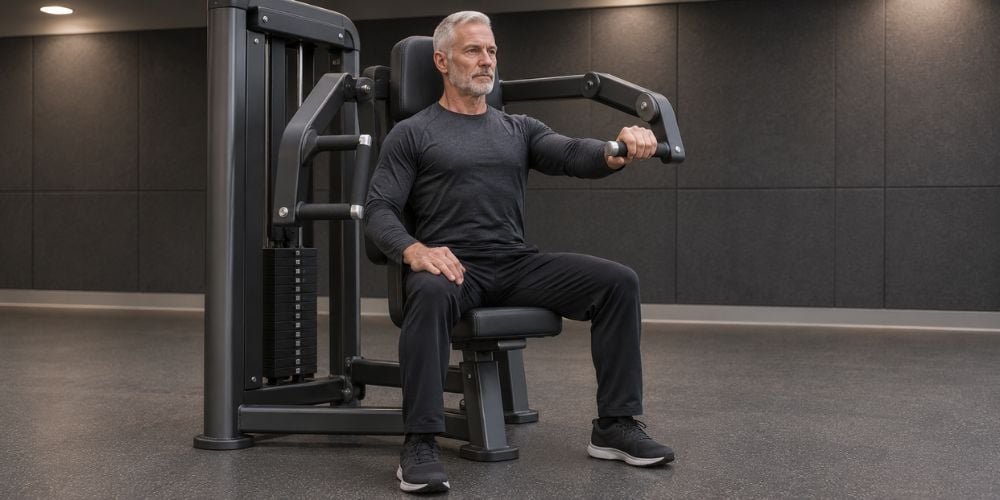
4. Neutral-Grip Machine Chest Press
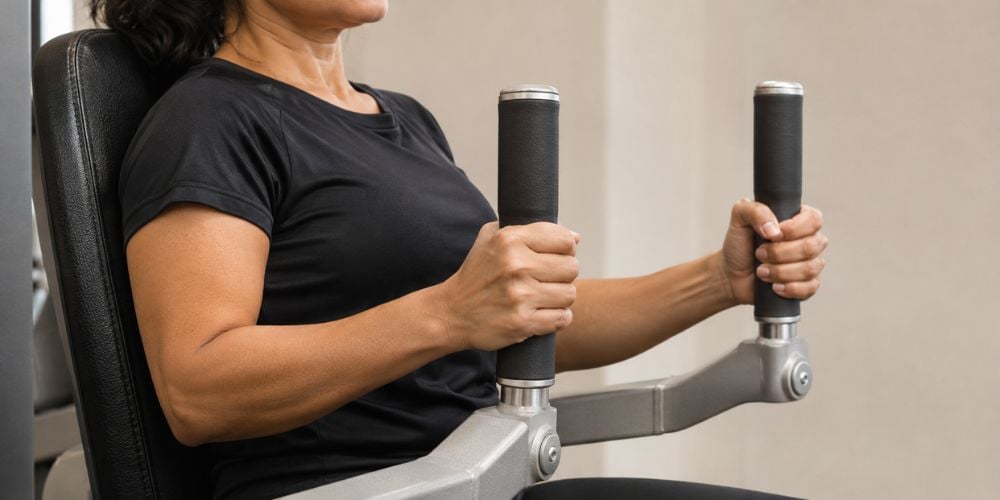
The neutral-grip chest press uses handles that let your palms face each other. This grip changes your wrist and shoulder position while still training your chest, front shoulders, and triceps.
How to do it:
- Sit on a machine with neutral-grip handles.
- Hold the handles with your palms facing inward.
- Keep your elbows comfortably beside your body.
- Press the handles forward.
- Slowly return to the starting position.
Sets and reps: 2 sets of 10–12 reps.
Tip: Keep your wrists straight and avoid pushing your elbows too far outward. Use a grip that feels comfortable for your shoulders.
If your gym’s machine doesn’t have neutral-grip handles, you can continue using its standard handles.
5. Slow-Tempo Chest Press
The slow-tempo chest press makes your muscles work longer during each repetition. Instead of focusing on heavier weights, you’ll focus on controlling the movement.
How to do it:
- Sit on the chest press machine and choose a manageable weight.
- Push the handles forward smoothly.
- Pause briefly near the end of the press.
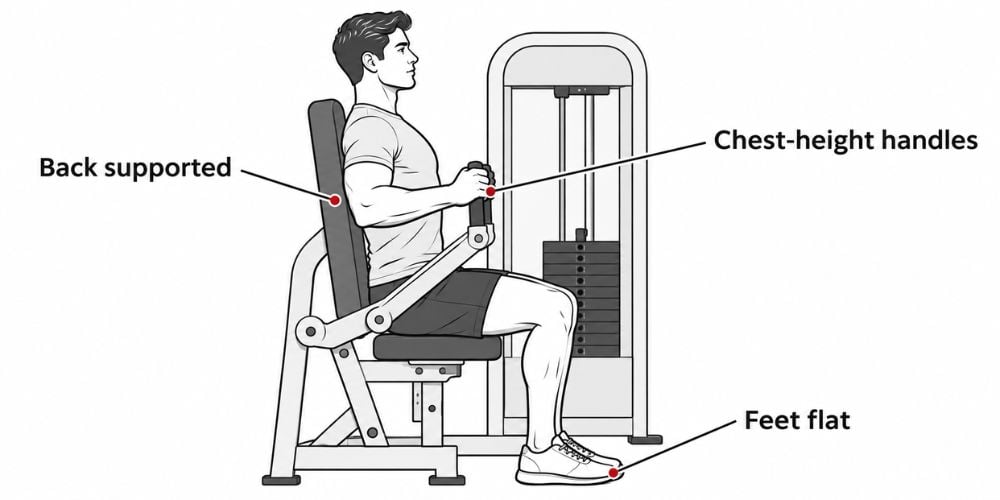
- Lower the handles for over 3 seconds.
- Repeat without bouncing or rushing.
Sets and reps: 1 set of 8–10 reps.
Tip: Use a lighter weight if needed. The important part is controlling the lowering phase instead of letting the weight pull your arms back.
This exercise also works well as an optional finisher after your regular chest press sets.
Which Chest Press Exercise Should You Choose?
Each variation works your chest, but the movement changes slightly.
Exercise | Main Focus | Best For |
Standard Seated Chest Press | Overall chest | Beginners and general strength |
Incline Machine Chest Press | Upper chest | Upper-chest emphasis |
Single-Arm Machine Chest Press | Each side separately | Improving individual arm control |
Neutral-Grip Machine Chest Press | Chest with a different grip | Comfortable wrist and shoulder positioning |
Slow-Tempo Chest Press | Controlled muscle tension | Improving repetition control |
You don’t need all five exercises in one workout. Pick the variations that match your goals and the equipment available at your gym.
6. Chest Press Workout Tips
You don’t need complicated techniques to improve your chest press workout. A few small adjustments can help you train more comfortably and effectively.
Here are some tips to follow:
- Warm up first: Do 5 minutes of easy movement and one light chest press set.
- Adjust your seat: Position the handles at the correct height before pressing.
- Choose a manageable weight: Use resistance you can control from start to finish.
- Keep your back supported: Avoid lifting your hips or twisting your torso.
- Control every rep: Press smoothly and lower the weight without dropping it.
- Rest between sets: Take 60–90 seconds, or longer when lifting heavier weights.
- Increase weight gradually: Add resistance when you can finish all your reps with proper form.
- Avoid painful movements: Stop or adjust the exercise if you feel sharp pain in your chest or shoulders.
The American College of Sports Medicine’s resistance training guidelines also emphasize consistency and choosing a training plan that fits your goals rather than making every workout complicated.
If you’re unsure how to adjust your machine, this chest press machine FAQ guide explains common setup questions, including seat height and handle positioning.
Sample Chest Press Machine Workout
Here’s a simple routine you can follow at the gym.
Exercise | Sets | Reps |
Standard Seated Chest Press | 3 | 10–12 |
Incline Machine Chest Press | 3 | 10–12 |
Single-Arm Machine Chest Press | 2 | 10 per arm |
Neutral-Grip Machine Chest Press | 2 | 10–12 |
Slow-Tempo Chest Press | 1 | 8–10 |
For beginners: Start with the standard seated chest press and incline machine chest press. Learn the movements first, then add more variations as you get stronger.
For regular gym users: Choose two or three exercises based on your training goals. You don’t need all five variations in every session because they work many of the same muscles.
How often should you train your chest?
Aim for around twice a week, with enough recovery time between hard sessions.
The American Heart Association’s strength training recommendations suggest training each major muscle group at least twice weekly, with at least two days of rest between workouts for that muscle group.
Conclusion
A chest press machine workout is a simple way to strengthen your chest, shoulders, and triceps. Changing the pressing angle, grip, arm position, or movement speed gives you different ways to train.
Start with the standard chest press, use a weight you can control, and add variations as you improve. Consistent training and proper technique will help you make progress.
If you want to explore different chest press designs, check out the commercial chest press equipment from YR Fitness to see how each machine supports your upper-body training.
Related articles: