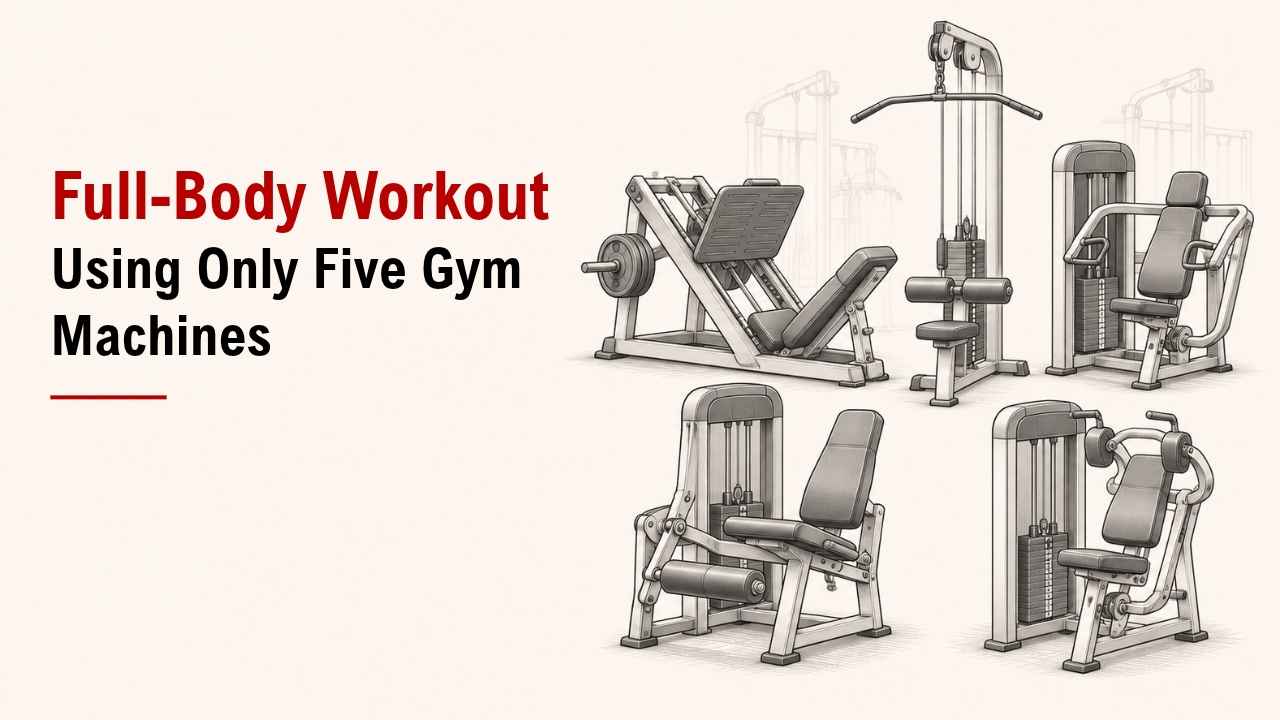

Want a full-body workout without moving between a dozen different machines? You can cover your major muscle groups with just five exercises.
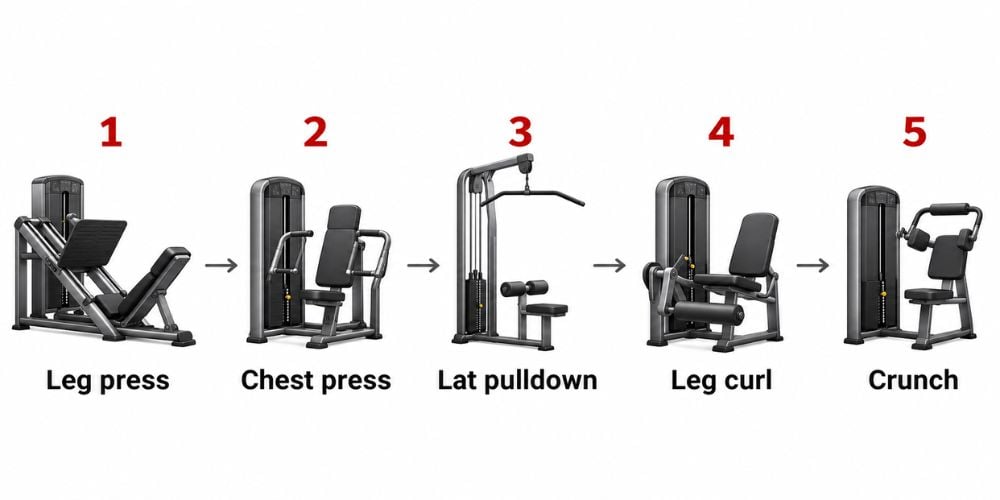
The simple answer is: use a leg press, chest press, lat pulldown, seated leg curl, and abdominal crunch machine. Complete them in order, choose a weight you can control, and focus on clean reps.
As the founder and chief designer of YR Fitness, I have spent decades working with strength-machine design and movement angles. In my experience, you do not need a complicated routine to get a productive full-body workout.
Below, I will show you the five machines, sets, reps, and basic forms you need. Follow the workout from top to bottom, and you will have a simple routine ready for your next gym session.
1. Leg Press — Legs and Glutes
Do: 3 sets of 8–12 reps
Start with the leg press while your legs are fresh.
It mainly works your:
- Quadriceps
- Glutes
- Hamstrings
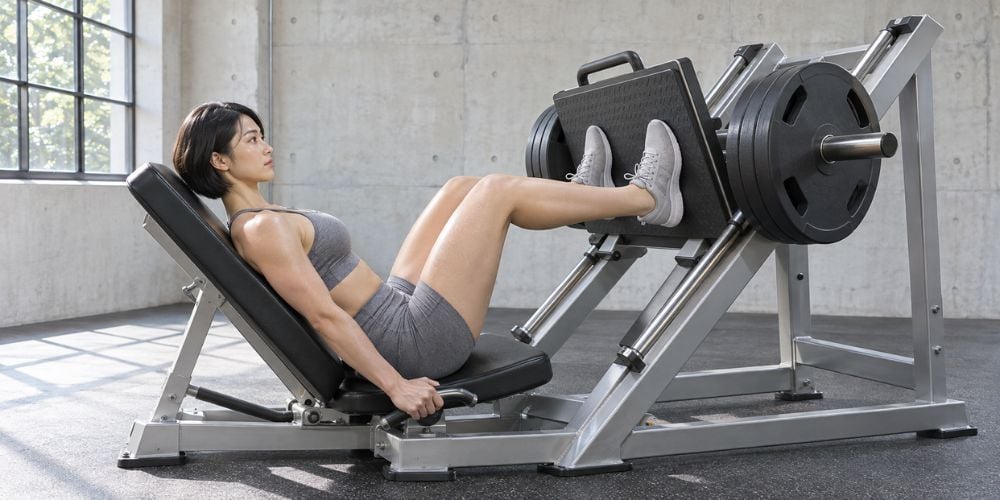
Sit with your back firmly against the pad and place both feet flat on the platform. Keep your feet around shoulder-width apart.
Release the safety handles and lower the platform slowly until your knees are comfortably bent. Push through your feet to return to the starting position.
Keep your knees moving in the same direction as your toes. Avoid locking them hard at the top.
Quick Tip: Start lighter than you think you need. You can always add more weight after your first set.
In my decades of design experience, I have found that a leg press feels much better when your hips, knees, and feet can move naturally together. A smooth movement path lets you focus on your legs instead of fighting the machine.
Not sure if the weight is right?
Ask yourself one question: Can I control every rep without changing my form?
If not, reduce the weight. Mayo Clinic also recommends prioritizing proper technique and gradually increasing resistance as exercises become easier.
2. Chest Press — Chest, Shoulders, and Triceps
Do: 3 sets of 8–12 reps
Move to the chest press next.
It mainly trains your:
- Chest
- Front shoulders
- Triceps
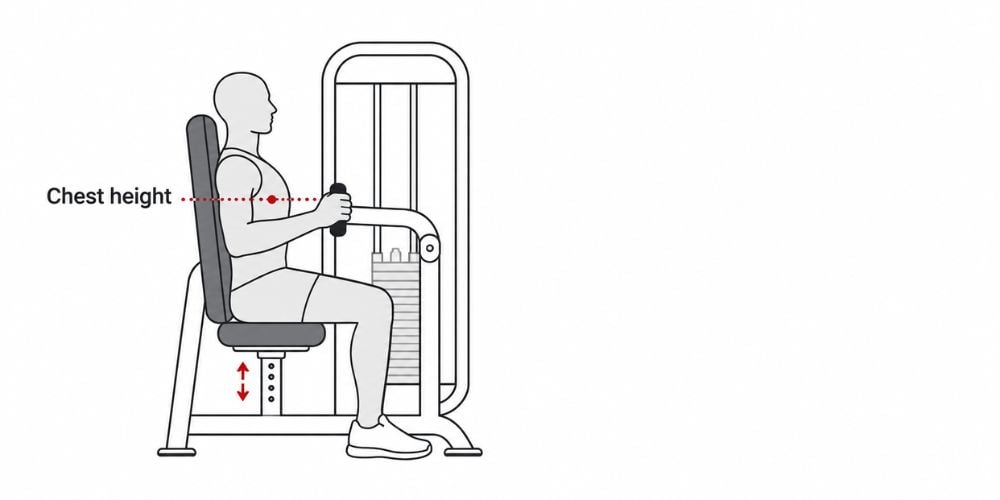
Adjust the seat so the handles sit roughly level with the middle of your chest.
Keep your back against the pad and your feet firmly on the floor. Press the handles forward until your arms are almost straight.
Then bring the handles back slowly.
Do not let the weight stack slam down between reps.
I like chest press for a simple full-body workout because the setup is easy once the seat is correct. You can focus on pressing instead of balancing a barbell.
Quick Tip: If you mostly feel exercise in your shoulders, check your seat height and avoid letting your elbows rise too high.
3. Lat Pulldown — Back and Biceps
Do: 3 sets of 8–12 reps
Now add a pulling exercise to balance your chest press.
The lat pulldown mainly works your:
- Latissimus dorsi
- Upper back
- Biceps
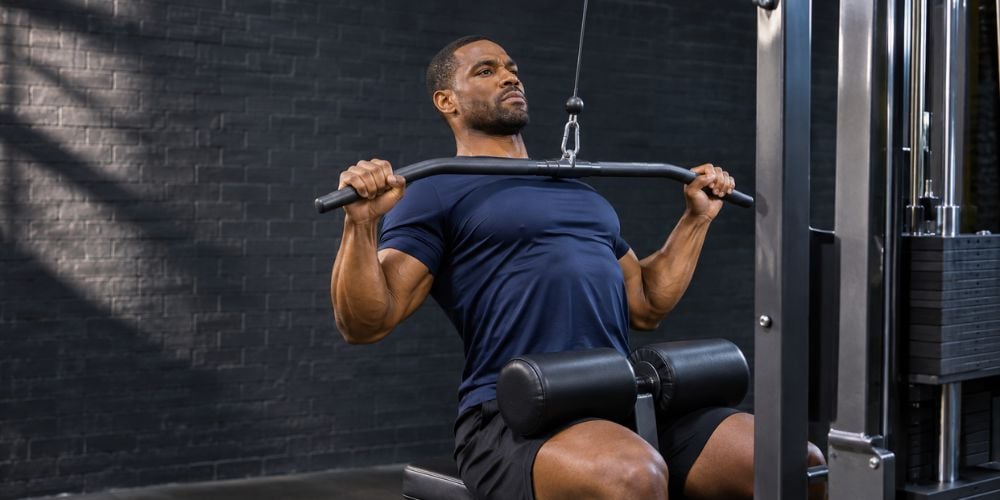
Sit down and secure your thighs under the pads.
Grip the bar slightly wider than shoulder width. Keep your chest up and pull the bar toward your upper chest.
Pause briefly, then let your arms straighten again under control.
Avoid swinging backward to move the weight. If you need to lean far back on every rep, reduce the resistance.
Quick Tip: Think about pulling your elbows down toward your sides instead of simply pulling with your hands.
I often see people use more weight than they can control on this exercise. Reducing the load usually makes it much easier to feel your back doing the work.
If you want to see how we design commercial strength machines around stable support and practical movement paths, explore our YR Fitness strength equipment. You can compare machines like presses, pulldowns, and lower-body equipment in one place.
4. Seated Leg Curl — Hamstrings
Do: 2–3 sets of 10–15 reps
The leg press already trains your lower body, but the seated leg curl gives your hamstrings more direct work.
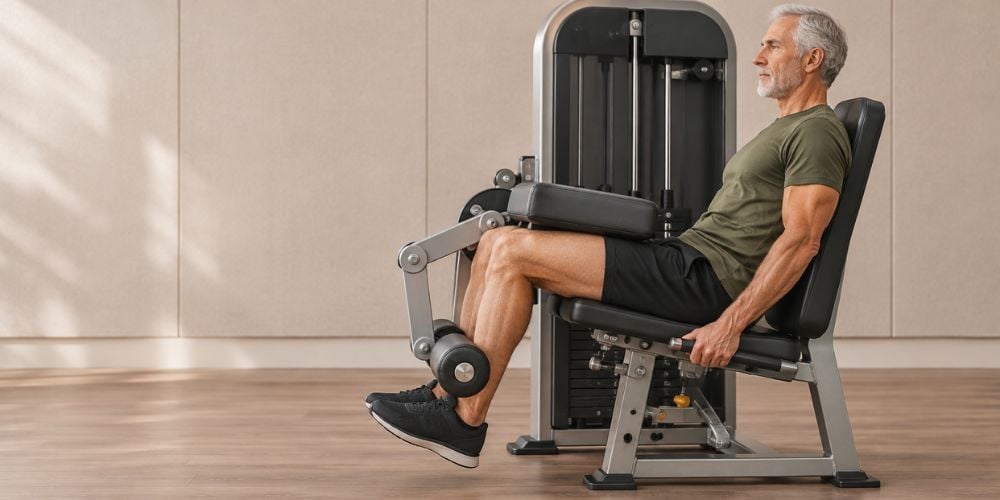
Sit firmly against the backrest.
Adjust the machine so your knees line up closely with its rotation point. Position the lower pad against the back of your lower legs.
Bend your knees and curl your legs downward.
Pause when your hamstrings contract, then return slowly to the starting position.
Do not let the weight pull your legs back quickly.
Quick Tip: Use a slightly lighter weight and control the return. Smooth reps usually work better here than rushed ones.
5. Abdominal Crunch Machine — Core
Do: 2–3 sets of 12–15 reps
Finish the workout with your core.
The abdominal crunch machine gives you a simple way to train your abs without adding extra floor exercises.
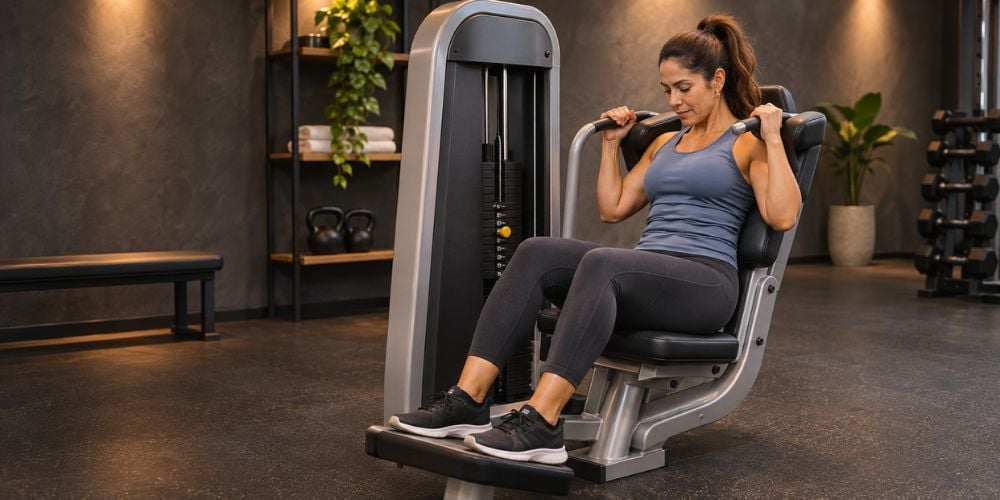
Adjust the seat and starting position until you feel comfortable.
Brace your core and curl your torso forward using your abdominal muscles. Pause briefly, then return slowly.
Avoid pulling aggressively with your arms. Your abs should do most of the work.
Quick Tip: More weight is not always better. Choose enough resistance to challenge your abs while keeping every rep controlled.
6. How Should You Run the Workout?
Keep it simple.
What to Do | Guideline |
Exercise order | Follow the 5 machines from top to bottom |
Rest between sets | 60–90 seconds |
Starting weight | Light enough to control every rep |
Progression | Add a little weight once the top of the rep range feels controlled |
Weekly frequency | Around 2–3 sessions, depending on recovery |
The CDC recommends muscle-strengthening activity at least two days per week and encourages training all major muscle groups, including the legs, hips, back, abdomen, chest, shoulders, and arms.
If you are new to these machines, start with lighter resistance. Once you can reach the top of the rep range with good control, increase the weight slightly.
Should you do all five machines every time? For this full-body routine, yes—that is what keeps the workout simple and balanced.
Conclusion
You do not need a long exercise list to train your whole body. These five machines cover your legs, glutes, chest, shoulders, back, arms, hamstrings, and core in one straightforward session.
Focus on good setup, controlled reps, and gradual progress. That will take you further than rushing through more exercises.
If you want to train on machines designed to make full-body strength workouts feel smooth and easy to follow, at YR Fitness, we build commercial strength equipment around stable support, practical movement paths, and reliable everyday performance.
Related articles: