
Not sure if your dumbbell shoulder press form is right? Maybe your lower back arches, your wrists bend, or the weights feel unstable overhead.
The simple answer is: choose a manageable weight, sit firmly, press the dumbbells overhead with control, and lower them slowly. Your body should stay stable from the first rep to the last.
As an Exercise Physiology & Biomechanics Expert at YR Fitness, I study how body position and joint movement affect strength exercises. I often see shoulder presses go wrong because people lift too heavy or rush the setup.
Below, I’ll walk you through the movement in seven simple steps. Follow them in order, and you can make each rep smoother, safer, and easier to repeat.
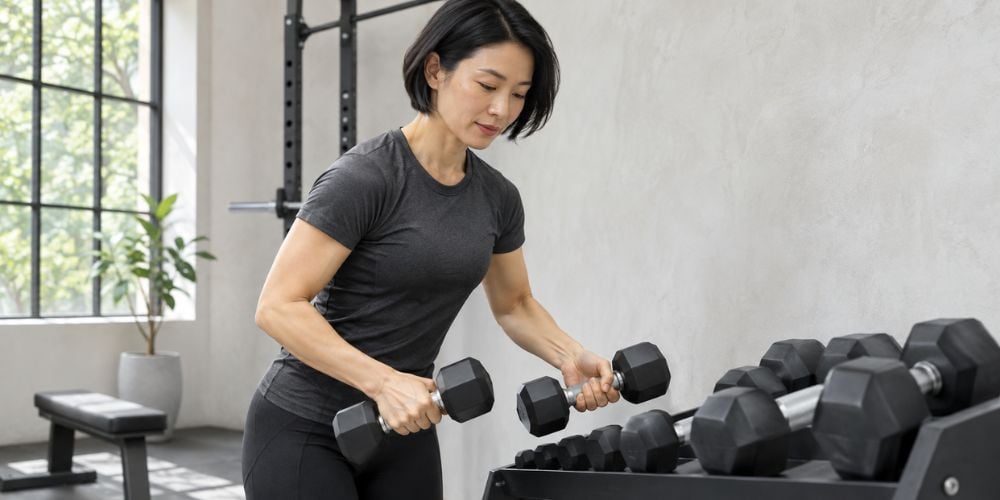
1. Choose the Right Dumbbell Weight
Start with dumbbells you can control the full set.
The weight can feel challenging, but it should not make you lean backward, twist, or rush the movement. If your form changes after only a few reps, go lighter.
That matches Mayo Clinic’s weight-training guidance, which recommends choosing a manageable load and reducing the weight or repetitions when good form starts to break down.
I usually suggest starting lighter while learning the exercise. You can add weight once your movement feels stable.
What You Notice | What It Usually Means | What to Do |
Reps feel controlled | Weight is manageable | Keep going |
Back starts arching | Weight may be too heavy | Reduce the load |
Body starts twisting | Stability is breaking down | Stop and reset |
Wrists bend backward | Grip or load needs adjustment | Go lighter and reset |
Quick question: Can you press without changing your body position? If not, reduce the weight.
2. Sit in the Correct Position
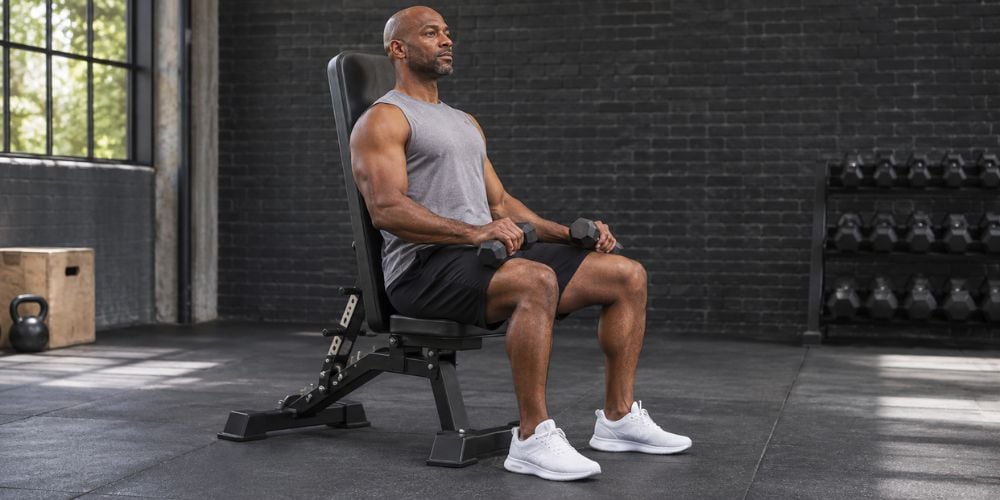
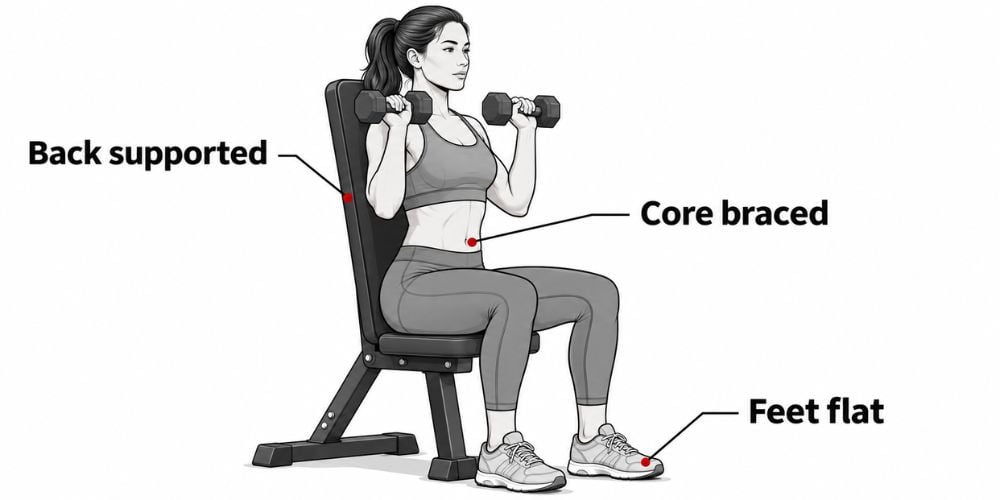
Sit on a bench with your back supported.
Keep your feet flat on the floor, back against the pad, chest naturally upright, core braced, and head neutral. Avoid sliding too far forward on the seat.
The ACE seated overhead press guide also recommends firm foot contact, back support, core bracing, and neutral wrists during the movement.
Here is why this matters: your shoulders should create the press while the rest of your body gives you a stable base.
3. Bring the Dumbbells to Shoulder Height
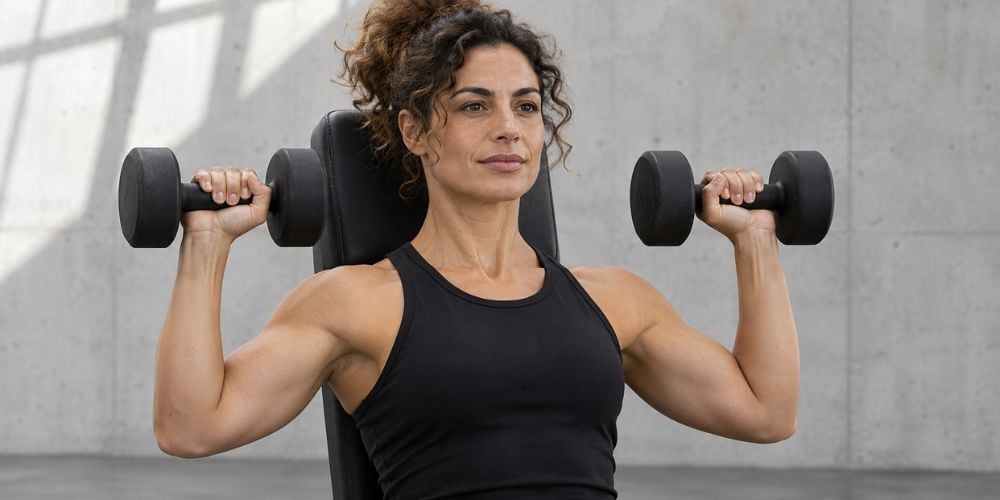
Hold one dumbbell in each hand and bring them beside your shoulders.
Keep your palms facing forward and your elbows slightly in front of your body. Your wrists should stay straight and stacked above your elbows.
The dumbbells should sit around shoulder level before you begin.
Wrists bending backward? Lower the weight and reset your grip before pressing.
4. Press the Dumbbells Overhead
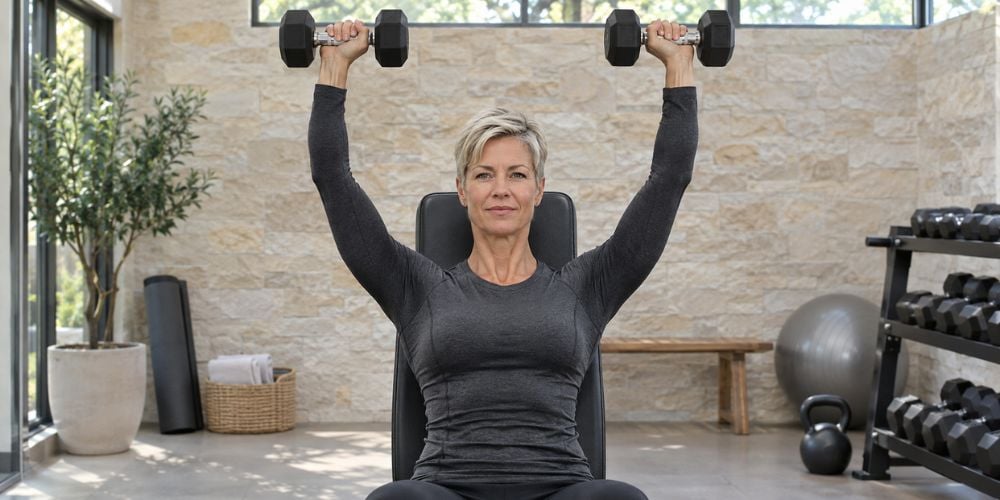
Brace your core and press both dumbbells upward.
Keep your torso still as the weights rise. Do not push your chest forward or create a large arch in your lower back.
Straighten your arms near the top without forcing your elbows into a hard lockout.
One cue I often use is “press up while keeping your ribs down.” It is simple, but it can help stop your lower back from taking over.
Want to know what exercise is really training? ACE shoulder research found that the dumbbell shoulder press produced the highest anterior-deltoid activation among the shoulder exercises tested, while also involving the middle deltoid.
A stable pressing setup makes good technique easier to repeat. At YR Fitness, we build commercial strength equipment around stable structures and practical movement paths, so if you want to explore other ways to train your shoulders and upper body, take a look at our commercial strength equipment.
5. Pause at the Top
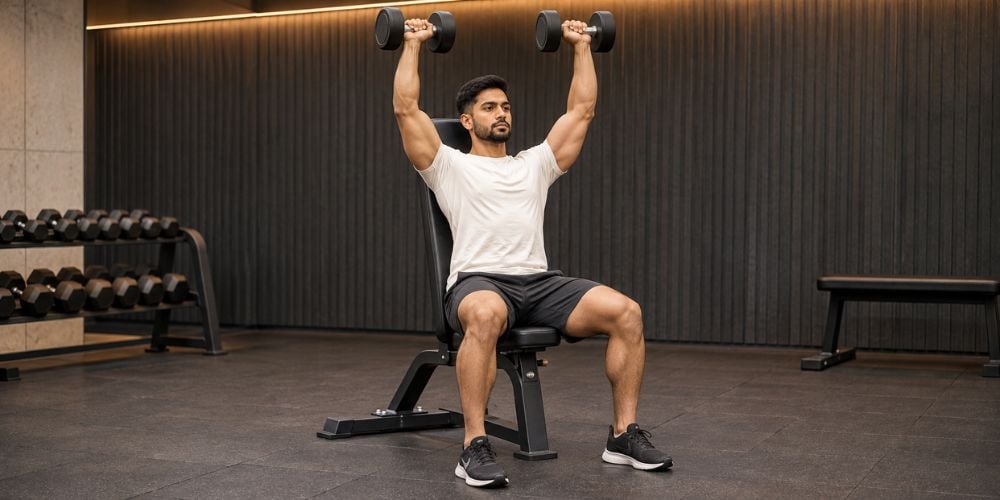
Hold the dumbbells steady for a brief moment.
Your arms should be almost straight, with the weights controlled above your shoulders. Avoid smashing the dumbbells together or aggressively shrugging your shoulders.
That short pause gives you a useful check: are you controlling the dumbbells, or is momentum controlling them?
If you cannot hold the top position briefly, the weight may be too heavy.
6. Lower the Dumbbells Slowly
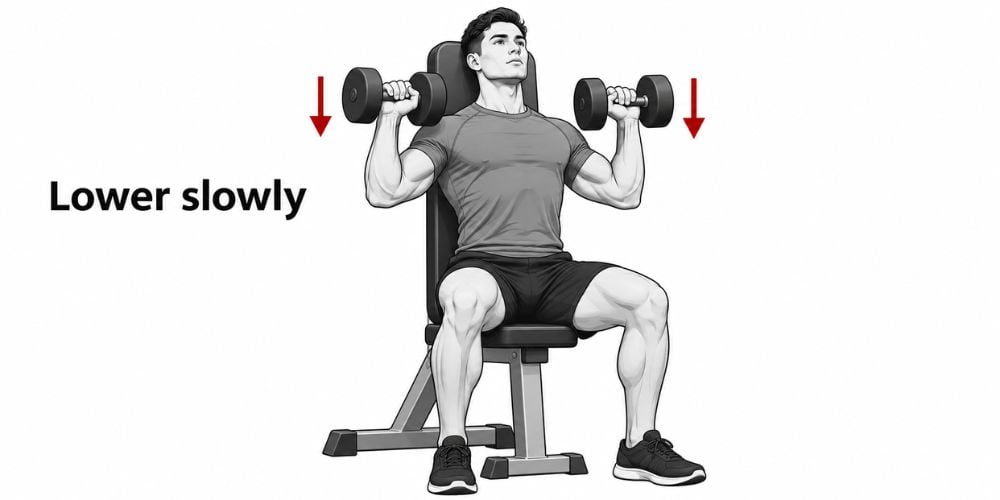
Bring the dumbbells back toward shoulder height.
Keep your wrists straight and control your elbows as the weights come down. Do not simply let gravity drop them.
I often see people focus completely on pressing the dumbbells up, then rush the lowering phase. Instead, return to the same starting position on every rep.
Think: press smoothly, lower deliberately.
7. Repeat With the Same Form
Now repeat the movement without changing your body position.
Your goal is not just to get the dumbbells overhead. Your goal is to make each repetition look similar to the one before it.
Phase | Simple Form Check |
Start | Dumbbells around shoulder height |
Setup | Feet flat and core braced |
Press | Move both dumbbells smoothly upward |
Top | Arms almost straight and weights controlled |
Lower | Return slowly toward shoulder height |
Next rep | Reset before pressing again |
Stop the set if you start leaning backward, twisting, bouncing the weights, or losing wrist control.
Clean reps matter more than simply doing more reps.
Quick Dumbbell Shoulder Press Checklist
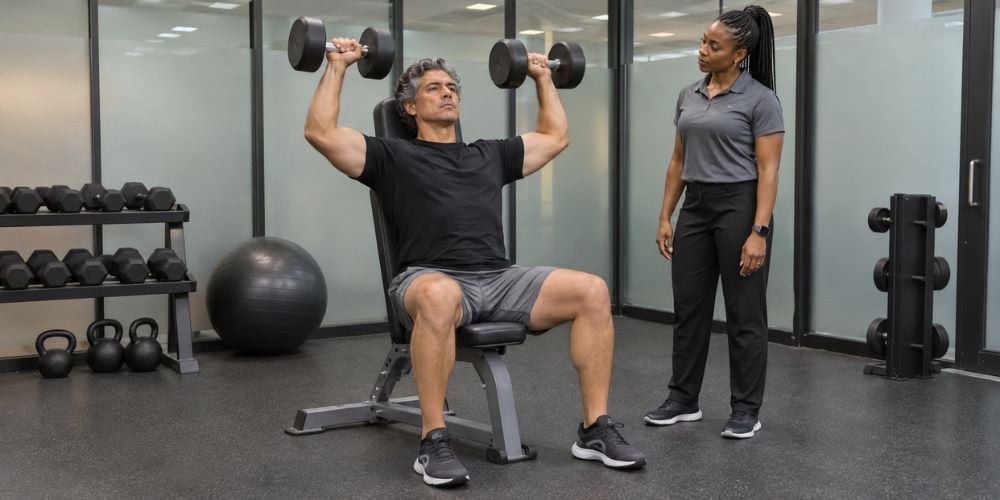
Before each set, check that you:
- Choose a manageable weight
- Keep your feet flat
- Support your back
- Brace your core
- Keep your wrists straight
- Press smoothly overhead
- Avoid excessive back arching
- Lower the dumbbells slowly
- Keep every rep consistent
Conclusion
A correct dumbbell shoulder press is simple: set your body, start at shoulder height, press overhead with control, and lower slowly.
Keep the weight manageable so your shoulders do the work, not your lower back.
At YR Fitness, we focus on strength equipment that supports stable, practical training. If you want more options for building your strength workouts, explore the YR Fitness website and find equipment that fits the way you train.
Related articles: