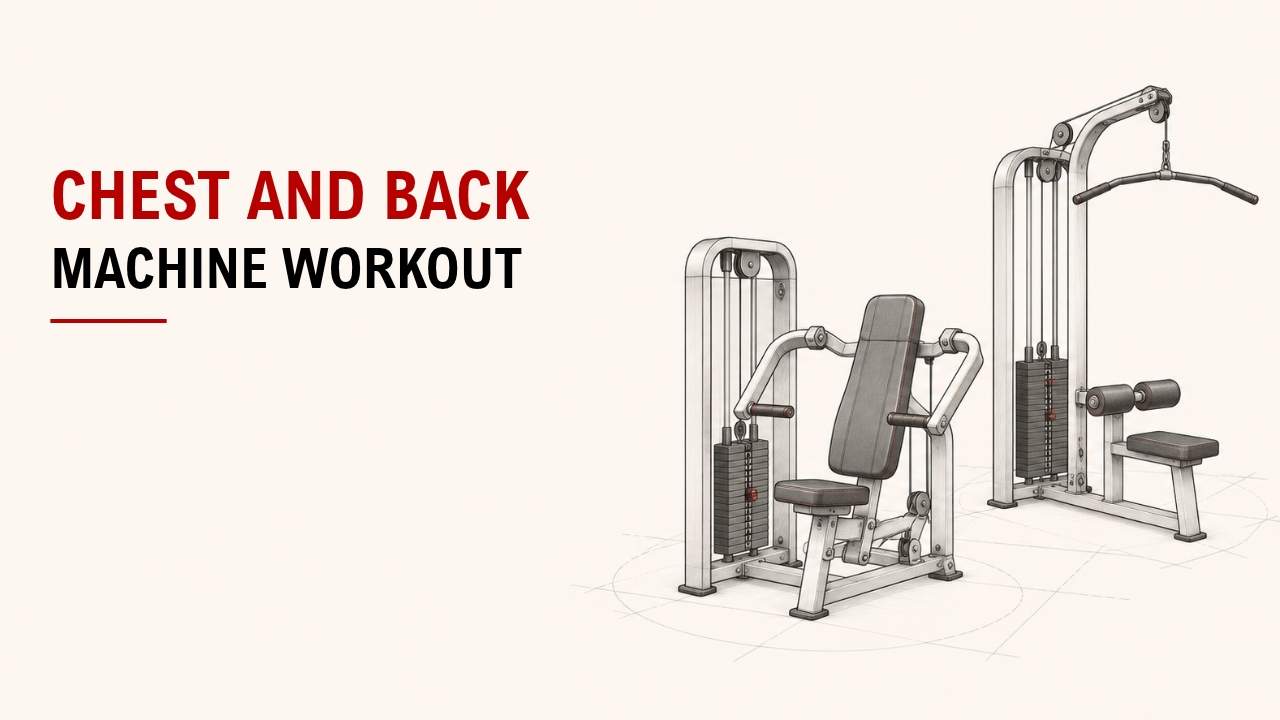

Want a simple chest and back machine workout without wasting time deciding what to do next? You can train both muscle groups well with six common gym machines.
The short answer is: alternate chest and back exercises, use a weight you can control, and complete around 3 sets of 8–12 reps for most movements.
As an Exercise Physiology & Biomechanics Expert at YR Fitness, I pay close attention to movement paths, joint position, and how machines guide resistance. I often see that good setup and controlled reps matter more than simply choosing the heaviest weight.
In this guide, I’ll walk you through six chest and back machines, the sets and reps to use, and the main form points for each one. Follow the workout in order and keep it simple.
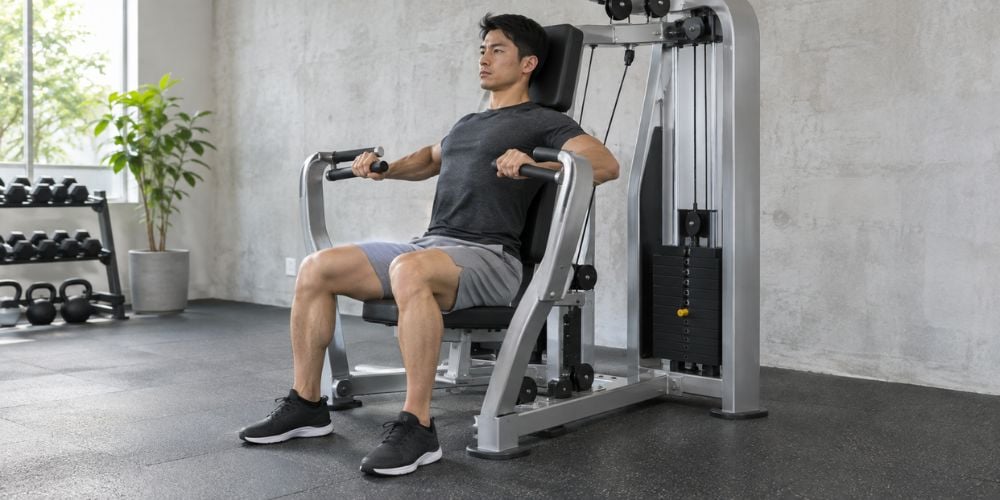
1. Chest Press Machine
Sets: 3
Reps: 8–12
Rest: 60–90 seconds
Start with the chest press machine.
Adjust the seat so the handles sit around the middle of your chest. Keep your back against the pad and your feet flat on the floor.
Press forward until your arms are almost straight. Keep a slight bend in your elbows instead of locking them.
Then bring the handles back slowly.
ACE gives similar setup advice for the machine chest press, including lining the handles up with the middle of the chest and avoiding elbow lockout.
Main muscles worked:
- Chest
- Front shoulders
- Triceps
I usually suggest a moderate weight for the first set. If 12 reps feel easy and your form stays clean, increase the resistance slightly.
Quick check: Are your shoulders rolling forward?
If yes, reduce the weight and keep your upper back against the pad.
2. Lat Pulldown Machine
Sets: 3
Reps: 8–12
Rest: 60–90 seconds
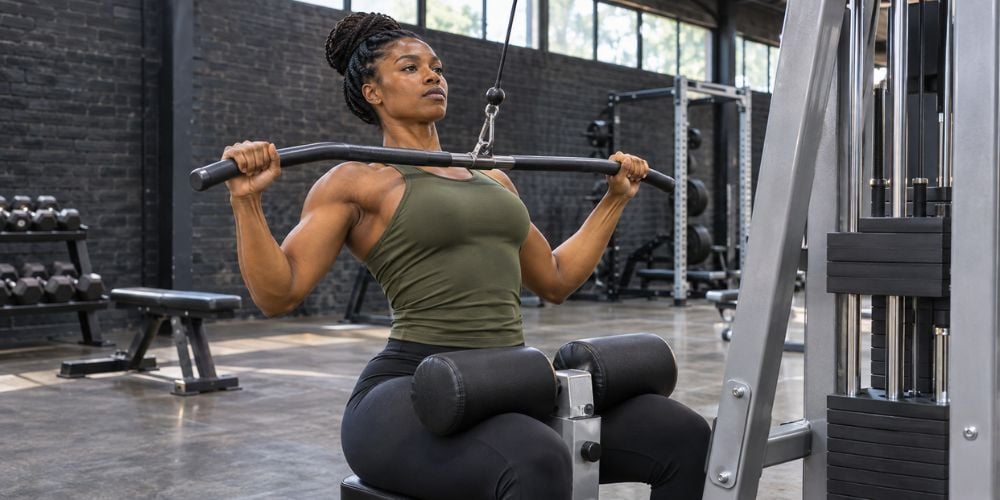
Next, move to the lat pulldown.
Adjust the thigh pad so your legs stay secure. Hold the bar with a comfortable grip, usually slightly wider than shoulder width.
Pull the bar toward your upper chest while keeping your chest lifted. Think about driving your elbows down, rather than only pulling with your hands.
Then return the bar slowly until your arms are extended.
Main muscles worked:
- Latissimus dorsi
- Upper back
- Biceps
Avoid leaning far backward just to gain more weight.
A small lean is fine. Turning exercise into a full-body swing is not.
3. Pec Deck Machine
Sets: 3
Reps: 10–15
Rest: 60 seconds
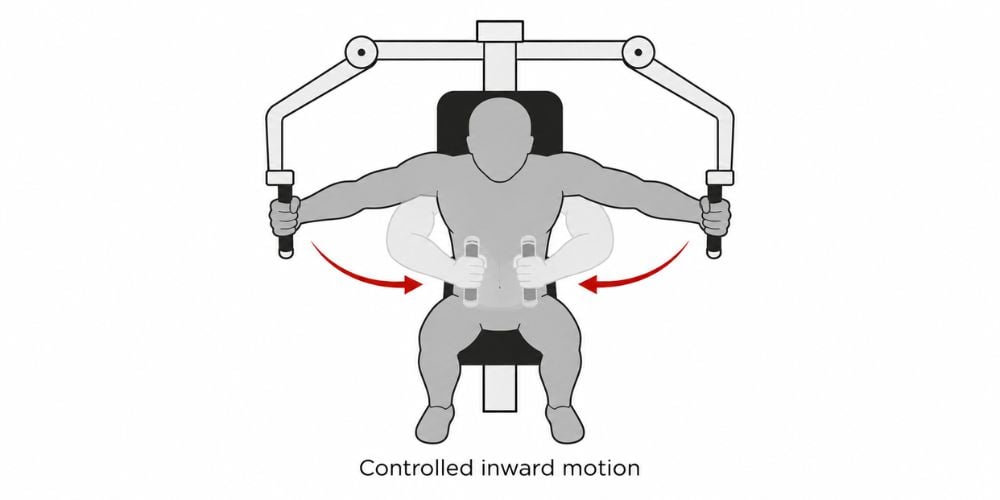
The pec deck gives your chest more direct work after the heavier press.
Adjust the seat so your arms line up comfortably with the handles or pads. Keep your back against the seat.
Bring your arms together in front of you. Pause briefly, then return slowly.
Main muscles worked:
- Pectoralis major
- Front shoulders
Do not let the machine pull your arms too far behind your body.
I often see people load too much weight here. A lighter load with better control usually makes it easier to keep the chest doing the work.
Ask yourself: Can you control weight on the way back?
If not, reduce resistance.
Machine design can make a big difference in how natural an exercise feels. At YR Fitness, we develop commercial strength machines with carefully designed movement paths and solid construction for repeated daily training.
If you want to compare different chest and back machine designs, explore our commercial strength equipment here: Explore YR Fitness strength equipment
4. Seated Row Machine
Sets: 3
Reps: 8–12
Rest: 60–90 seconds
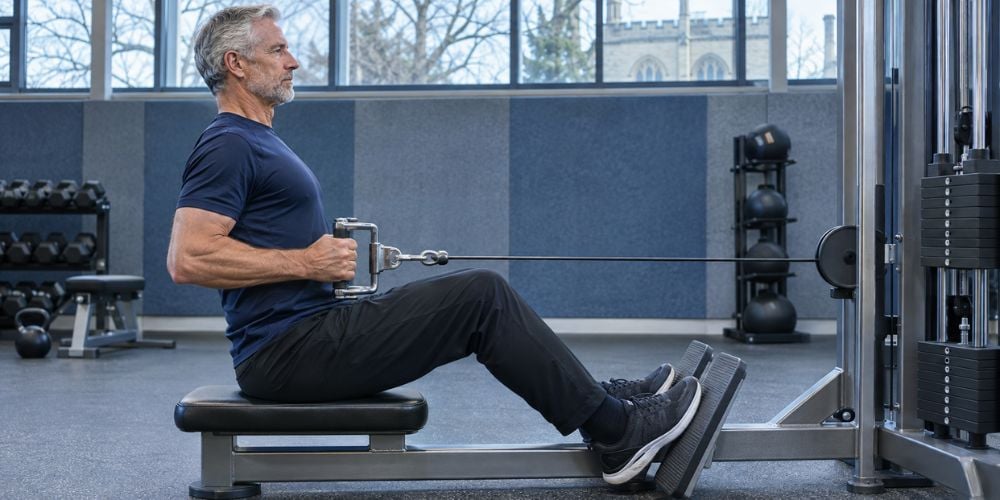
Now switch back to a pulling movement.
Sit tall and keep your chest up. Pull the handles toward your lower ribs.
Bring your shoulder blades slightly together as you pull. Then extend your arms slowly without letting your shoulders collapse forward.
Main muscles worked:
- Middle back
- Lats
- Rear shoulders
- Biceps
Avoid rocking your torso backward to create momentum.
From a biomechanics point of view, I would rather see a smaller, controlled pull than a bigger movement created by swinging your body.
5. Incline Chest Press Machine
Sets: 3
Reps: 8–12
Rest: 60–90 seconds
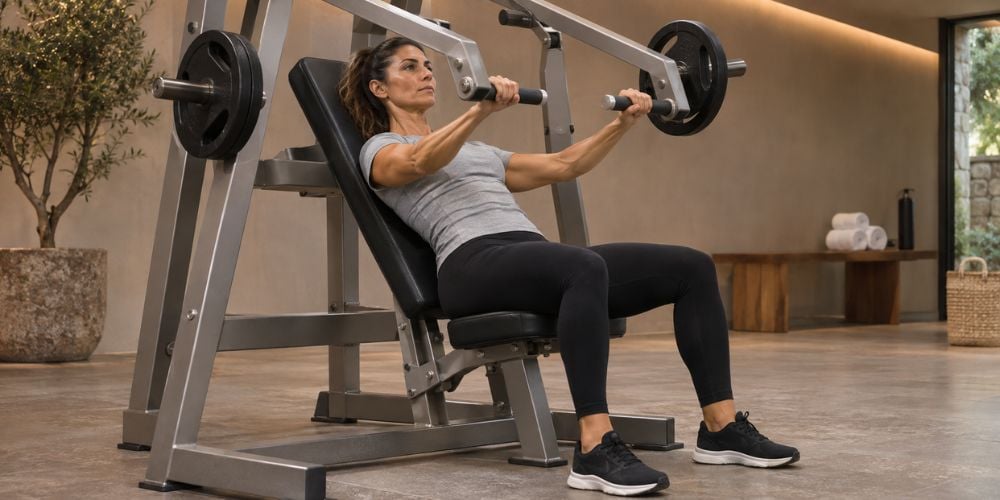
The inclined chest press shifts more work toward your upper chest.
Adjust the seat so the handles sit around upper-chest level. Keep your back against the pad.
Press the handles upward and forward.
Stop just before your elbows fully lock, then lower the handles under control.
Main muscles worked:
- Upper chest
- Front shoulders
- Triceps
You may use less weight here than on the standard chest press.
Is that a problem?
No. Different machine angles change how resistance feels through the movement, so you do not need to match the same weight on every chest machine.
6. High Row Machine
Sets: 3
Reps: 10–12
Rest: 60–90 seconds
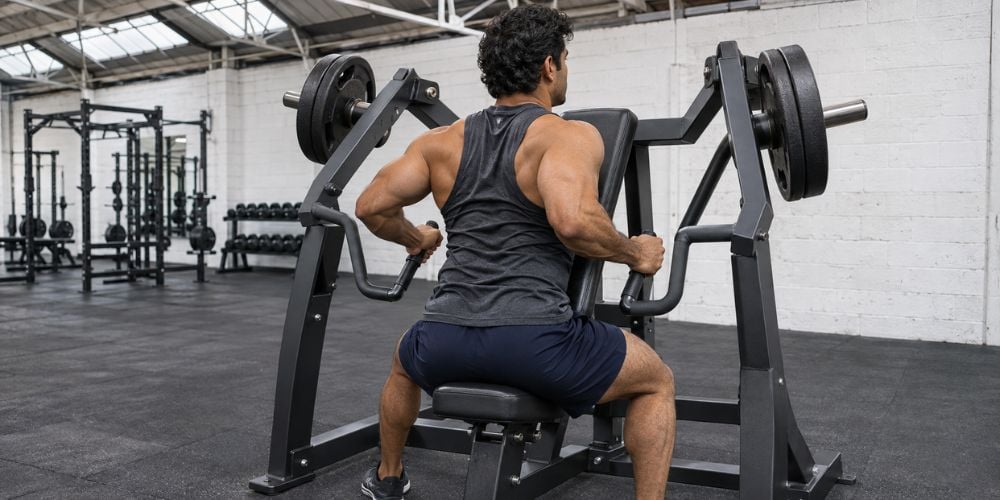
Finish with the high row.
Sit securely against the support pad and grip the handles. Pull them down and back toward your upper ribs or chest, depending on the machine.
Keep your shoulders down instead of shrugging them toward your ears.
Return slowly until your arms are extended again.
Main muscles worked:
- Upper back
- Lats
- Rear shoulders
- Biceps
Do not rush the final reps.
I like to use those last few reps as a simple control check. If you can still lower the handles smoothly, the weight is probably about right.
What Should You Focus On?
Exercise | Main Form Cue | Common Mistake |
Chest Press | Keep back against pad | Locking elbows |
Lat Pulldown | Drive elbows downward | Leaning too far back |
Pec Deck | Control the return | Using too much weight |
Seated Row | Pull toward lower ribs | Rocking the torso |
Incline Chest Press | Press up and forward | Forcing too much weight |
High Row | Keep shoulders down | Shrugging during the pull |
You do not need perfect technique from the first rep.
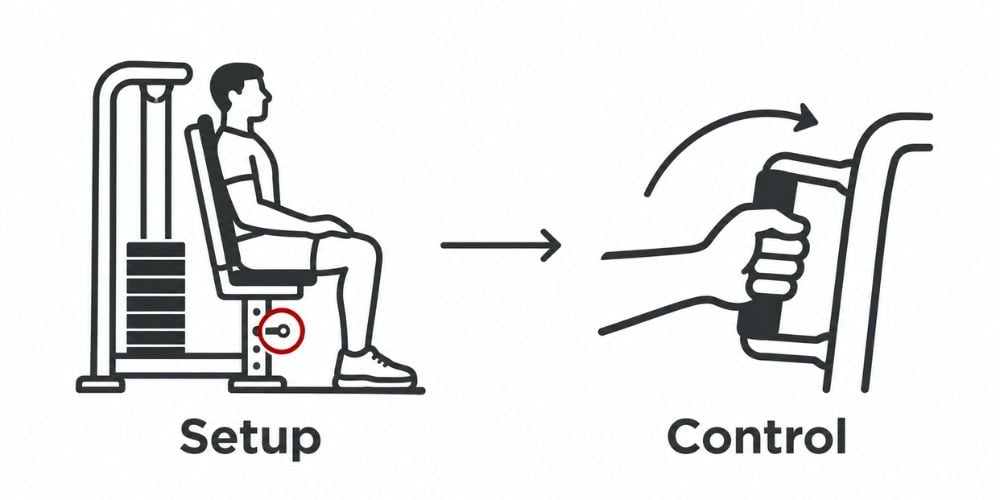
Focus on one cue at a time. Get comfortable with the setup first, then gradually improve your control.
Conclusion
A chest and back machine workout does not need to be complicated. Use 2–3 chest exercises and 2–3 back exercises, keep every rep controlled, and gradually increase resistance as you get stronger.
The main thing is consistency. Choose weights you can manage, keep your form clean, and build from there.
Want to compare more machine options for chest and back training? Explore the strength equipment from YR Fitness and see which movement designs fit the exercises in this workout.
Related articles: