


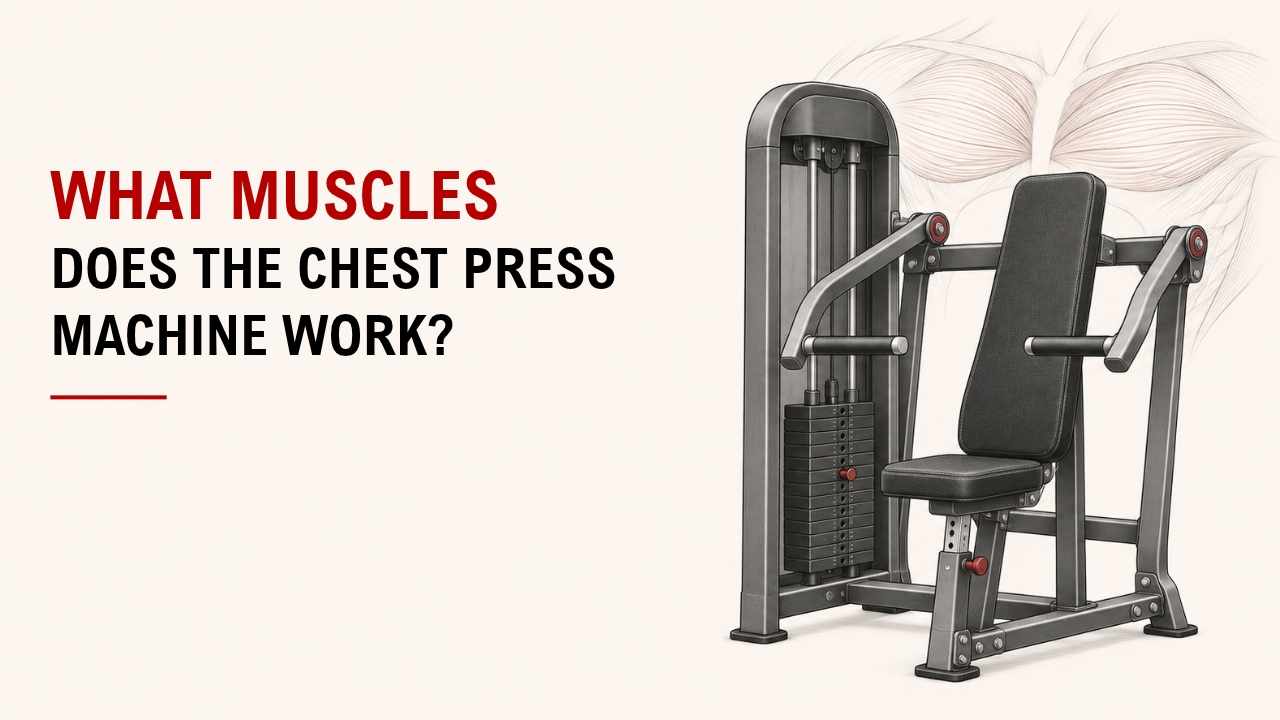

Ever used a chest press machine and wondered which muscles you’re actually training? The main muscles worked are your chest, front shoulders, and triceps.
Your chest does most of the pushing, while your shoulders and triceps help complete each rep. The machine’s pressing angle also changes which part of your chest gets more attention.
As an Exercise Physiology and Biomechanics Expert at YR Fitness, I focus on how exercises work different muscle groups.
In this guide, I’ll show you which muscles the chest press targets and how to make every rep count.
1. Main Muscles Worked by the Chest Press Machine
The chest press machine mainly works three muscle groups: your pectoralis major, anterior deltoids, and triceps.
Here’s a quick breakdown:
Muscle | Location | Role During Chest Press |
Pectoralis Major | Chest | Main pushing muscle |
Anterior Deltoids | Front shoulders | Help move your arms forward |
Triceps Brachii | Back of upper arms | Straighten your elbows |
Pectoralis Major (Chest Muscles)
Your pectoralis major is the main muscle working during a chest press.
It’s the large muscle covering your chest. It helps move your arms forward and inward as you push the handles away.
The chest press works in these areas:
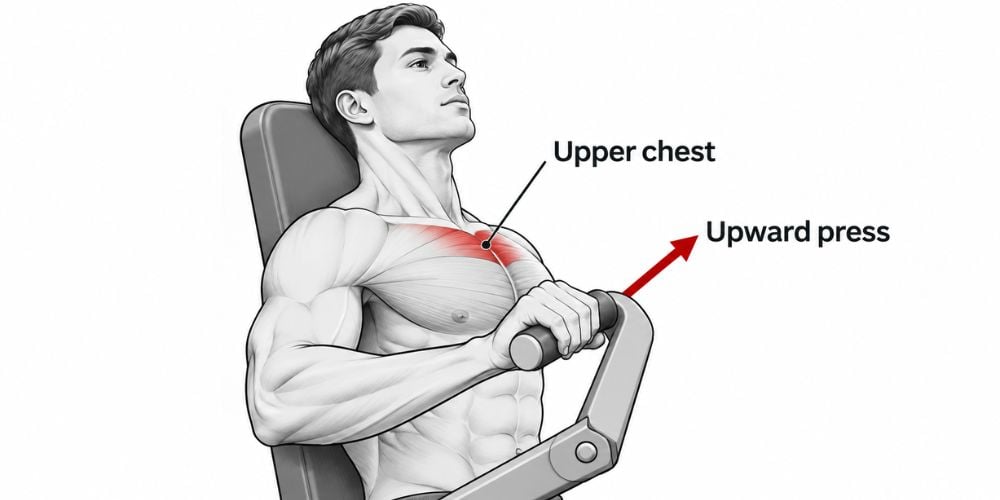
- Upper Chest: Helps move your arms forward and upward.
- Middle Chest: Provides much of the pushing force during a standard chest press.
- Lower Chest: Helps with pressing, especially at downward angles.
These are all regions of the same chest muscle. Changing your pressing angle shifts more work toward certain fibers.
Anterior Deltoids (Front Shoulders)
Your anterior deltoids sit in front of your shoulders.
They help your chest push the handles forward and keep your upper arms moving smoothly.
You’ll usually feel more shoulder involvement when you:
- Use an inclined chest press machine.
- Keep your elbows too high.
- Push your arms forward against resistance.
Quick tip: Keep your elbows at a comfortable angle instead of flaring them straight out. This can help reduce unnecessary shoulder strain.
Triceps Brachii (Back of Upper Arms)
Your triceps are located at the back of your upper arms.
They help straighten your elbows as you push the handles away from your chest.
Your triceps are especially important during the final part of the press, when your elbows extend.
What if your arms get tired before your chest?
Try lowering the weight and checking your technique. Your triceps will still work, but a lighter load can make the movement easier to control.
2. Secondary Muscles Worked
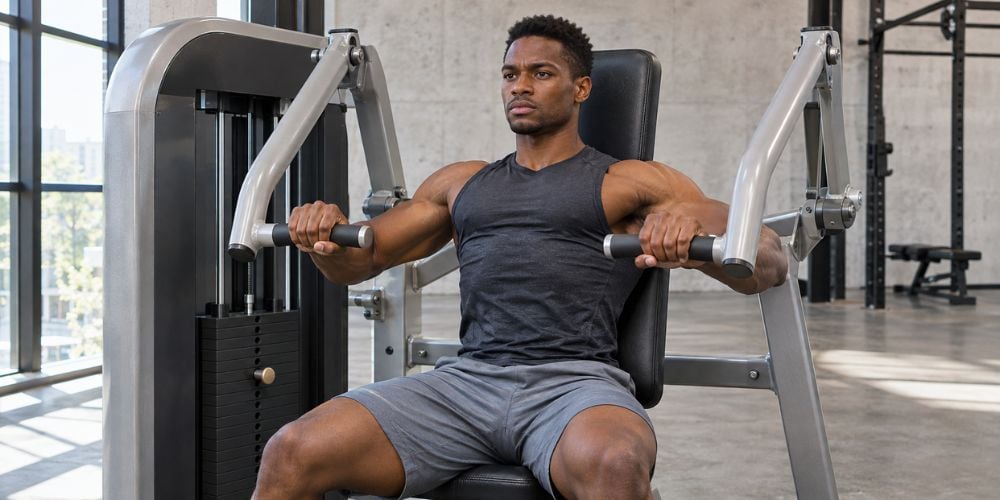
The chest press also uses smaller muscles to keep your shoulders stable.
They don’t do most of the pushing, but they help you control each repetition.
Serratus Anterior
The serratus anterior sits along the sides of your rib cage, just below your armpits.
It helps control your shoulder blades as you push forward.
How much it works depends on the machine and how freely your shoulder blades can move.
Rotator Cuff Muscles
Your rotator cuff is a group of four small muscles around your shoulder joint.
These muscles help:
- Keep your shoulder joints stable.
- Control your upper arm position.
- Support smooth pressing movements.
You won’t necessarily feel these muscles working, but they help keep your shoulders steady throughout each rep.
3. How Chest Press Machine Angles Affect Muscle Focus
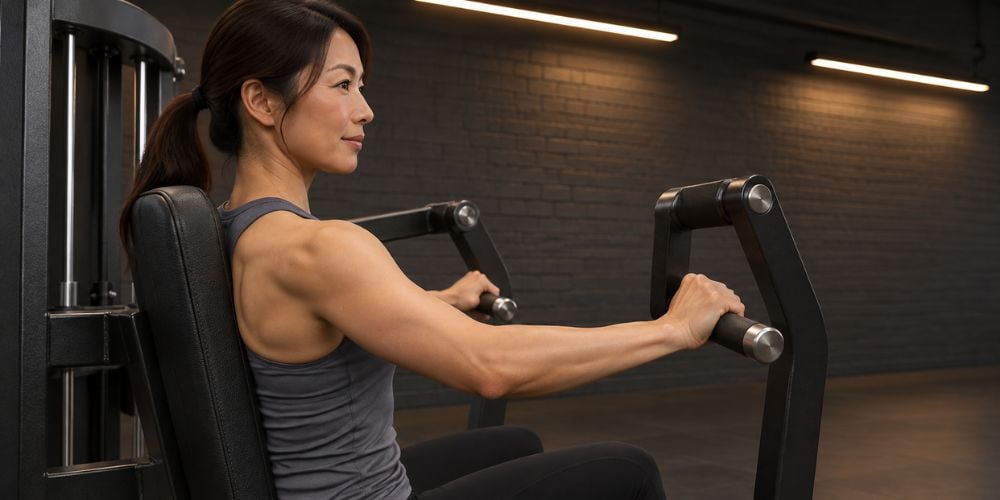
Not all chest press machines train your chest in exactly the same way.
The pressing angle changes which muscle fibers receive more emphasis.
Chest Press Type | Main Muscle Focus | Best For |
Flat Chest Press | Overall chest, especially middle and lower fibers | General chest development |
Incline Chest Press | Upper chest and front shoulders | Upper chest emphasis |
Decline Chest Press | Lower chest fibers | Lower chest emphasis |
Flat Chest Press
The flat chest press works your entire chest, with strong involvement from the middle and lower chest fibers.
Your front shoulders and triceps also help with each push.
Best for: Building overall chest strength and muscle.
Incline Chest Press
The incline chest press has you push at an upward angle.
This places more emphasis on your upper chest while also working your front shoulders and triceps.
According to research on bench press angles, an incline of around 30° can increase upper chest muscle activation during a barbell bench press. Machine designs vary, but the same general principle helps explain why pressing angles matter.
Best for: Building upper chest strength.
Decline Chest Press
The decline chest press uses a slightly downward pressing angle.
This shifts more emphasis toward the lower chest, while your shoulders and triceps still assist.
Best for: Putting more focus on your lower chest.
Do you need all three variations?
Not necessarily. All three train your chest, so start with the version that feels comfortable and matches your workout goals.
At YR Fitness, we design chest press machines with guided movement paths to support smooth, controlled training. You can compare our Mid Chest Press, Incline Chest Press, and Lower Chest Press to see how different pressing angles support your chest workouts.
4. How to Feel Your Chest Muscles Working More
Do you sometimes feel the chest press more in your shoulders or arms than your chest?
That’s common. I often see people using too much weight or sitting at the wrong height, which moves harder to control.
Here are the simple ways to improve your chest press:
Adjust Your Seat Height
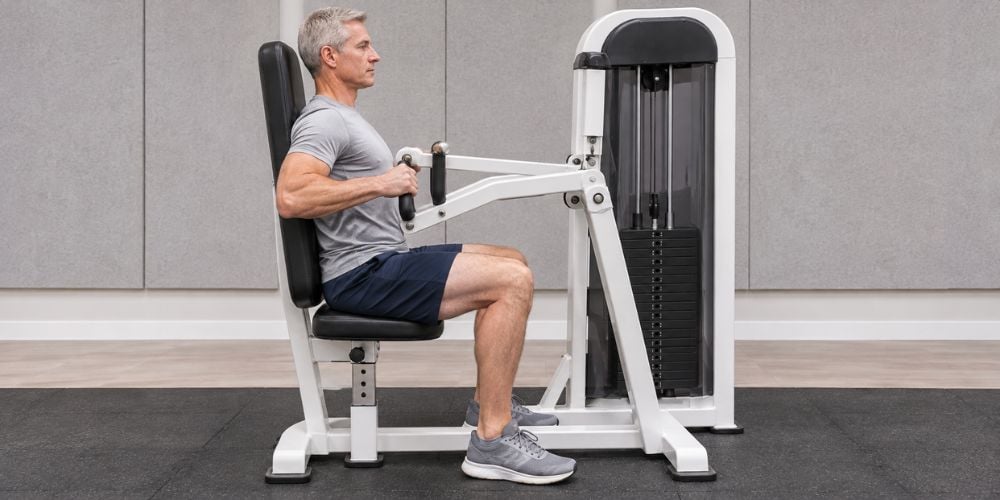
Set your seat so the handles line up around the middle of your chest on a standard flat chest press.
If the handles are too high or too low, your pressing position may feel awkward.
Quick tip: Adjust the seat before adding weight.
The American Council on Exercise’s seated chest press guide also recommends aligning the handles with your mid-chest and keeping your back supported.
Keep Your Back Against the Pad
Sit upright with your back supported and feet flat on the floor.
Keep your shoulders comfortable and avoid lifting your back away from the seat while pushing.
This helps you stay stable during each repetition.
Use a Comfortable Elbow Position
Keep your elbows slightly below shoulder height instead of pointing them straight out to the sides.
This helps you maintain a more comfortable shoulder position while pressing.
Avoid forcing your elbows into an uncomfortable angle.
Conclusion
The chest press machine mainly targets your pectoralis major (chest), anterior deltoids (front shoulders), and triceps. Your serratus anterior and rotator cuff muscles also help keep your shoulders stable.
For better chest training, focus on the basics: adjust your seat, use a comfortable elbow position, and control every repetition.
Want to explore machines designed for smooth, controlled chest workouts? Browse the YR Fitness chest press collection and compare different designs to find one that suits your training style.
Related articles:



