


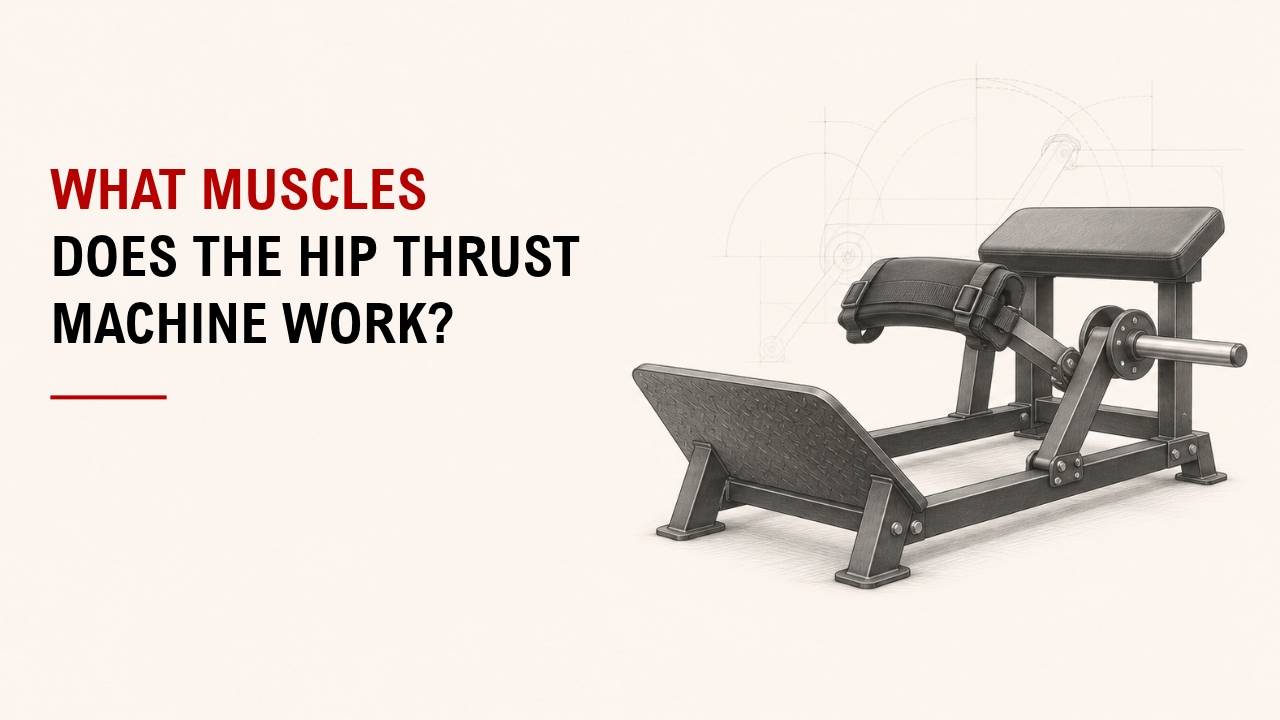

Wondering which muscles you work when you use a hip thrust machine?
The main target is your glutes, while your hamstrings, quadriceps, and core help support the movement. The gluteus maximus does most of the lifting, while smaller muscles help keep your hips stable.
As an Exercise Physiology & Biomechanics Expert at YR Fitness, I focus on helping people understand how their muscles work during exercise.
In this guide, you’ll learn which muscles the hip thrust machine targets and what each one does. You’ll also get simple tips to feel your glutes working more during every repetition.
1. Primary Muscles Worked by the Hip Thrust Machine
The hip thrust machine mainly works three glute muscles. Each helps you lift your hips or keep them stable.
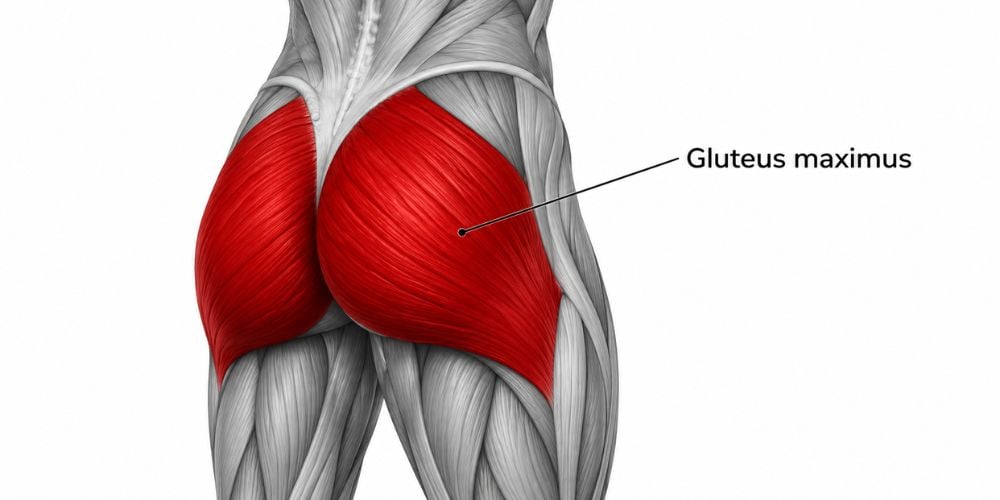
Gluteus Maximus (Main Muscle)
The gluteus maximus is the largest muscle in your buttocks. It does most of the work when you push your hips upward.
What it does:
- Extends your hips during the upward movement.
- Produces most of the force to lift weight.
- Helps build stronger and bigger glutes.
- Controls your hips as you lower the weight.
A systematic review of hip thrust exercises confirms that the gluteus maximus is highly active during this movement.
Want to feel it more? Focus on squeezing your glutes at the top instead of simply lifting heavier weights.
Gluteus Medius
The gluteus medius sits on the upper, outer part of your glutes. Its main job during hip thrusts is keeping your hips stable.
What it does:
- Stabilizes your pelvis.
- Helps prevent your knees from collapsing inward.
- Supports proper hip alignment.
- Controls side-to-side movement.
You may not feel it as much as your gluteus maximus, but it helps you maintain good form.
Gluteus Minimus
The gluteus minimus is a smaller muscle located underneath the gluteus medius.
What it does:
- Supports hip stability.
- Keeps your pelvis balanced.
- Helps control hip position.
It works with your gluteus medius to keep your hips steady.
The American Council on Exercise’s hip thrust guide also explains how all three glute muscles contribute to the exercise.
2. Secondary Muscles Worked
Your glutes handle most of the movement, but your hamstrings, quadriceps, and inner thighs also help.
Hamstrings
Your hamstrings are located at the back of your thighs. They assist your glutes when you extend your hips.
What they do:
- Assist with hip extension.
- Help control the movement.
- Support your lower body during each repetition.
Hip thrusts generally emphasize your glutes more than your hamstrings.
Quadriceps
Your quadriceps are located at the front of your thighs. They mainly help support your knee position.
What they do:
- Help stabilize your knees.
- Keep your legs supported.
- Help maintain a steady foot position.
Your quadriceps contribute to the exercise, but they aren’t the main target.
Adductor Magnus
The adductor magnus is a large muscle on the inner part of your thigh. It also helps extend your hips.
What it does:
- Assists your glutes during hip extension.
- Supports the upward movement.
- Helps maintain hip control.
This muscle contributes to hip extension, especially when your hips are flexed.
At YR Fitness, we design hip thrust equipment to support stable positioning and controlled movement. If you’re exploring different setups, compare the 82032A hip thrust machine with the G2D32 3D hip thruster to see how adjustable foot and back support can help you find a comfortable training position.
3. Stabilizing Muscles
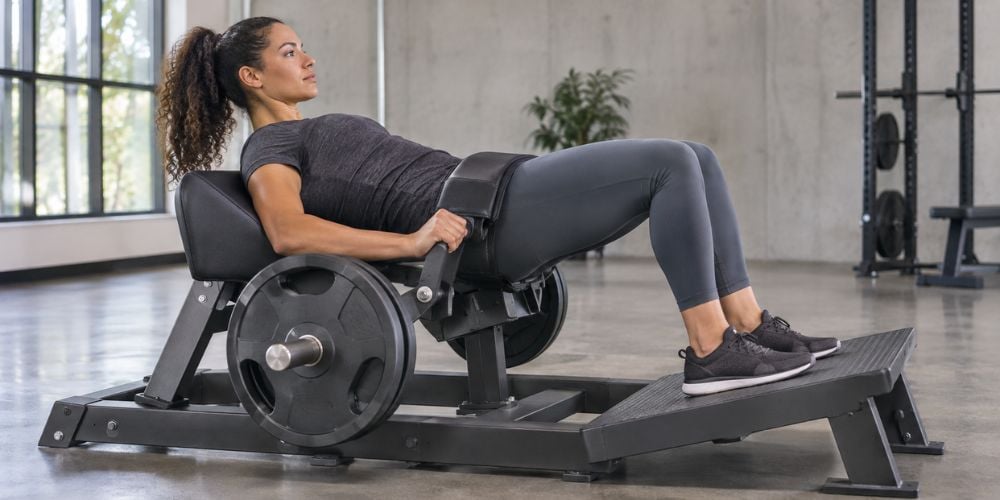
Your core and lower-back muscles help keep your body steady while your hips move.
Core Muscles
Your core includes your abdominal muscles, obliques, and deeper stabilizing muscles.
What they do:
- Keep your torso stable.
- Help control your pelvis.
- Prevent excessive lower-back arching.
- Support smooth hip movement.
Your core doesn’t do the main lifting, but it helps you stay in control.
Erector Spinae
The erector spinae muscles run along your spine. They help keep your back steady during hip thrusts.
What they do:
- Stabilize your back.
- Maintain your torso position.
- Support your spine during movement.
These muscles mainly help you hold your position rather than lift the weight.
Does your back feel uncomfortable? Check your position before adding more resistance. A machine with a moving backrest, such as the C458 hip thruster, can offer another way to support your torso during the exercise.
4. How to Feel Your Glutes More During Hip Thrusts
Do you feel hip thrusts more in your thighs or lower back than your glutes?
I often see this happen when foot placement or hip movement needs a small adjustment. Here are six ways to improve your technique.
Keep Your Feet Shoulder-Width Apart
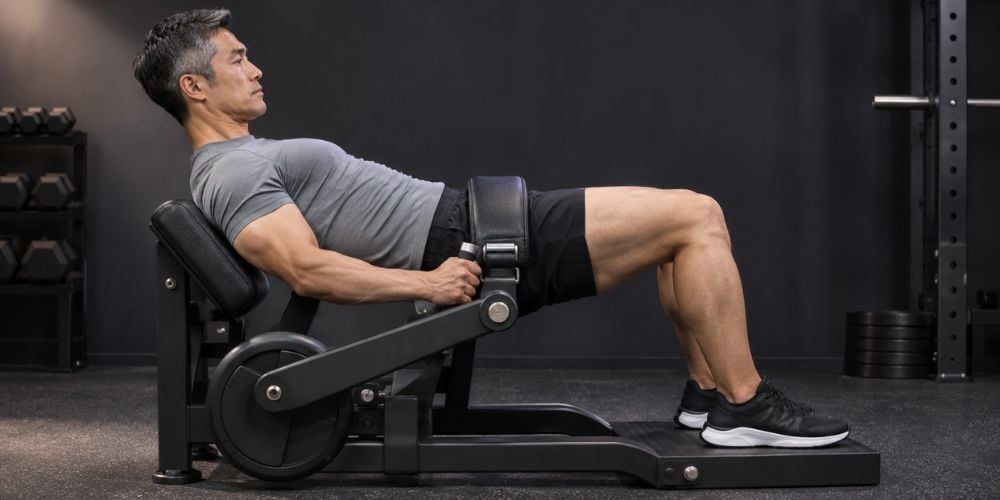
Place your feet about shoulder-width apart.
This gives you a stable base and helps keep your knees aligned.
Adjust Your Foot Position
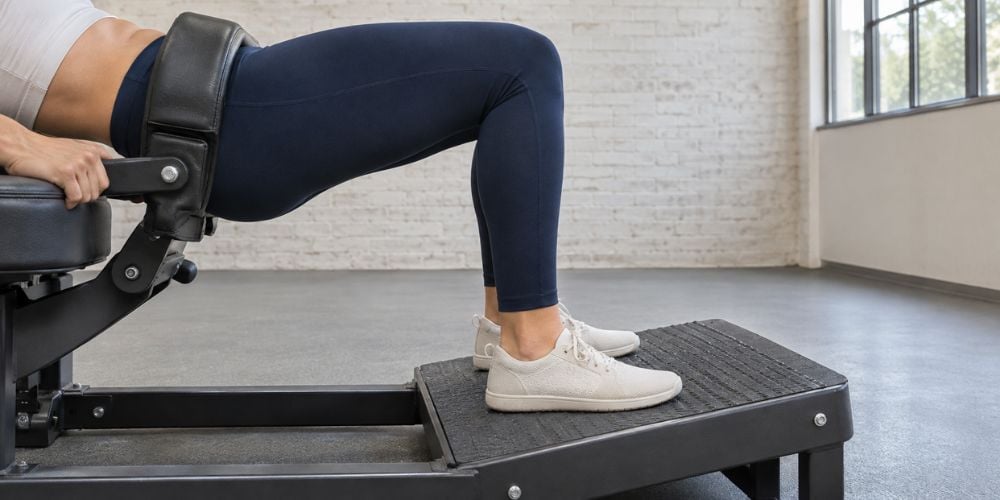
Position your feet so your shins are nearly vertical at the top of the movement.
If your feet are too close or too far away, you may feel more effort in other muscles.
Some machines, like the 61A58 hip thruster, have adjustable foot pedals and roller positions to help you find a better fit.
Push Through Your Whole Foot
Keep your heels grounded and press through your whole foot.
Avoid shifting all your weight onto your toes.
Conclusion
The hip thrust machine mainly works your gluteus maximus, making it a useful exercise for building stronger and bigger glutes.
Your gluteus medius, gluteus minimus, hamstrings, quadriceps, and adductor magnus also contribute. Meanwhile, your core and erector spinae help keep your body stable.
Want to make your glute workouts more comfortable? Explore the YR Fitness hip thrust machine range to compare different designs and find a setup that supports your training goals.
Related articles:



